
Last updated November 18, 2026
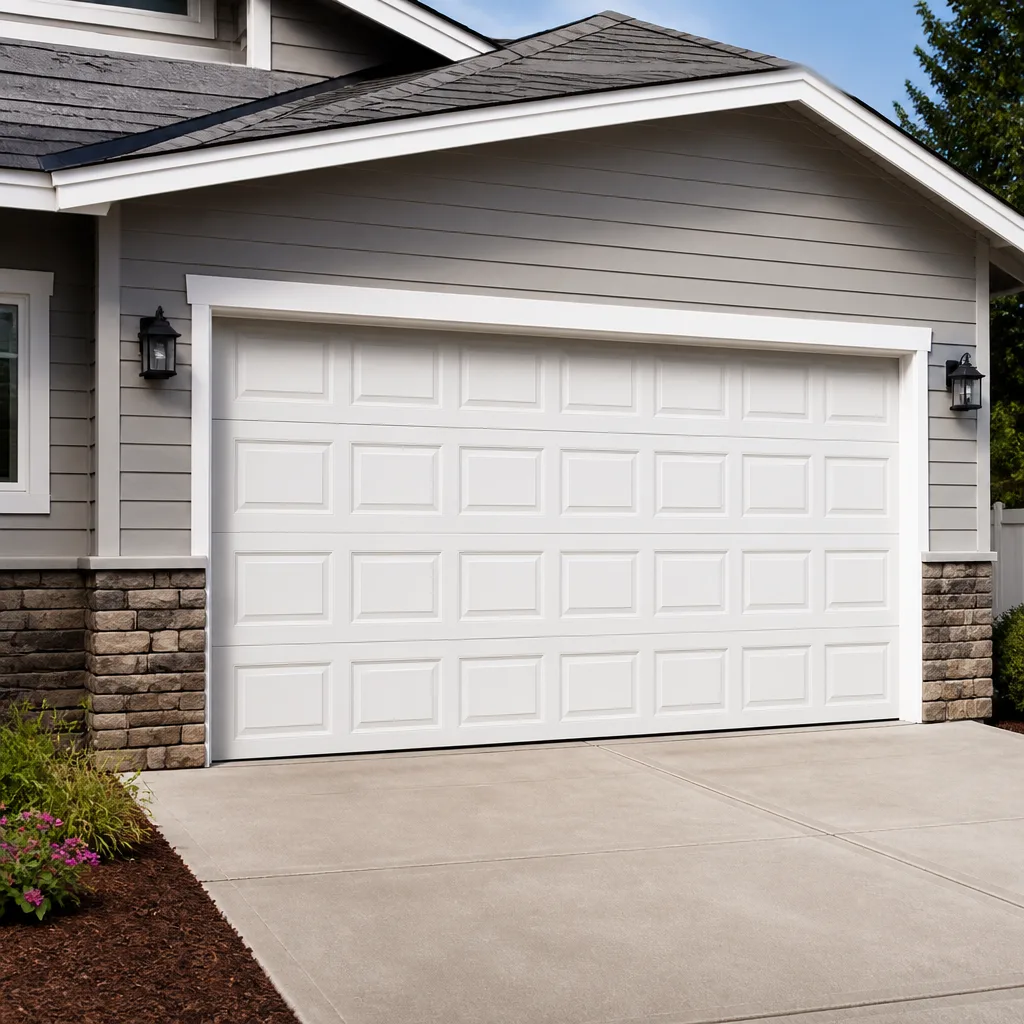 Raised-panel steel
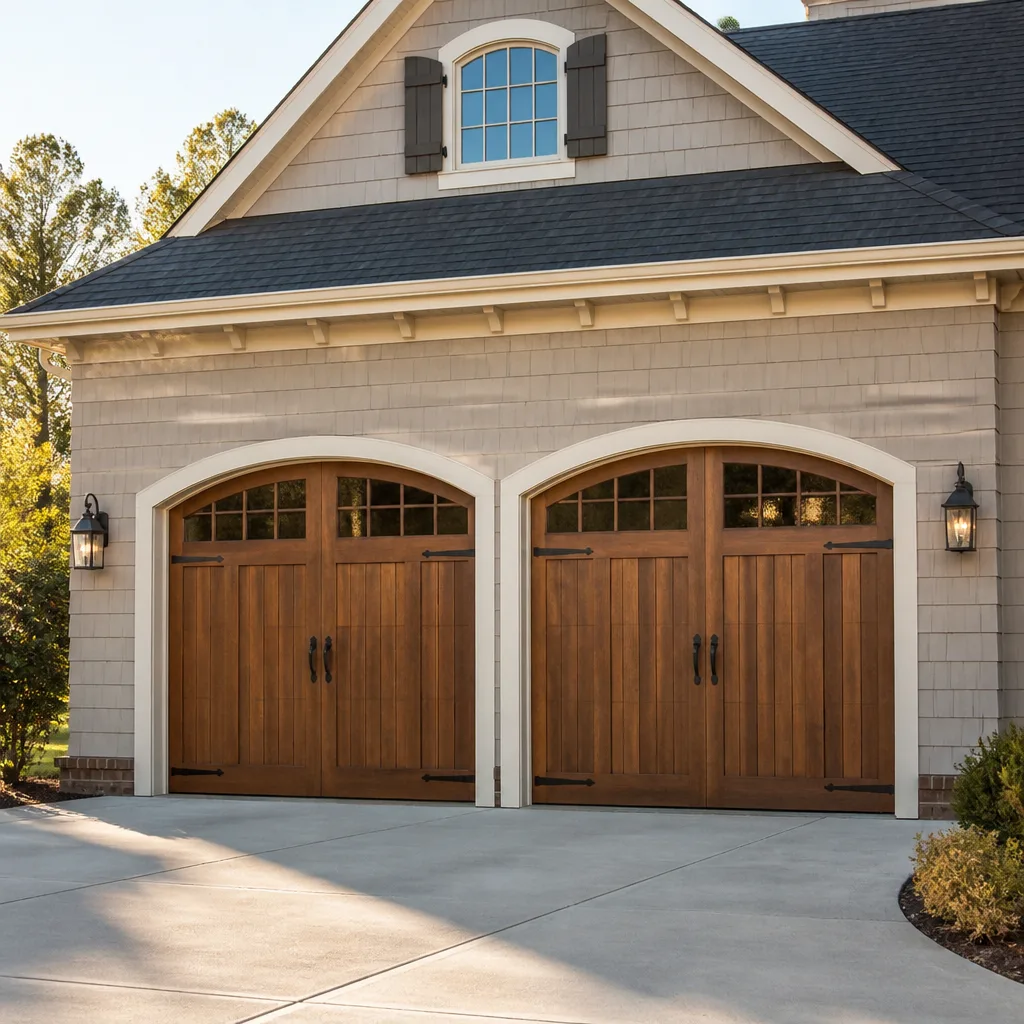 Carriage house
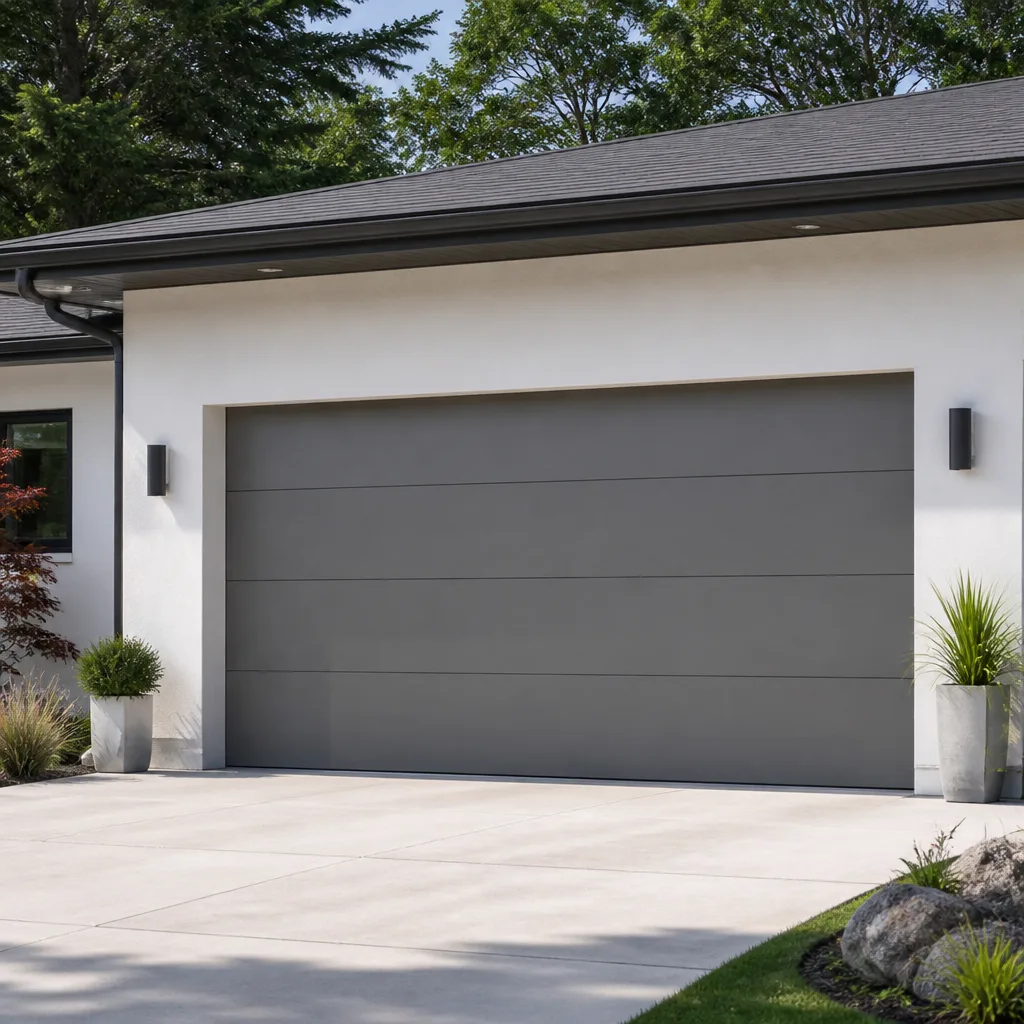 Modern flush
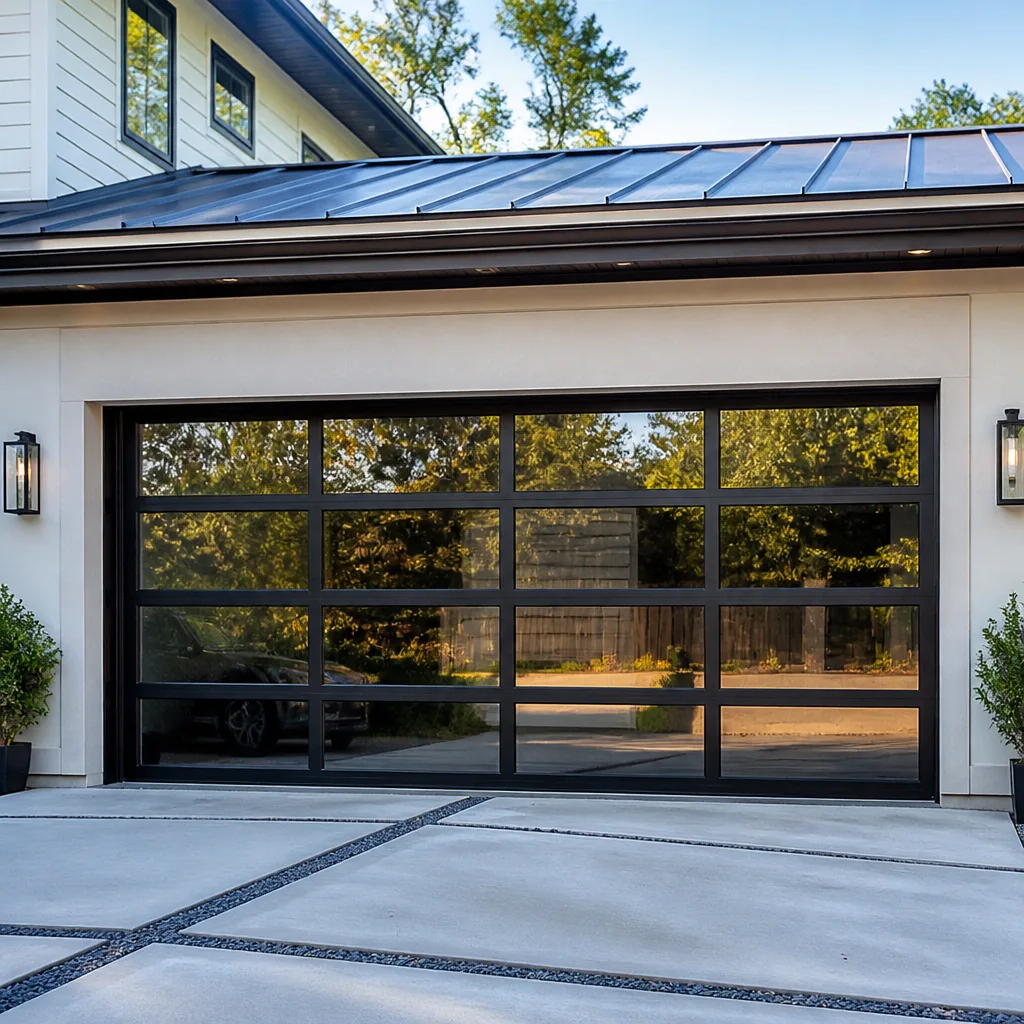 Full-view glass
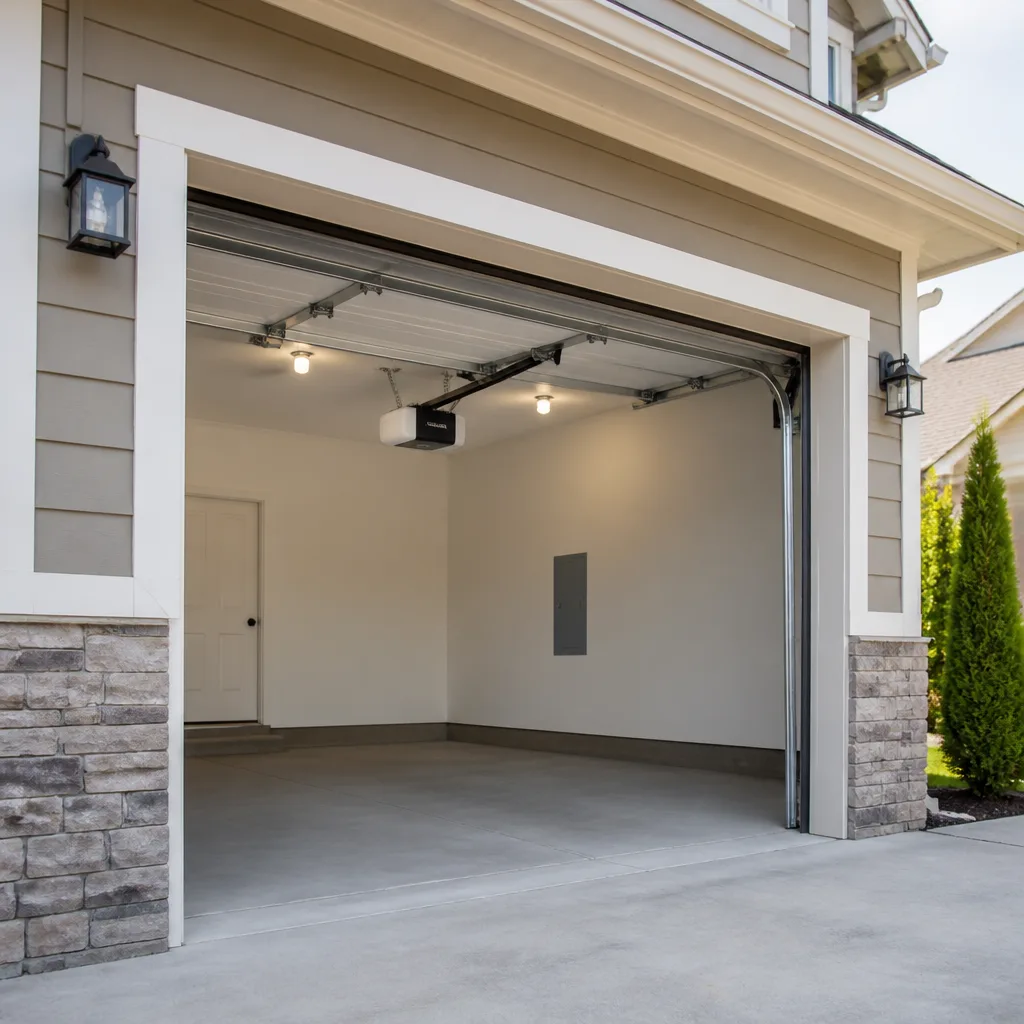 LiftMaster openers
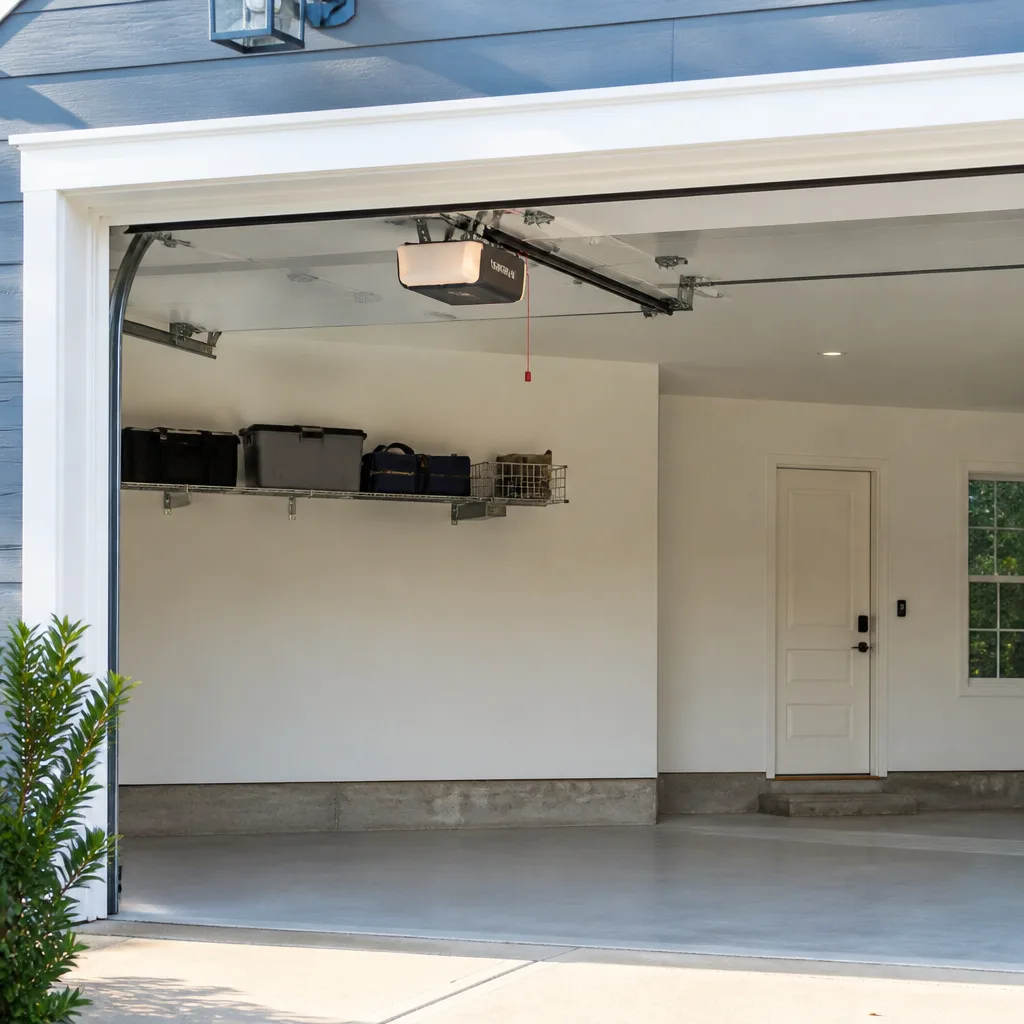 Chamberlain openers
Full 25-point door and opener safety check with every visit - springs, cables, rollers, tracks, and your LiftMaster or Chamberlain opener included
You get a price before we start. It does not change when the pro arrives.
Get your free estimateSeasonal Garage Door Care for Winchester: Year-Round Homeowner’s Guide
A garage door maintenance guide written for the Pacific Northwest will tell you to watch for rust. In Winchester, NV, the door is drying out and contracting. The problems are different, and the inspection sequence should be too. Most published checklists come from climates with humidity and freeze-thaw cycles, and they miss the specific wear pattern the high desert produces: UV load that bakes seals and paint through summer, then a cold snap in January that pulls hardware tight after months of heat expansion. This guide maps a maintenance calendar to that actual stress sequence, with tasks tied to real months, real parts, and the way a Winchester door ages. You’ll learn what to inspect each season, what signals a repair versus a replacement, and how to keep a one-page log that makes the door’s history visible.
Quick Answer
Garage doors in Winchester need a desert-specific seasonal sequence: at minimum two lubrication and balance checks a year, a bottom seal inspection each summer before UV hardens the rubber, a painted-steel check for oxidation, and a post-winter fastener and cable-drum check each spring. The single most useful habit is a dated one-page log that records each task, the condition found, and who completed it. A neglected door doesn’t fail suddenly; it fails in the season the first ignored stressor catches up with it.
Styles & brands we work with
- Raised-panel steel
- Carriage house
- Modern flush
- Full-view glass
- LiftMaster openers
- Chamberlain openers
Table of Contents
- Why Winchester’s Climate Changes the Maintenance Calendar
- Summer: UV Load, Bottom Seals, and Heat-Stressed Steel
- Fall: Re-Tensioning Springs and Cold-Season Lubrication
- Winter: Cold-Weather Opener Behavior vs. Real Motor Failure
- Spring: Post-Thermal-Cycle Inspection
- The One-Page Seasonal Log: How to Build It
- Common Mistakes to Avoid
- When to Call a Professional
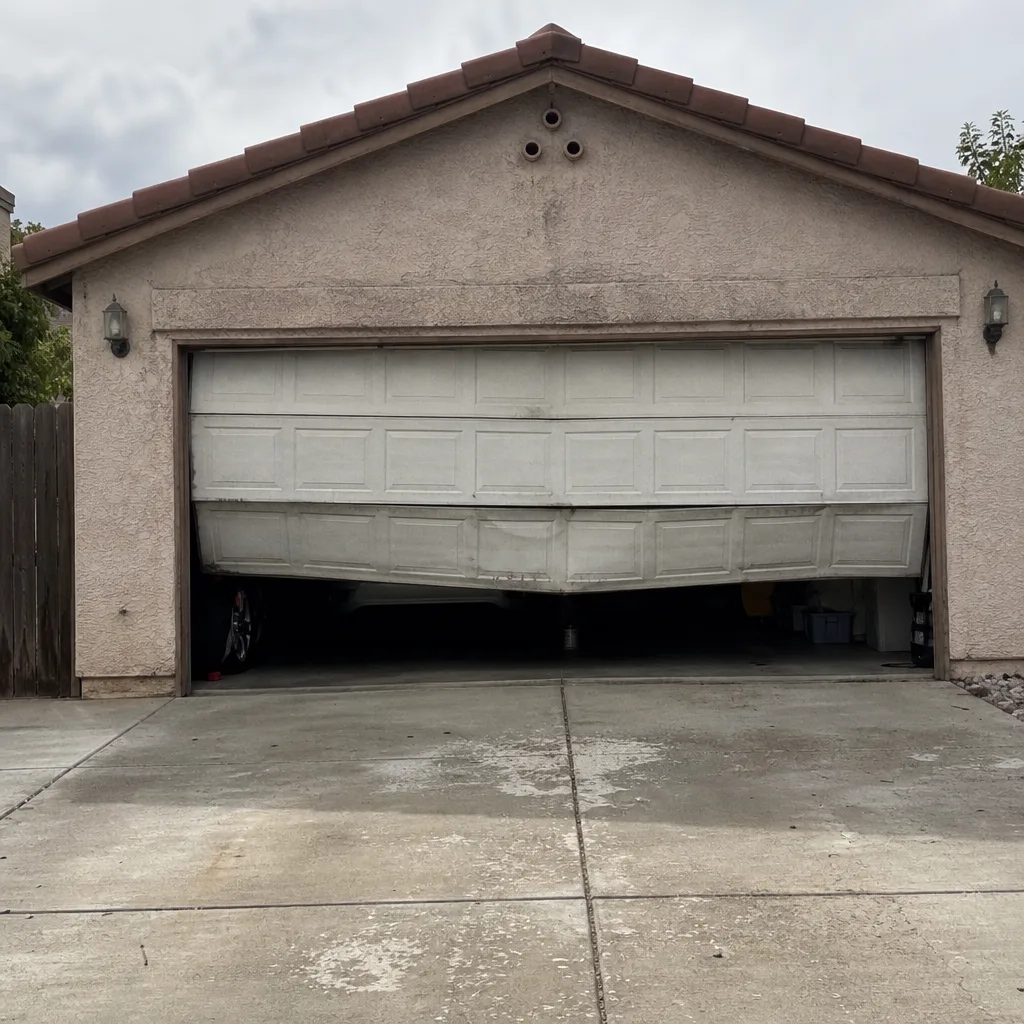 Before
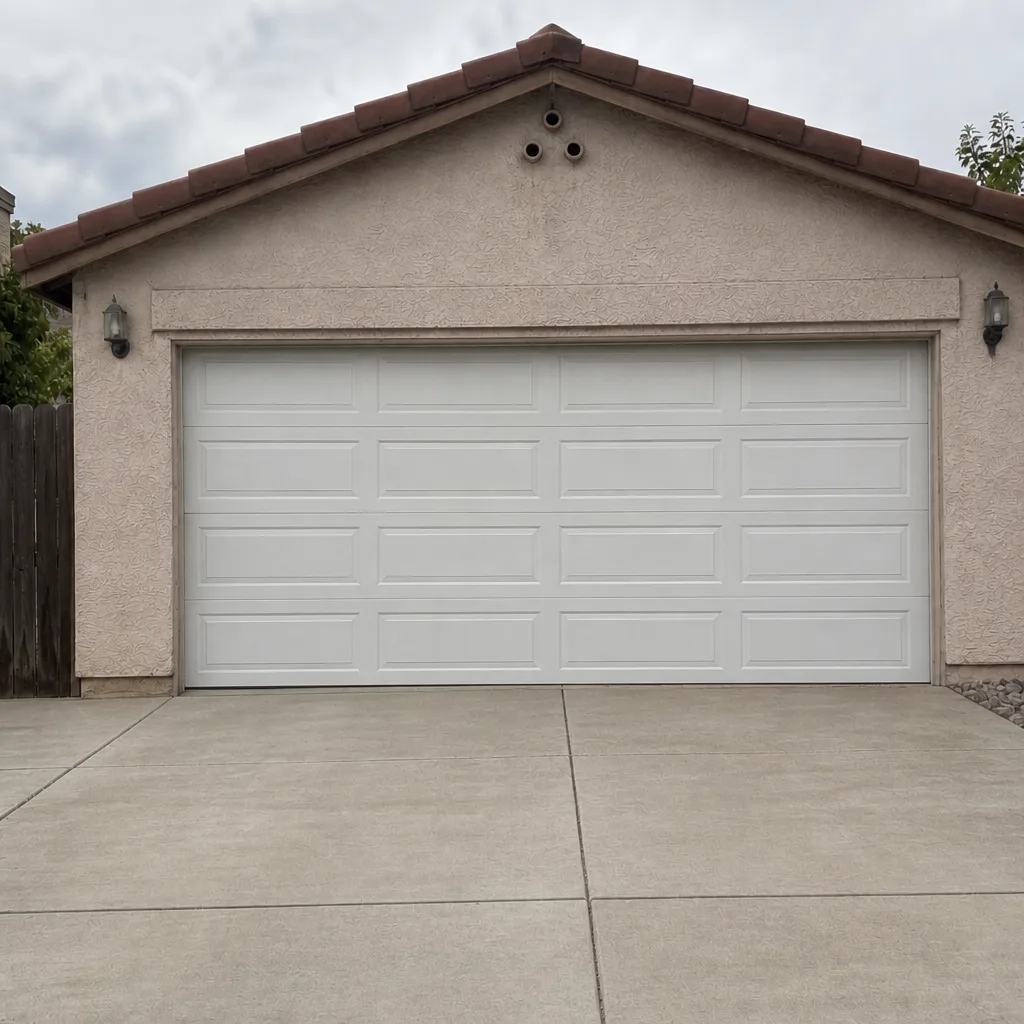 After
Why Winchester’s Climate Changes the Maintenance Calendar
Winchester sits in a high-desert pocket where summer afternoons sail past 100°F and winter nights drop below freezing, often within the same calendar year but weeks apart. That gap between the heat extreme and the cold extreme is the whole story. Metal expands in the summer heat and contracts when the temperature falls, and each cycle works the fasteners, set screws, and spring coils a little looser. A coil torsion spring – the wound spring above the door that counterbalances its weight – is sensitive to this because it does much of its work hot. Painted steel panels absorb UV all summer and can develop surface oxidation that traps heat and accelerates panel fatigue. Then a fall cold front rolls through and the door that ran smoothly in August suddenly hangs heavy or binds.
Guides written for humid or coastal climates spend their ink on rust and salt. Winchester doesn’t have that problem. What we see in Winchester homes is a different sequence: rubber drying and hardening, painted panels taking UV load, springs and fasteners working loose through thermal cycling, and openers that behave oddly on the first cold mornings. In our experience, a maintenance calendar borrowed from a wet climate sends you looking for the wrong failures at the wrong time of year. The right schedule follows the desert sequence, not a generic one.
One practical point up front: many of these inspections are safe to do from the ground with the door closed and the power disconnected. Anything involving the springs or cables is not. We’ll flag that clearly as we go.
Summer: UV Load, Bottom Seals, and Heat-Stressed Steel
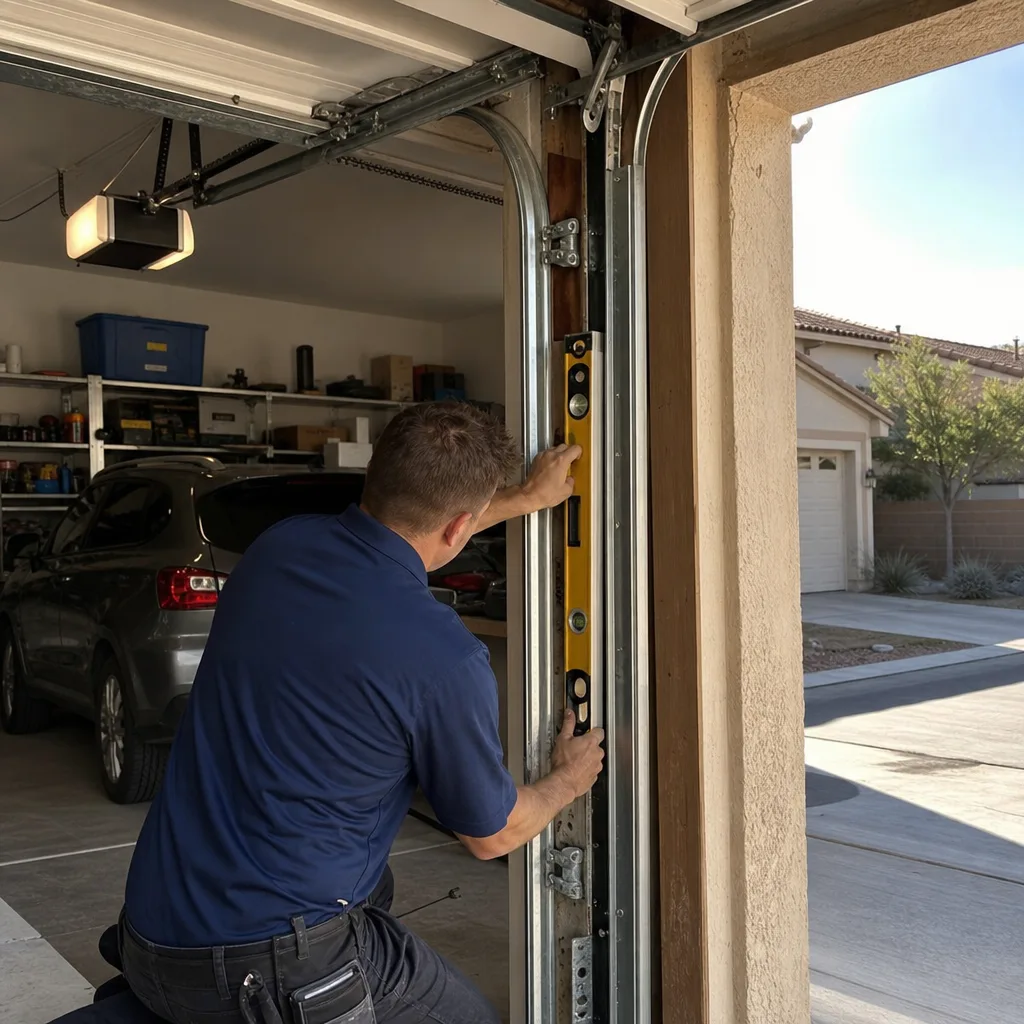
Summer is when Winchester’s sun does its slow damage. The bottom seal – the rubber strip along the lowest edge of the door that keeps out dust, wind, and pests – takes the most UV of any part on the door. In a high-desert summer it hardens, cracks, and stops sealing long before it looks worn from a distance. Once the rubber hardens it also stops flexing against the threshold, which lets grit and hot air inside and puts more load on the weather seal behind it.
What to check each summer, working from the ground:
- Inspect the bottom seal along its full length. Squeeze a section; if it feels stiff like a rubber eraser left in a hot car, it’s due for replacement. Look for cracks, gaps, and daylight showing under the closed door.
- Check painted steel panels for surface oxidation. Chalky, dull patches that feel rough to the touch trap heat and speed panel fatigue. Waxing or touching up worn paint early costs far less than replacing a panel.
- Run a balance check with the door disconnected. Pull the opener’s emergency release, lift the door to waist height, and let go. A balanced door stays roughly where you put it. A door that drifts down fast or shoots up on its own is out of balance and the counterweight system needs attention.
- Listen for new noise. A dry roller or hinge squeals more in heat. A squeal you hear in July is a pivot point telling you it needs lubrication.
- Wipe the tracks and check for grit. Desert dust and fine sand collect in the vertical and horizontal tracks. Vacuum or wipe them out so the rollers don’t grind grit into the bearings all season.
If your door is a Clopay or Wayne Dalton steel model, summer is also the season to confirm the paint is intact near the bottom rails and panel seams, where ponding irrigation and sun meet. Never adjust the springs yourself during any of this: the torsion spring stores enough energy to cause serious injury, and that work belongs to a trained technician every time. The checklist above is observation only, which is exactly what it should be.
Fall: Re-Tensioning Springs and Cold-Season Lubrication
When the overnight temperatures in Winchester start dropping below 50°F, the door answers differently. Cold tightens the springs, the metal contracts, and a door that was perfectly balanced in August can start hanging heavy or dipping on one side. That’s not a malfunction; it’s the season moving the tolerances. Fall is the window to correct it before the first hard freeze, and it’s also the last easy chance to get lubrication right.
Two tasks carry the season:
- Check and re-tension the torsion springs if the door shows imbalance as the ambient temperature falls below 50°F. A trained technician measures the imbalance from the ground, diagnoses whether it’s a spring tension issue or a worn roller, and adjusts accordingly. Springs are adjusted with winding bars and a specific procedure; this is not a homeowner task and shouldn’t be sold as one.
- Re-lubricate every pivot point before the cold sets in. That means hinges, rollers, and the torsion spring coils, using a lithium- or silicone-based garage door lubricant – not WD-40, which cleans and thins rather than leaving a protective film. A lubricated door runs quieter cold and puts less strain on the opener motor on the first sub-freezing mornings.
Fall is also the right time to look at the door’s weather seal face and threshold, because that’s what keeps the cold night air on the driveway side of the door. A hardened summer seal often lets a draft under the door precisely when you start running the heater. If you want to see what a documented fall inspection looks like, our garage door repair in Winchester page describes the photo record we leave behind on every visit.
Winter: Cold-Weather Opener Behavior vs. Real Motor Failure
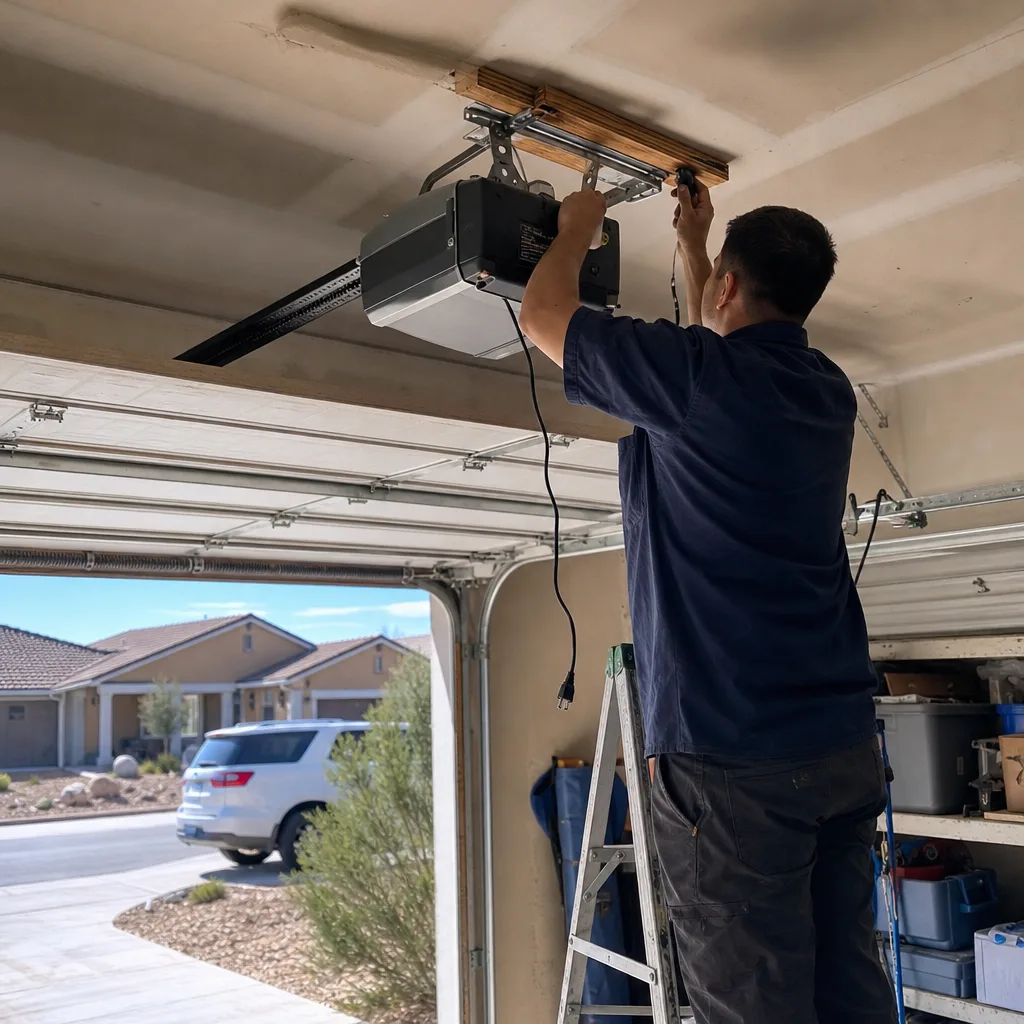
Every winter, Winchester homeowners call about an opener that “sounds wrong” or seems slow on the first cold morning. Most of the time it’s normal. In cold weather, the opener motor and its gear train work against stiffer grease and a door that’s slightly heavier from contraction, so the motor draws more current and takes longer to move the door. A longer warm-up cycle on a cold morning isn’t a fault; it’s the motor overcoming cold hardware.
What actually signals motor failure is different. Watch for these instead:
- The door reverses or stops without mechanical obstruction. A logic board that trips on overload, or a force setting that needs resetting, is a real fault – not cold weather.
- A consistent clicking or straining that doesn’t go away once the door is moving. If the motor still groans after the door has been through a full cycle and warmed up, the gear train or the trolley carriage (the sliding arm that connects the door to the opener’s rail) may be worn.
- Opener runs but the door doesn’t move. Usually a broken trolley carriage or a stripped gear, not a dead motor.
- Remote and wall button work inconsistently. Cold can affect a tired battery and a weak radio receiver; check the simplest cause first.
Winter is also the season emergency calls cluster, because a spring that was quietly losing tension all fall can snap on the coldest night, when the metal is at its tightest. If that happens, don’t lift the door by hand and don’t take the opener’s release cord and force it – that’s how people get hurt. Call. Servo answers live 24/7, including holidays, and our garage door opener repair & installation in Winchester service covers opener motor and logic board diagnostics with a written price before any work starts.
Spring: Post-Thermal-Cycle Inspection
Spring in Winchester is the season to check what the winter left behind. After months of the door cycling through expansion and contraction, the fasteners are the first to loosen. The inspection sequence matters because a loose set screw or bracket fastener is cheap to tighten and expensive to ignore.
Run this sequence each spring, in order:
- Open the door and check the cable drum set screws. The drum is the spool at each top corner of the door that winds the cable as the door travels. If the set screws have backed out, the cable can slip out of its groove; that’s a genuine hazard and belongs to a technician, but you can look for uneven travel and listen for cable slap.
- Confirm the roller bracket fasteners are tight after the repeated expansion and contraction. A rattle on the way up and down is often a bracket that worked loose over the winter.
- Recheck door balance, the same way as in summer, with the door disconnected from the opener.
- Look at the hinges and the end bearing plates on the torsion shaft. Any visible wobble or loose bolt is a spring-season flag.
- Confirm the safety sensors at the base of the tracks are aligned. A brief winter power blip or a shifted sensor can leave the reversal system out of adjustment; test it by passing an object through the beam with the door closing.
This sequence is what “after thermal cycling” means in practice: the season loosened things, and spring is when you check them. Our technicians have up to 11 years of experience with every major brand, from Amarr to Craftsman, and the first thing they do on a spring call is measure and photograph rather than guess.
The One-Page Seasonal Log: How to Build It
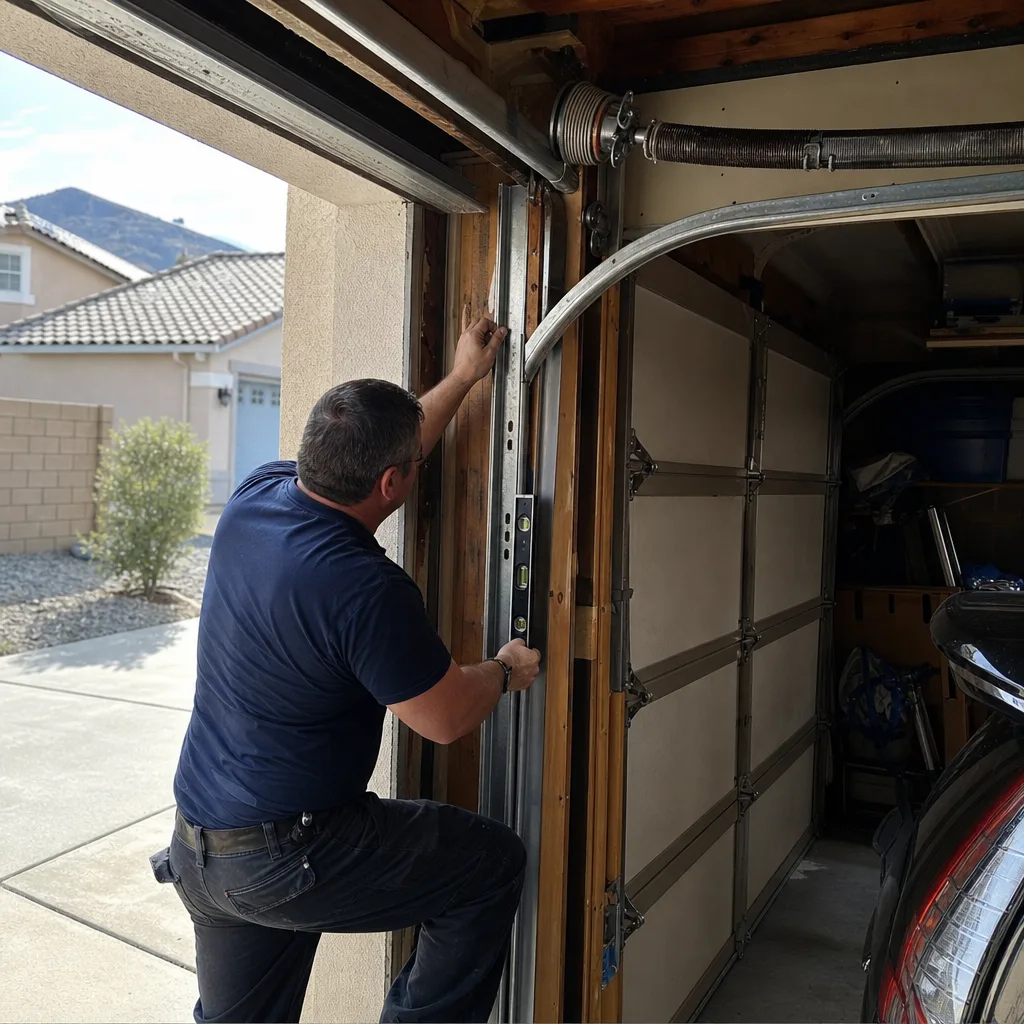
The single most useful garage door tool in Winchester isn’t a wrench; it’s a dated piece of paper. A one-page seasonal log makes the door’s history visible, so when a technician arrives they can see what was done, when, and in what condition. It also protects you as a homeowner: if a repair under our 365-Day Done Right Promise ever needs a second look, the log and the photo record show exactly what happened. Here’s a workable template.
- Header: door make and model (if known), opener brand, install date, and the log’s start date.
- Four season rows: Summer (month), Fall (month), Winter (month), Spring (month).
- Four columns per row: Task, Condition Found, Action Taken, Completed By.
- Task column: the specific item (e.g., “bottom seal inspection,” “spring re-tension check,” “lubrication,” “fastener check”).
- Condition column: a plain observation, not a feeling – “bottom seal stiff and cracking at center” beats “seal looked bad.”
- Action column: replaced, adjusted, tightened, or scheduled, with parts named.
- Completed By: the technician’s name or “homeowner” – this is the column that gives the log its value.
Tie each row to a calendar month so the schedule isn’t vague. The exact date matters less than the record that the check happened and who did it. If a gate or opener call turns into a bigger job, the log follows the door forward. You can see the same documentation logic on our garage door installation in Winchester page, where every install closes with a written scope and a photo record.
Common Mistakes to Avoid
- Using a wet-climate checklist in a desert climate. Watching for rust on a Winchester door misses the actual stressors – UV, oxidation, and thermal cycling – and leads homeowners to skip the inspections that matter here.
- Waiting for the door to break before inspecting it. A torsion spring that’s losing tension doesn’t announce itself. The monthly balance check and the spring inspection are how you catch it before it snaps on a cold night.
- Lubricating with the wrong product. WD-40 thins and cleans but doesn’t leave the protective film a pivot point needs. Garage door lubricant – lithium or silicone – is the right call, applied to hinges, rollers, and spring coils.
- Replacing a bottom seal with a generic strip that doesn’t flex in summer heat. A seal that hardens in June is worse than the one you removed. Specify a heat-tolerant seal and check it again each summer.
- Adjusting a torsion spring yourself. This is the single most dangerous thing a homeowner can attempt on a garage door. The spring stores enough energy to injure, and adjusting it requires the right bars and procedure. Leave it to a trained technician.
- Ignoring a cold-morning opener “problem” that’s actually normal. Replacing an opener because it’s slow on the first cold morning wastes money. Know what cold-weather behavior looks like so you can tell it from real failure.
- Keeping no record of anything. Without a log, every technician starts from scratch and every fix is a guess. The one-page log is the cheapest preventive maintenance there is.
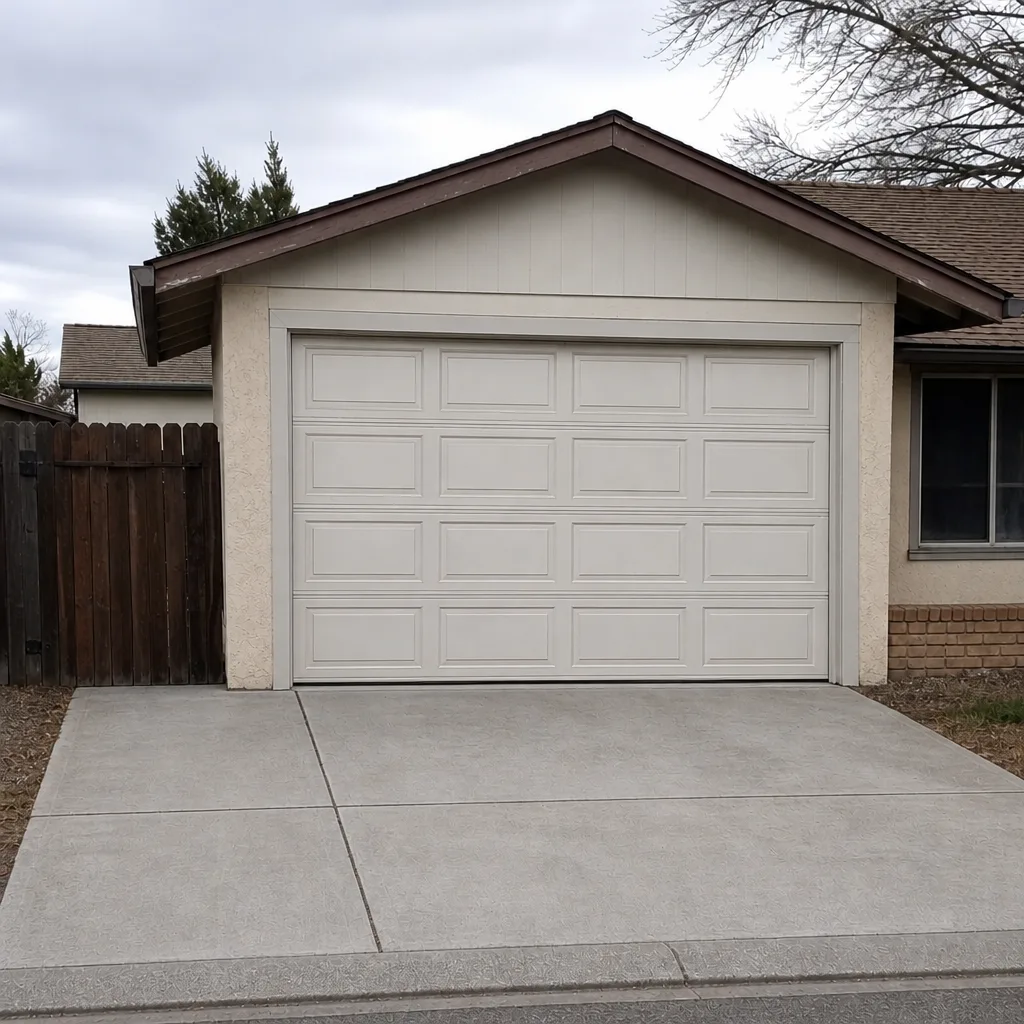
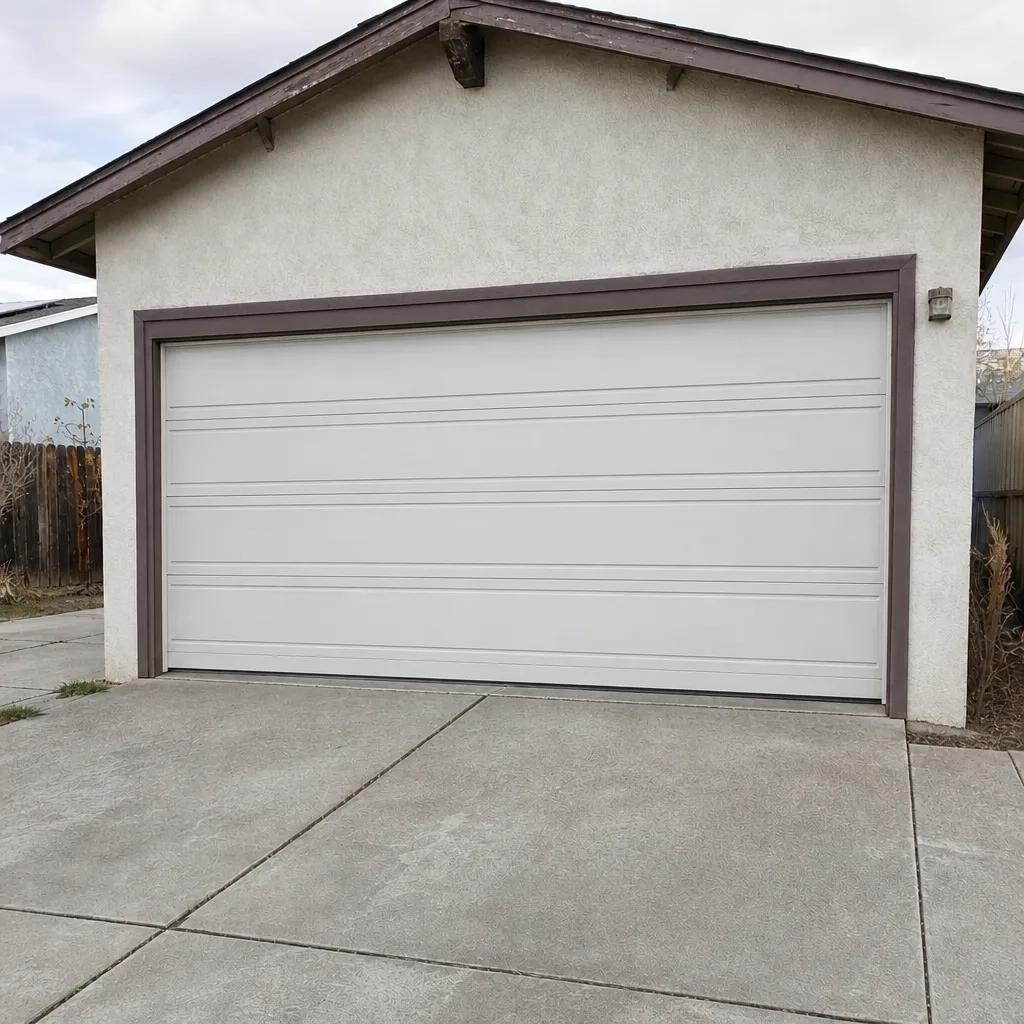
See the difference
BeforeAfter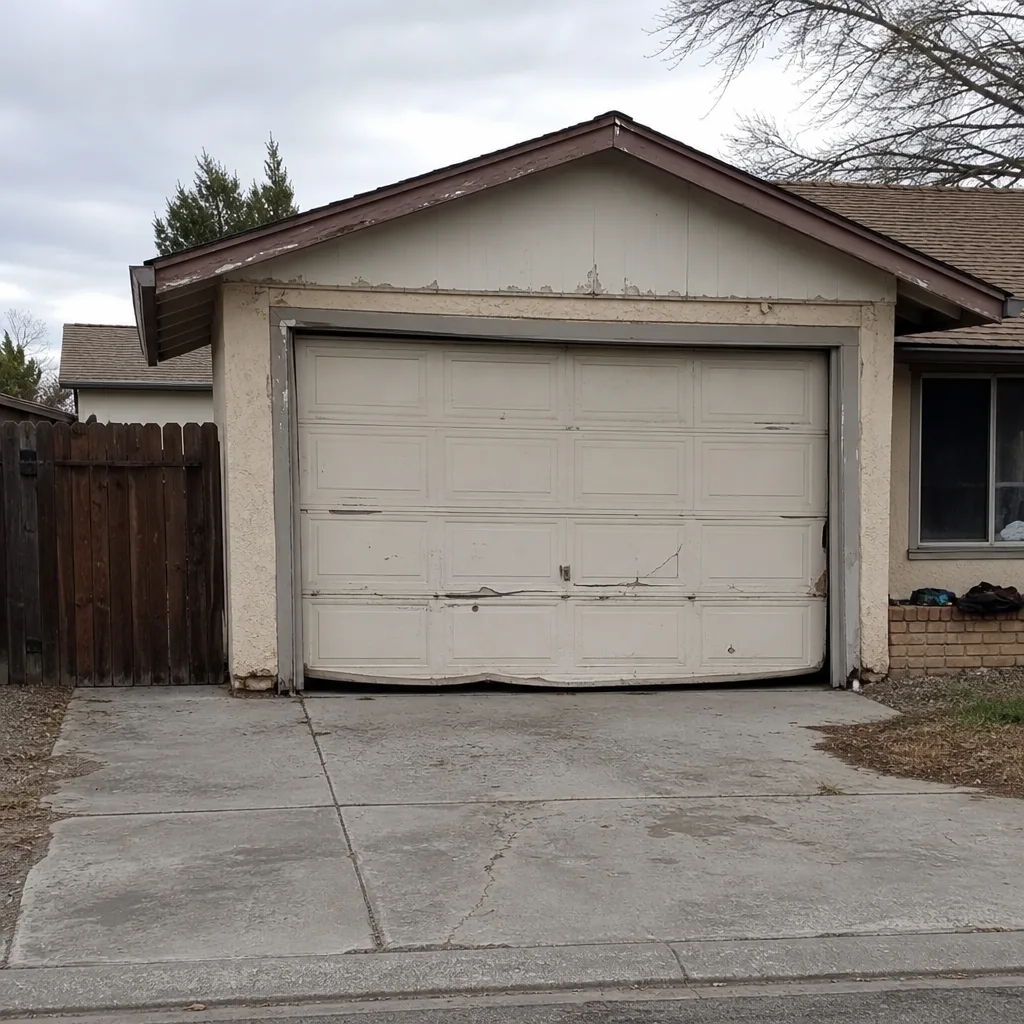 Before
 After
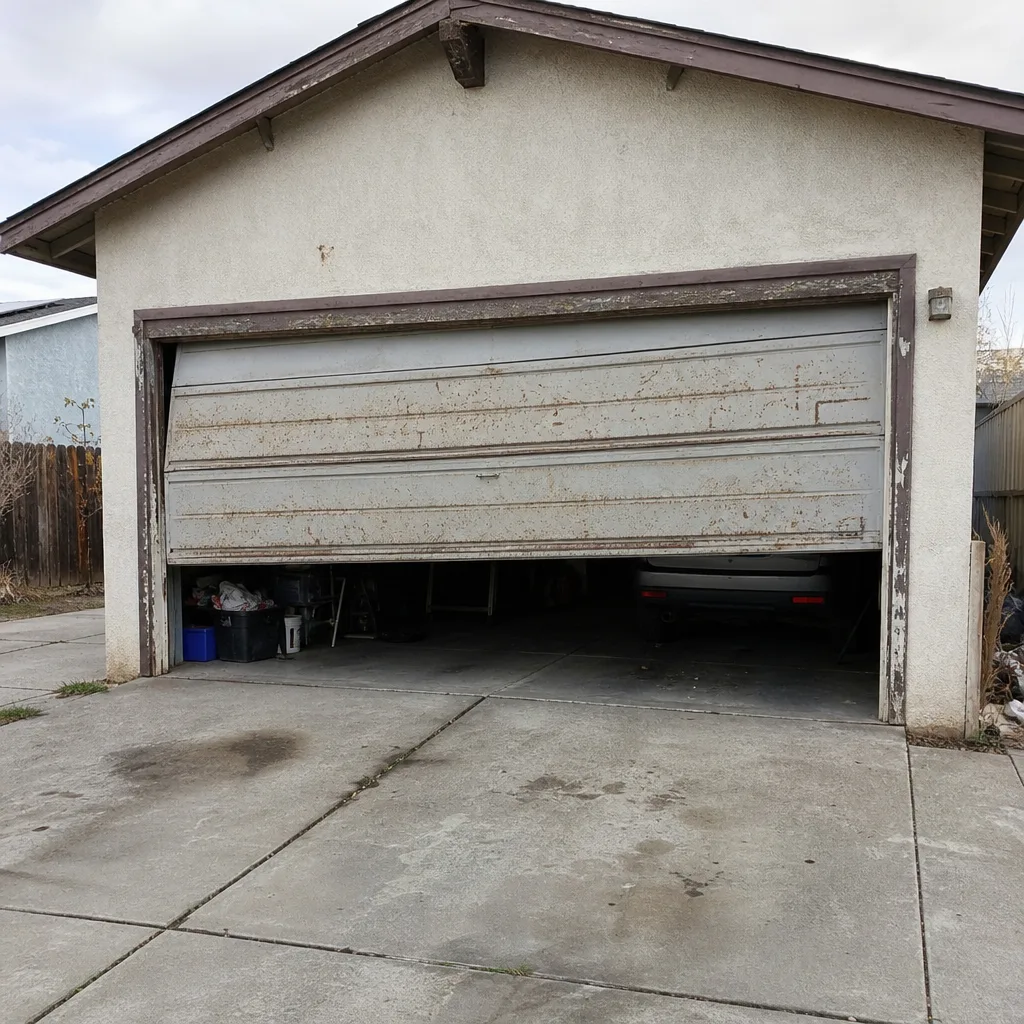 Before
 After
When to Call a Professional
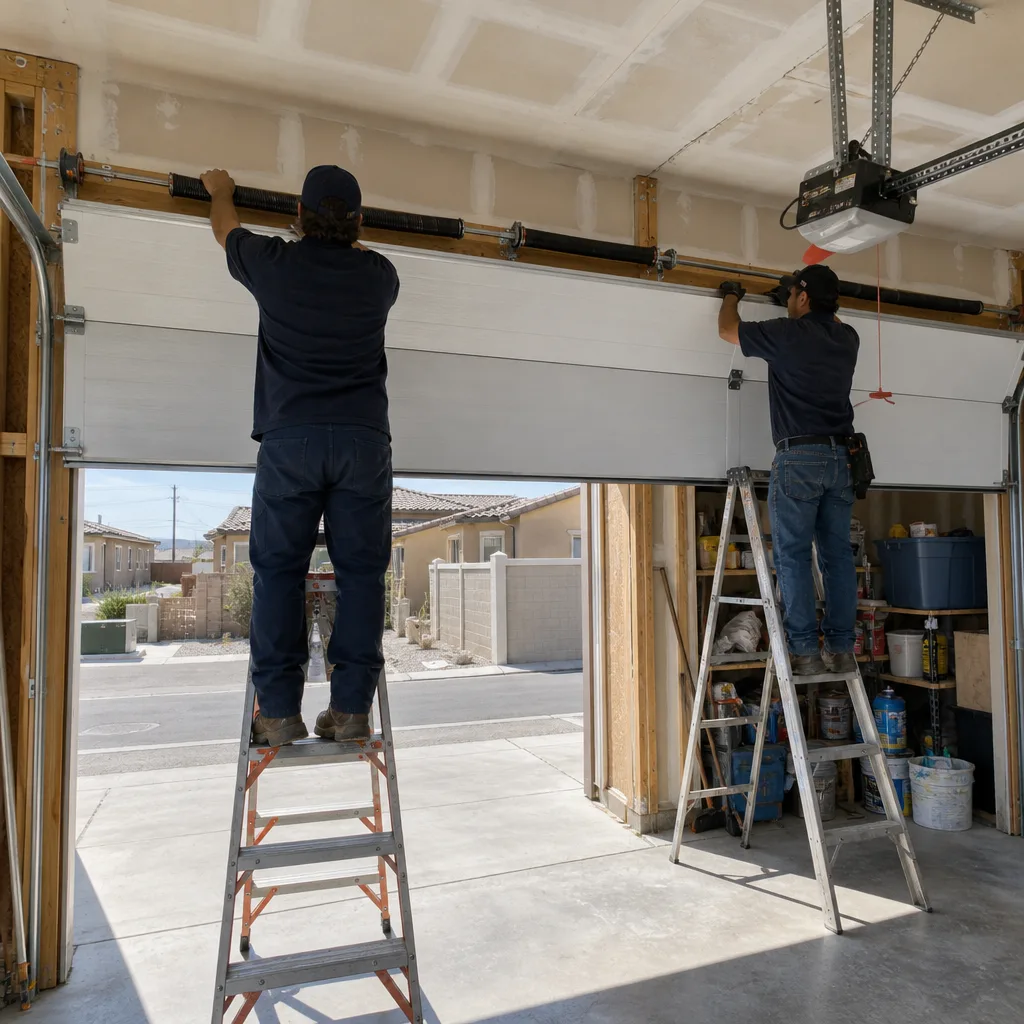
Some tasks belong on your own checklist from the ground. Others should stop you cold. Call a professional in Winchester when the door is out of balance, when you hear a snap or bang from the spring or cable, when the door comes off its tracks, when the opener reverses or trips repeatedly, or any time you can see daylight under the bottom seal after a fresh replacement. And call if you’re unsure whether something is a spring problem or a roller problem – a wrong diagnosis costs more than the visit. Servo Garage Doors Winchester offers free estimates in Winchester – call (855) 517-0284. Our technicians have up to 11 years of experience, and every job comes with a written, flat price and scope before any work starts. Bring a written estimate from another company and we’ll provide a free second opinion; no code or coupon required.
Frequently Asked Questions
A garage door in Winchester should be serviced at least twice a year, timed to the seasons that stress it most: a summer seal and oxidation check and a fall lubrication and spring check. If the door runs through several cycles a day, or you’ve noticed new noise or drift, step up to quarterly. The key is tying inspections to the calendar months, not to a vague “when it looks bad” rule. Call (855) 517-0284 for a free estimate on any service – estimates are free.
Cold-weather opener behavior is a longer, slower warm-up on the first cold morning that sorts itself out once the door has cycled; motor failure is a consistent strain, click, or reversal that doesn’t go away when the hardware warms. A logic board that trips on overload or a worn trolley carriage is a real fault, not weather. Our opener service covers that diagnosis with a written price before any work. Call (855) 517-0284 for an exact quote – estimates are free.
No. A torsion spring stores enough energy to cause serious injury, and re-tensioning requires the right winding bars and a specific procedure. This is the one item on the seasonal list that should never be a homeowner task in Winchester or anywhere else. Leave it to a trained technician. Call (855) 517-0284 for a free estimate on spring service.
Winter weight is usually thermal contraction, not a failed spring: the metal tightens, the springs load differently, and the door answers a bit heavier when the temperature drops. That’s why fall is the season to check balance and re-lubricate before the cold sets in. If the heavy feel comes with a bang or a door that won’t lift, that’s a spring failure and it needs a technician. Call (855) 517-0284 for a free estimate.
Use a one-page log with a dated row for each season, the condition found, the action taken, and who completed it. That record is what a buyer wants to see and what backs a warranty claim. Every Servo visit already includes a documented photo record of findings and completed work. Call (855) 517-0284 to book a visit – estimates are free.
A documented photo record includes pictures of the failed component and the completed work on every visit, so you can see what was found and what was done. It traces back to our founding rule: you see the failed part before anyone quotes a replacement – Clause 4 of The Haven Standard. It’s included, not optional, and it’s part of every written job. Call (855) 517-0284 to schedule – estimates are free.
The Bottom Line
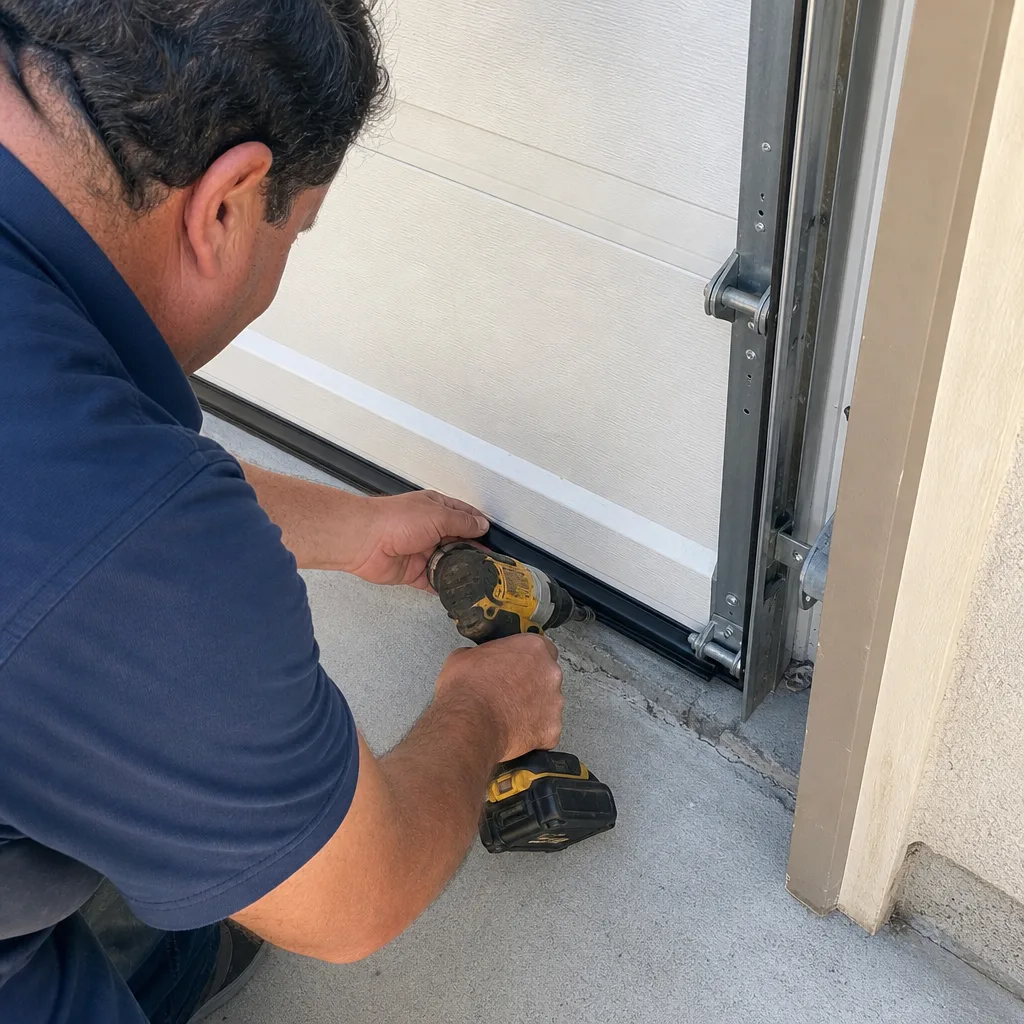
Winchester’s high-desert climate runs the door through a specific sequence: UV and heat in summer, contraction and imbalance as temperatures fall below 50°F, opener oddities in winter, and loose fasteners each spring. A maintenance calendar that ignores that sequence is borrowed from somewhere else. Build a one-page log, run the summer seal and oxidation check, lubricate and check balance in fall, know which winter complaints are normal, and inspect fasteners and cable drums each spring. The tasks tied to parts and months keep the door running longer; the log keeps the history honest. Everything else – springs, cables, opener motors – belongs to the trained technician.
Contact Us
If you’d rather hand the seasonal checklist to someone who does this every day, call Servo Garage Doors Winchester at (855) 517-0284 for a free estimate. A live person answers 24/7, including holidays, and you’ll get a written, flat price and scope before any work starts. Back to the Servo Garage Doors Winchester home page for a full list of services, or browse the guide again any time.
Written by the team at Servo Garage Doors Winchester.