
Last updated November 18, 2026
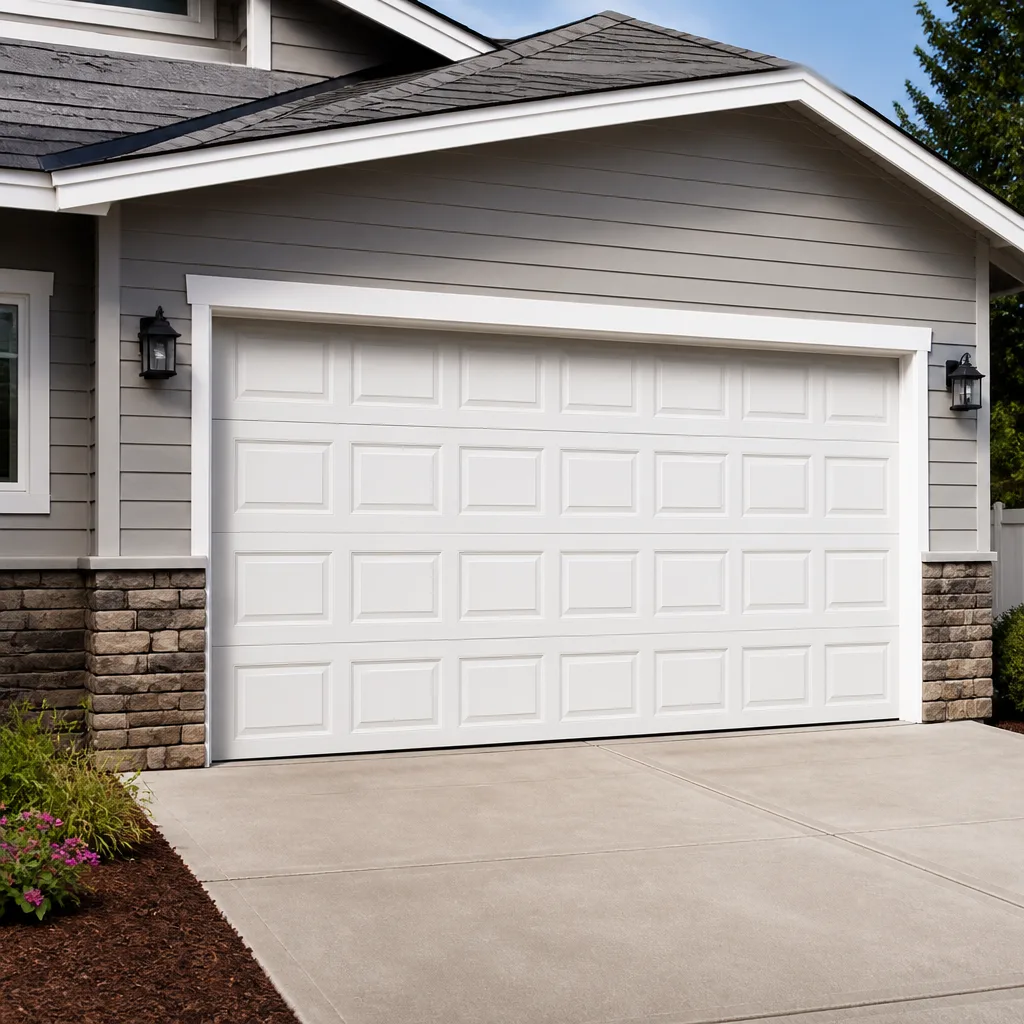 Raised-panel steel
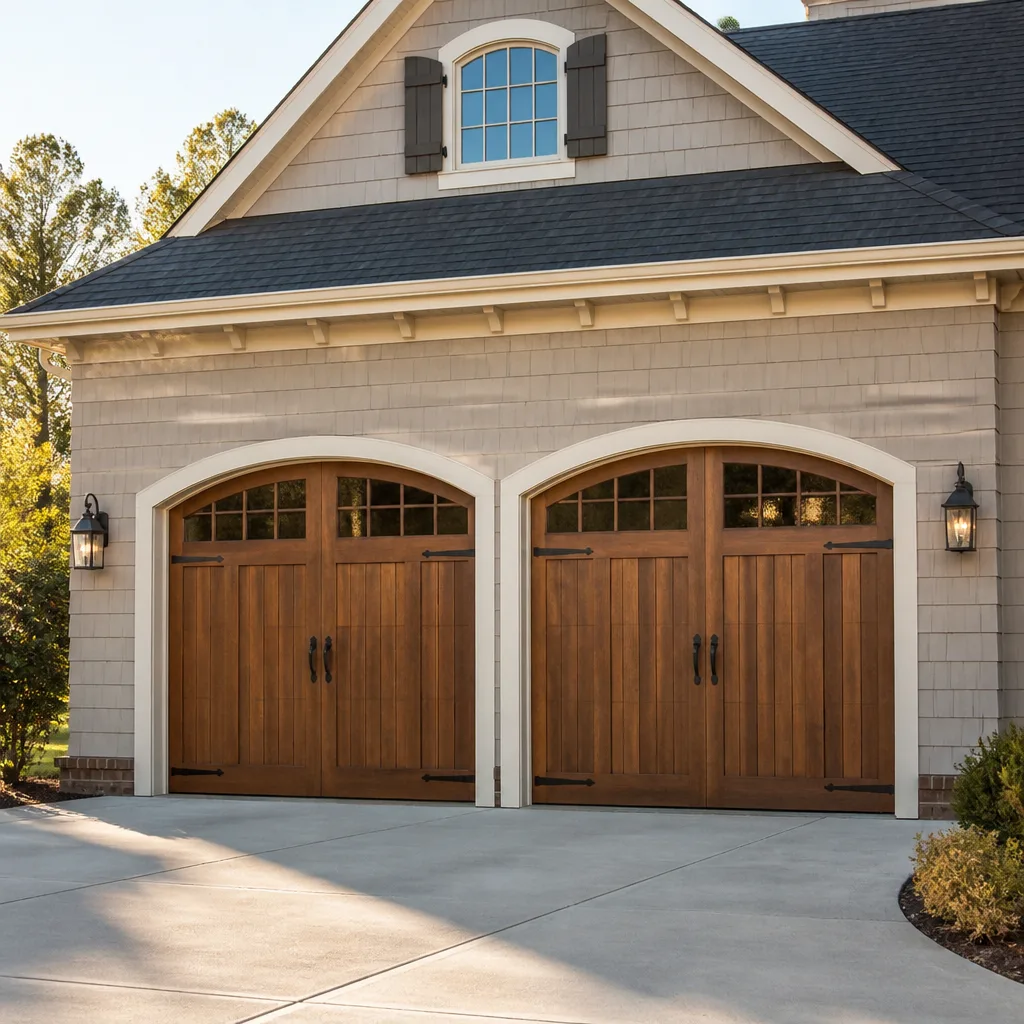 Carriage house
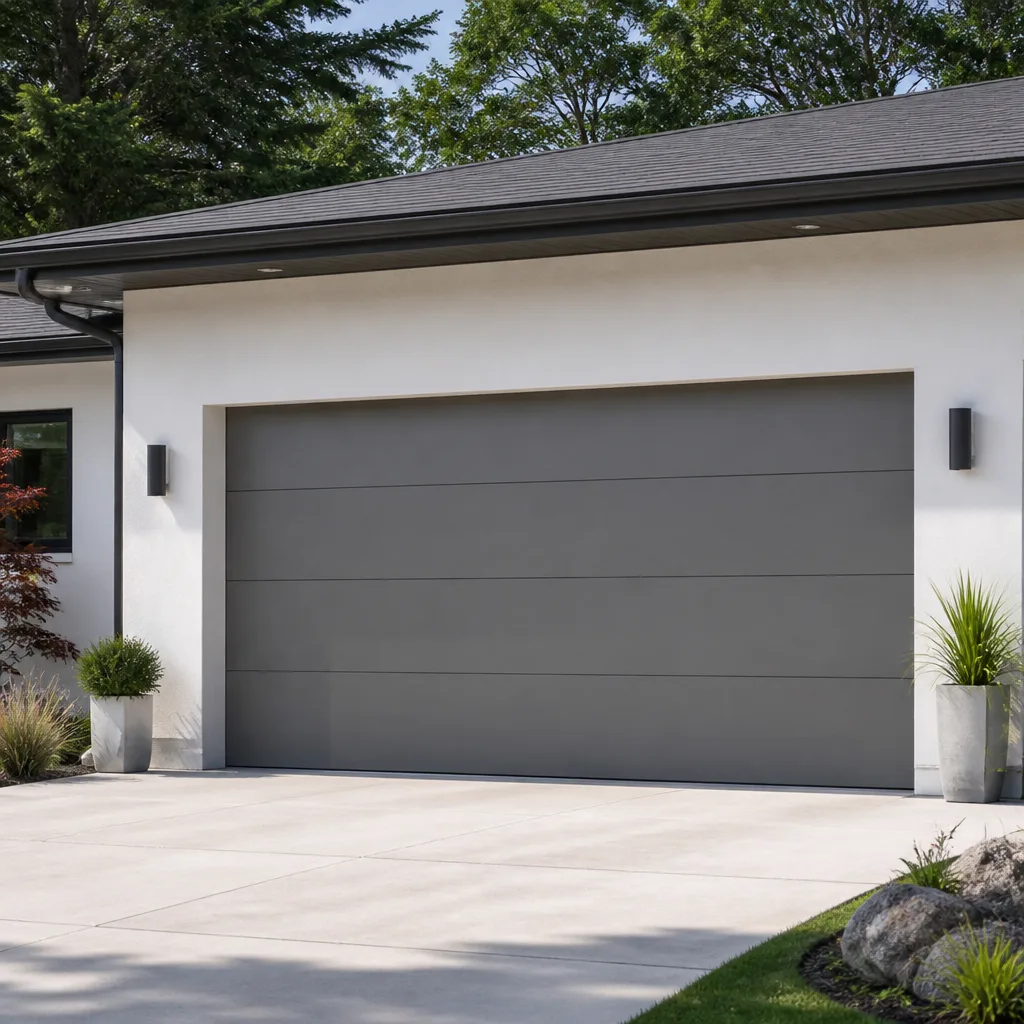 Modern flush
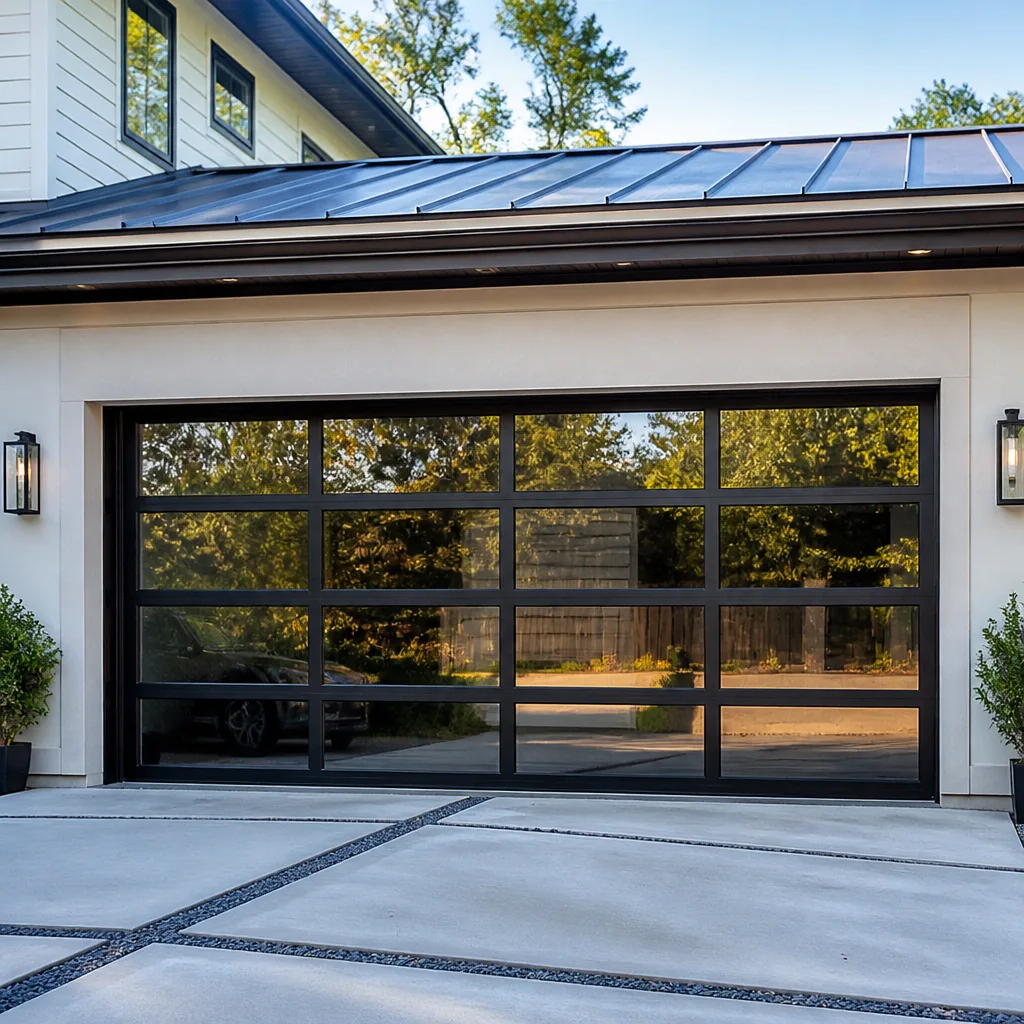 Full-view glass
 LiftMaster openers
 Chamberlain openers
Full 25-point door and opener safety check with every visit - springs, cables, rollers, tracks, and your LiftMaster or Chamberlain opener included
You get a price before we start. It does not change when the pro arrives.
Get your free estimateChoosing the Right Garage Door Brand: A Buyer’s Guide for Winchester
Two doors can both be described as “heavy-gauge insulated steel.” One is 24-gauge with a 6.3 R-value, the other is 27-gauge with a 2.0 R-value. In Winchester’s temperature range, that gap is a utility bill and a lifespan. Neither label tells you which door you’re actually buying, and that’s the problem with most brand comparisons: they rank “quality” without defining the construction specification being measured. This guide evaluates the brands available to Winchester homeowners on five measurable attributes – steel gauge, insulation R-value, cycle rating, section joint design, and warranty terms – so the comparison produces a defensible choice.
Quick Answer
The right garage door brand for a Winchester home is determined by five measurable specs, not by the logo on the box: steel gauge (24-gauge or thicker for hail and wind resistance), R-value (R-13 minimum for an attached garage in this climate zone), cycle rating (25,000 cycles for households opening the door eight or more times daily), section joint design (tongue-and-groove over flush-joint), and warranty language you can actually read. Brands like Clopay and Amarr build strong residential lines across that spec range, LiftMaster makes the best opener hardware, and Wayne Dalton occupies the budget tier – but the brand name matters less than whether those five numbers show up in writing before you buy.
Styles & brands we work with
- Raised-panel steel
- Carriage house
- Modern flush
- Full-view glass
- LiftMaster openers
- Chamberlain openers
Table of Contents
- Steel Gauge: Why 24-Gauge Beats 27-Gauge in Winchester
- R-Value in Zone 3B: Does the Insulation Upgrade Pencil Out?
- Cycle Ratings: When 10,000 Cycles Isn’t Enough
- Section Joint Design and Winchester’s Thermal Swing
- Warranty Anatomy: What “Lifetime” Actually Covers
- How the Major Brands Stack Up on These Five Specs
- Common Mistakes to Avoid
- Frequently Asked Questions
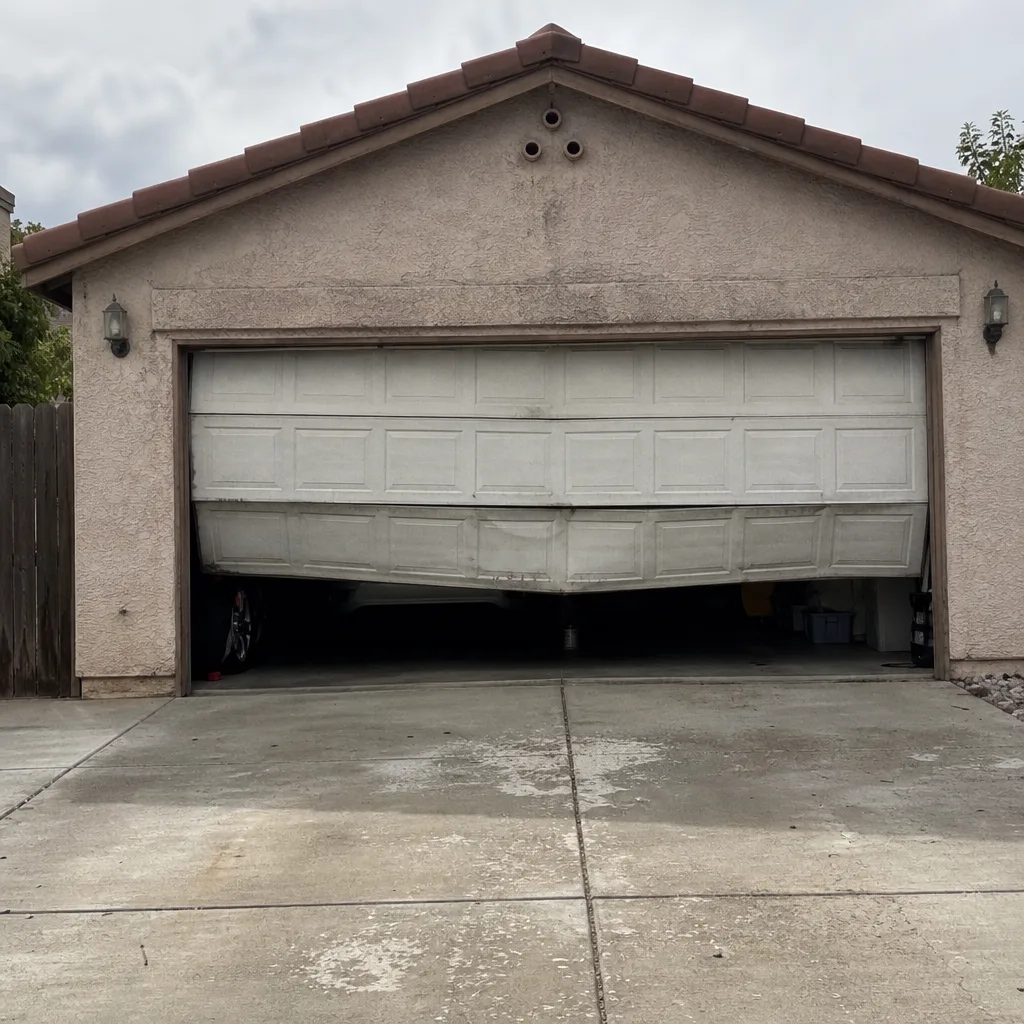 Before
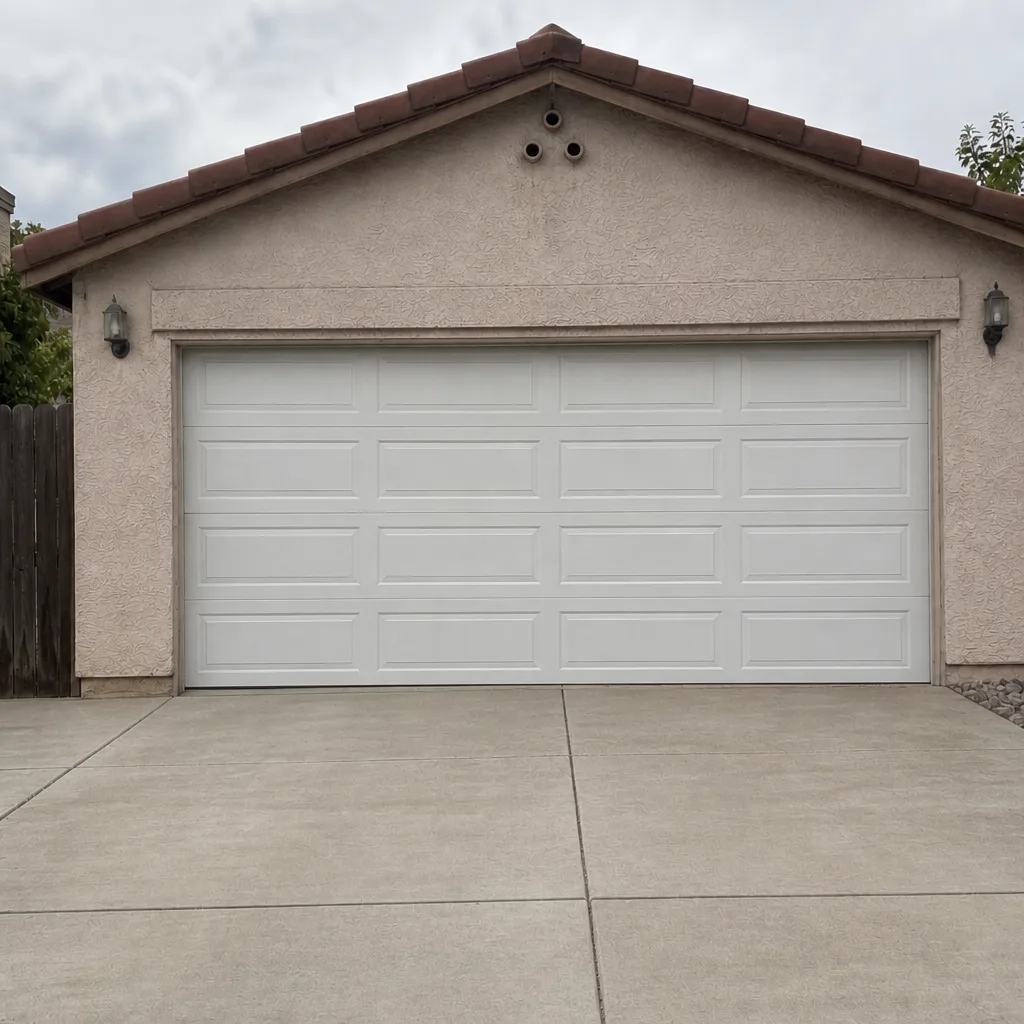 After
Steel Gauge: Why 24-Gauge Beats 27-Gauge in Winchester
Steel gauge works backwards from what most people assume. A lower number means thicker steel. A 24-gauge door is heavier and more dent-resistant than 25-gauge or 27-gauge, and most budget-priced doors sold off a showroom floor are 27-gauge with a galvanized coating that reads like a quality marker but tells you nothing about thickness.
This matters in Winchester for reasons that aren’t aesthetic. The valley gets hail. Spring wind events roll down off the Spring Mountains and push hard against a west-facing door, and a 27-gauge panel takes a dent that a 24-gauge panel shrugs off. Once a section is dented, the door is out of balance – the roller tracks bind, the opener works harder, and the spring wears faster. That’s a repair that traces all the way back to a spec nobody checked at purchase.
Here’s how to confirm gauge before you sign anything:
- Ask for the gauge in writing, per section. “Heavy-gauge” isn’t a spec; 24-gauge is.
- Ask whether the steel is galvanized or primed. Galvanized resists rust better in high-heat, low-humidity climates like southern Nevada’s.
- Compare the door weight on the spec sheet. It’s a reliable proxy – a heavier section, all else equal, means thicker steel.
- Check the warranty language for gauge tiers. Some brands give a longer panel warranty on their 24-gauge lines than their 27-gauge lines, which tells you what the manufacturer thinks of its own budget product.
In our experience, homeowners in the 89052 and 89044 ZIP codes – the newer build areas near Inspirada and Mountain’s Edge – frequently get quoted the same 27-gauge door a builder installed a decade ago, and it’s usually because the quote is a like-for-like replacement rather than an upgrade. That’s a decision worth making on purpose. If you’re weighing replacement, our Garage Door Installation in Winchester page walks through what an upgrade actually costs against the spec.
R-Value in Zone 3B: Does the Insulation Upgrade Pencil Out?
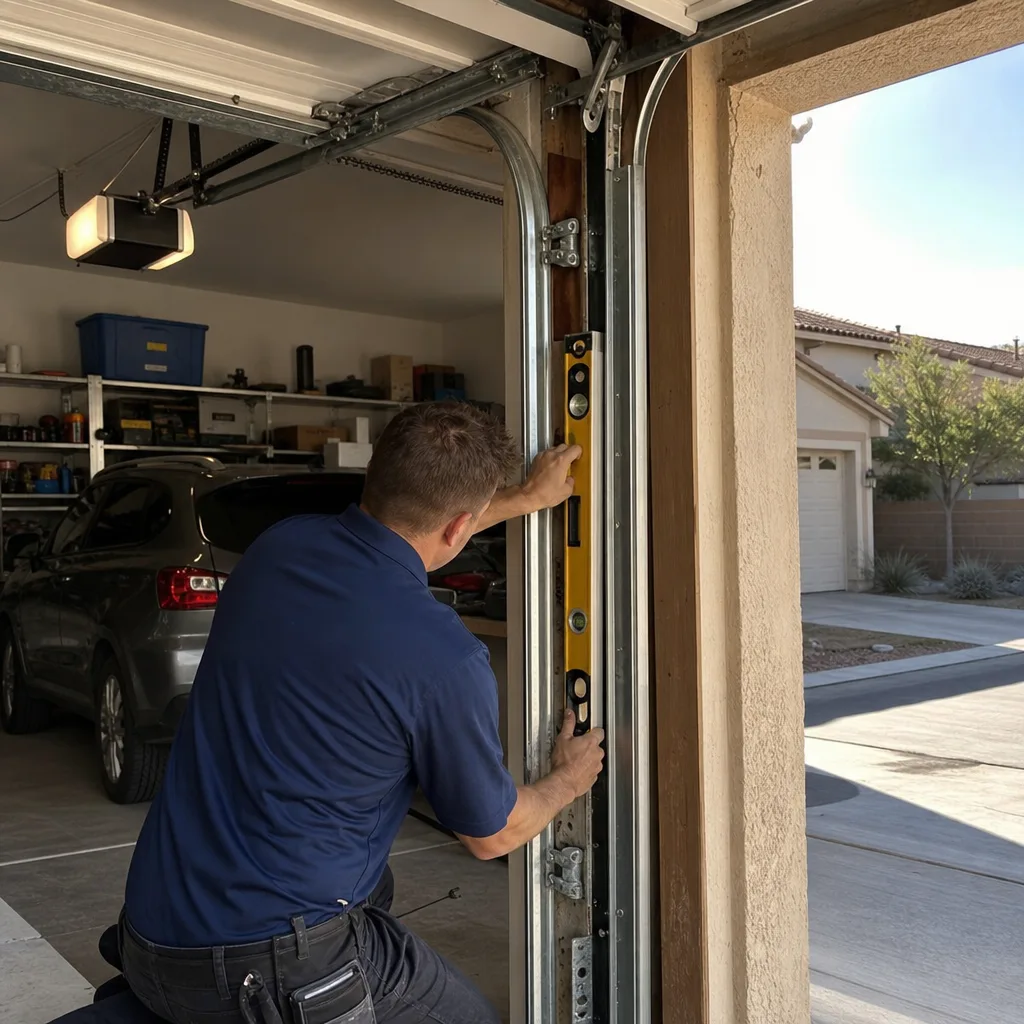
R-value measures how well the door resists heat transfer. An attached garage in Winchester’s climate zone (3B – warm, dry, mild winters) benefits from R-13 minimum on the door if the garage shares a wall with conditioned living space, which describes almost every attached garage in the valley.
Most builder-grade doors ship at R-6.3 to R-8. Upgrading to R-13 to R-18 costs roughly $300 to $700 more at the door, and the question is whether that spend pays for itself through reduced HVAC load. It usually does, over ten to fifteen years, because an uninsulated or lightly insulated door is the largest weak point in the thermal envelope between a conditioned room and a 115-degree summer afternoon.
The math is not abstract. A garage that stays cooler in July puts less heat load on the shared wall, which lightens the load on the air handler feeding the rooms behind it. If your garage runs hotter than the outside air by midday – a common complaint in Winchester – that’s the door doing its job badly.
Two things to know before upgrading:
- R-value is only as good as the seal. A high-R door with a bad bottom weather seal leaks air and heat no matter what the label says. Pair the upgrade with fresh weatherstripping and thresholds.
- Insulation is thermal, not soundproofing. Polyurethane foam cores do quiet a door more than polystyrene panels, but don’t buy for sound if thermal isn’t also a concern.
If the door is original to a mid-2000s build, the insulation upgrade is usually the highest-return single purchase on this list. If the door is already R-12 or better and sealing well, spend the money elsewhere.
Cycle Ratings: When 10,000 Cycles Isn’t Enough
Every residential garage door carries a cycle rating – the number of open-and-close cycles its springs are expected to survive. The industry baseline is 10,000 cycles. That’s roughly seven years of average use at four cycles a day.
Four cycles a day is not most households. A family with two cars, one driven by a teen, an Amazon delivery routine, and a workshop out back can easily cycle eight or ten times daily. At ten cycles a day, a 10,000-cycle spring set is done in under three years – and when torsion springs fail, they usually fail loudly and without warning.
This is where brands diverge. LiftMaster and Wayne Dalton both offer commercial-grade spring and hardware lines rated to 25,000 cycles or higher, which is roughly two and a half times the life. For a Winchester household in that high-use bracket – a two-driver home, a home business, kids coming and going – the cycle upgrade is the difference between replacing springs on a predictable schedule and replacing them because one gave out on a Tuesday morning.
Ask the manufacturer or installer two questions in writing:
- What is the cycle rating of the springs being installed?
- What is the wire diameter of those springs? (Spring life and wire gauge are inseparable – an installer can quote a “heavy-duty” spring with a thin wire that cycles out fast.)
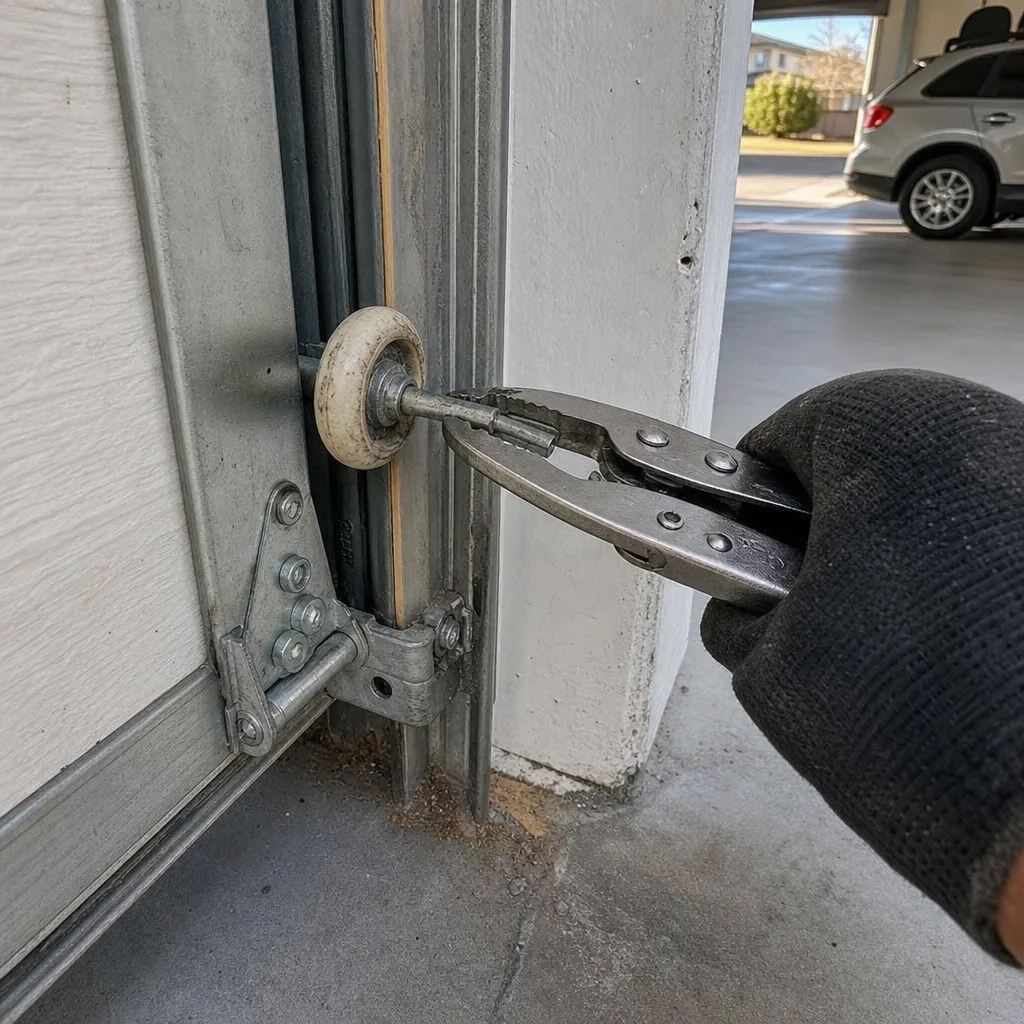
Springs are a high-tension component. Do not attempt to measure, adjust, or replace a torsion spring yourself – the stored energy is enough to cause severe injury, and this is exactly the kind of work a trained technician does with the door secured and the winding bars in place. If a spring has already failed, see our Garage Door Repair in Winchester page for how same-day repair works here.
Section Joint Design and Winchester’s Thermal Swing
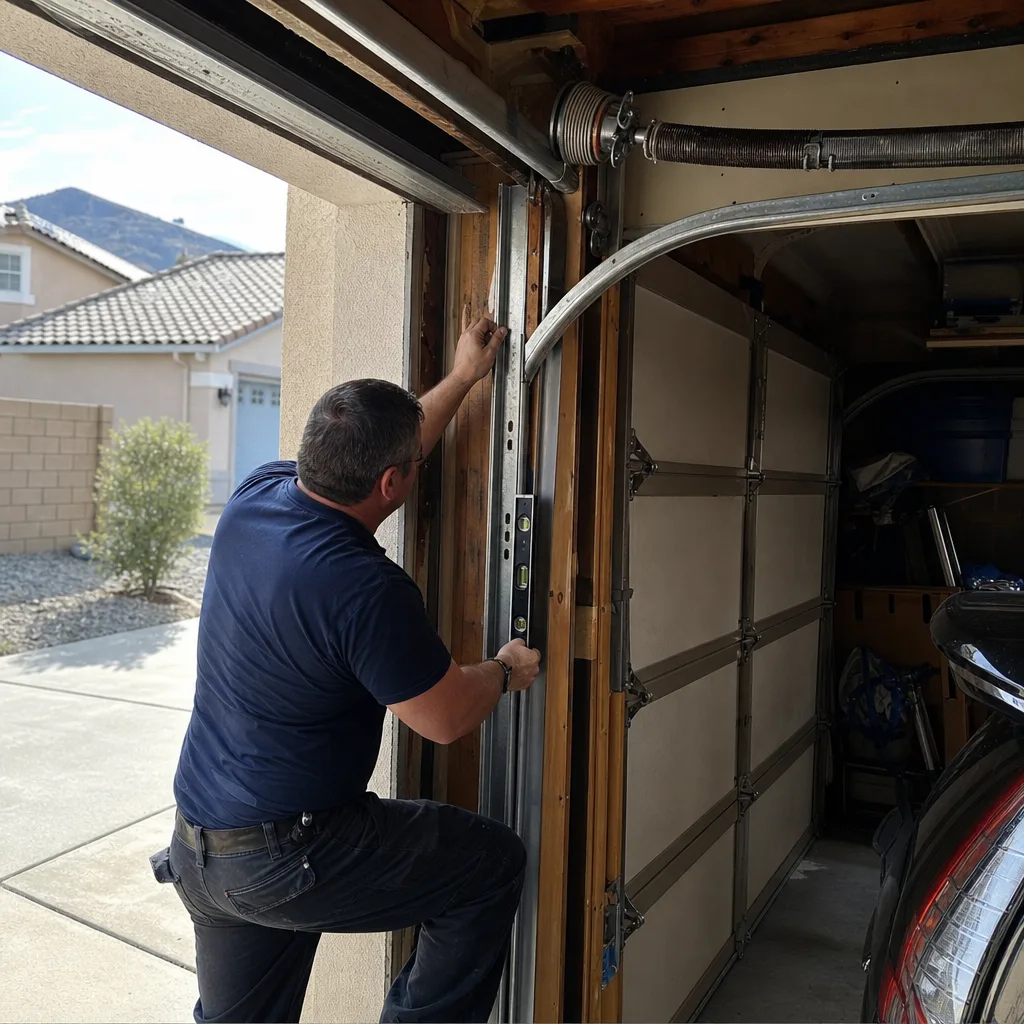
Garage doors are made of horizontal sections joined edge to edge. The design of that joint – how the sections interlock – determines whether the door seals tightly or gaps as temperatures move.
Tongue-and-groove joints overlap, with one section’s edge fitting into a channel on the next. They seal better through thermal expansion and contraction because the overlap absorbs the movement. Flush joints, common in lower-tier doors and builder-grade products, butt the sections edge to edge with a thin weather seal between them. They’re cheaper to make, and they’re the ones that open up a visible gap when Winchester’s afternoon highs swing forty degrees from a cold winter morning.
In our experience across the valley, the flush-joint section gap shows up most often on doors facing west and taking the full afternoon sun. The section facing the sun expands more than the shaded ones, the flush joint can’t absorb the difference, and the gap lets in dust, wind-driven rain, and the occasional insect. Tongue-and-groove handles that swing without complaint.
What to check when comparing doors:
- Joint type in the spec. Ask whether it’s tongue-and-groove or flush. A salesperson who doesn’t know the difference is not quoting you on construction.
- Section thickness. A 2-inch-thick section seals better than a 1 3/8-inch section, because the joint has more material to work with.
- Bottom seal and perimeter weatherstripping. The best joint in the world is undermined by a worn bottom seal. Replace both together.
Joint design also affects how the door sounds. A tight tongue-and-groove door with good weatherstripping is noticeably quieter in the room above the garage, and it holds up better in a windy exposure. Our Garage Door Opener Repair & Installation in Winchester page covers how opener hardware interacts with a heavier, better-sealed door.
Warranty Anatomy: What “Lifetime” Actually Covers
“Lifetime” on a warranty page is a term of art, not a promise. It means the manufacturer will honor a specific type of claim for as long as you own the door – and the exclusions usually decide whether your claim gets paid.
Warranties break into three tiers, and most brands sell all three:
- Surface finish warranty. Covers paint, finish, and rust-through. Usually the shortest tier and the one most often voided by coastal or high-UV environments.
- Structural integrity warranty. Covers the physical failure of the panel – delamination, cracking, section collapse. Longer than finish, and this is the tier that matters most in a hail and wind climate.
- Hardware warranty. Covers hinges, rollers, springs (sometimes), and opener parts. The most variable from brand to brand, and the one to read line by line.
The exclusions are the real test. High-UV environments like southern Nevada frequently fall under a finish-warranty exclusion or a reduced term, and a warranty that sounds like a lifetime panel guarantee can quietly exclude cosmetic fading or color change from sun exposure. There’s nothing dishonest about that – it’s disclosed in the terms – but it’s disclosed in a document most buyers never read. The brands that play it straight print the exclusion clearly and tell you what claim you can actually produce.
Read four things before you buy: what the warranty covers, for how long, under what conditions, and what documentation you need to file a claim. If a warranty can’t survive that test, it’s marketing copy.
How the Major Brands Stack Up on These Five Specs
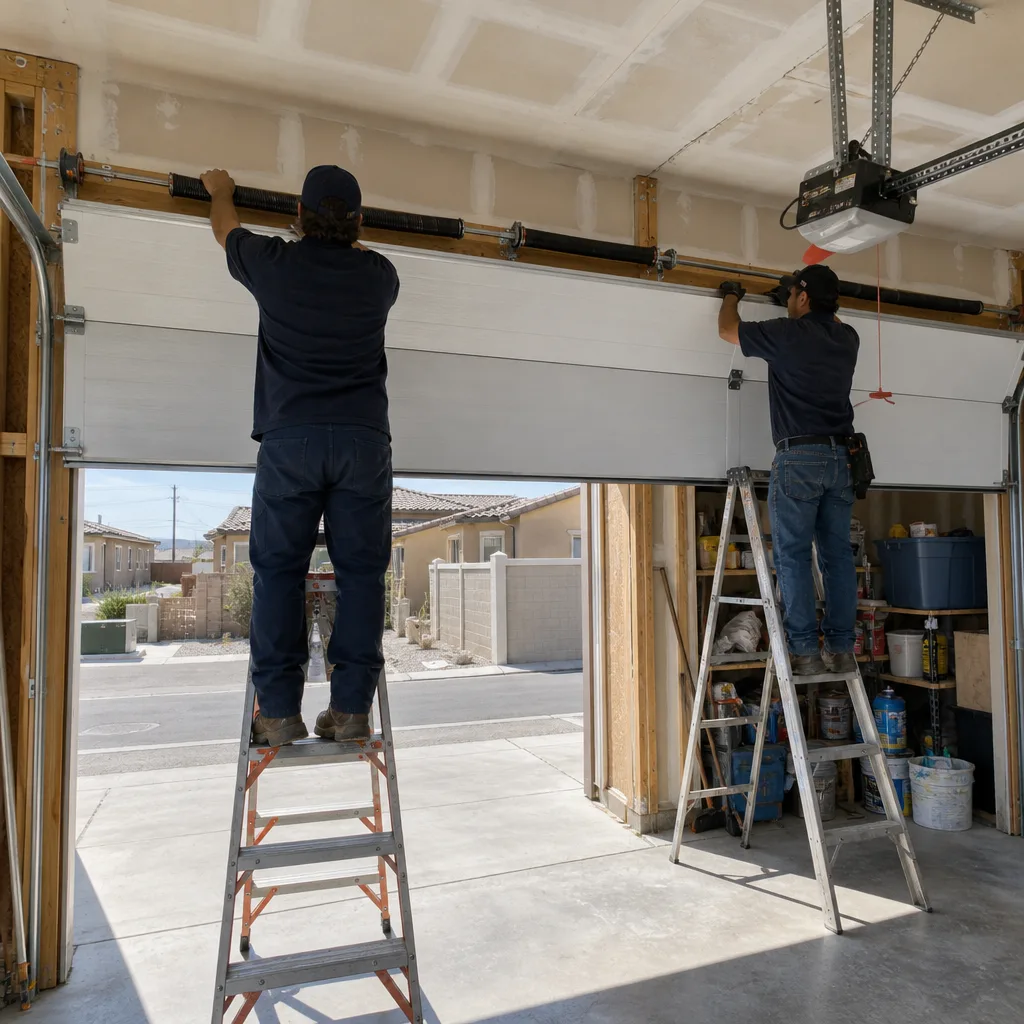
We service all the major brands – LiftMaster, Chamberlain, Genie, Clopay, Amarr, Wayne Dalton, Craftsman, and Raynor – and the honest answer is that no single brand wins on every spec. Here’s the map.
Clopay and Amarr build strong residential lines across the gauge and R-value range, with recognizable tiers: their entry-level doors are 25- and 27-gauge, and their mid and upper lines go to 24-gauge or heavier with polyurethane cores that hit R-13 to R-18. If you want a door defined by its spec sheet rather than its price tag, these are the names to shop by tier, not by brand.
LiftMaster is the opener side of the equation. Its residential openers are the standard for a reason – reliable logic boards, quiet belt-drive options, and smart-home integration that actually works. LiftMaster’s commercial-grade hardware also shows up in high-cycle residential packages rated above 10,000 cycles, which matters for the high-use household.
Chamberlain and Genie cover the middle and budget tier of openers well. Chamberlain’s belt-drive units are quiet and dependable; Genie’s screw-drive and belt-drive openers are common in mid-market homes. Both are serviceable and well-supported for parts.
Wayne Dalton occupies the value tier on doors and also sells commercial-grade cycle hardware for higher-use applications. Its residential doors are generally 25- or 27-gauge at the entry level – thinner, and worth weighing against the climate as noted above.
Raynor rounds out the field with solid residential construction and a good mid-tier offering. Craftsman, meanwhile, is mostly found under Genie and Chamberlain hardware and is a common legacy door in Winchester’s older subdivisions.
The takeaway: brand names are shorthand for a spec range, not a verdict. Shop by the five numbers, and the brand resolves itself.
Common Mistakes to Avoid
- Buying “heavy-gauge” without a number. Heavy-gauge is a marketing phrase. If the quote doesn’t say 24-gauge or better in writing, you don’t know what you’re getting.
- Upgrading insulation on a door that leaks air. An R-18 door with a worn bottom seal in a Winchester summer afternoon is a hot box with a nice label. Do the weatherstripping.
- Assuming 10,000 cycles fits your household. Count how many times a day you open and close the door. A busy family in the 89052 area can triple that number in a year.
- Skimping on joint design to save a few hundred dollars. Flush joints in a west-facing door in Winchester’s thermal swing will gap. Repairing and resealing is not free.
- Reading the warranty term, not the exclusions. “Lifetime” often excludes the sun. Read the exclusion section before you buy.
- Letting a quote stand without a written spec sheet. An invoice line that says “insulated steel door” tells you nothing. Get the gauge, the R-value, the cycle rating, the joint type, and the warranty in writing.
- Trusting a verbal “we’ll take care of it” on warranty claims. The claim you can produce the paperwork for is the claim that gets paid. Our Servo Garage Doors Winchester home page explains how our documented record works.
See the difference
BeforeAfter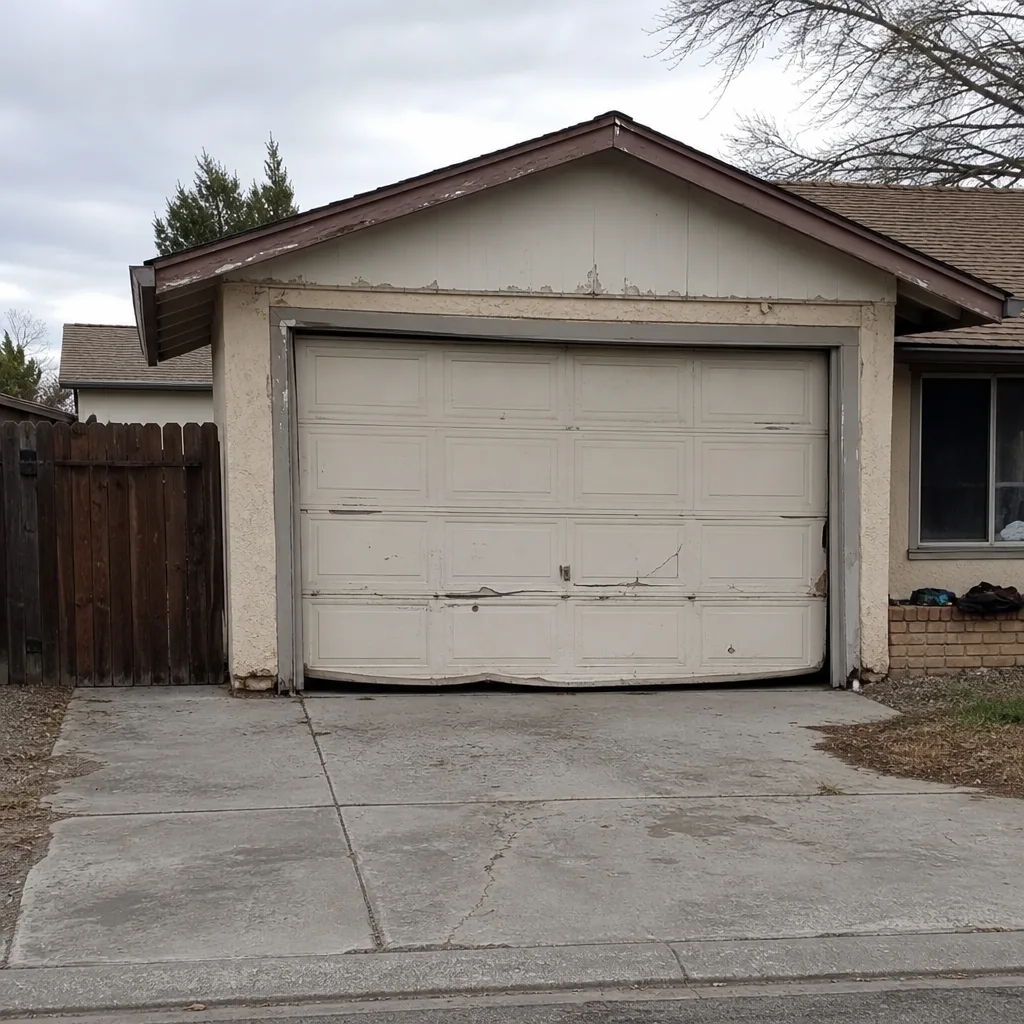 Before
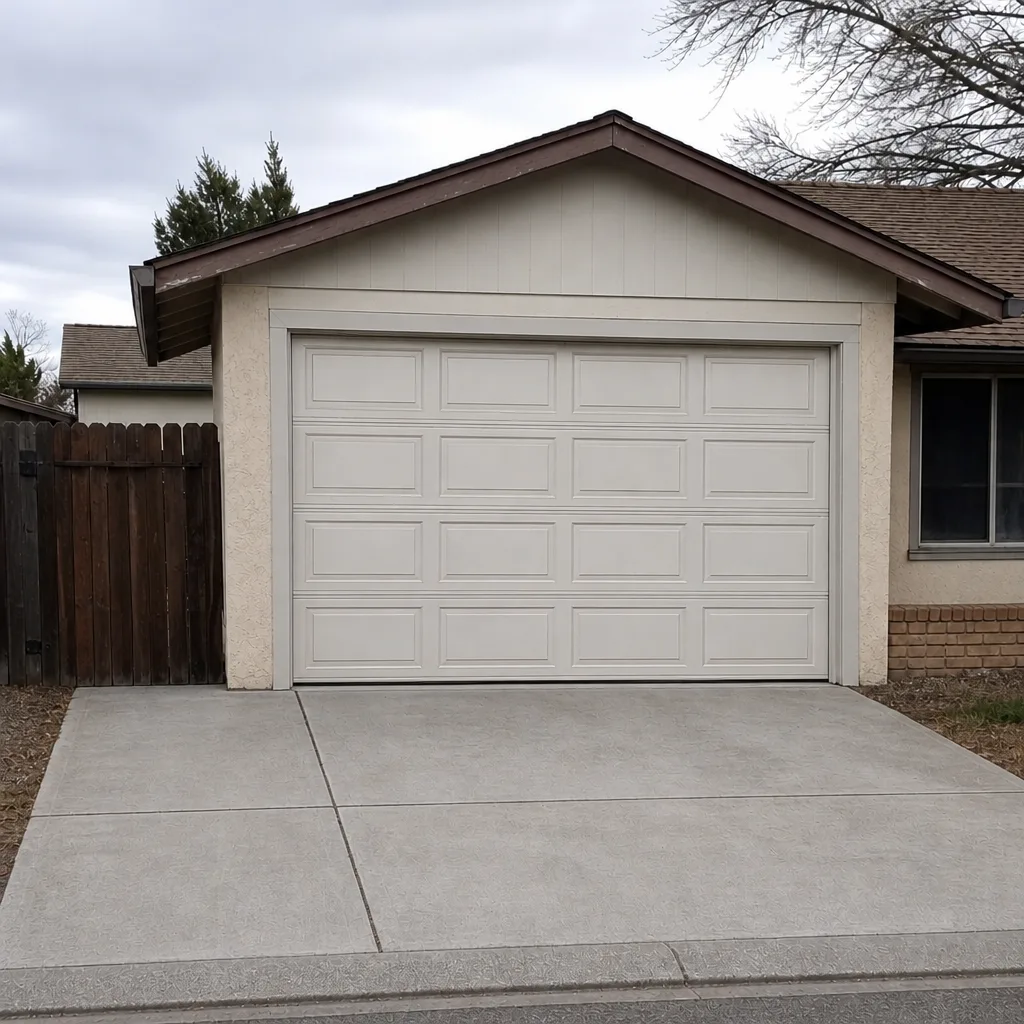 After
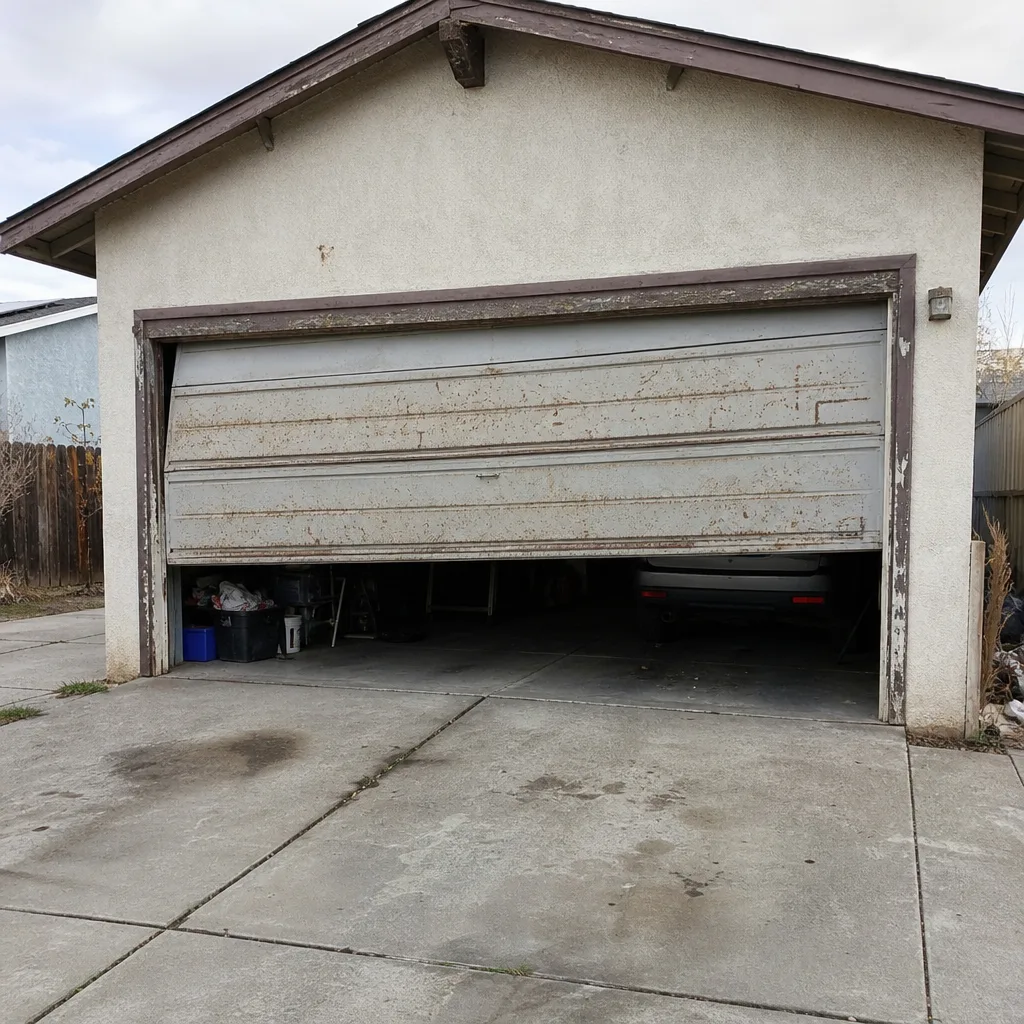 Before
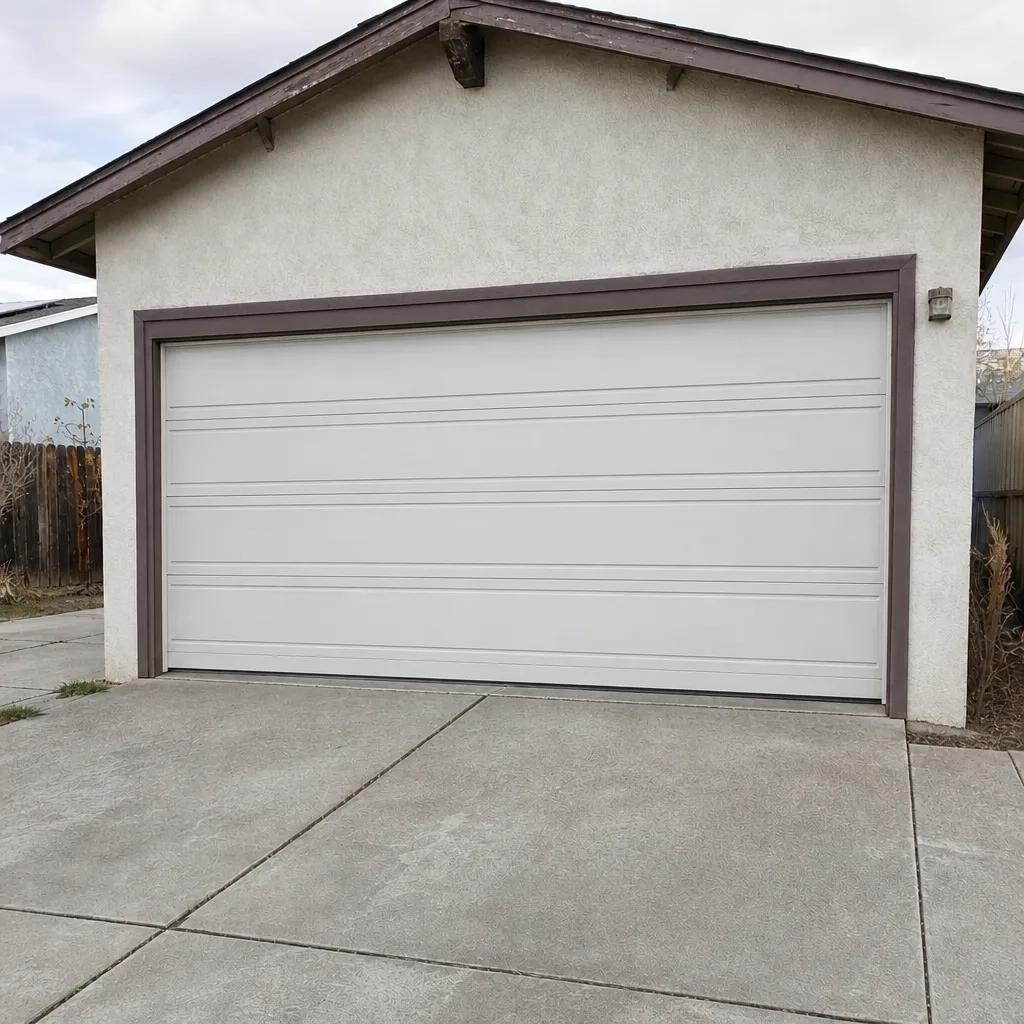 After
When to Call a Professional
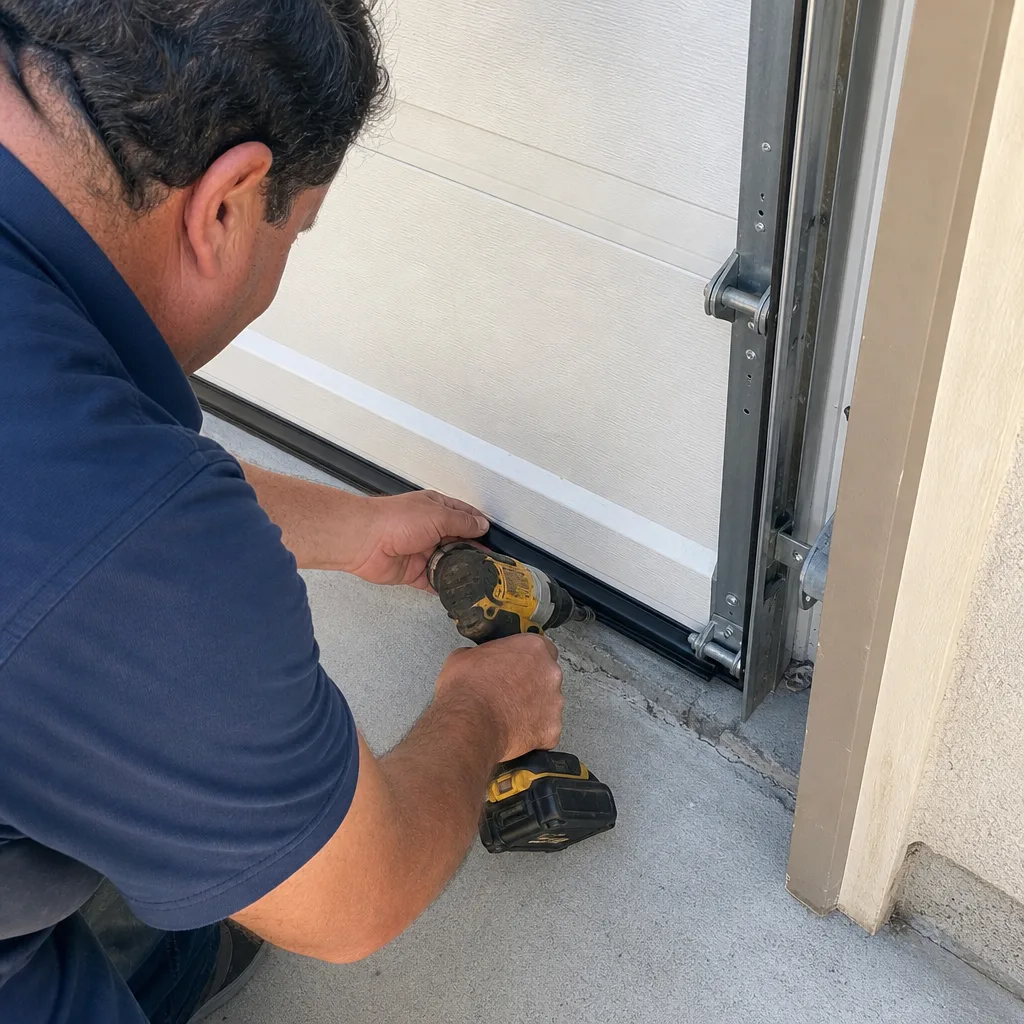
A few situations call for a professional rather than a comparison chart. If a torsion spring has failed, the door won’t balance or lift – leave it alone and call, because springs are under high tension and the components have to be removed and reinstalled with the door secured. If the door is binding, the panels are out of track, or a section has cracked from hail, that’s a structural diagnosis, not a spec shopping exercise. If you’re evaluating a replacement and want the five specs checked in writing against a written price, before any work starts, we can help.
Servo Garage Doors Winchester offers free estimates in Winchester and a free second opinion on any written estimate another company has already given you – bring the paperwork. Call (855) 517-0284.
Frequently Asked Questions
There’s no single best brand – the best door is the one that hits the five measurable specs for your home: 24-gauge or thicker steel, R-13 or better for an attached garage in this climate zone, 25,000 cycles if your household cycles eight or more times a day, tongue-and-groove joints, and a warranty whose exclusions you’ve read. Clopay and Amarr build strong residential lines across that range, and LiftMaster is the standard on the opener side. Call (855) 517-0284 for a free estimate – written, upfront, before any work starts.
Yes, in Winchester. A 27-gauge door is common in builder-grade and budget lines, and it dents under hail and spring wind where 24-gauge absorbs the hit. Once a panel dents, the door is out of balance and the opener and springs wear faster – so the gauge upgrade protects the parts you don’t see. It’s not a small cost difference, but it’s a genuine one. Call us for a free estimate and we’ll quote both in writing.
R-13 minimum if the garage shares a wall with conditioned living space, which describes most attached garages in Winchester. Builder doors typically ship around R-6.3 to R-8, so an upgrade to R-13 or R-18 usually pays back over ten to fifteen years in reduced HVAC load. It only pencils out if the door seals properly, so pair the upgrade with new weatherstripping. Call (855) 517-0284 for a free measure and a written price.
Yes. A technician can confirm gauge from the door’s model and construction, and photograph the failed component or the section measurement before quoting anything. That’s Clause 4 of our standard – the customer sees the part before anyone quotes a replacement. Bring any written estimate you’ve got from another company and we’ll give you a free second opinion. Call (855) 517-0284.
It usually covers a specific tier for as long as you own the door – surface finish, structural integrity, or hardware – and the exclusions govern what actually gets paid. High-UV environments like southern Nevada often fall under a finish-warranty exclusion or a reduced term, so read what the warranty explicitly excludes before you buy. The brands worth buying disclose exclusions clearly. Call (855) 517-0284 if you want help reading a warranty on a door you’re considering.
Both. We repair doors and springs, install openers, and install new doors – LiftMaster, Chamberlain, Genie, Clopay, Amarr, Wayne Dalton, Craftsman, and Raynor. Every job gets a flat written price and written scope before work starts, and a documented photo record when we leave. Our technicians have up to 11 years of experience, and we’re independently owned and operated under The Haven Standard. Call (855) 517-0284.
The Bottom Line
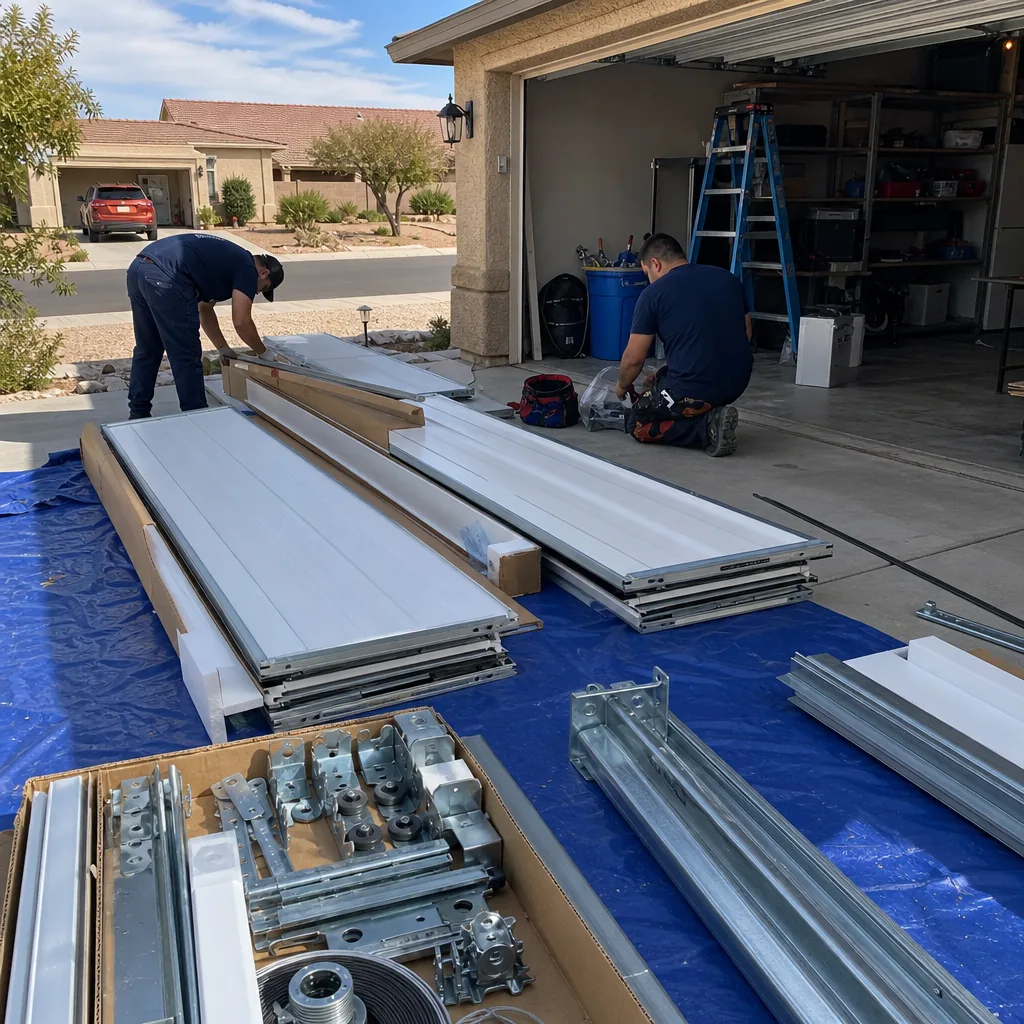
A garage door brand comparison is only useful if it measures something. Ask for five numbers in writing – gauge, R-value, cycle rating, joint design, and warranty exclusions – and the salesperson’s recommendation becomes a spec sheet you can defend. In Winchester, that means 24-gauge steel for hail and wind, R-13 for a shared wall, 25,000 cycles for a busy household, tongue-and-groove joints for the thermal swing, and a warranty that survives a read of the exclusions. Shop by tier, not by logo, and the brand resolves itself. Call (855) 517-0284 for a free estimate, written upfront, before any work starts.
Written by the team at Servo Garage Doors Winchester.