
Last updated November 18, 2026
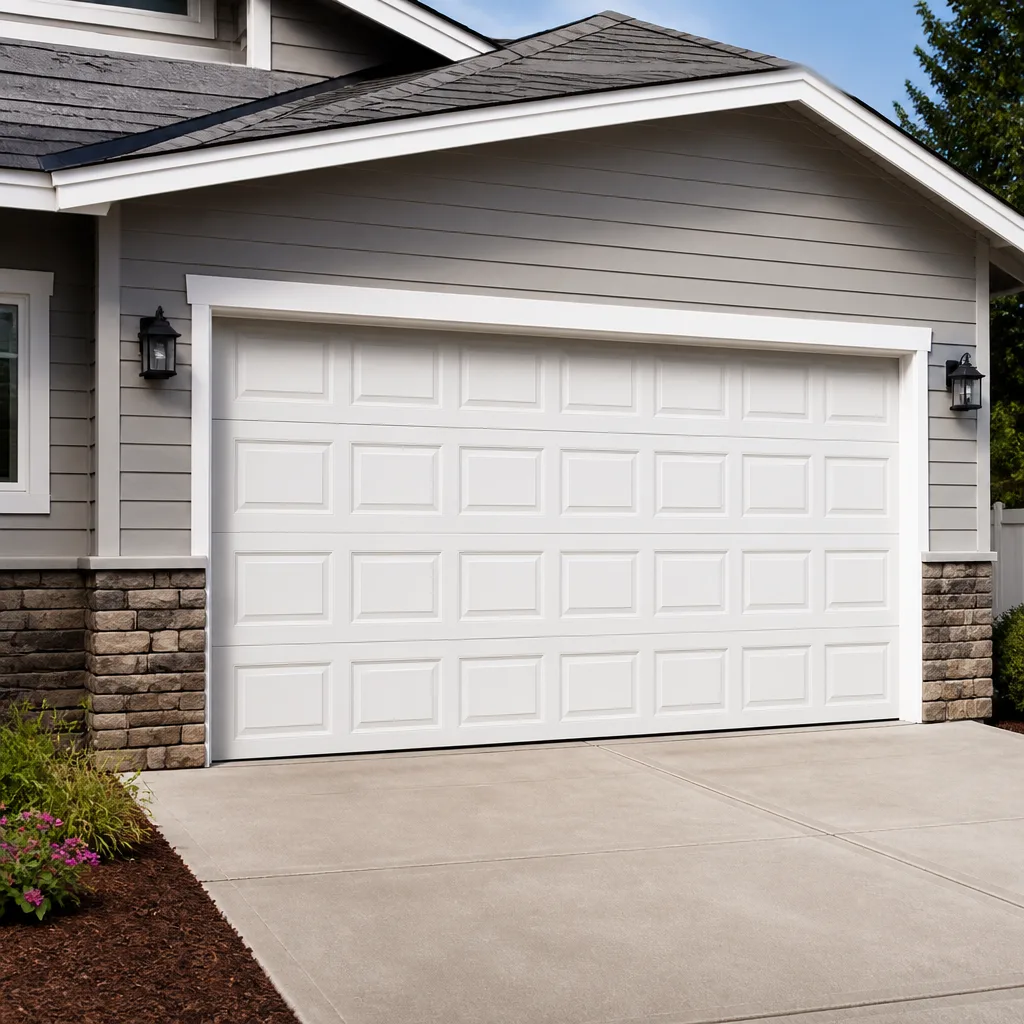 Raised-panel steel
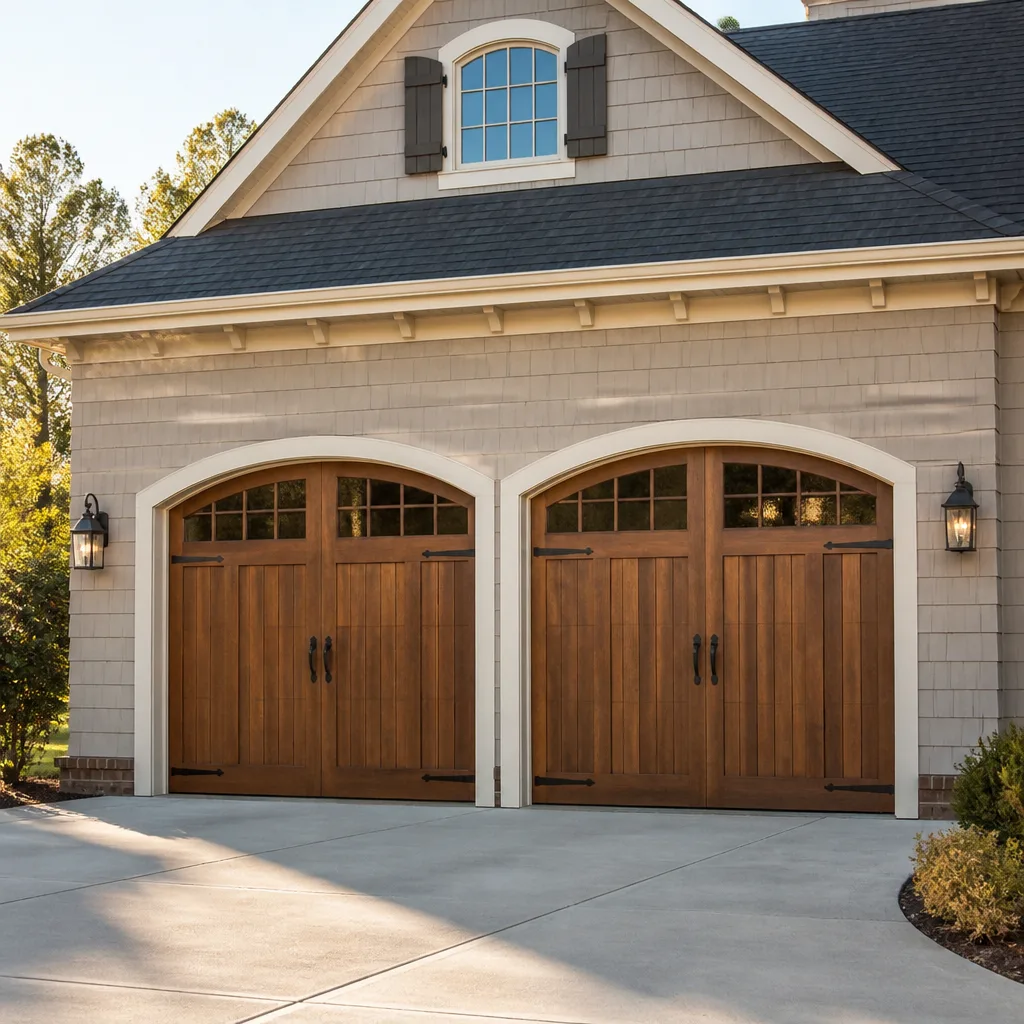 Carriage house
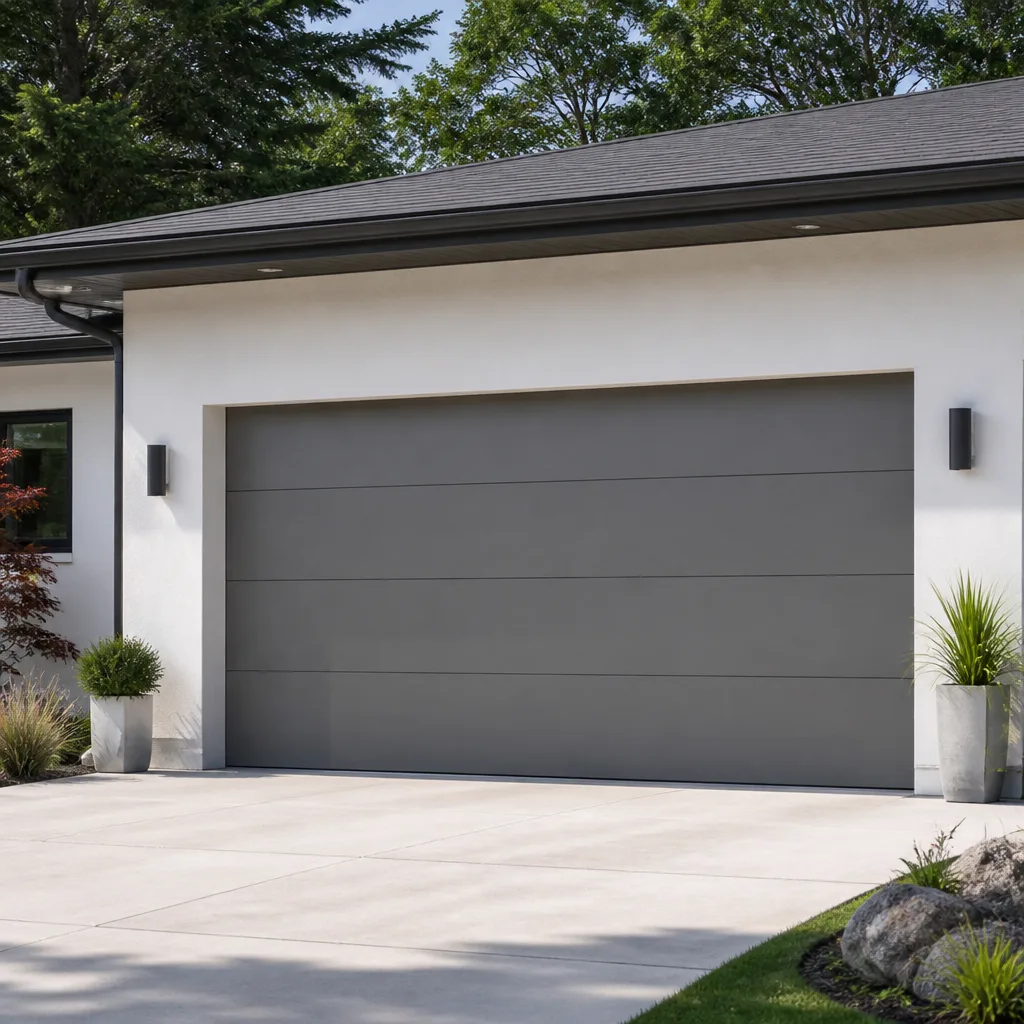 Modern flush
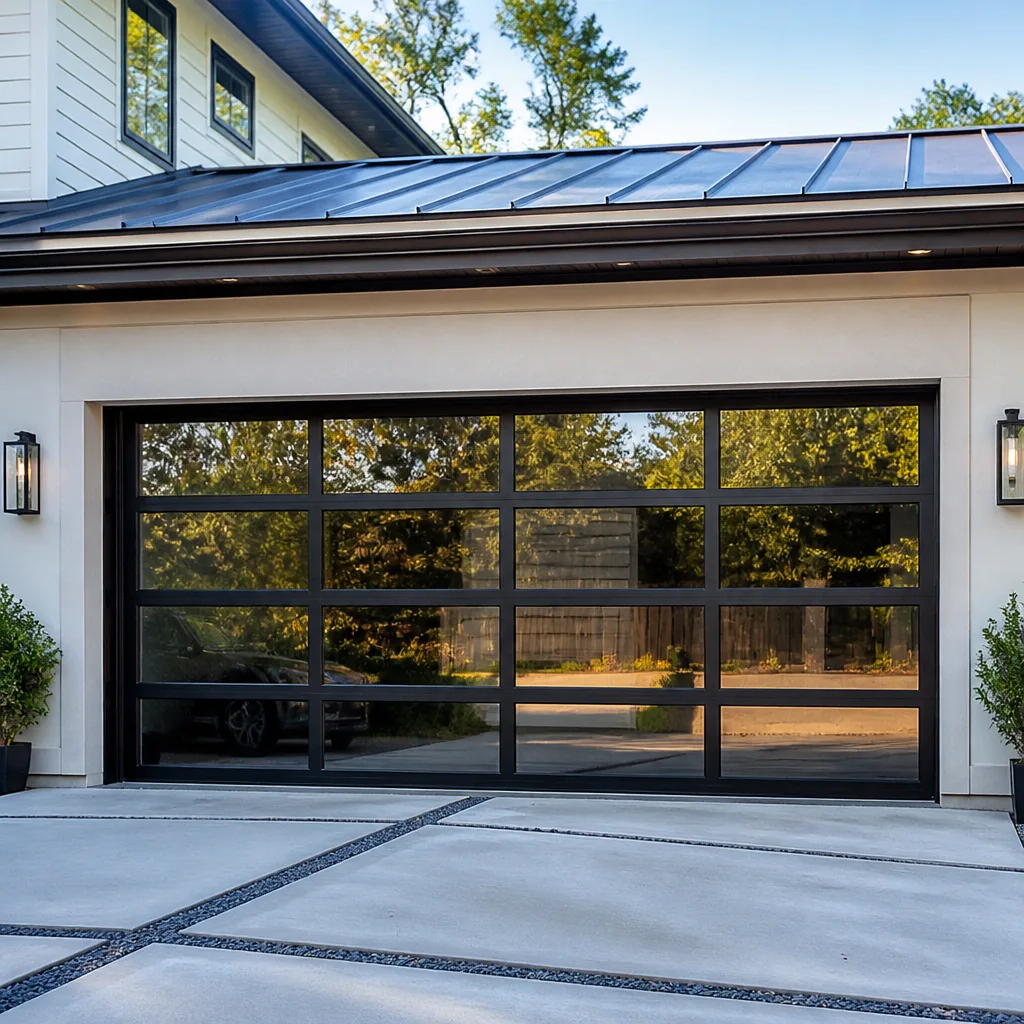 Full-view glass
 LiftMaster openers
 Chamberlain openers
Full 25-point door and opener safety check with every visit - springs, cables, rollers, tracks, and your LiftMaster or Chamberlain opener included
You get a price before we start. It does not change when the pro arrives.
Get your free estimateGarage Door Repair Warning Signs Every Homeowner Should Know
Here’s what we’ve learned from looking inside thousands of garage doors across Winchester: the dramatic, sudden failures almost never happen without a paper trail. A torsion spring that’s two to three weeks from letting go usually leaves a fine rust line at the coil gap and sits a little crooked when the door is down. A cable that’s about to fail will start fraying at the drum weeks before it strands you. None of these are loud. All of them are readable if you know where to look. This guide catalogs the warning signs by what you see, what you hear, and what a 30-second test tells you, so you can turn a scheduled repair into a scheduled repair.
Quick Answer
The most reliable garage door repair warning signs are a visible rust band or gap at the spring coil, frayed cable strands at the drum, the door hesitating at the top of travel, a door that reverses without anything in its path, and grinding that comes from only one side. Any of these means a component is already failing, not about to. Caught two to eight weeks early, the same part is typically a scheduled repair. Caught the day it snaps, it’s an emergency call.
Styles & brands we work with
- Raised-panel steel
- Carriage house
- Modern flush
- Full-view glass
- LiftMaster openers
- Chamberlain openers
Table of Contents
- Visual warning signs, by component
- What the door is telling you when it hesitates, reverses, or grinds
- The 30-second monthly balance test
- Warning signs that allow continued use vs. signs that don’t
- How Winchester’s temperature swing drives failures
- Why we won’t hand you a spring-replacement checklist
- Common mistakes to avoid
- Frequently asked questions
 Before
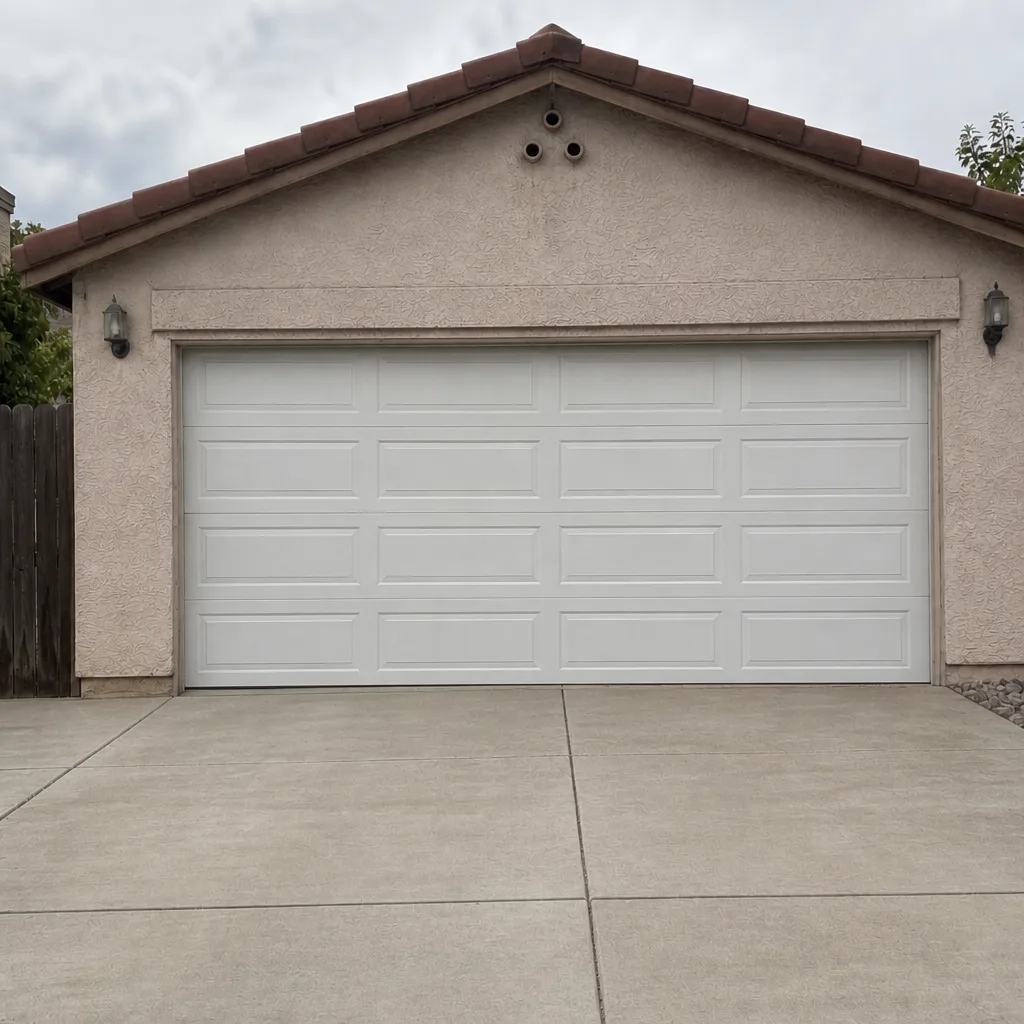 After
Visual Warning Signs, by Component
You don’t need to disassemble anything to read these. A flashlight and a slow walk along the door is enough.
Torsion spring (the coiled spring above the door). Look at the coil gap, the space between the wound coils. A healthy spring shows even spacing. A failing one shows a rust band or a fine line of powdery corrosion at that gap, and sometimes a slight lift at one end of the coil. That rust means the wire is thinning at its most stressed point. It’s the single most predictive sign we see.
Cables. Follow each cable down to the drum it winds onto at the corner of the door. At the attachment point, healthy cable looks like a solid braid. A failing cable shows broken strands poking out, a flattened spot, or a wrap that’s riding over itself instead of sitting in its groove. Any of those warrants a call within days.
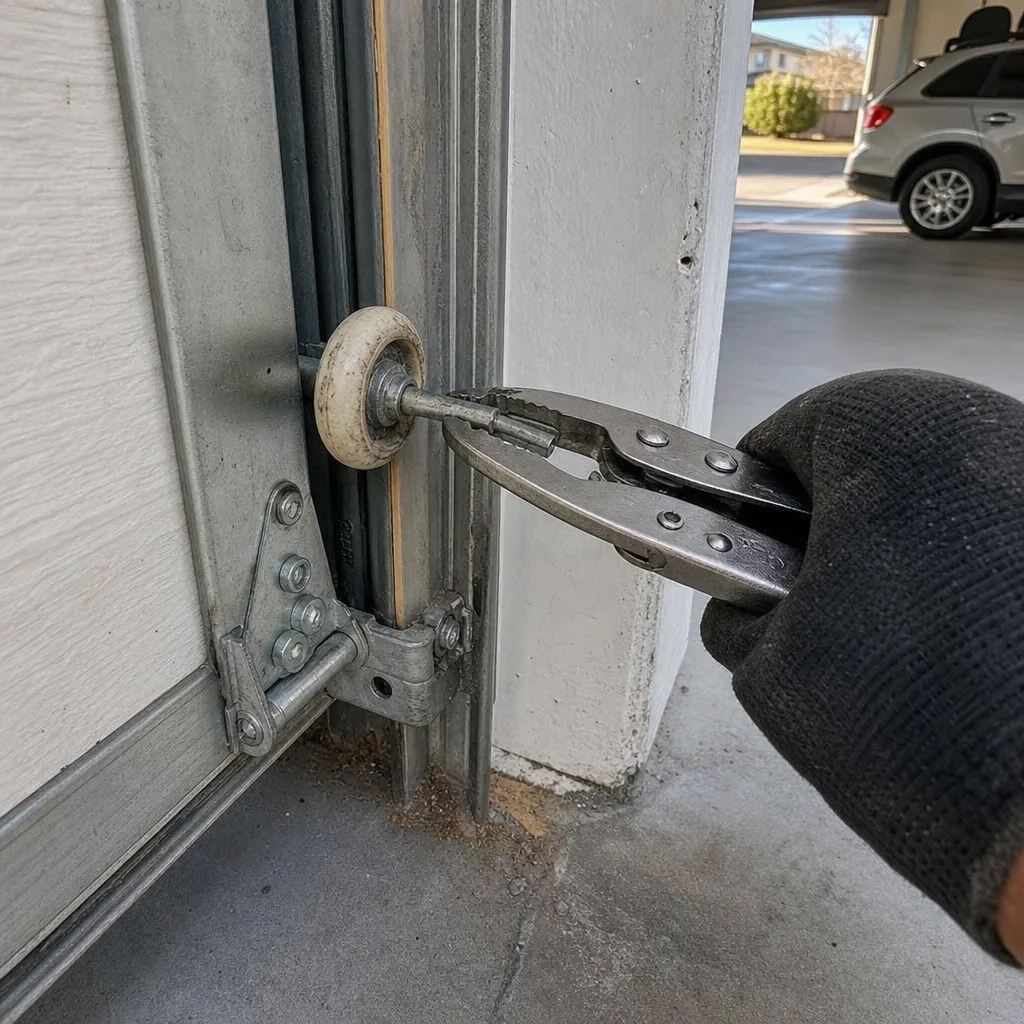
Rollers. Nylon rollers are visible from the side with the door closed. A worn roller develops a flat spot that you’ll see as a small flattened facet where it should be round. Flat-spotted rollers are a common source of wobble and noise. Steel rollers show a different wear pattern – scoring and metal dust on the track.
Bottom seal. Check the four corners where the rubber seal meets the floor. Compression failure shows up as a gap you can see daylight through, or a seal that’s cracked and no longer touching the threshold at the corners. A failed seal lets water and cold air in, and in a metro climate like Winchester’s summer heat, it’s also the first place a door loses its seal against weather.
- Rust banding on spring coils – wire thinning at the stress point
- Frayed or flattened cable at the drum attachment – cable head or cable failure ahead
- Flat spots on nylon rollers – wobble, noise, uneven track wear
- Bottom seal gap at corners – water and air intrusion, threshold wear
What the Door Is Telling You When It Hesitates, Reverses, or Grinds
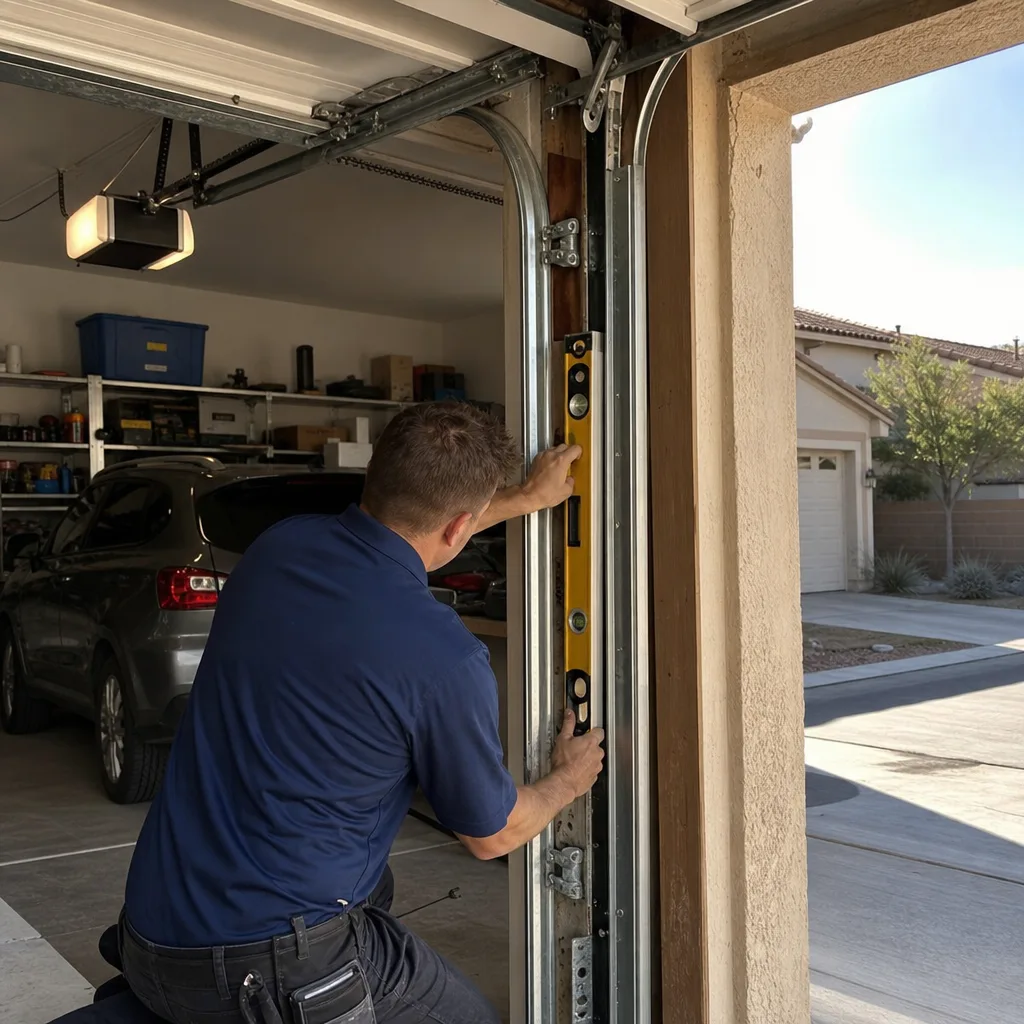
Sound and motion are diagnostic. Each of these carries a specific mechanical meaning, and they aren’t interchangeable.
The door hesitates at the top of travel. It climbs normally, then stalls briefly just before reaching the fully open position. On a door with extension springs (the long springs that run alongside the horizontal track), that hesitation usually points to a worn spring that’s lost some of its lift. On a door with a newer opener, it can also mean the up-limit switch is set short – the opener thinks the door has arrived before it actually has. Either way, it’s a service call, not an emergency.
The door reverses unexpectedly. If the door comes down and then retreats without anything under it, two things are usually responsible: a misaligned safety sensor at the floor, or a spring that’s lost tension and can’t hold the door’s weight through the full travel. Sensor misalignment is common and easy to check – look for an LED that’s off or blinking on either sensor eye. A tension loss is not something to test by hand.
Grinding from only the left or only the right side. A single-sided grind almost always traces to a cable issue on that side, or a roller that has seized in its track on that side. When only one side is dragging, the door is being pulled unevenly, and that unevenness puts extra stress on the spring. Left-right asymmetry is one of the fastest escalating signs on this list.
Pops, bangs, or a knocking sound near the opener. On a LiftMaster or Chamberlain opener, that’s often the trolley carriage or a loosening chain. On an older Genie, it can be the drive gear. These are inexpensive fixes when they’re caught early and more involved when they aren’t.
The 30-Second Monthly Balance Test
This is the one check worth doing on the first of every month. It tells you directly whether your springs are holding tension, which is the costliest component to replace.
- Close the door fully and disconnect the opener. On most openers, pull the red release handle hanging from the trolley – that’s the carriage that rides the rail.
- Raise the door by hand to about waist height. Stop there.
- Release the door. Do not force it. Just let go.
- Watch what it does.
If it stays put or settles only slightly, your springs are balanced and doing their job. If it drops slowly or falls on its own, the springs have lost tension and you should schedule service. If it’s very hard to lift, the springs are over-tensioned or a cable is binding – also a service call.
Reconnect the opener by pulling the door up to the trolley and clicking the release arm back in place. Do this test with the door closed first and the disconnection step done exactly as described. Never release a door that’s mid-travel with the opener attached.
If you’d rather not run the test yourself, that’s a reasonable call. Our technicians have up to 11 years of experience and will do it in a few minutes on any garage door repair in Winchester visit.
Warning Signs That Allow Continued Use vs. Signs That Don’t
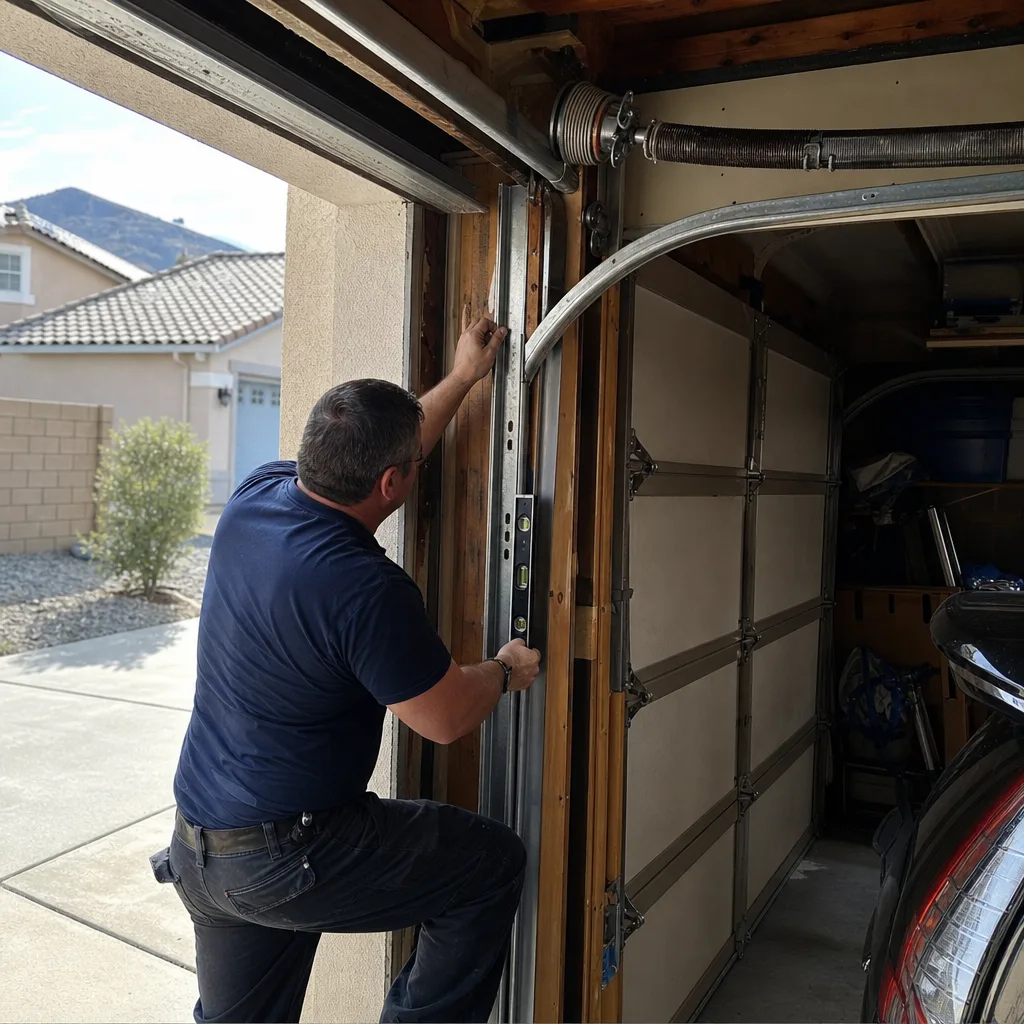
Not every warning sign is a stop sign. The distinction matters because treating a slow seal failure as an emergency is expensive, and treating a frayed cable as a slow seal failure is dangerous. Here’s how we sort it on the phone.
Fine to keep using for now (schedule service within 2-4 weeks):
- Compression failure at one corner of the bottom seal
- A single flat-spotted nylon roller
- Mild noise that hasn’t gotten worse over a week
- An opener LED or sensor that’s occasionally flickering – check the alignment first
Warrants same-week service:
- A rust band at the spring coil gap that wasn’t there last month
- Frayed strands at the cable-drum attachment
- The door hesitating at the top of travel, every time, not just sometimes
- The balance test showing drop
Stop using the door and call today:
- Any grinding from only one side that’s getting worse
- A door that reverses unexpectedly with nothing in its path, after you’ve confirmed the sensors are aligned
- Any visible separation at the cable end
If you’re not sure which category you’re in, that’s exactly the moment to call. On a garage door opener repair and installation in Winchester call, we can usually sort a warning sign into one of these three buckets in a minute or two. We answer the phone live, 24 hours a day, and you’ll get a text with the technician’s name and an on-the-way notification – not a callback window.
How Winchester’s Temperature Swing Drives Failures
Winchester sits in a climate that goes from roughly 20°F in deep winter to over 100°F in midsummer. That range is what we plan around. Springs and cables expand and contract with it, and the failure modes cluster into two seasons.
Late winter and early spring. After a run of cold nights, we get the most spring failures of the year. Cold makes the steel in the torsion spring brittle, and the hundreds of cycles it ran through the winter have already worn it. When a Winchester spring finally goes, it tends to go in February or March. We see the warning signs – a fine rust line, a slightly asymmetrical park – most often in late January and February, which is when we recommend a visual check.
Late summer and early fall. Heat is hard on seals, rollers, and lubricant. Rubber bottom seals dry out and crack, nylon rollers flat-spot, and hinges start to seize. That’s also when the balance test tends to expose a spring that lost tension during the summer. We recommend a balance check in mid-September and again in mid-February.
Two other Winchester-specific things worth knowing. In older homes around the historic downtown core, a garage door may be on an original steel track that’s more prone to misalignment than newer aluminum systems. In newer builds and remodels, doors are more likely to be running on modern opener systems from LiftMaster or Chamberlain, where sensor alignment and logic-board faults are the more common failure mode. And if you’re bringing a written estimate from another company, our Servo Garage Doors Winchester home is the place to ask for the free second opinion – no coupon needed.
Why We Won’t Hand You a Spring-Replacement Checklist
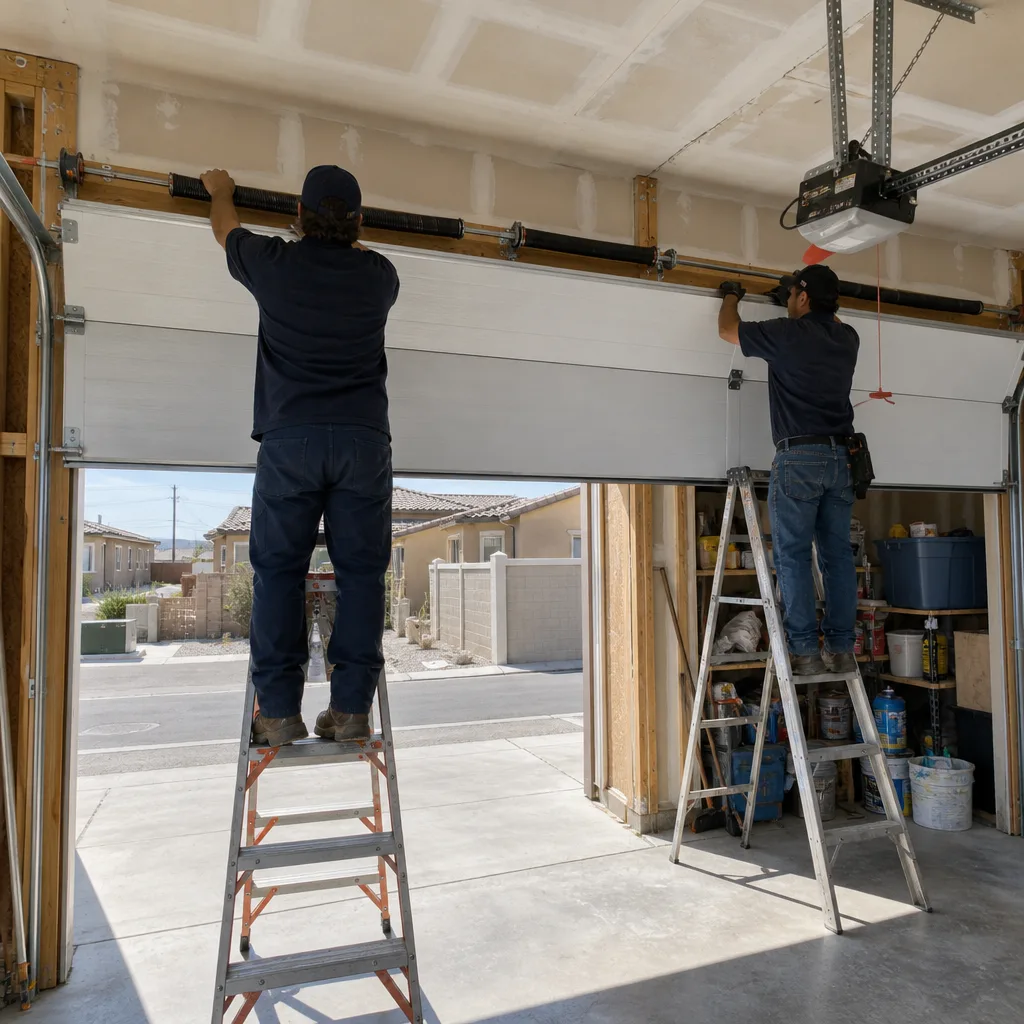
Torsion and extension springs are under enormous stored tension. A torsion spring on a typical residential door is wound with enough energy to cause serious injury if it releases while you’re near it, and the cables that hold it are under the same load. We don’t publish step-by-step instructions for releasing, winding, or replacing either, and we’d rather lose a page view than see someone hurt in their own garage.
What you can safely do: read the visual signs, run the balance test as written, check your sensors, and look for fraying at the drum. What you shouldn’t do: wind or unwind a torsion spring, loosen a cable drum, or try to replace a spring without a winding bar and the training to use it. Those are jobs for a trained technician. The local pro we connect you with is state-licensed and insured as their state requires, and every job arrives with a written price and written scope before any work starts.
Common Mistakes to Avoid
- Replacing a door when a spring is the problem. A door that’s hard to lift or noisy is very often a spring-and-roller job, not a door job. Replacing the door first is the most expensive way to fix a spring.
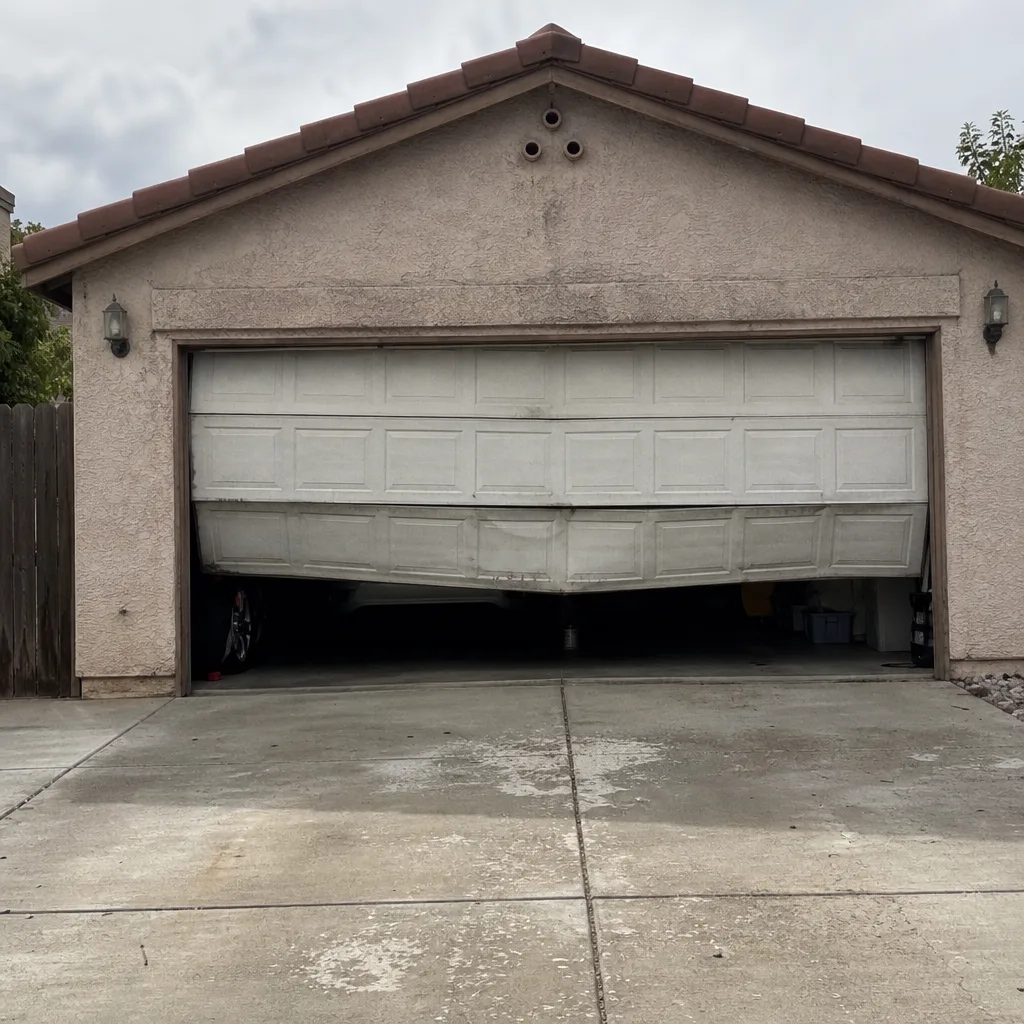
- Ignoring a single-sided grind for “just a little while.” In Winchester we see this turn from a cable issue into a bent track and a cracked panel within a few weeks. The longer it runs, the more of the door you replace.
- Assuming an opener that reverses is broken. About half the time we’re called out for a “bad opener,” the sensor eyes are just misaligned or dirty. Check that first before authorizing any replacement.
- Lubricating the tracks. Track lubricant attracts grit and can throw rollers out of alignment. Lubricate the rollers and hinges, not the tracks.
- Buying a new door for a seasonal noise complaint. A seasonal creak after a cold snap is often a hinge or roller lubricant issue, not a sign the door is failing. A balance test and a visual check settle it in minutes.
- Testing a door you think has a broken spring. If the door feels heavy, or the balance test shows drop, stop. Lifting a door supported by a failed spring pulls the cable and the panel with it.
- Trusting a quote without a photo. This is the one we care about most. A quote without a photograph of the failed part is a guess, not an estimate. If you have a written estimate from another company, bring it – we’ll take a free second look. If you don’t have one yet, our garage door installation in Winchester page explains what a written scope should contain.
See the difference
BeforeAfter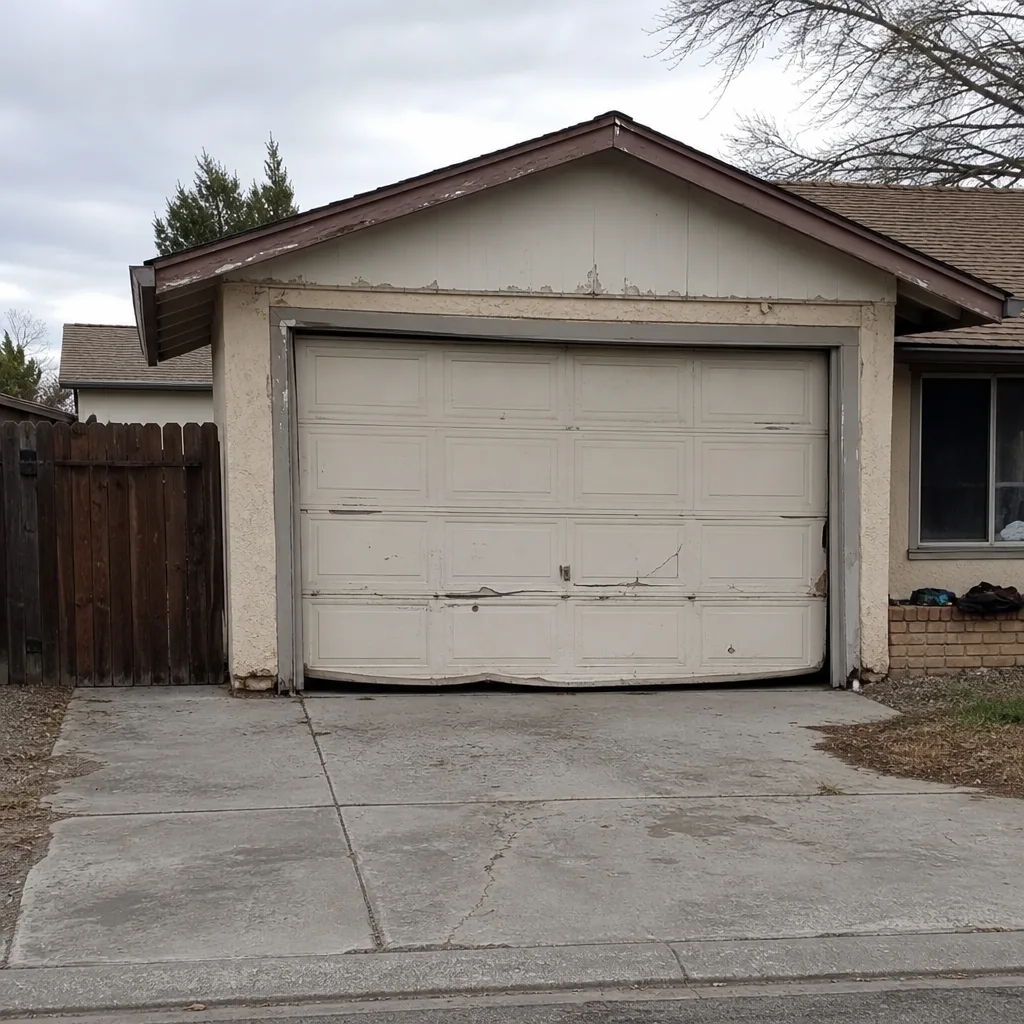 Before
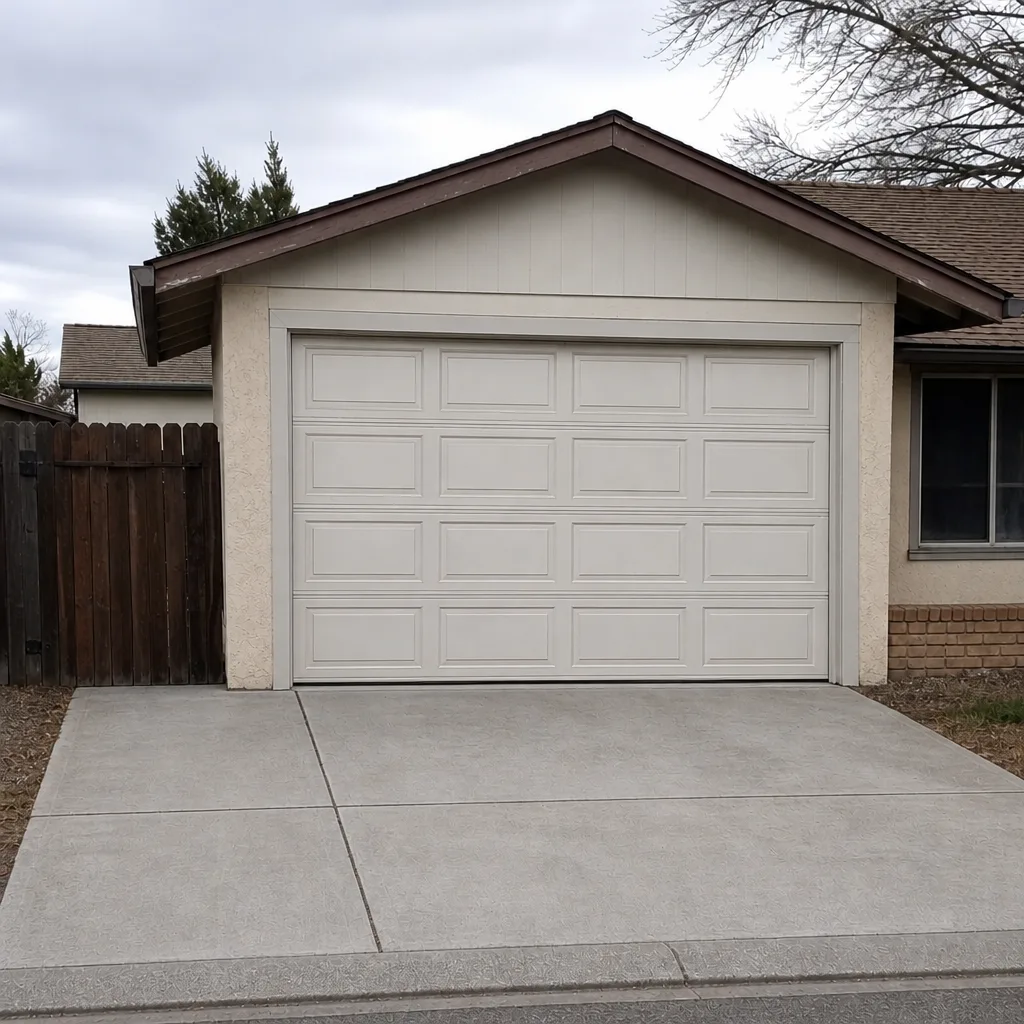 After
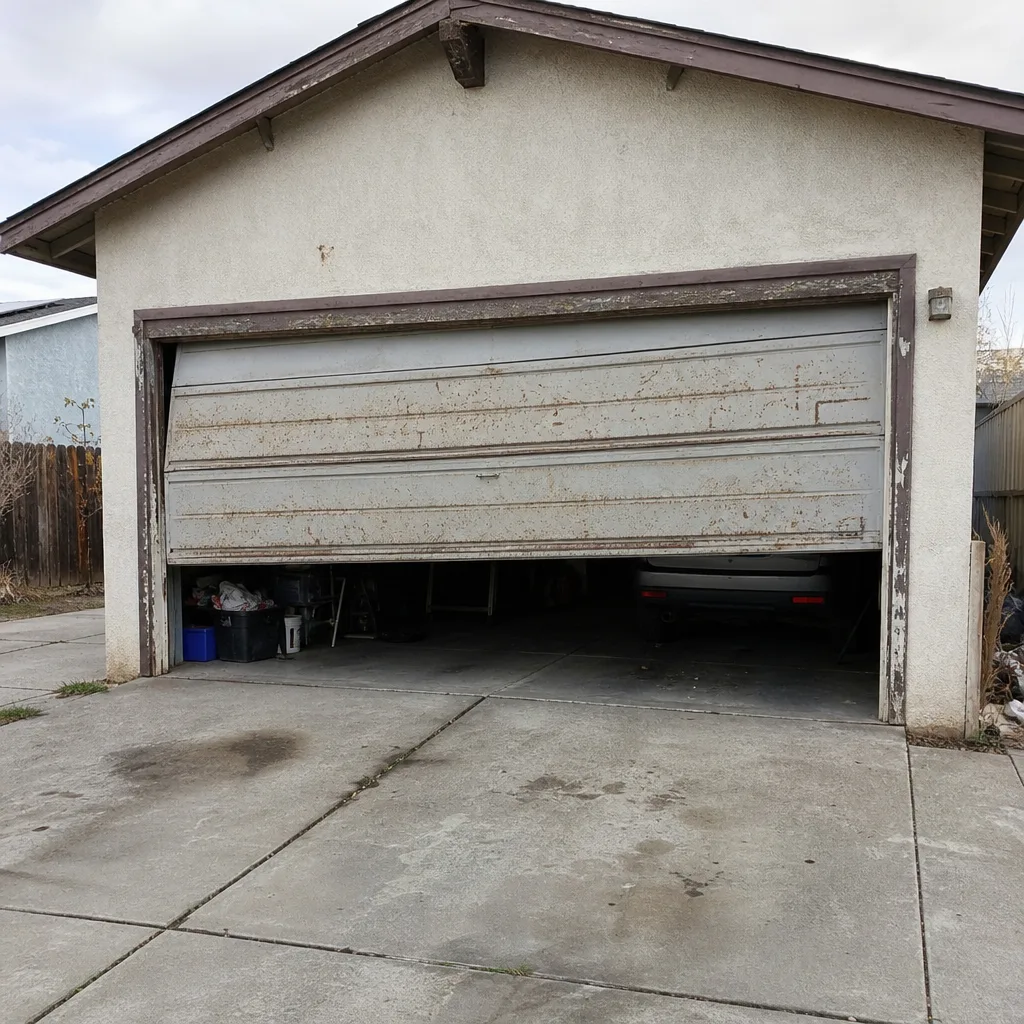 Before
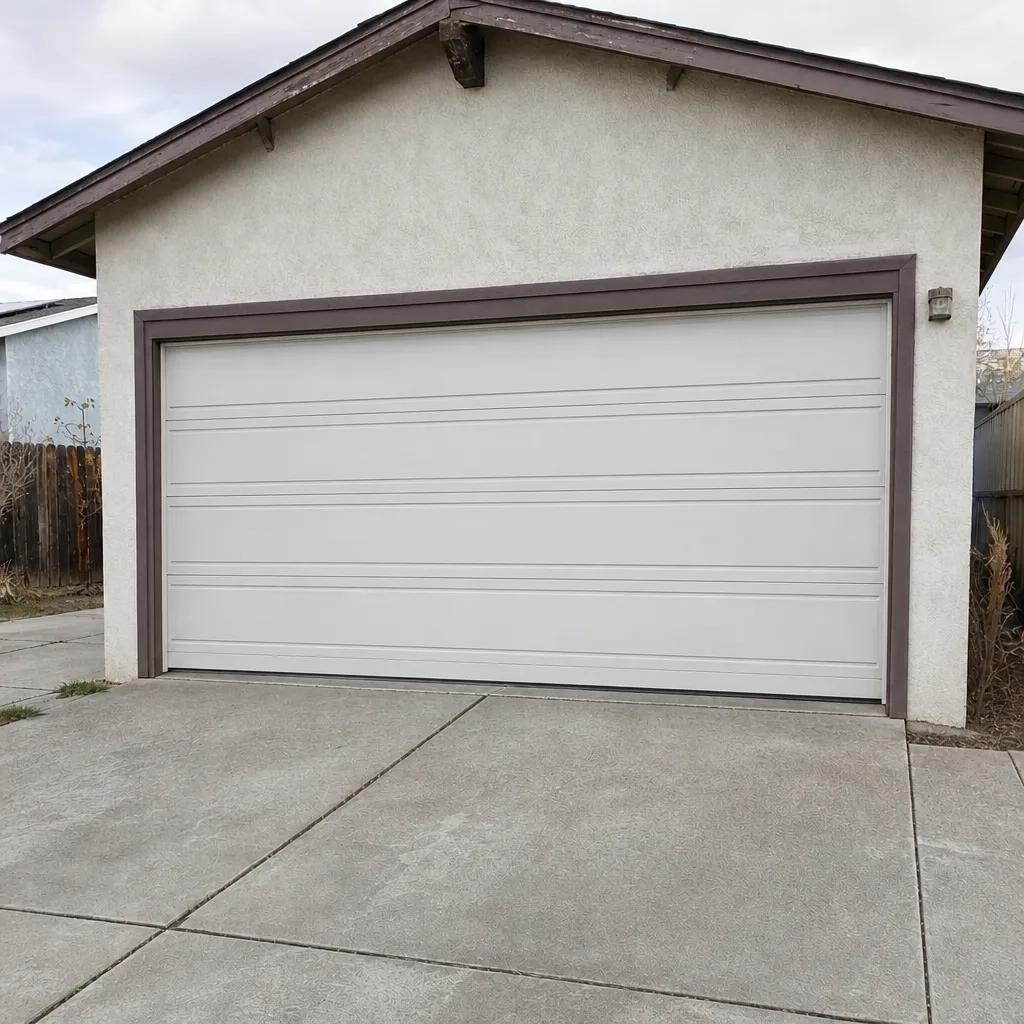 After
When to Call a Professional
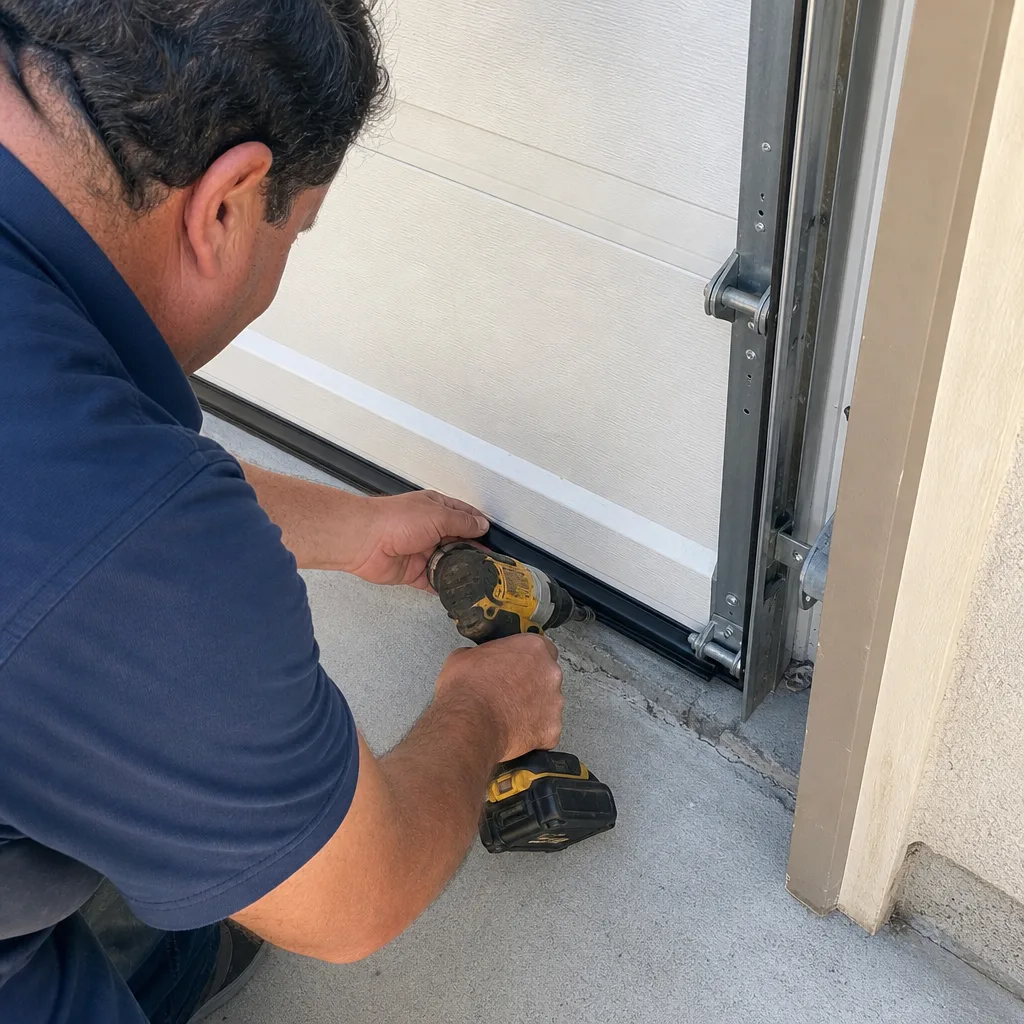
Call when a warning sign is on the “same week” or “stop using” list above, when the balance test shows drop, or when you can’t tell which category you’re in. Call if the door reverses with nothing in its path, grinds from one side, or won’t hold at waist height. Call if a spring shows a rust band that wasn’t there last month. Call if you’re unsure – the phone call is free and the diagnostic visit is scheduled, not an emergency unless you need it to be.
Servo Garage Doors Winchester offers free estimates in Winchester – call (855) 517-0284. We answer live, 24 hours a day, and the technician arrives with the price in writing and the scope in writing before anything gets touched. You’ll also get a documented photo record of what was found and what was done. The 365-Day Done Right Promise means if it isn’t right, we make it right.
Frequently Asked Questions
In Winchester, a single torsion spring replacement typically lands in the low-to-mid $200s, and a matched pair runs meaningfully more because the pair is replaced together on most doors so both springs age evenly. Labor and the balance test are part of the written quote, and you get the price in writing before any work starts. Call (855) 517-0284 for an exact quote – estimates are free.
On repair and emergency calls, yes – we take same-day appointments in Winchester most days and we answer live 24 hours a day, including holidays. We’ll text you the technician’s name and an on-the-way notification, not a callback window. For new-door installation or replacement, the timeline is different: that work is measured, ordered, and scheduled, so we’ll book a free measure and a written price instead of a same-day dispatch. Call (855) 517-0284 to book either.
No. Clause 1 of The Haven Standard means the price and scope are written before any work starts, and the invoice cannot exceed them. If the technician finds something the diagnosis didn’t catch, they photograph the failed component and quote the extra work as a separate, written line before touching it. You approve or decline before anything gets done. Call (855) 517-0284 for an exact quote – estimates are free.
Yes – the local pro we connect you with is state-licensed and insured as their state requires, and the license number is documented on the page, not buried in fine print. Our technicians have up to 11 years of experience, and every visit closes with a documented photo record of what was found and what was done. Call (855) 517-0284 to book.
Most residential torsion springs are rated for 10,000 to 15,000 cycles, which is roughly 7 to 10 years on a typical two-car door used twice a day. Winchester’s temperature swing shortens that: the 20°F-to-100°F range adds stress every cold snap, so we see more spring failures in late winter than any other time. The rust band at the coil gap is the sign that the countdown has started.
Check the safety sensors first – look for an LED that’s off or blinking on either eye and clear any dirt or obstruction. If the sensors are aligned and the door still reverses, roll up the door if it will stay, stop using it, and call us. Reversing with nothing in the path is usually a sign of a spring that’s lost tension, and using it while that’s happening puts the cables and panels under strain. Call (855) 517-0284 today.
The Bottom Line
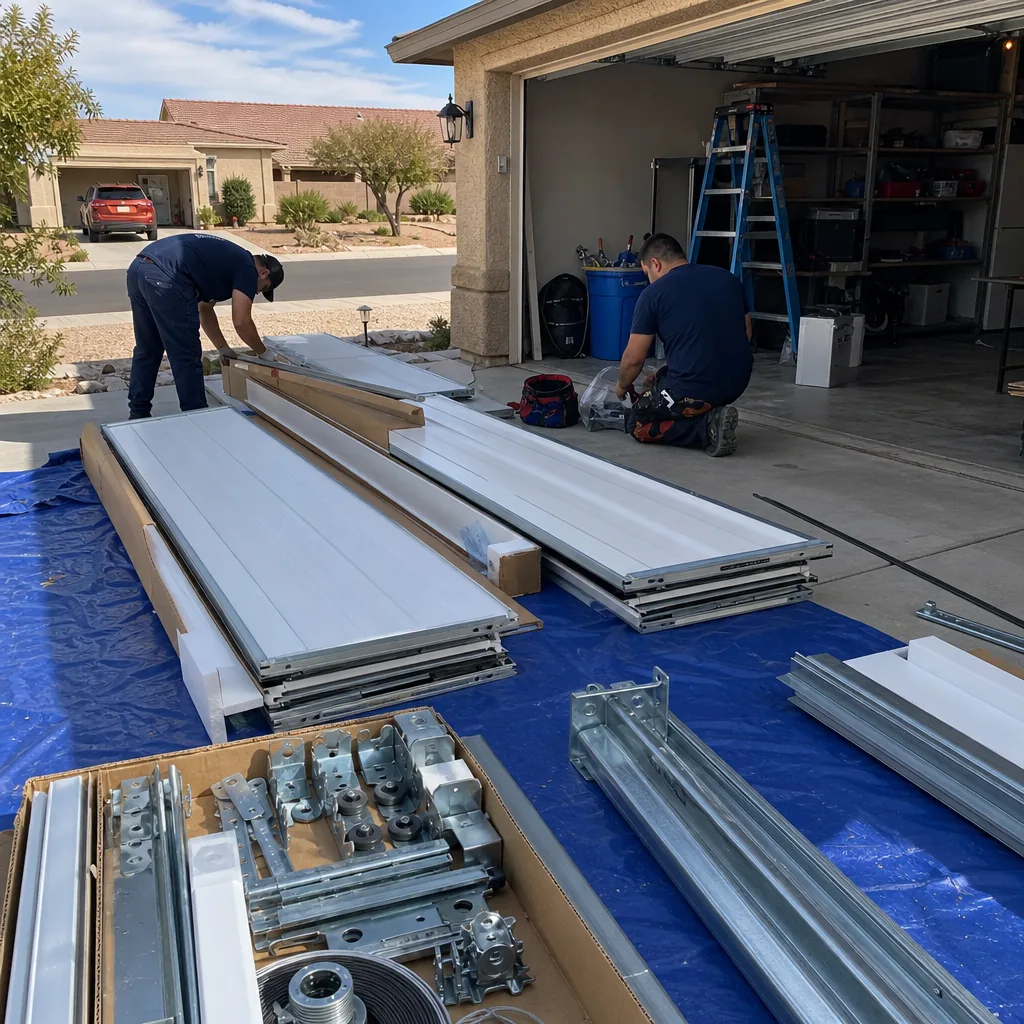
Most garage door failures announce themselves two to eight weeks out through rust at the spring coil, fraying at the cable drum, flat-spotted rollers, a hesitating top-of-travel, or a failed balance test. Reading those signs on a monthly cadence is the difference between a scheduled repair and an emergency call on the same component. Winchester’s 20°F-to-100°F range makes late winter and late summer the two windows to check hardest. What you can safely do: look, listen, test, and call. What you shouldn’t do: wind a spring or loosen a cable drum. The price is written before any work starts, the photo record shows what was found, and the 365-Day Done Right Promise backs the work. That’s the whole system – and it’s why we can name the range on the page instead of asking you to call for a quote.
Call (855) 517-0284 for a free estimate in Winchester. We answer live 24 hours a day, and we’ll take a free second look at any written estimate you’re holding from another company – bring the paperwork.
Written by the team at Servo Garage Doors Winchester.