
Last updated November 18, 2026
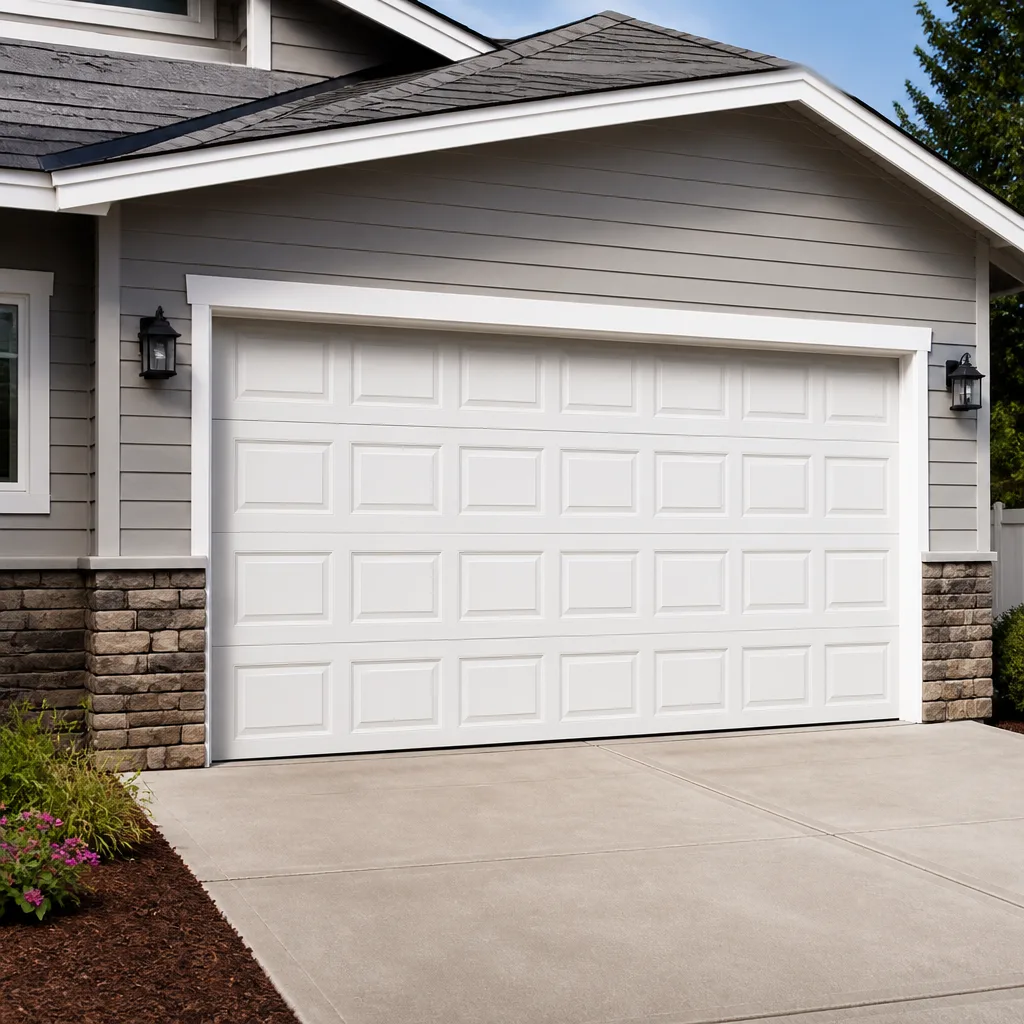 Raised-panel steel
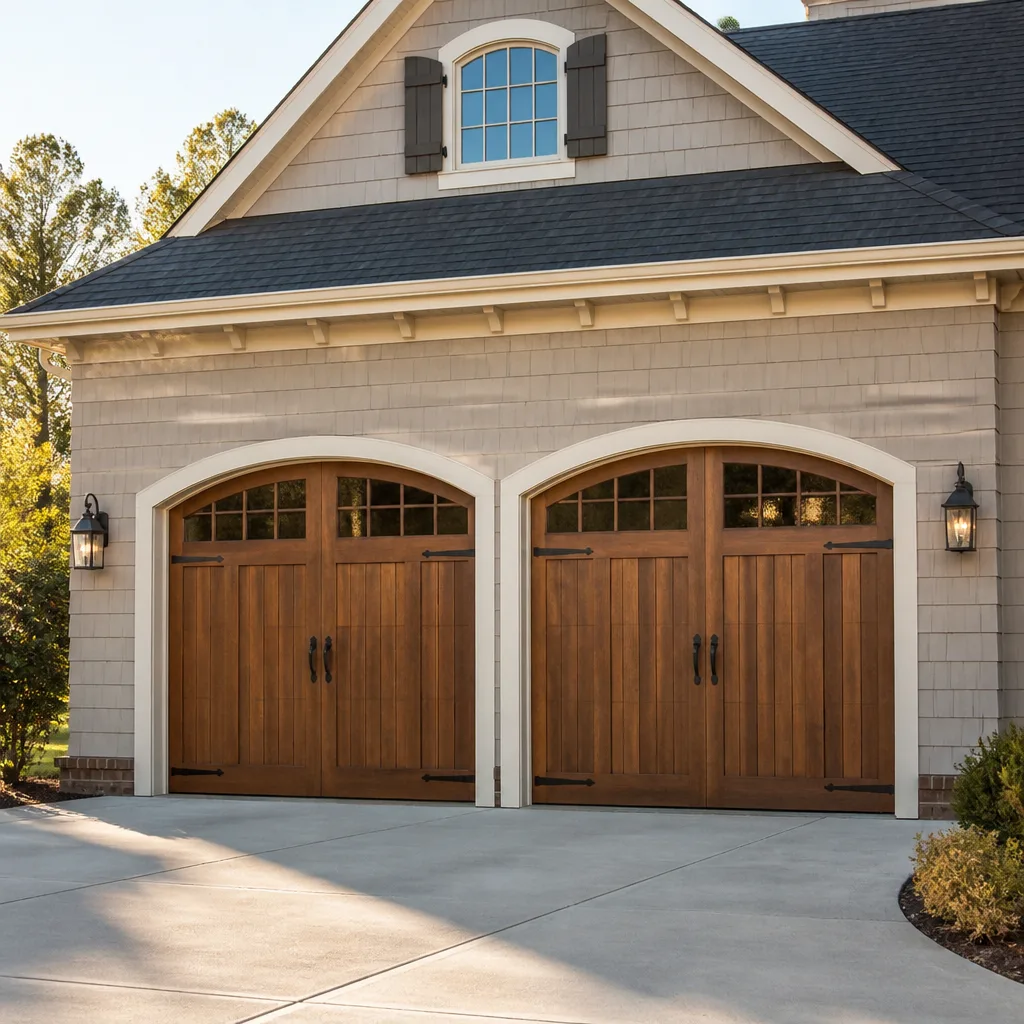 Carriage house
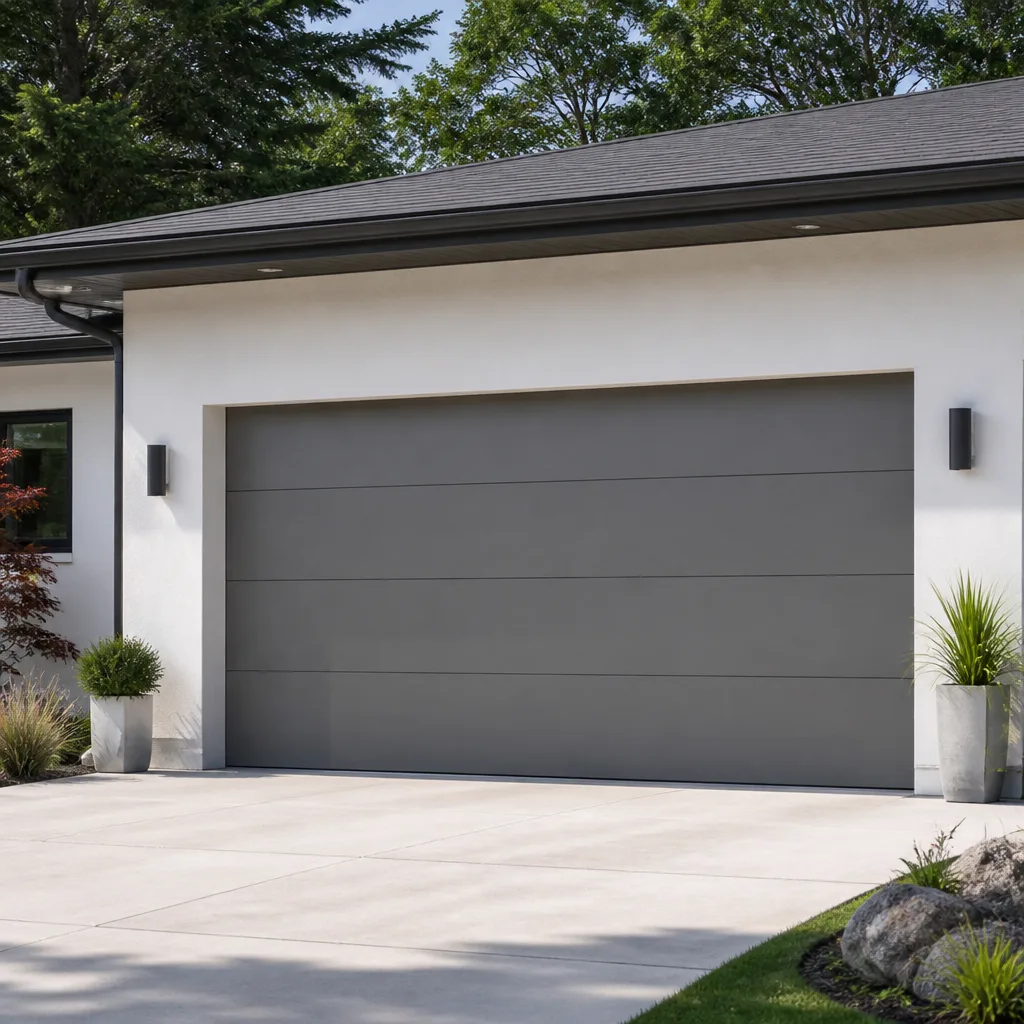 Modern flush
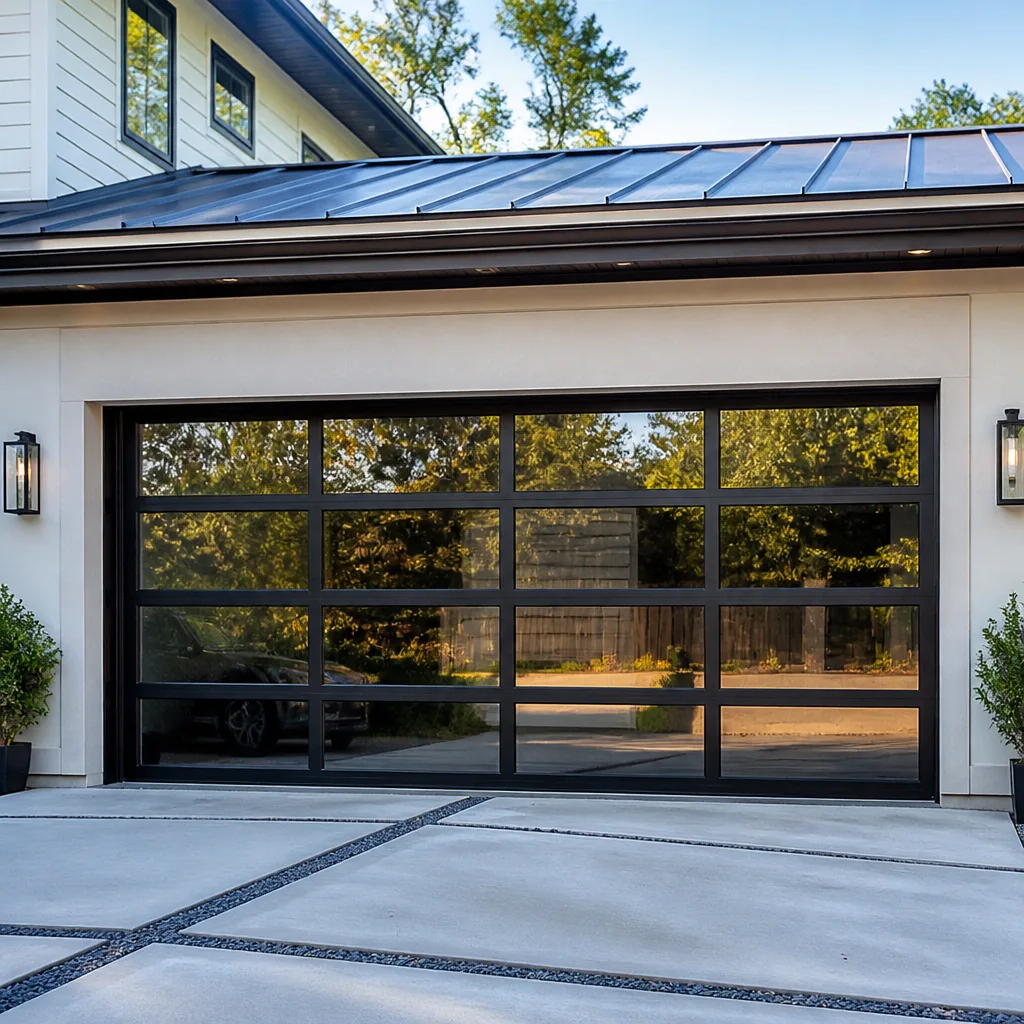 Full-view glass
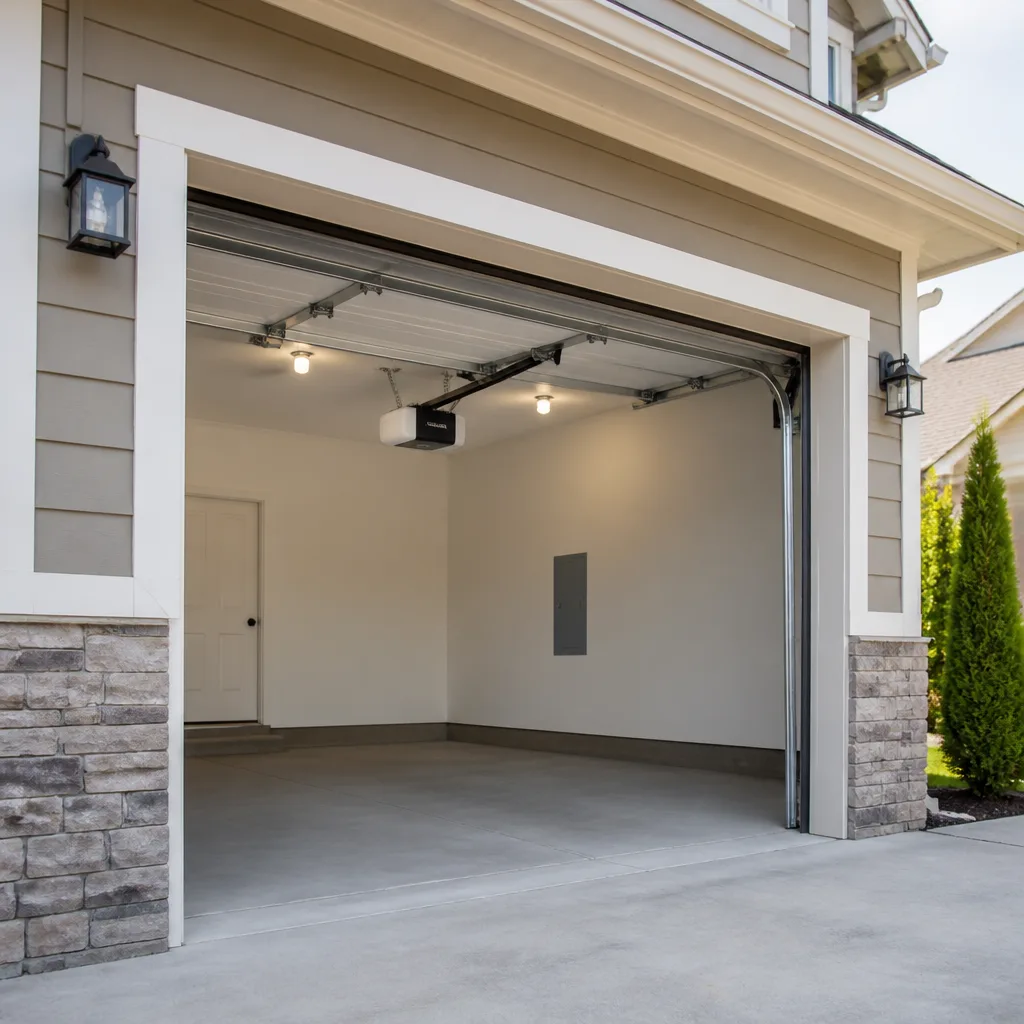 LiftMaster openers
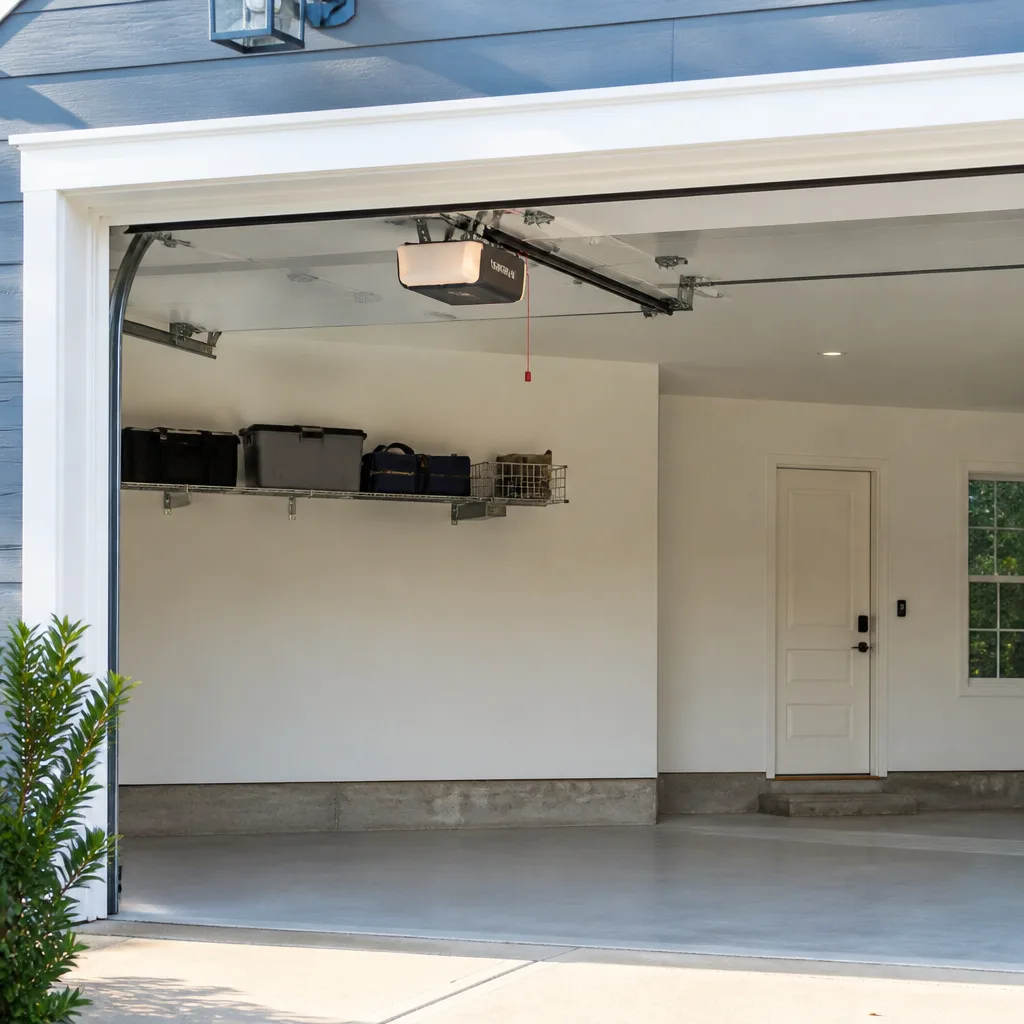 Chamberlain openers
Full 25-point door and opener safety check with every visit - springs, cables, rollers, tracks, and your LiftMaster or Chamberlain opener included
You get a price before we start. It does not change when the pro arrives.
Get your free estimateEmergency Garage Door Troubleshooting: Common Problems and How to Fix Them
The manual release cord on your opener is red for a reason. Pulling it correctly takes three seconds and safely disconnects the door from a failed opener. Pulling it while a torsion spring is broken can send the door down without resistance. The difference between those two situations is one visual check that most guides skip: the spring itself, before you touch the cord. This guide works as a decision tree, not a checklist. Each step ends with either “proceed” or “stop and call.” You’ll learn the four common emergency presentations, the opener clues that tell you which part failed, and the photos to take before anyone arrives. If you’re in Winchester and the door is stuck right now, the stop point matters more than anything else here.
Quick Answer
For most emergency garage door problems, the safe homeowner action is a visual check plus the manual release, and the unsafe action is forcing a door with a broken spring or a jumped cable. If the torsion spring above the door is intact and the door is balanced, you can usually release the opener and lift the door by hand to get a car out. If the spring is broken, the cable is off its drum, or the door is hanging off the track, stop and call a trained professional. In Winchester, spring and cable failures are the two calls we see most, and both are dangerous to handle without the right tools.
Styles & brands we work with
- Raised-panel steel
- Carriage house
- Modern flush
- Full-view glass
- LiftMaster openers
- Chamberlain openers
Table of Contents
- Start Here: The Decision Tree
- The Spring-Intact Check Before Any Manual Operation
- Door Won’t Open
- Door Won’t Close
- Door Came Off Track
- Door Opened Partially and Stopped
- Opener Behavior Clues: Motor Running vs. Silent
- The Documentation Step Before You Call
- Common Mistakes to Avoid
- When to Call a Professional
 Before
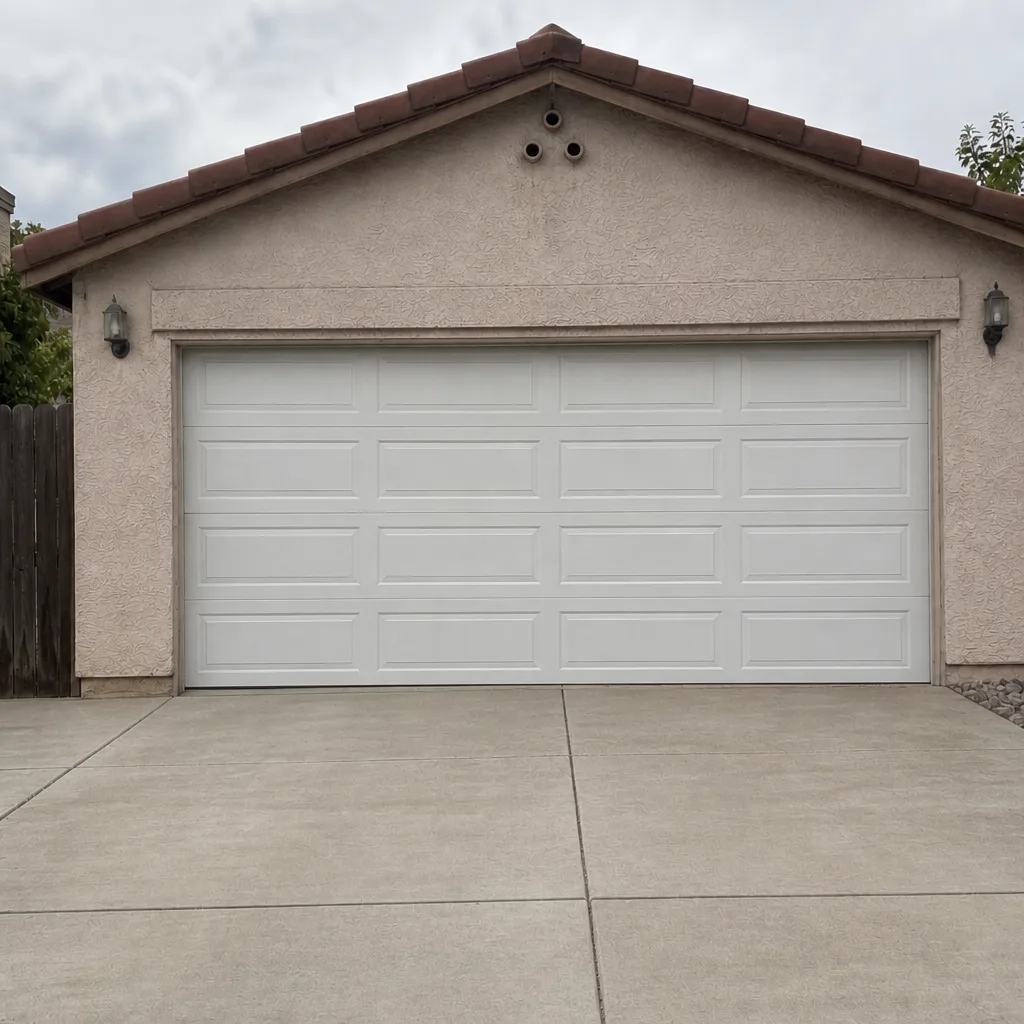 After
Start Here: The Decision Tree
Every garage door emergency funnels into a small number of questions. Answer them in order and you’ll know whether to proceed or stop within about two minutes.
- Is the door fully closed, fully open, or stuck partway? A door stuck partway under tension is the highest-risk situation and usually means a spring or cable problem.
- Look at the torsion spring above the door or the extension springs along the sides. Is it one solid piece, or is there a visible gap and two separated ends?
- Listen to the opener. Does the motor run and the door not move, or is the motor silent?
- Check the track. Do the rollers sit inside the rails, or is the door leaning away from one side?
- Look at the cables. Are they spooled on the drums and taut, or loose and off the drum?
The answer to question two decides almost everything that follows. If the spring is broken, every other step changes: you don’t force the door, you don’t cycle the opener repeatedly, and you call for repair. Our Garage Door Repair in Winchester page covers the repair side in more detail. If the spring is intact, the problem is usually opener-side or track-side, and the door itself is safer to move.
Winchester homes built between 2015 and 2025 sit in a climate that swings hard between dry summer heat and cold desert nights. That cycle works on springs and cables year-round, and it’s why we tell homeowners here to check the spring before anything else. The quickest way to summarize the whole decision: broken spring means stop, intact spring means proceed carefully.
The Spring-Intact Check Before Any Manual Operation
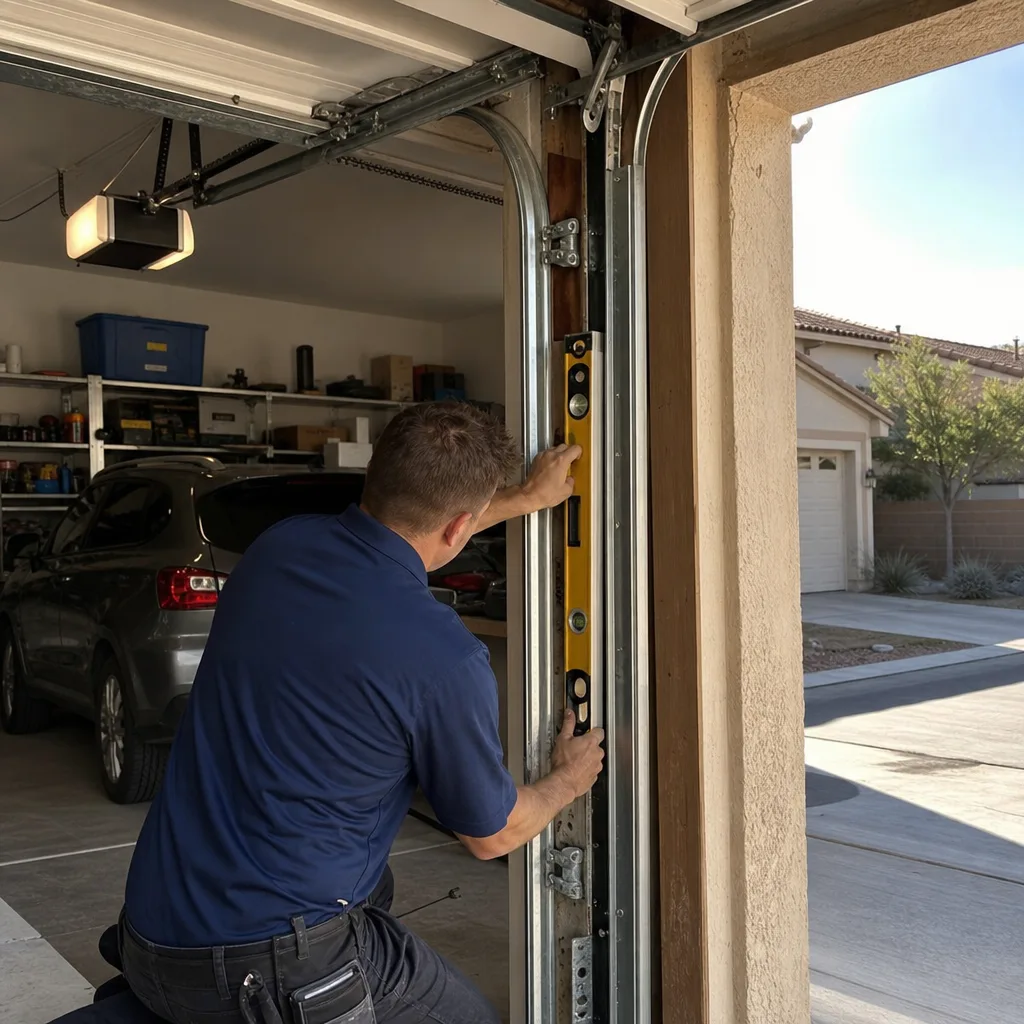
A torsion spring is the coil mounted on a shaft above the door. When it’s wound and working, it’s one continuous coil of wire under heavy tension, and it shows no gap. When it fails, it breaks with a loud bang, and you’ll see two separated ends with a visible gap between them, often with the coil still hanging on the shaft. Extension springs sit along the horizontal tracks and stretch when the door closes; a failed one is stretched out and dangling, sometimes with a safety cable holding it.
Here’s what to look for:
- Intact torsion spring: a tight, continuous coil, no gap, shaft centered. Proceed.
- Broken torsion spring: a clear gap, two ends, sometimes the door sitting crooked or heavy. Stop and call.
- Loose or off-track cable: the cable is slack or off its drum. Stop. A cable under tension can whip.
- Door hangs heavy in your hands when you lift it a few inches: the spring is no longer carrying its share of the weight. Stop.
This check takes one visual pass. It’s the step most guides skip, and it’s the one that decides whether pulling the red release cord is safe or genuinely dangerous. If you have any doubt about what you’re seeing, treat it as broken and call. Our Garage Door Opener Repair & Installation in Winchester page explains what happens on the opener side once the spring is confirmed intact.
Door Won’t Open
A door that won’t open after you press the button usually points to one of three things: an opener that isn’t receiving or sending the command, a dead battery or safety issue, or a failed spring that has left the opener unable to lift the door’s weight.
Work through it in this order:
- Check the wall button and the safety sensors at the bottom of the tracks. A blinking sensor light usually means a misaligned or obstructed sensor, and the door won’t close, though a blocked sensor can also stop some models entirely.
- Try the remote and the wall button separately. If the wall button works and the remote doesn’t, it’s a remote or battery issue, not the opener.
- Look at the door itself. If it’s sagging or the spring is broken, the opener is trying to lift dead weight and won’t. Stop here and call.
- Check the circuit breaker and any GFCI outlet the opener is plugged into.
If the opener hums or clicks and the door doesn’t rise, the problem is likely mechanical, not electrical. In Winchester, repeated won’t-open calls in older homes often trace back to a worn drive gear inside a LiftMaster or Chamberlain unit rather than a spring. In that case the door is fine to release by hand, because the spring is intact. A partially open door is covered separately below.
Door Won’t Close
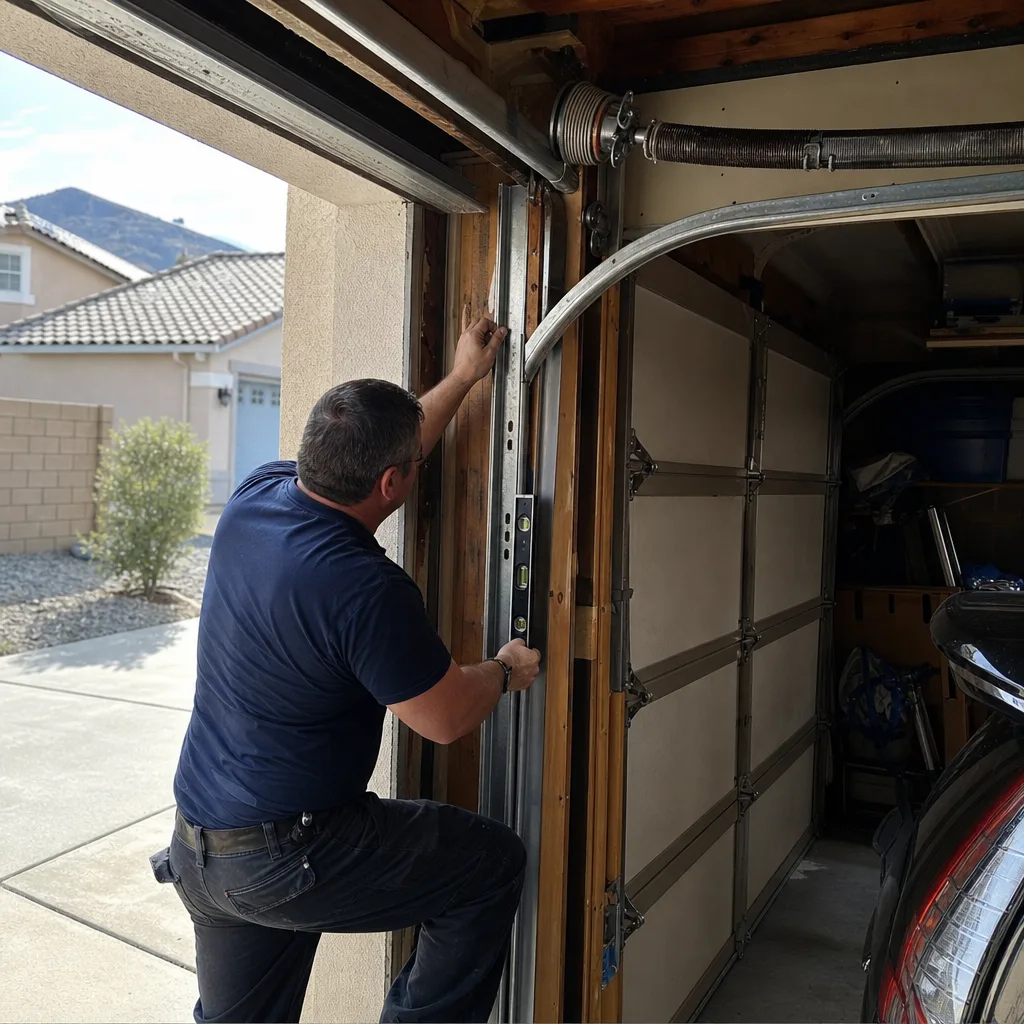
A door that opens but won’t close is almost always a safety-device issue. The two photo-eye sensors near the floor at each side of the door send an invisible beam across the opening; if something breaks that beam, the door stops and reverses. This is the opener doing its job, not a failure.
What to check:
- Sensor alignment: both lights should be solid, not blinking. Nudge each sensor until it’s facing its partner and the light steadies.
- Obstruction: a stored box, a shovel, or a pet crossing the beam can block the door. Clear the path and try again.
- Track and rollers: a door that binds on one side can trigger the opener’s safety reversal on the way down.
- Limit switch: if the door reverses a few inches off the floor, the travel limit may be set too short or the close-force setting too low.
The close-force and travel-limit settings live on the opener’s logic board or under a cover, and adjusting them wrong can be a real safety problem, especially with a heavy Clopay or Amarr door. If the sensor lights are solid, the path is clear, and the door still won’t close, that’s a good point to stop. A door that won’t close also leaves your home open, so if it’s an after-hours situation in Winchester, an emergency call is worth making now.
Door Came Off Track
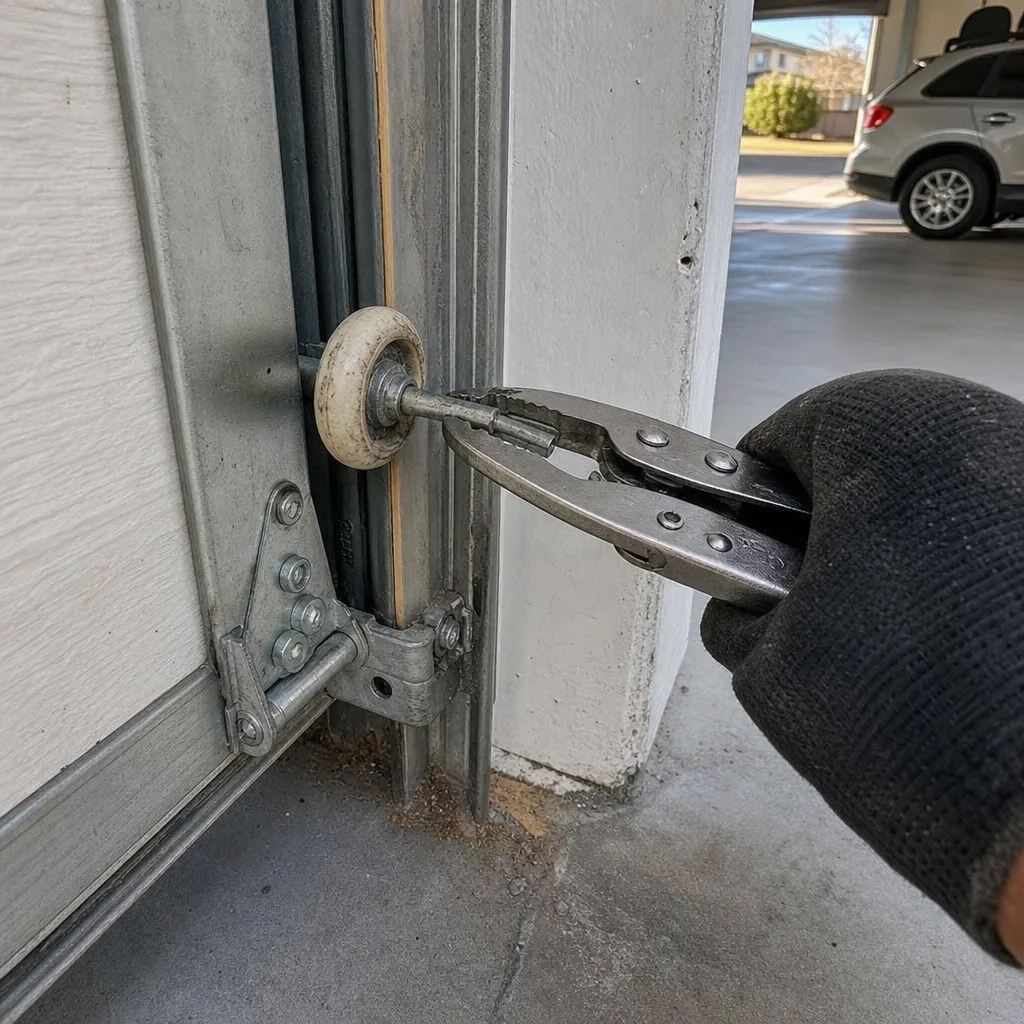
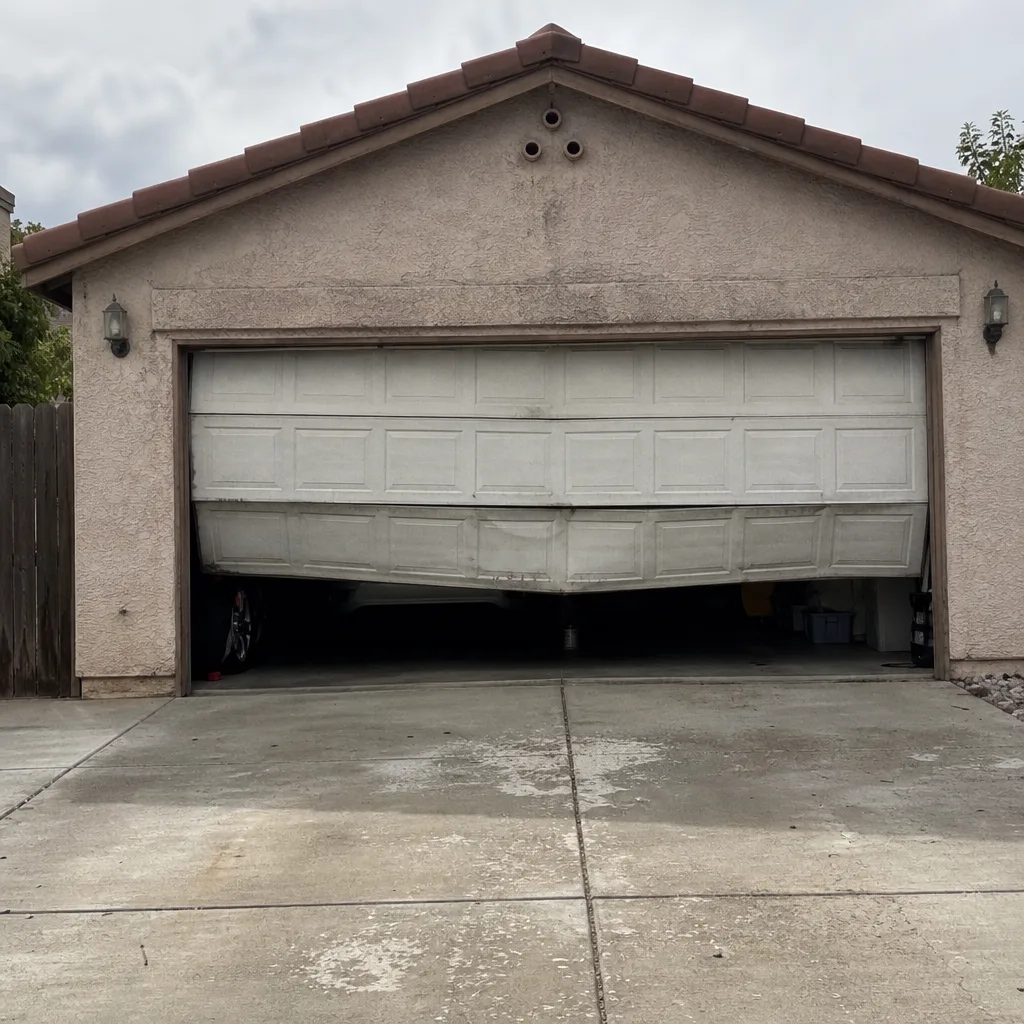
A door off its track is a stop-and-call situation, without exception. The rollers have jumped the rails, or the track has bent, and the door’s weight is now leaning on components that were never meant to carry it. Forcing it back up can bend the panels, damage the hinges, and in the worst case drop the door on whoever is standing under it.
What you should do:
- Don’t force the door up or down. Leave it where it sits if it’s stable.
- Don’t cycle the opener. The motor will keep pulling against resistance and can tear the trolley or strip the gear.
- Keep clear of the door. If the door is hanging open and the track is bowed, stay out from under it.
- Photograph the gap between the roller and the track on each side, plus the bent section if you can see it.
- Call for repair. This is not a homeowner fix even with a good toolkit.
Off-track doors often follow a curb strike or a car nudging the bottom panel, and that’s a common call in Winchester driveways where cars park tight. If the track itself is bent, it may need replacing rather than persuading back into shape, and that’s a decision worth having a technician make on site. We’ve seen plenty of Wayne Dalton and Raynor doors bend a track panel and still work fine once the track is straightened or swapped.
Door Opened Partially and Stopped
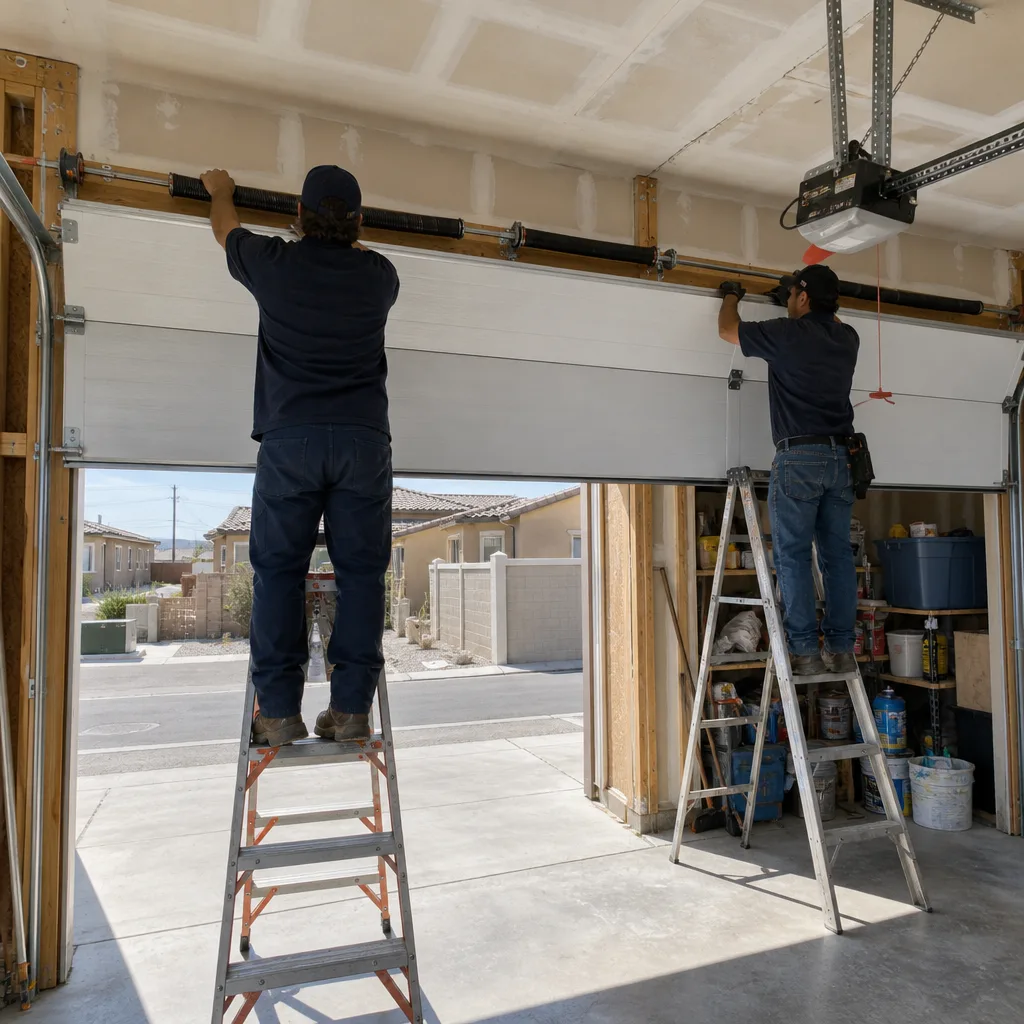
A door that opens a few feet and stops is often announcing a broken spring. The opener lifts until the load becomes too much, then the safety reversal kicks in. Other causes include a failing logic board, a slipping drive belt or chain, or a travel-limit setting that stops the door short.
Check in this order:
- Look at the spring again. If it’s broken, stop. The door is hanging on the opener’s hold and could drop if the opener releases.
- Listen to the motor. If it runs but the door doesn’t move, the drive (belt, chain, or screw) or the trolley carriage has failed.
- Look at the trolley carriage (the part that rides the rail and connects the opener arm to the door). If it’s separated, the opener is spinning free.
- Try the wall button once. If it stops at the same point every time, the travel limit is likely set wrong.
This is the situation where a partially open door becomes a security question, because the house is left open at night. If that’s where you are in Winchester, call rather than leave it. The partial-stop pattern is one of the four presentations that most consistently turn out to be a torsion spring, and that’s a job for a trained technician with the right winding bars.
Opener Behavior Clues: Motor Running vs. Silent
The opener is telling you what’s wrong if you listen to it. The two behaviors point in very different directions, and each implies a different safe homeowner action.
- Motor runs, door doesn’t move: the drive has failed or the trolley is disconnected. Look for a broken belt, a stripped gear, or a trolley carriage that’s separated from the arm. The door itself is fine; the opener is the problem. You can release the door by hand to get a car out if the spring is intact.
- Motor doesn’t activate at all: power or logic board issue. Check the outlet, the breaker, and the wall button first. If those are fine, the logic board inside the opener has likely failed. Don’t open the opener housing; the board is sensitive and the unit isn’t designed for homeowner repair.
- Motor runs and clicks repeatedly: the safety sensors or travel limits are triggering the reversal. Not a mechanical failure.
- A single click, then nothing: often a capacitor or logic board issue. Call for a diagnosis.
The distinction matters because the first case is safe to work around and the second case really isn’t. We’ve pulled more than a few Genie and Craftsman units in Winchester where the homeowner assumed the door was broken and it was actually a dead logic board. If you’re not sure which behavior you’re hearing, describe it on the phone and we can usually narrow it down before anyone arrives.
The Documentation Step Before You Call
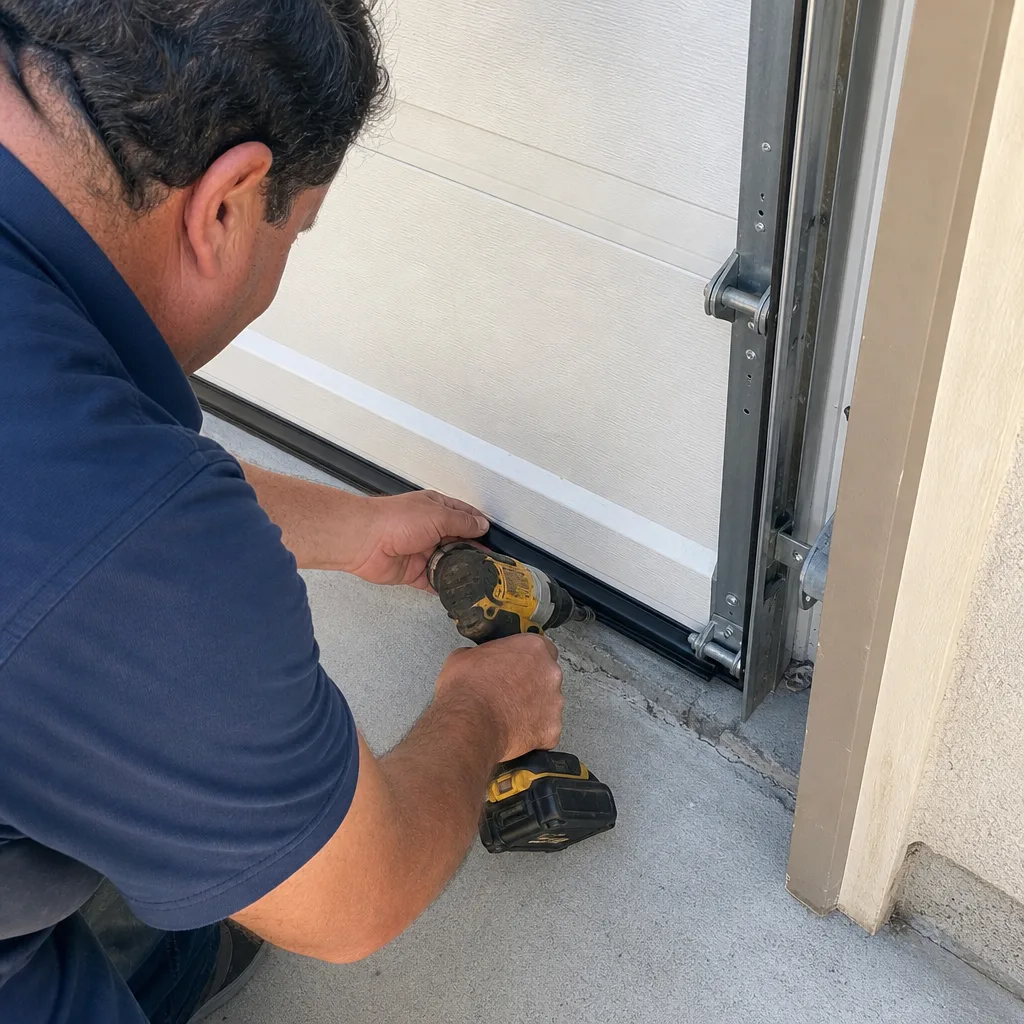
Before you call, take three photos. This shortens the diagnosis and gives you a record of the door’s condition before anyone touches it. It also matters if you ever need to compare a repair quote against what you saw.
- The spring: photograph the full length of the torsion spring or extension springs. Get the gap in frame if there’s a break.
- The cable position: shoot where each cable meets the drum at the top corners. A cable off its drum is a detail a technician can spot immediately.
- The track gap: photograph where each roller sits in the track, particularly any gap or bend. Include the track on both sides.
This is the same documentation discipline we build into every visit: the technician photographs the failed component before quoting a replacement, so you see the failed part rather than taking our word for it. That rule comes from Clause 4 of The Haven Standard, and it’s the reason our customers get a photo record of what was found and what was done before we leave. Bringing your own pre-repair photos on the call only speeds things up. When you’re ready for a professional diagnosis, call (855) 517-0284 and we’ll walk through what you’re seeing.
Common Mistakes to Avoid
- Pulling the red release cord on a door with a broken spring. With the spring gone, the door’s full weight drops onto you. Check the spring first, then decide.
- Cycling the opener over and over on a door that won’t move. Each attempt pushes the motor against resistance and can strip the gear or burn out the opener. Stop after one try.
- Forcing an off-track door back into the rails. The door’s weight is leaning on the wrong components, and forcing it can drop the door or bend panels beyond repair.
- Standing under a partially open door to inspect it. A door held up by a failing spring can come down without warning. Inspect from the side, not underneath.
- Trying to adjust a torsion spring without winding bars. This is the single most dangerous garage door task. A wound torsion spring stores enormous force and can cause serious injury in an instant.
- Assuming a dead opener is a door problem in Winchester homes. Older homes often have a GFCI outlet that’s tripped, and a two-second reset fixes it.
- Calling without photos. A photo of the spring and cable lets the technician arrive with the right part the first time, which cuts the repair to a single visit.
When to Call a Professional
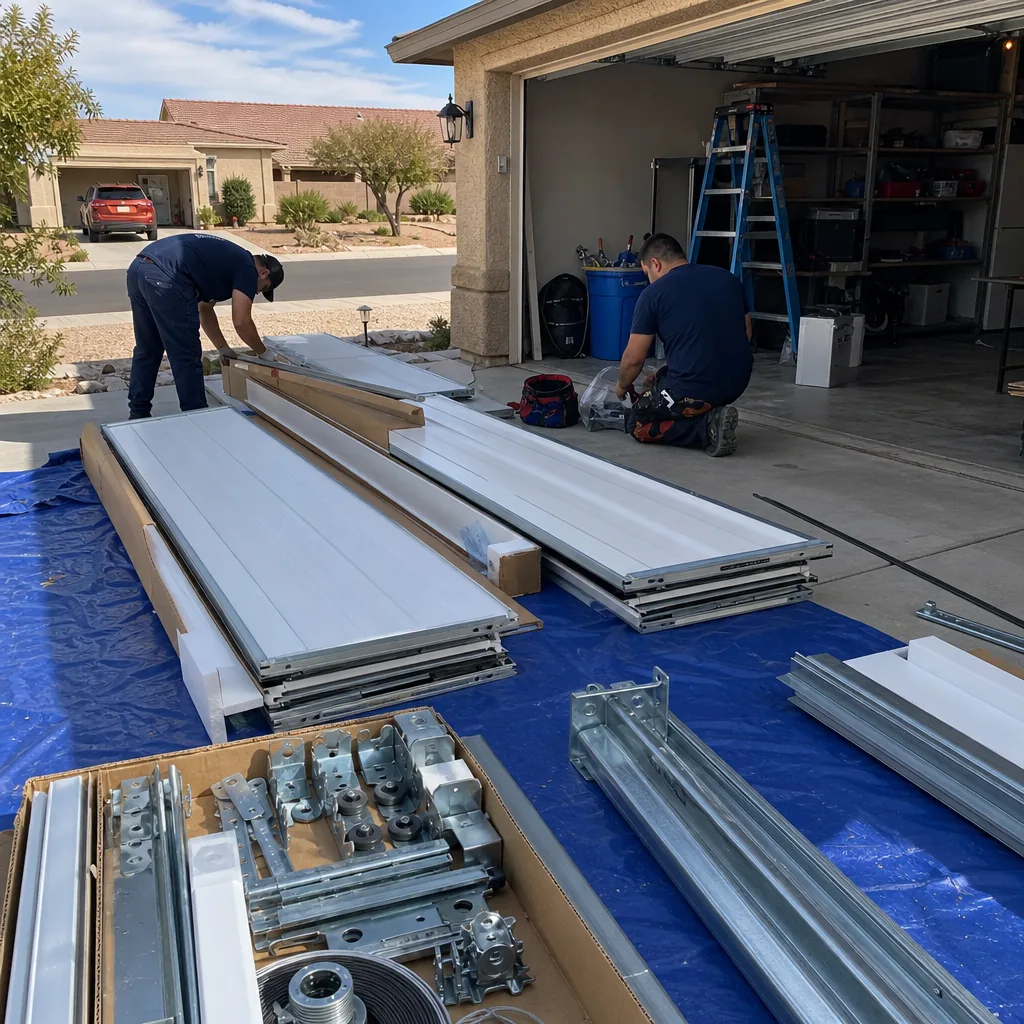
Call a professional when the spring is broken, the cable is off its drum, the door is off the track, or the opener’s logic board has failed. Those four are the ones where homeowner tinkering can cause real injury or turn a small repair into a bigger one. For a door that’s simply out of balance or stuck on a sensor, a quick phone description can often save you the visit entirely. In Winchester, our team has the parts for LiftMaster, Chamberlain, Genie, Clopay, Amarr, Wayne Dalton, Craftsman, and Raynor units on hand, and our technicians have up to 11 years of experience. Servo Garage Doors Winchester offers free estimates in Winchester. Call (855) 517-0284 and we’ll give you a written price before any work starts.
See the difference
BeforeAfter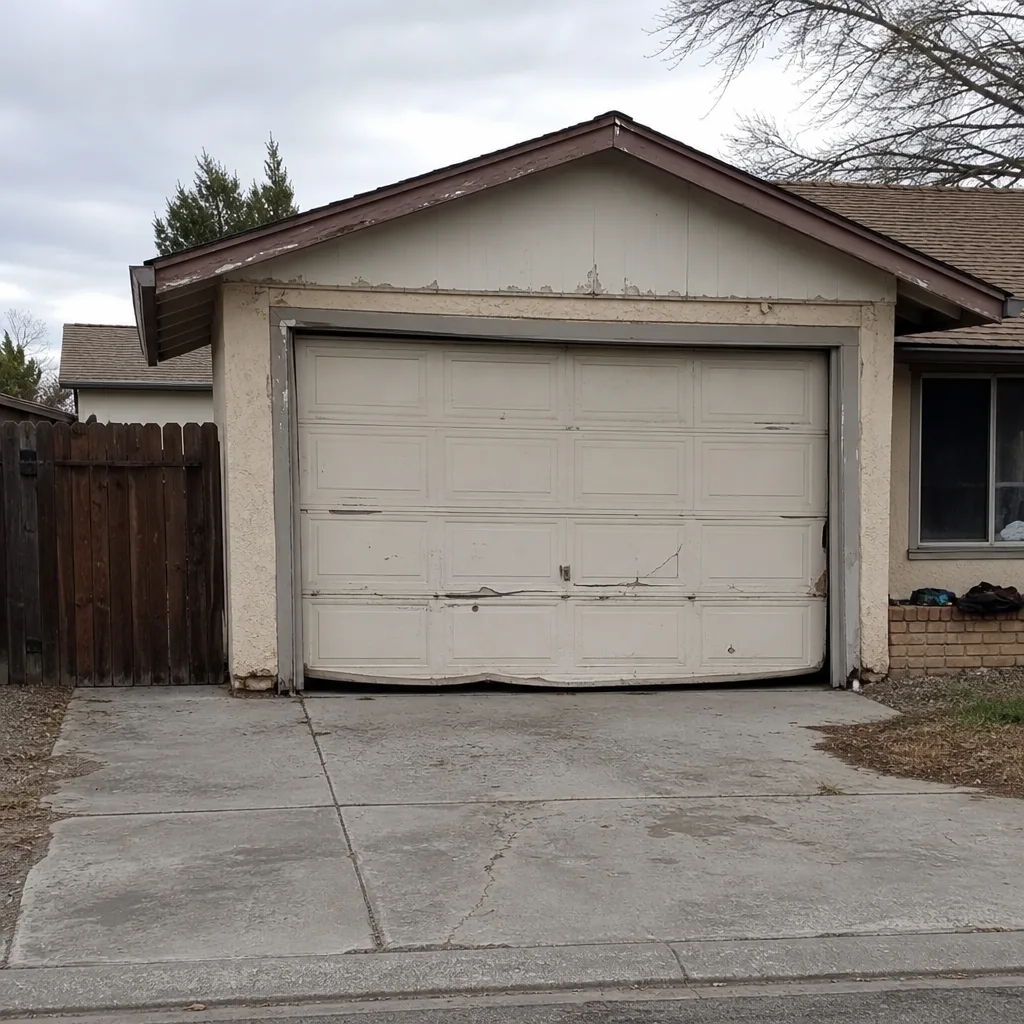 Before
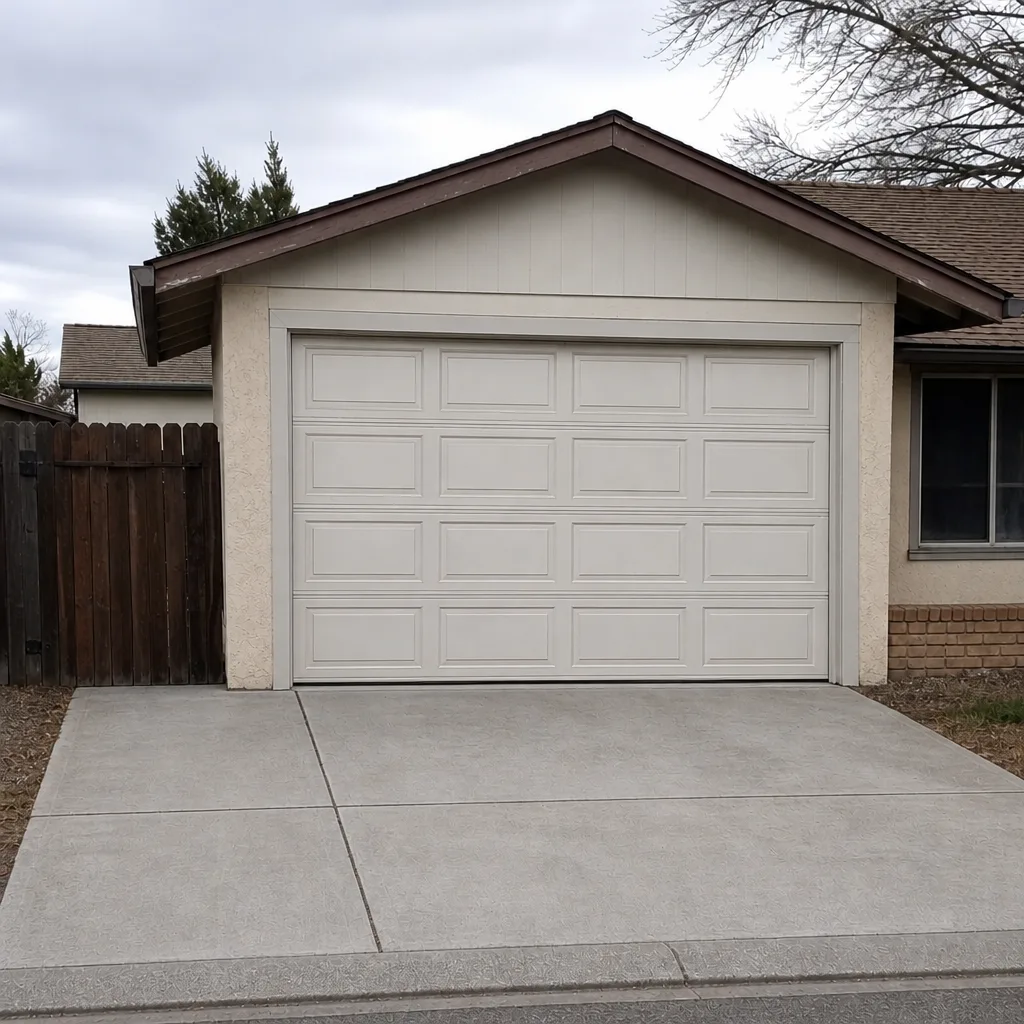 After
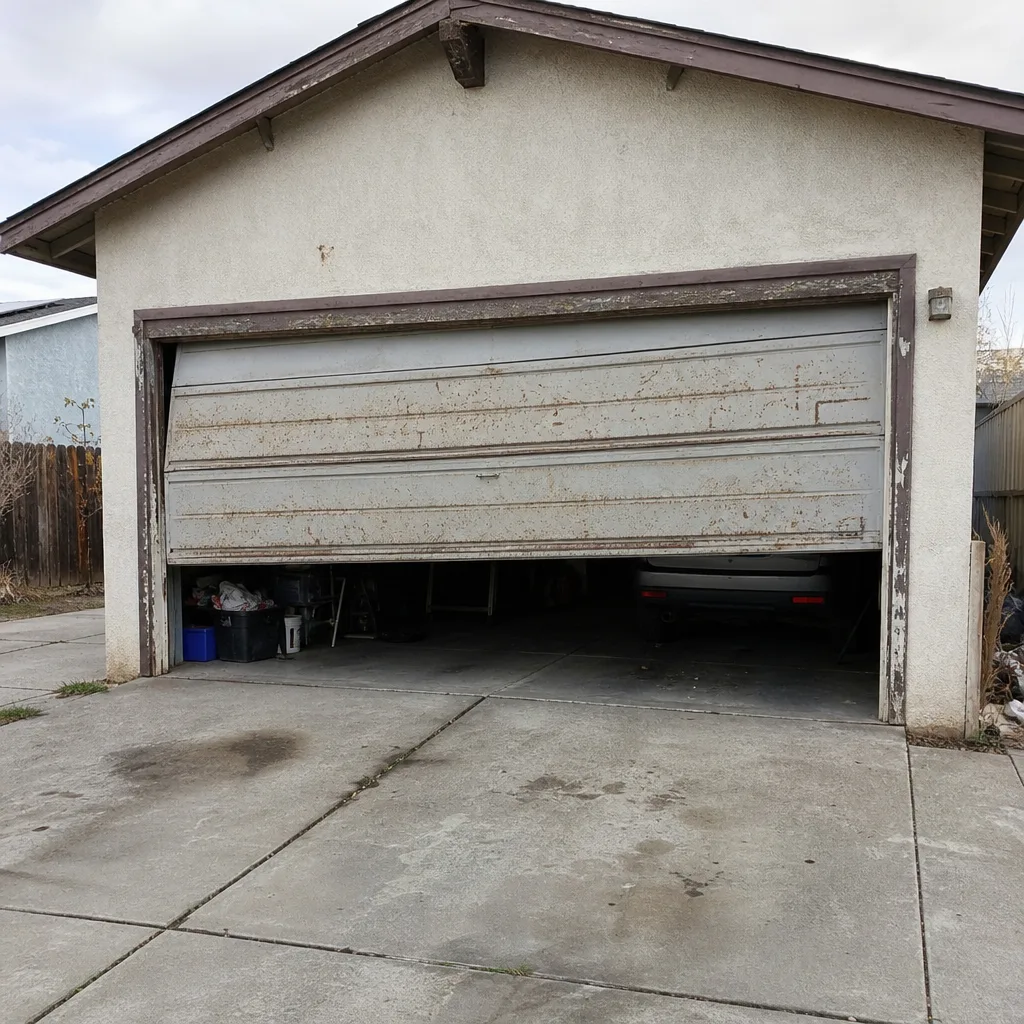 Before
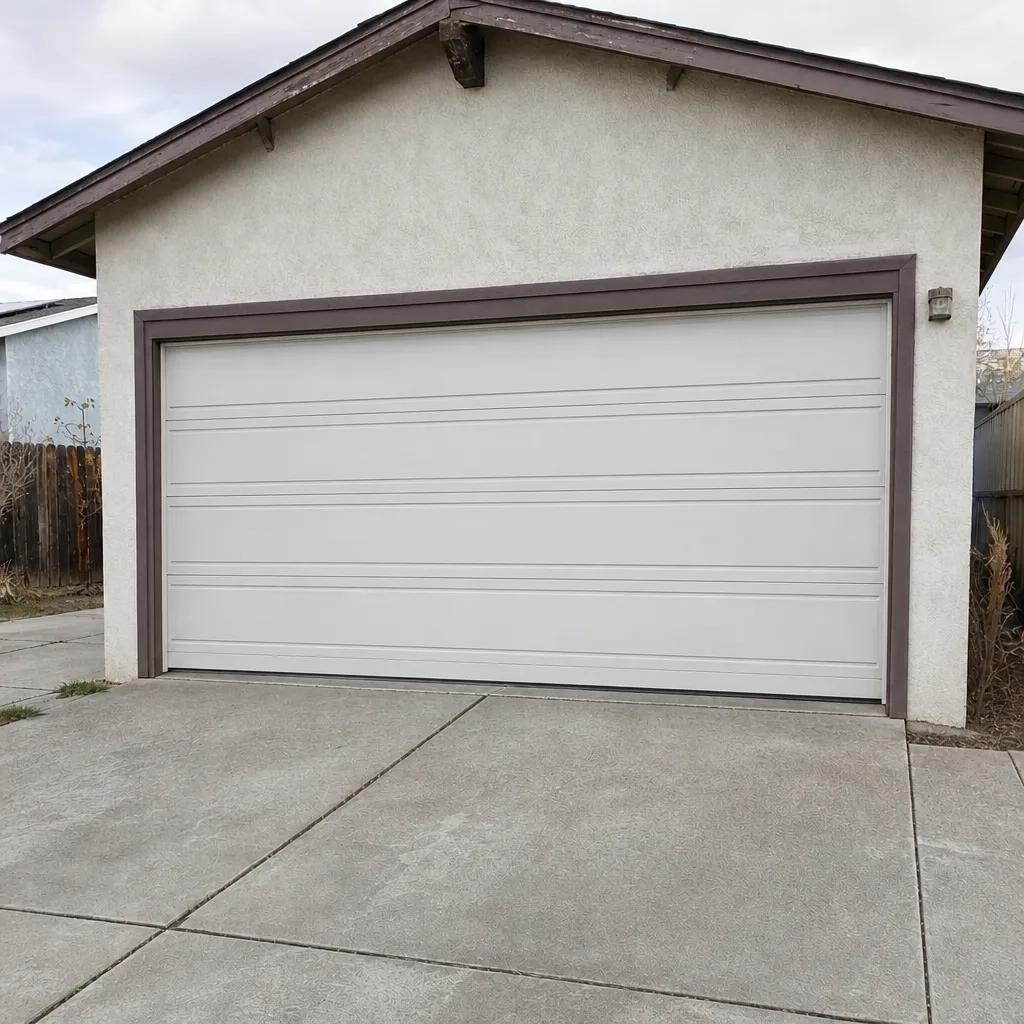 After
Frequently Asked Questions
No. A door with a broken spring carries its full weight in one piece, and it will drop as soon as you take the opener’s support away. If the spring is broken, leave the door alone and call a technician. In Winchester, we treat every broken-spring call as a priority dispatch.
Most emergency repairs in Winchester fall in a predictable range depending on the part. A torsion spring replacement is typically the largest line item, opener logic board repair the middle, and sensor or track adjustment the lowest. We give you a flat, written price before any work starts, so you know the number before the technician opens the toolbox. Call (855) 517-0284 for an exact quote – estimates are free.
No. The written price and written scope we give you before work begins is the price you pay for that scope. If we find something extra, you’ll see a new written quote before we touch it, and you can decline. Clause 1 of The Haven Standard exists specifically to prevent surprise invoices.
Yes. Live phone coverage runs 24 hours a day, 7 days a week, including holidays, and emergency calls are answered by a real person, not a recording. You’ll get a named technician and an on-the-way text rather than a callback window. Call (855) 517-0284 and describe the door; if it’s stuck open at night, that’s an emergency call.
The local pro we connect you with holds its own license and insurance as required, and our technicians are background-checked and arrive uniformed. Servo Garage Doors is independently owned and operated under The Haven Standard, which means the local business keeps its own credentials and works to the documentation and written-price system we set.
Take three photos: the spring, the cable position at each drum, and the gap where each roller sits in the track. This shortens the diagnosis and gives you a record of the door’s condition before anyone arrives. You can text the photos or describe them on the call, and if you already have the pre-repair record on your phone you can compare it against the photo record you get back after the repair.
The Bottom Line
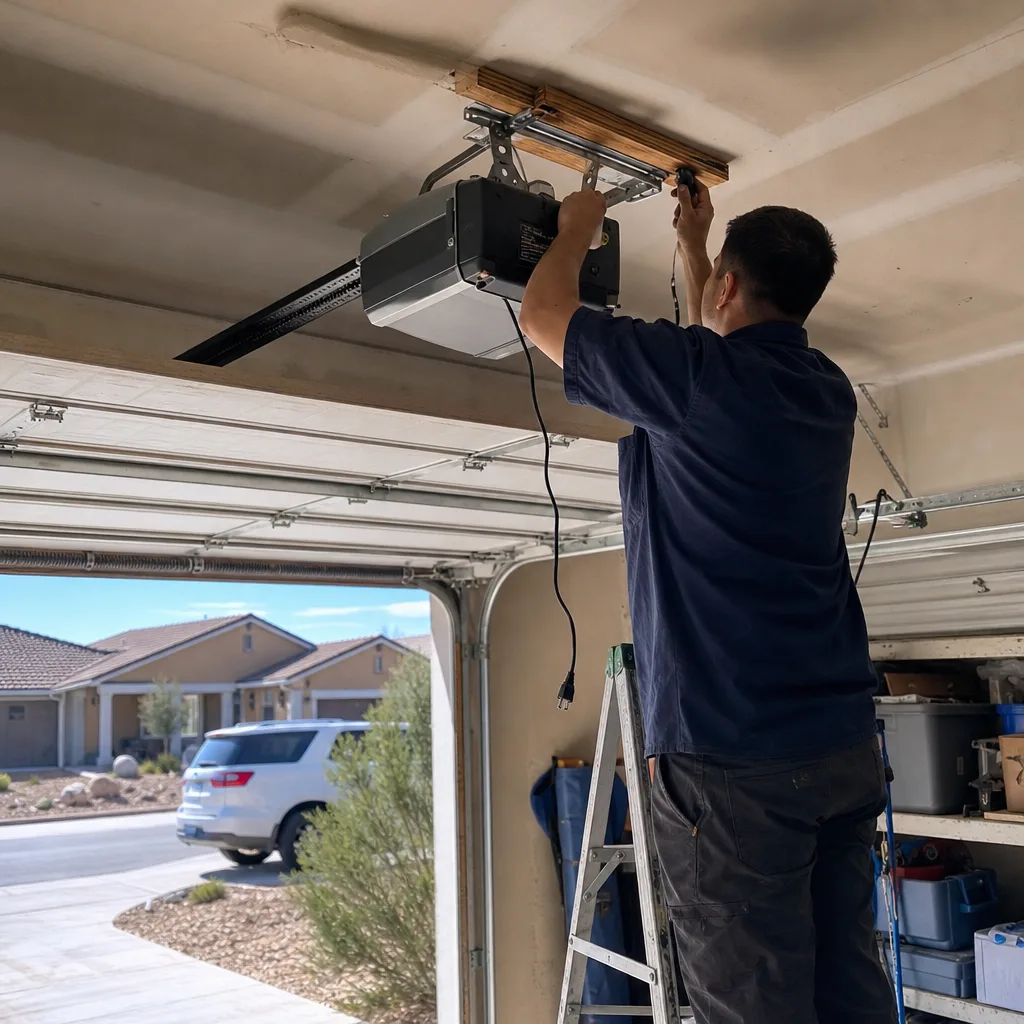
Emergency garage door troubleshooting works when you treat it as a decision tree. Check the spring first. If it’s intact and the door is balanced, you can safely release the opener and lift the door by hand to get a car out. If it’s broken, the cable is off its drum, or the door is off its track, stop and call. Take the three photos before you dial, because the pre-repair record shortens the diagnosis. In Winchester, spring and cable failures are the calls we answer most, and the difference between a handled emergency and an injury is usually the one visual check most guides skip.
If you’re in Winchester and you want the door looked at properly, the call is free. Servo Garage Doors Winchester answers the phone live, 24 hours a day, and hands you a written price before any work starts. Call (855) 517-0284 for a free estimate, or start at our Servo Garage Doors Winchester home. When the door is beyond repair, our Garage Door Installation in Winchester team can walk you through replacement with the same documented, written-price-first process.
Written by the team at Servo Garage Doors Winchester.