
Last updated November 18, 2026
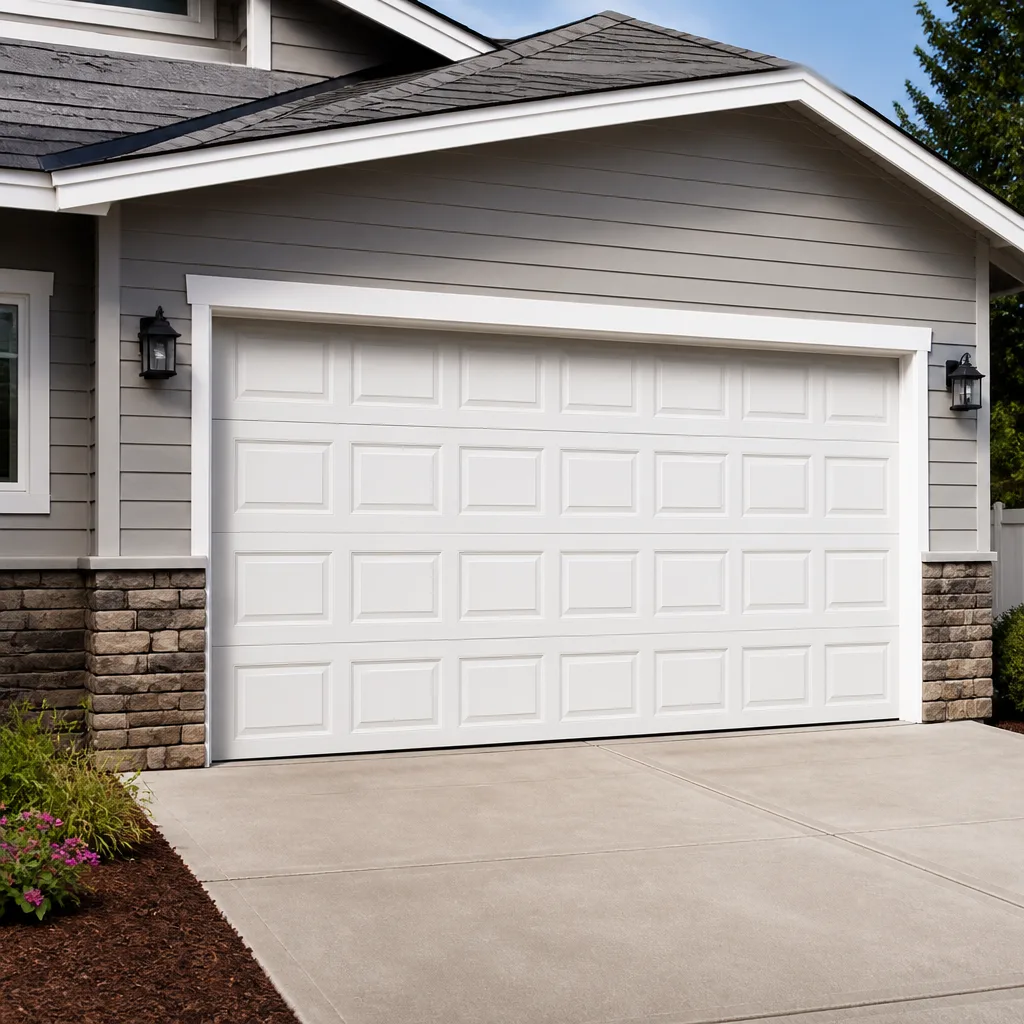 Raised-panel steel
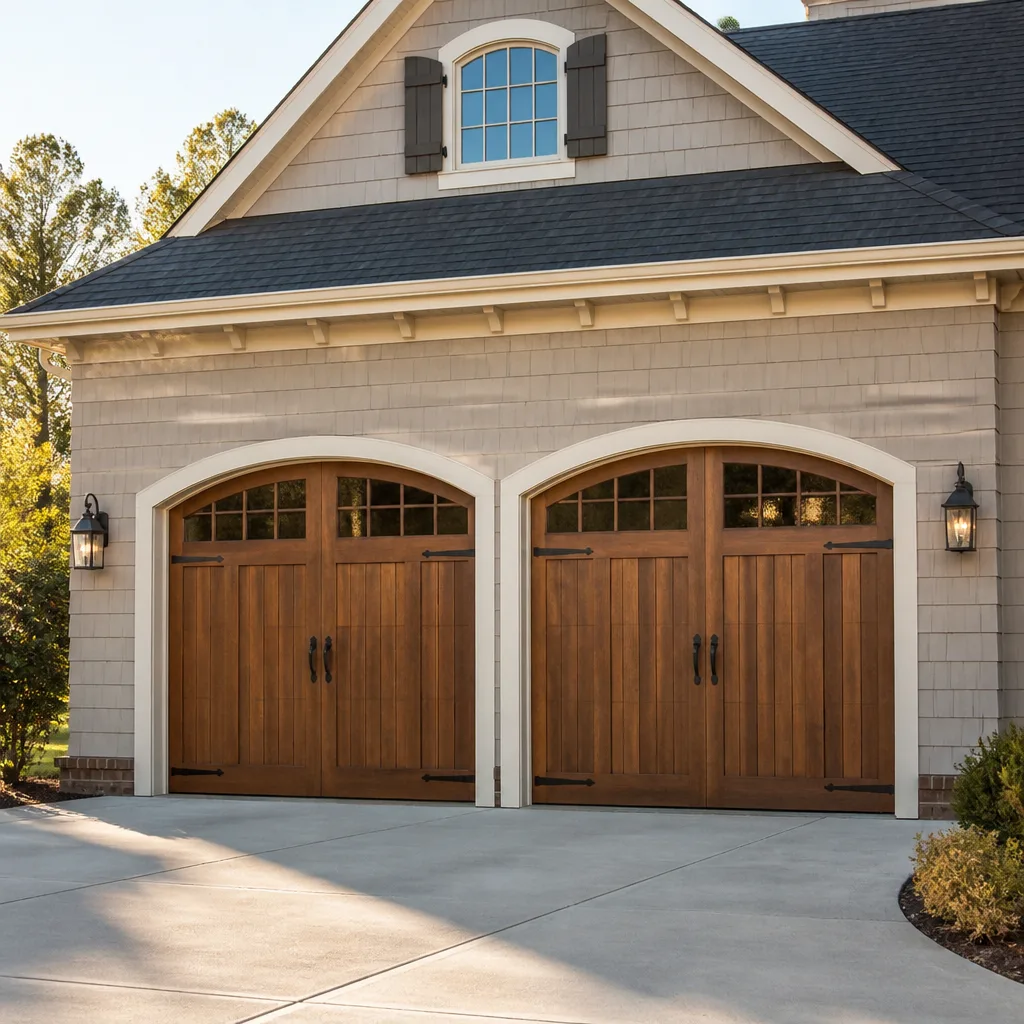 Carriage house
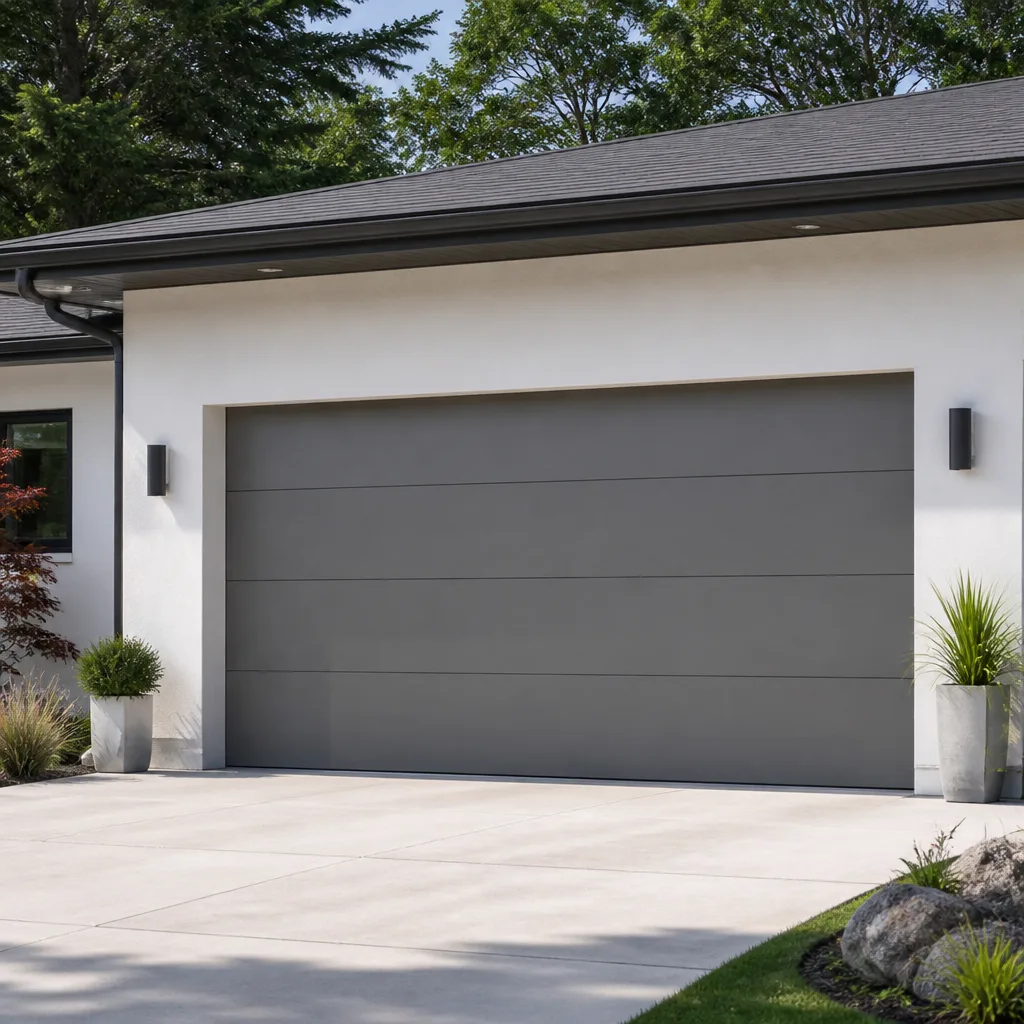 Modern flush
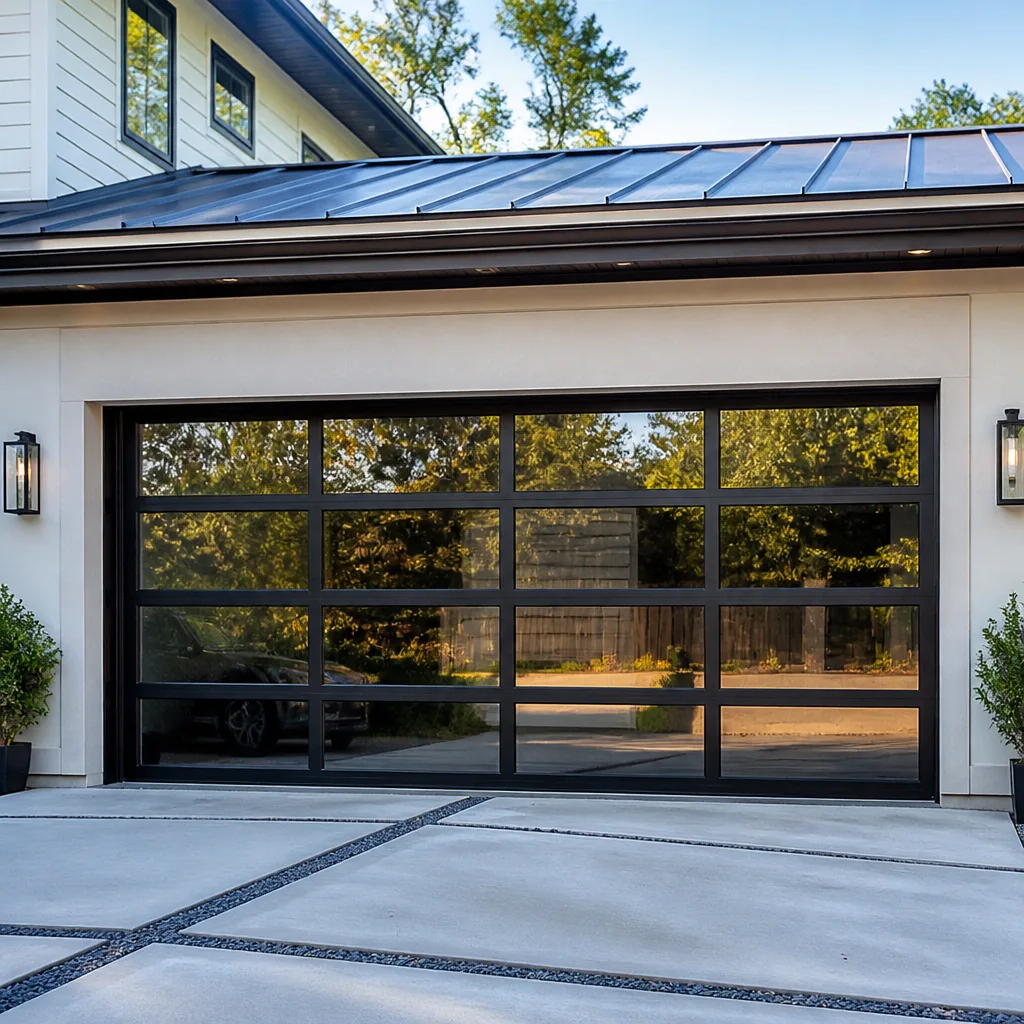 Full-view glass
 LiftMaster openers
 Chamberlain openers
Full 25-point door and opener safety check with every visit - springs, cables, rollers, tracks, and your LiftMaster or Chamberlain opener included
You get a price before we start. It does not change when the pro arrives.
Get your free estimateEmergency Garage Door Warning Signs Every Homeowner Should Know
A torsion spring doesn’t snap without history. In the days and weeks before failure, the door usually tells you: subtle resistance on manual lift, a faint popping sound under load, a bottom seal that suddenly shows daylight on one side. Those signals are measurable stress indicators, not random quirks. The emergency was announced in advance. It just wasn’t recognized. This guide teaches you to read those pre-failure signals in plain terms, maps each one to a realistic timeline so you know what’s urgent and what can wait a week, and shows you what to document before you call. In Winchester, where summer heat and dry air work torsion springs hard, reading these signs early is the difference between a planned repair and a 2 a.m. call.
Quick Answer
The five pre-emergency warning signs are unusual resistance on manual lift, an uneven gap at the bottom seal, visible rust or a visible gap in the spring coils, jerky travel on the way up, and an opener motor that runs longer per cycle than it used to. Signs tied to cables and springs mean days to weeks. Signs tied to balance, tracks, and hinges mean weeks to months. Any sign that involves a door you can lift from the outside means call today.
Styles & brands we work with
- Raised-panel steel
- Carriage house
- Modern flush
- Full-view glass
- LiftMaster openers
- Chamberlain openers
Table of Contents
- Warning Sign Timelines: What’s Urgent and What Can Wait
- The Five Signals Most Homeowners Dismiss
- The Overnight Test: Why the Door Works at Night and Binds by Morning
- When a Warning Sign Is Also a Security Problem
- Springs and Cables: The Signs You Should Never Test Yourself
- Photograph It Monday, Call Monday: Building the Record Before the Emergency
- Common Mistakes to Avoid
- Frequently Asked Questions
 Before
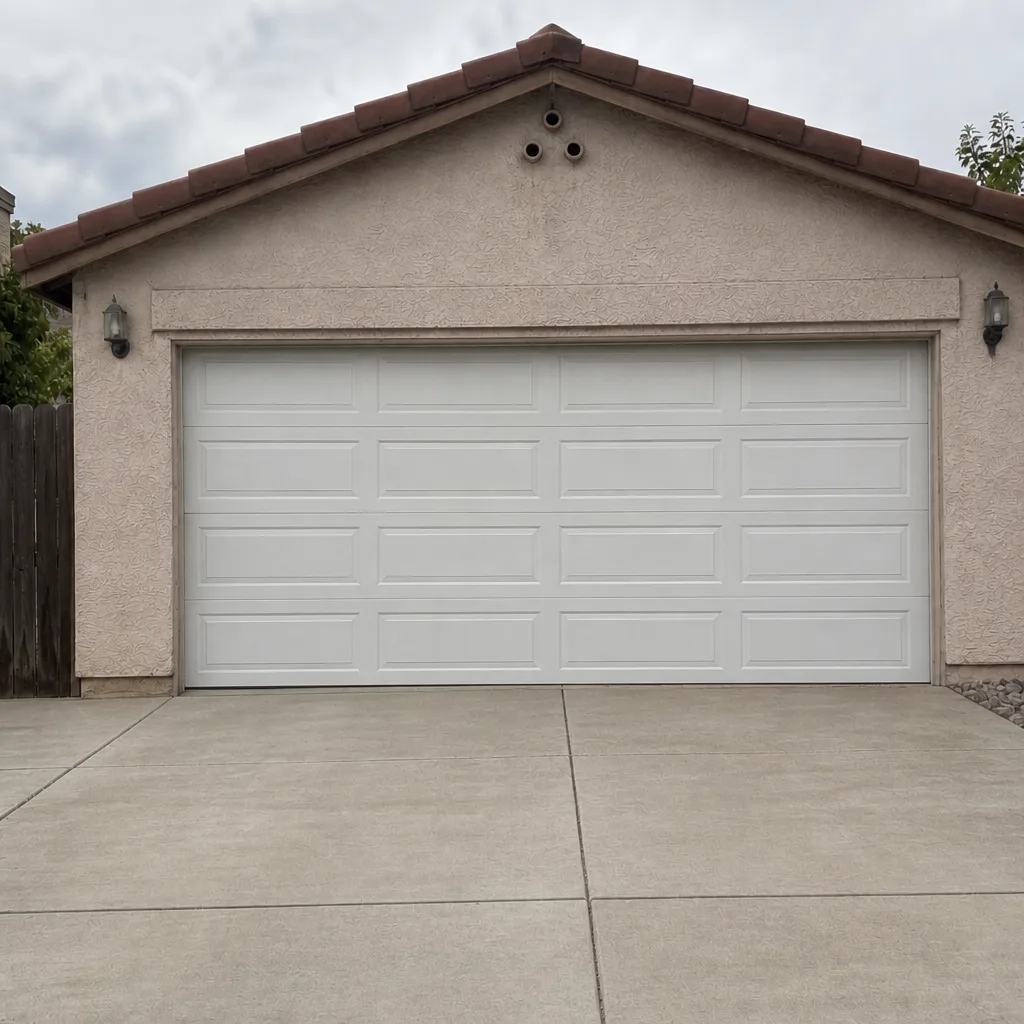 After
Warning Sign Timelines: What’s Urgent and What Can Wait
Not every warning sign carries the same clock. A fraying cable is a days-to-weeks problem because a cable that lets go drops one side of the door and can send the panels twisting. A door that’s slightly out of balance is a weeks-to-months problem, but it accelerates wear on the opener every single time you use it. Knowing which bucket a sign falls into is what turns a vague worry into a decision.
Here’s how we sort the signs when we walk a Winchester driveway:
- Days to weeks: frayed or kinked cables, visible gaps in spring coils, popping sounds under load, a door that reverses on its own mid-travel.
- Weeks to months: uneven bottom gap, jerky travel, opener running longer per cycle, loose hinges and rollers, a door that sags on one side.
- Call now: anything that lets the door be lifted from outside, a door stuck open, a snapped spring with the door down, or a door that has come off a track.
The pattern we see in Winchester is that heat does the timing for you. Between June and September, torsion springs here run through thousands of cycles in 100-degree-plus garage heat, and the fatigue compounds faster than it does in cooler climates. In a neighborhood like Summerlin or the older stretches of Green Valley, we’ll often find a spring that’s a few hundred cycles from failing but shows rust bloom and a thin wire diameter that tells us it’s been stressed hard. That’s a plan-it repair, not an emergency, and we’d rather you know that on a Tuesday than discover it on a Saturday night. The same sorting logic applies whether you’re calling us or anyone else: put the sign in a bucket, then act on the bucket. You can read more about what a standard repair visit looks like on our Garage Door Repair in Winchester page.
The Five Signals Most Homeowners Dismiss
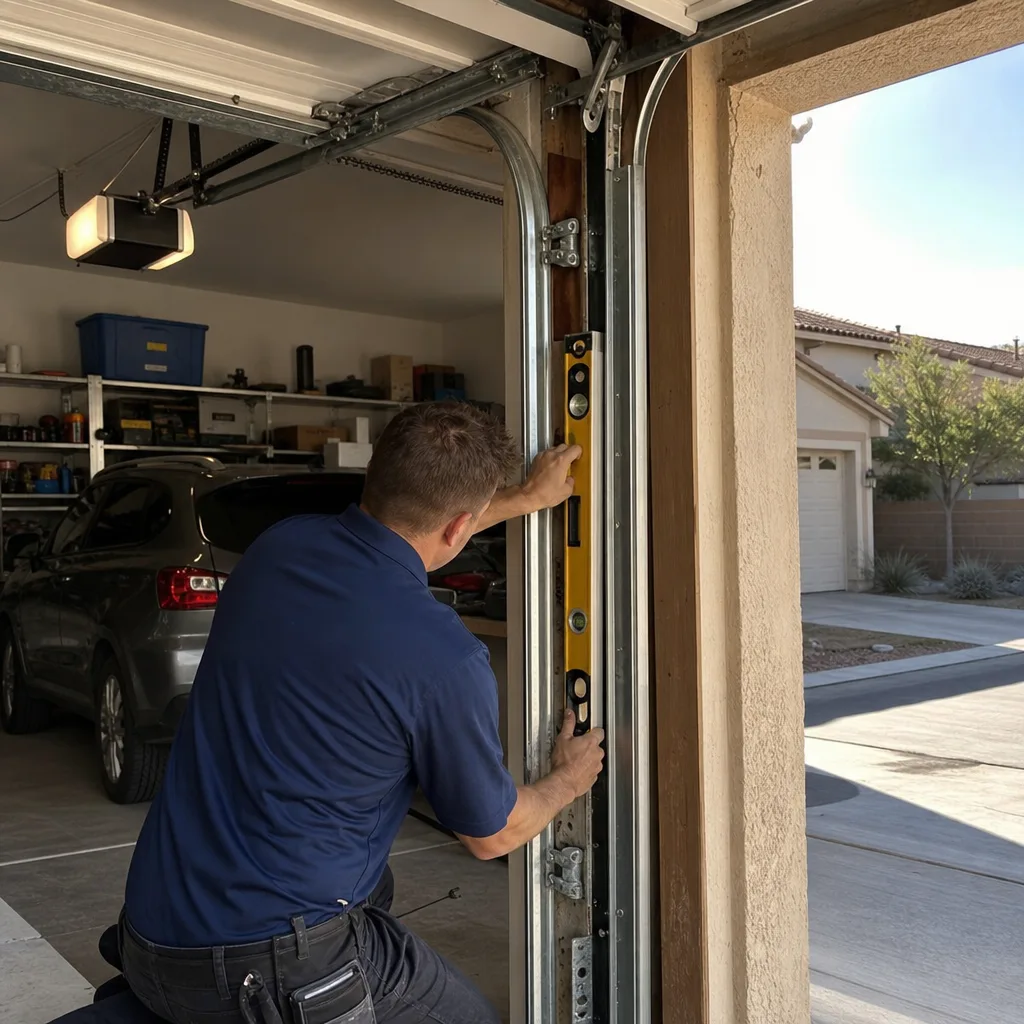
These are the five that come up again and again in our service calls, and they’re the five that get explained away the longest. Each one is measurable if you look for it correctly.
- Unusual resistance on manual lift. Disconnect the opener by pulling the release cord, then lift the door by hand to about waist height. A healthy door lifts with steady, even effort and stays put when you let go halfway. If it feels heavy, or it sinks back down, the balance is off and the spring is doing less work than it should.
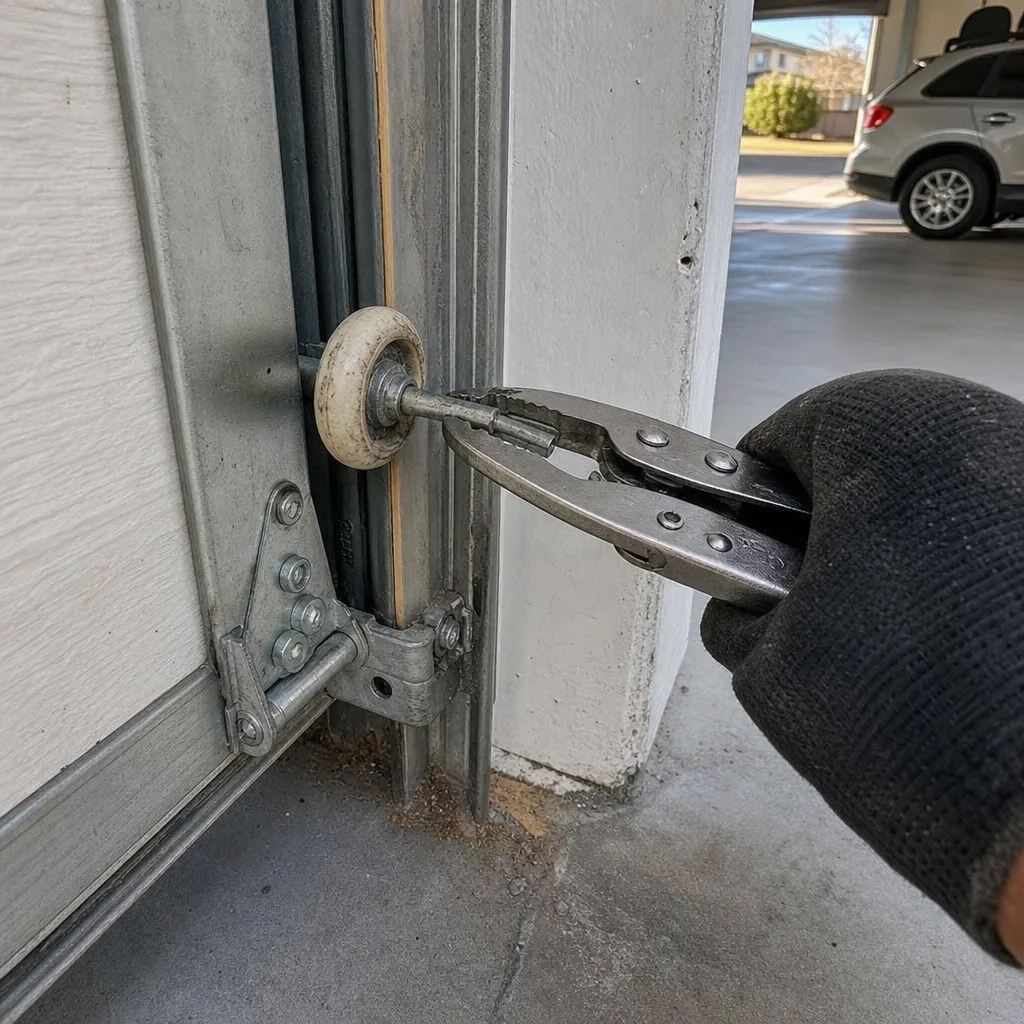
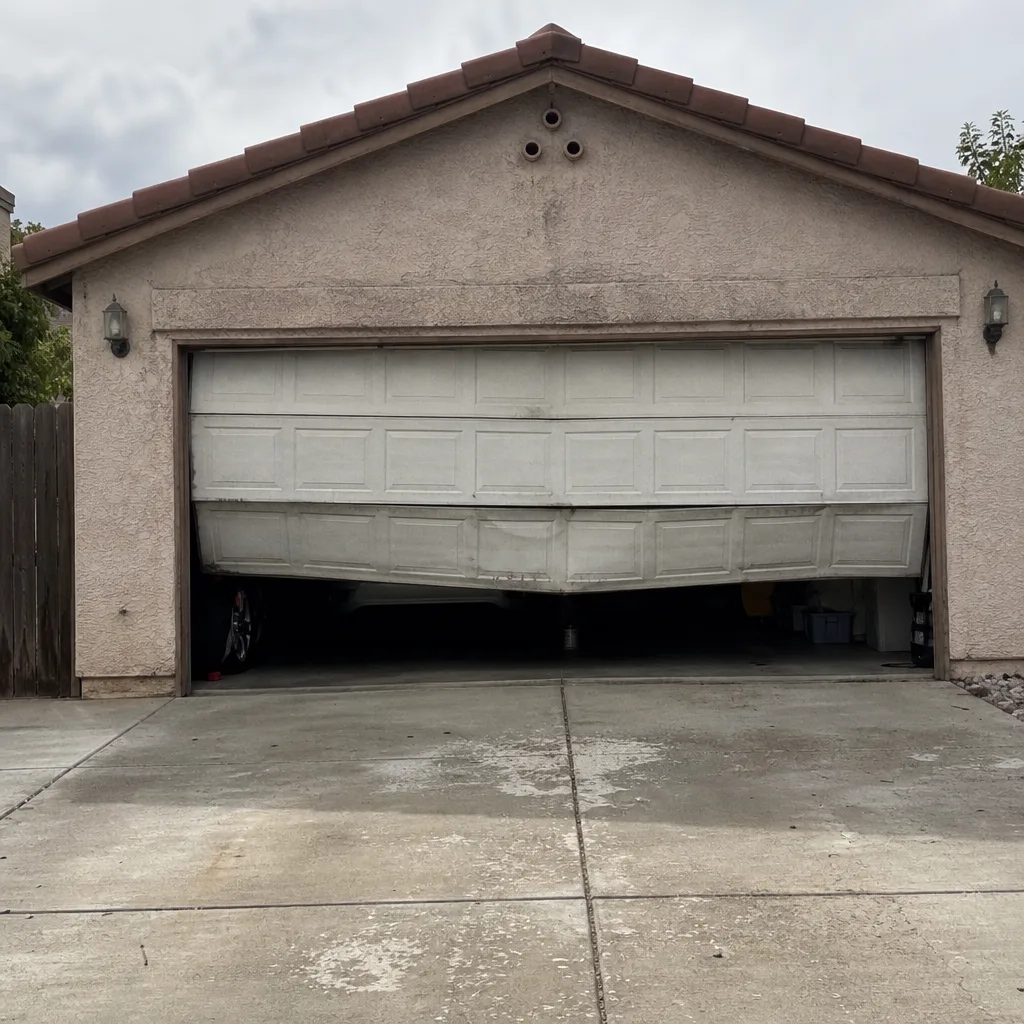
- An uneven gap at the bottom seal. Stand inside the garage, close the door, and look for daylight under the bottom edge. A gap on one side means the door isn’t sitting square. It could be a track that’s shifted, a hinge that’s bent, or a panel that’s warped.
- Visible rust on the spring coils. Rust on a torsion spring is a stress indicator, not a cosmetic flaw. Springs are wound under enormous tension every cycle, and rust pits the wire. A spring with rust bloom or a visible gap between coils is closer to failure than its age suggests.
- Jerky travel on the way up. A door that stutters, shudders, or catches as it rises is often telling you about a bound roller or a track that’s out of alignment. It’s usually not the opener, and it’s usually not something to ignore.
- The opener motor running longer per cycle. If you’ve noticed the opener sounds like it’s working harder than it used to, or the door takes an extra two or three seconds to close, the opener is compensating for drag. That drag has a cause, and it wears out the opener’s gears and logic board if it isn’t found and fixed.
What we’re doing when we respond to a call about one of these is simple. We photograph the failed or worn component before we quote anything, which is Clause 4 of The Haven Standard. You see the rust, the gap, or the bound roller on our screen before we name a price. If you’d rather do that reading yourself in advance, our Garage Door Opener Repair & Installation in Winchester page covers the opener side of the equation in more depth.
The Overnight Test: Why the Door Works at Night and Binds by Morning
This is one of the most useful diagnostic patterns we know, and most homeowners have never heard of it. A door that closes smoothly at 10 p.m. and then binds, shudders, or sits slightly uneven at 7 a.m. is telling you that temperature or humidity changed something in its geometry between the two moments. The door didn’t develop a new problem overnight. The overnight swing exposed a problem that was already there.
Winchester is a good place to see this. Our temperature swings between evening and morning can run 20 to 30 degrees in spring and fall, and the dry air pushes wood and steel in opposite directions. What actually happens overnight:
- A steel track expands or contracts slightly, and a roller that was riding cleanly now catches on a spot it didn’t catch before.
- A hinge that was tight loosens a touch, or a screw that was holding a track bracket backs out a fraction.
- A panel that’s already slightly warped sits differently once the metal cools.
To run the test on your own door, close it fully at night, open it the next morning, and watch the first few feet of travel. Note where it stutters and whether the bottom edge sits square when it comes back down. If the door binds in the same spot every morning, that’s a developing hardware problem, and it’s usually easier and cheaper to fix before it becomes an off-track door. When we find this pattern on a Winchester call, we usually trace it back to a worn roller or a bracket that’s shifted, and the repair is straightforward. Our Garage Door Installation in Winchester page covers the other end of that conversation if the door’s age means replacement beats repair.
When a Warning Sign Is Also a Security Problem
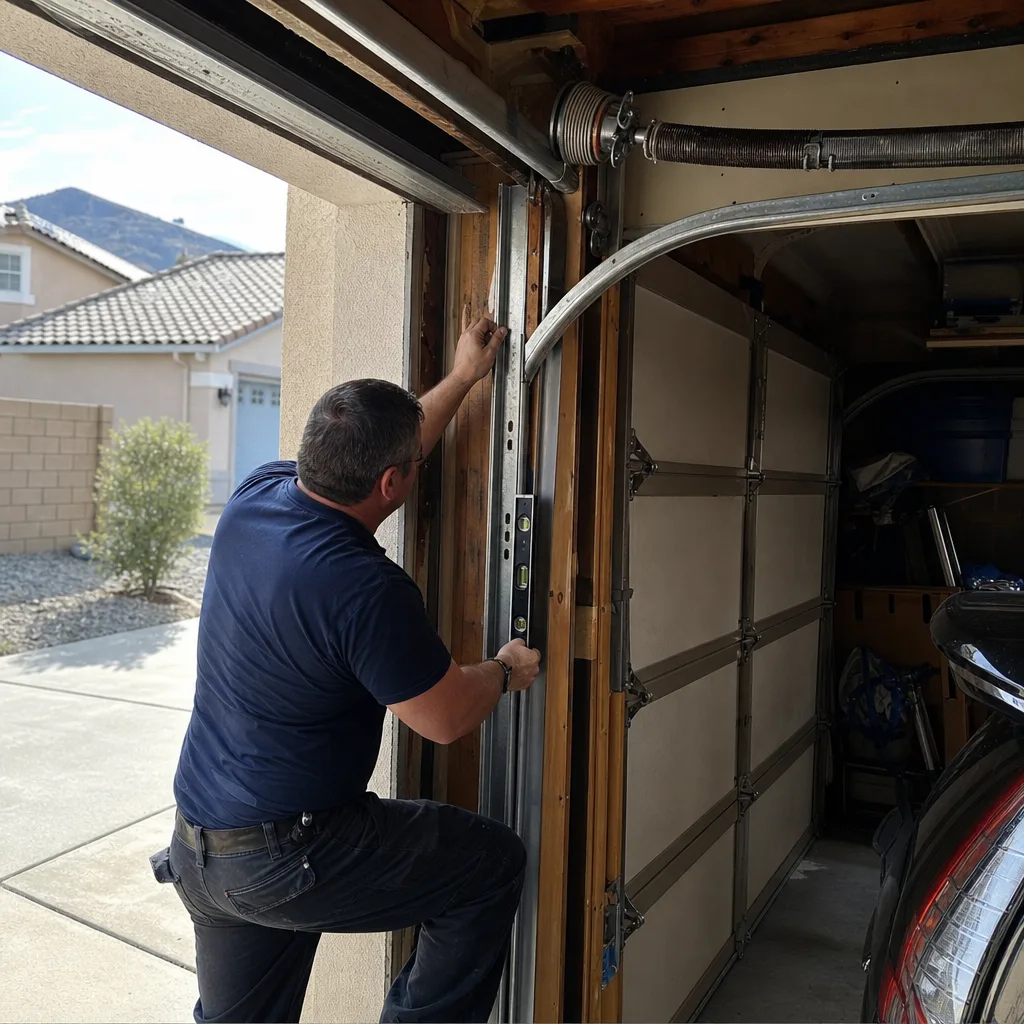
Some signs are about the door not working. Others are about the door not protecting. A garage door that closes but doesn’t latch all the way, or that can be lifted from the outside with moderate upward force, is a different kind of emergency. The panel looks fine from the driveway. The lock is doing nothing.
Here’s what to check, and what to do about it:
- Close the door and push up on the bottom panel from outside. If you can move it, even an inch, the door isn’t latching securely. On a properly set door it shouldn’t budge.
- Look for the manual release cord hanging within reach of the outside gap. A cord that can be grabbed through a gap in the panel or the top frame line is a security gap, not a convenience.
- Check the bottom seal for gaps wider than a finger. That’s the same gap that lets a coat hanger in. Weatherstripping is inexpensive and it’s usually the fastest security fix on the door.
- Test the opener’s automatic reversal. Put a piece of wood under the closing door. It should stop and reverse on contact. If it doesn’t, the safety reverse is failing, and that matters both for kids and for the door’s ability to close properly under load.
- Listen for the latch plate. A door that closes and then quietly settles back down a quarter inch isn’t latched, it’s resting.
We treat a door that can be opened from outside as a same-day call, not a scheduled repair. In Winchester, we see this most often on older doors where the safety reverse has drifted or the bottom seal has worn thin across a decade of desert sun. Both are cheap problems to fix and expensive ones to discover later.
Springs and Cables: The Signs You Should Never Test Yourself
Torsion springs and lift cables are the two components under the most tension on the entire door, and they’re the two where a homeowner should not test anything beyond looking. A torsion spring can store hundreds of pounds of force. When it releases, it releases fast enough that a trained technician treats it as a controlled hazard. We don’t want you anywhere near it.
What you can safely observe:
- Rust on the coils. Look at the spring above the door. Rust bloom, pitting, or a thin, dark line across the wire is a sign of fatigue.
- A visible gap between coils. When the door is fully closed, the coils should sit tight. A gap suggests the spring has already stretched under load.
- Frayed or kinked cables. Look along the cable on each side of the door. Individual strands sticking out of the braid, a kink, or a cable that’s jumped its drum is a stop-using-it sign.
- A popping or twanging sound under load. A spring that pops as the door moves is telling you the coil is binding.
When we respond to a cable or spring call, our technicians photograph the failed component before quoting anything, and we quote a written, flat price and a written scope before any work begins. That’s Clause 1 of The Haven Standard, and it exists because this trade has a long history of invoices that grew after the fact. You’ll get the price in writing first. If you’re looking for the broader picture on how a full repair visit is structured, our Servo Garage Doors Winchester home page walks through the process from call to photo record.
Photograph It Monday, Call Monday: Building the Record Before the Emergency
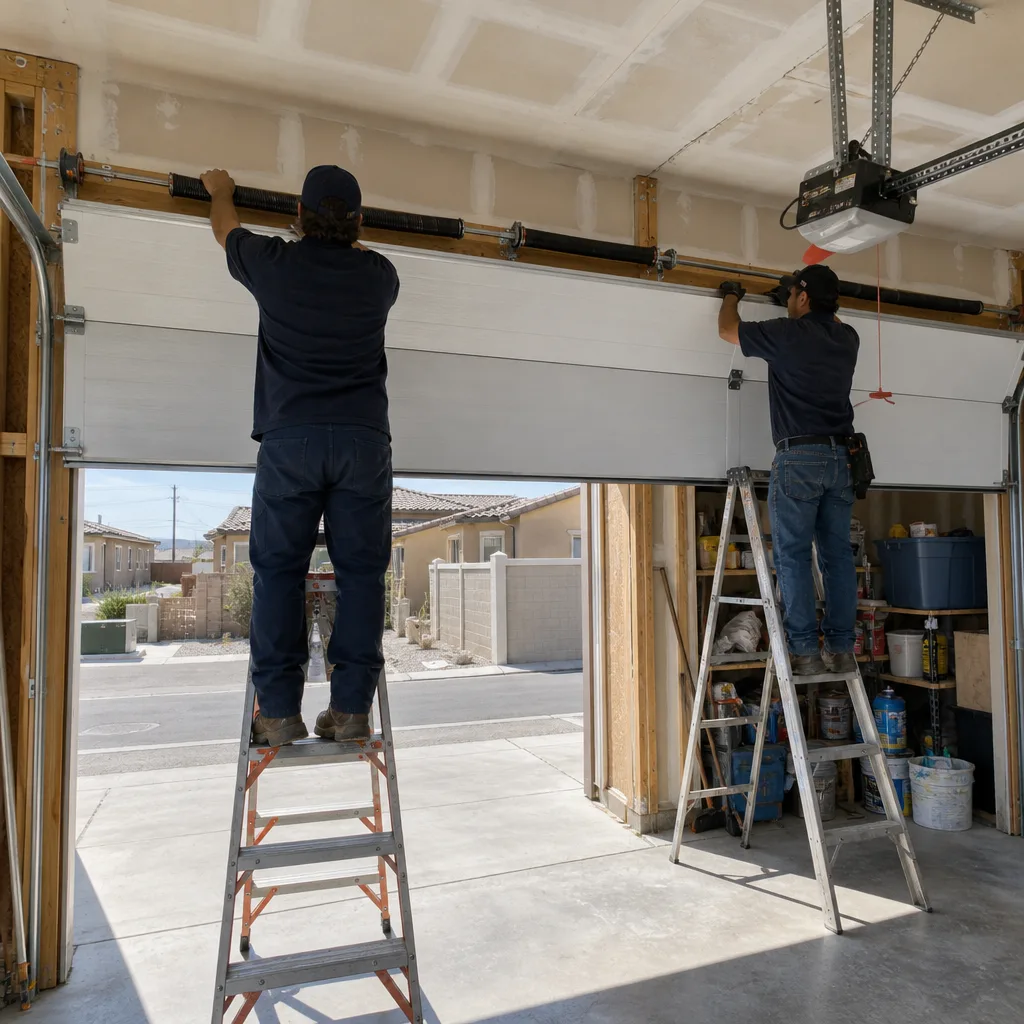
Documentation isn’t paperwork. It’s evidence, and it’s easier to build than most homeowners realize. Here’s the practice we recommend to every Winchester homeowner we work with: when you notice a warning sign, photograph it, note the date, and call that same day. A photo of a fraying cable on Monday morning, taken on a phone, is a repair record that starts before the emergency rather than after it.
What that record gets you:
- A timeline for the failure. When a technician can see the condition of a component on the day you first noticed it, they can tell you whether it’s a days problem or a weeks problem.
- A benchmark for the repair. If the spring has rust and a visible gap in the photo, the case for replacement is already made before anyone quotes a price.
- A clear record for the next owner. If you sell the house in two years, a documented repair history on the door is a real asset in a Winchester listing. Buyers ask about the door more often than sellers expect.
- Protection against a moving quote. If the documented condition is on file, the written scope is anchored to it, and the flat price holds.
On our side, we close every job with a documented photo record of findings and completed work. It’s included, not optional, on every visit. Every one of the 18,000-plus doors we’ve made right since 2015 closes that way, and it’s the reason the 365-Day Done Right Promise works: if a repair isn’t right, we can see what was done and make it right. The customer has the photos too, so there’s no argument about what was found. If you want to bring a written estimate from another company to us for a free second opinion, we’re happy to look at it. Bring the paperwork.
Common Mistakes to Avoid
- Treating a popping spring as a “getting used to it” noise. In Winchester, springs pop more in summer heat, and that’s the season we replace the most of them. A popping spring is telling you something, and it’s usually fatigue, not habit.
- Lubricating a track that needs aligning. Grease quiets a noise temporarily and hides the cause. A shudder that disappears after lubrication usually comes back in a week, and by then the roller or the bracket it was rubbing against is more worn.
- Assuming the opener is the problem because the door is slow. Nine times out of ten, a slow or strained door is a balance or drag problem, not an opener problem. Replacing the opener first costs more and fixes nothing.
- Replacing the door when the door is fine and the hardware isn’t. A door that’s a little uneven or stiff on one side is often a hinge, roller, and spring job, not a new-door job. Get an honest read on the hardware before you sign for a new door.
- Disconnecting the opener for “just a minute” and leaving it disconnected. A door that’s been released from the opener can free-fall if the balance is off. Reconnect it before you leave the house for the day.
- Testing a torsion spring’s tension by hand. The spring stores enough force to break fingers or worse when it lets go. This is a look-only component. Don’t wind it, don’t test it, don’t reach around it.
- Ignoring a bottom seal gap through one monsoon and finding out in the next. Winchester’s summer storms drive water under a gap that seemed harmless in July. By August it’s under the door, on the slab, and into the wall.
See the difference
BeforeAfter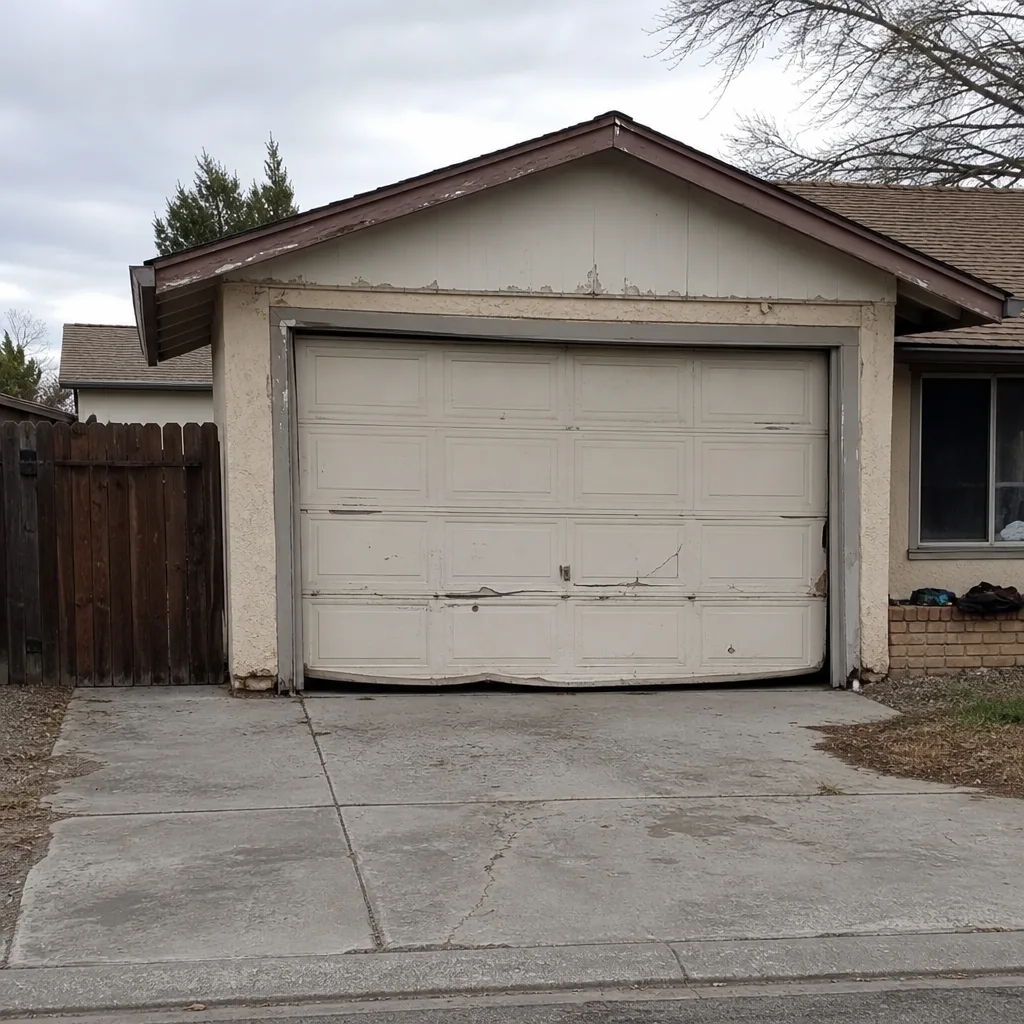 Before
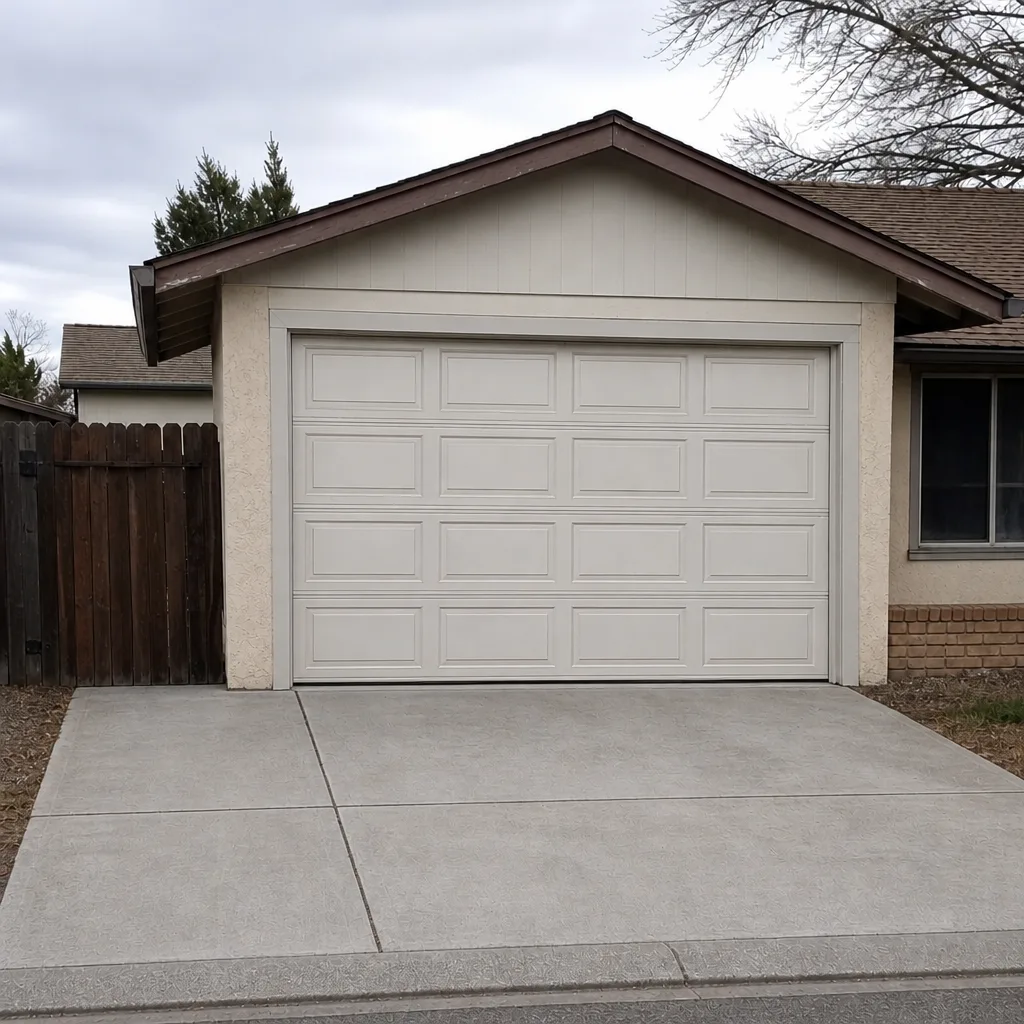 After
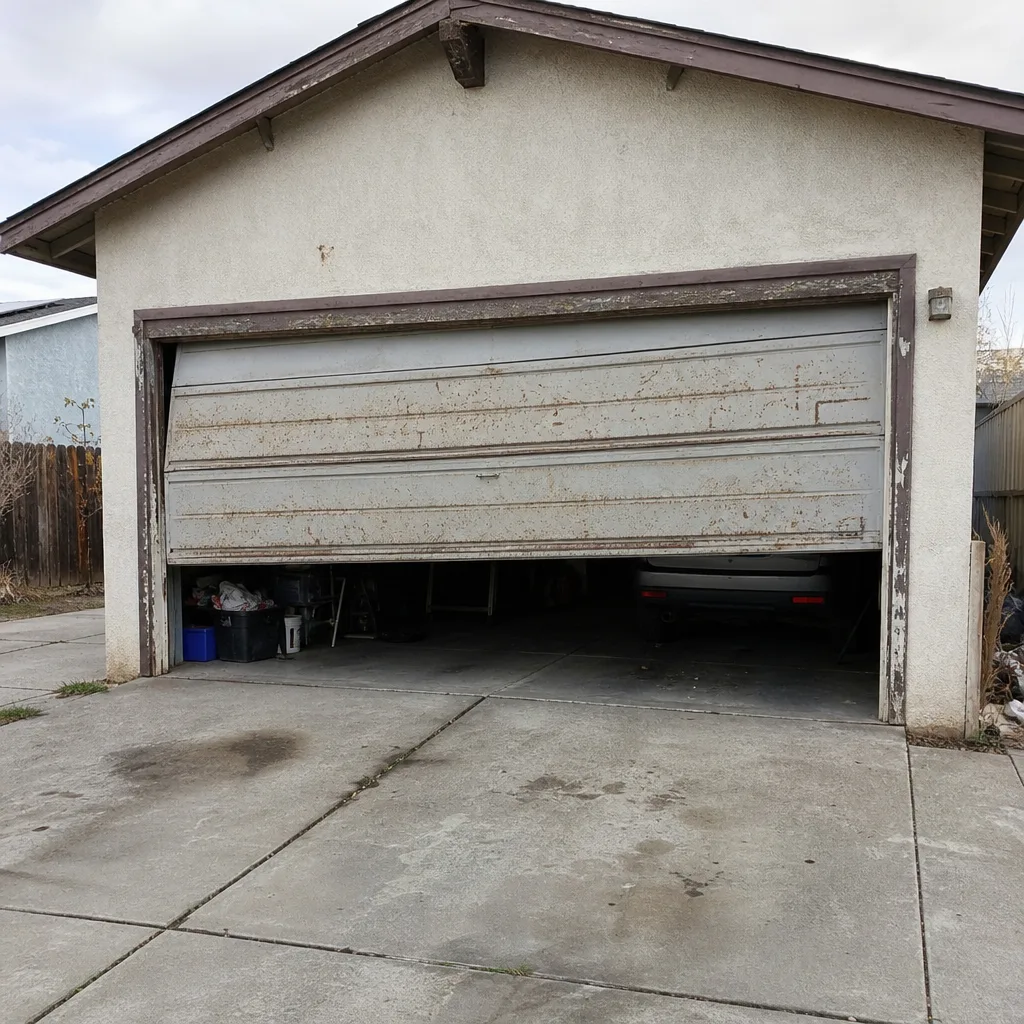 Before
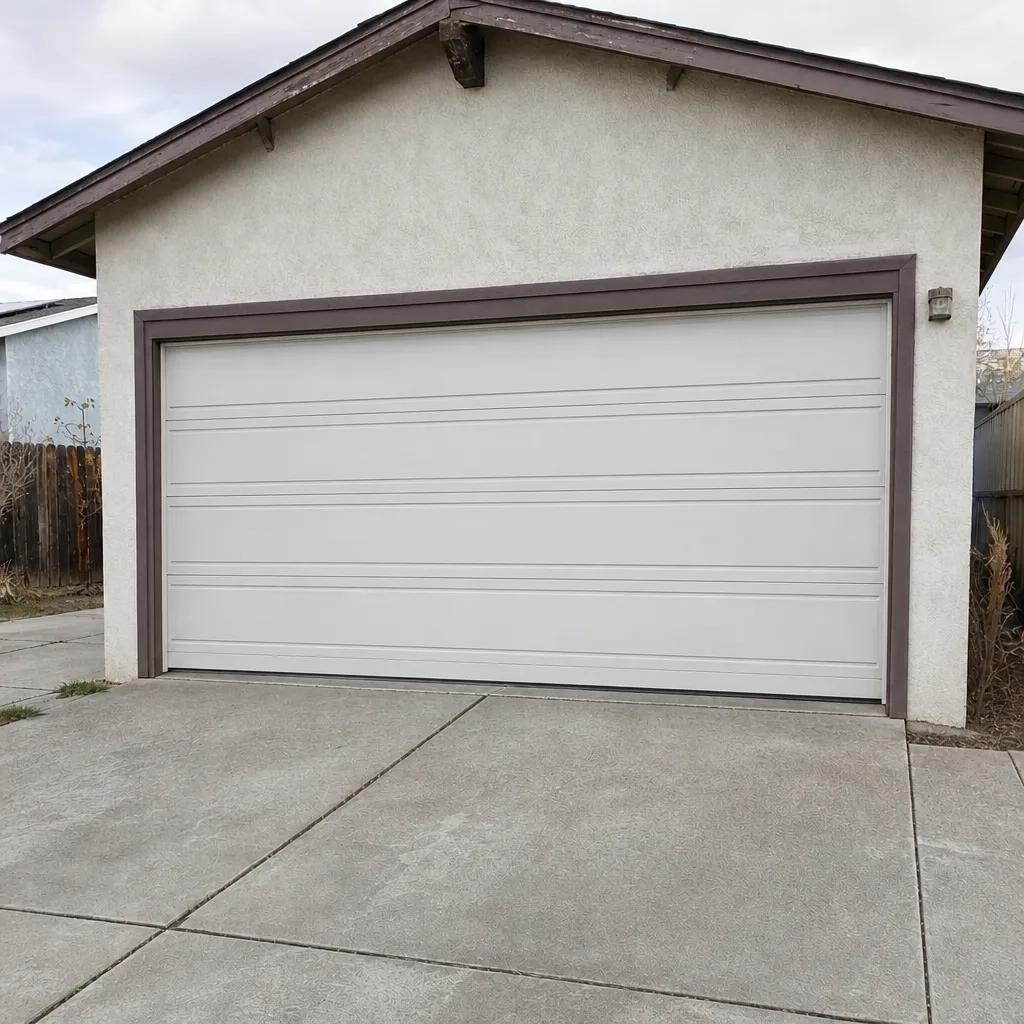 After
When to Call a Professional
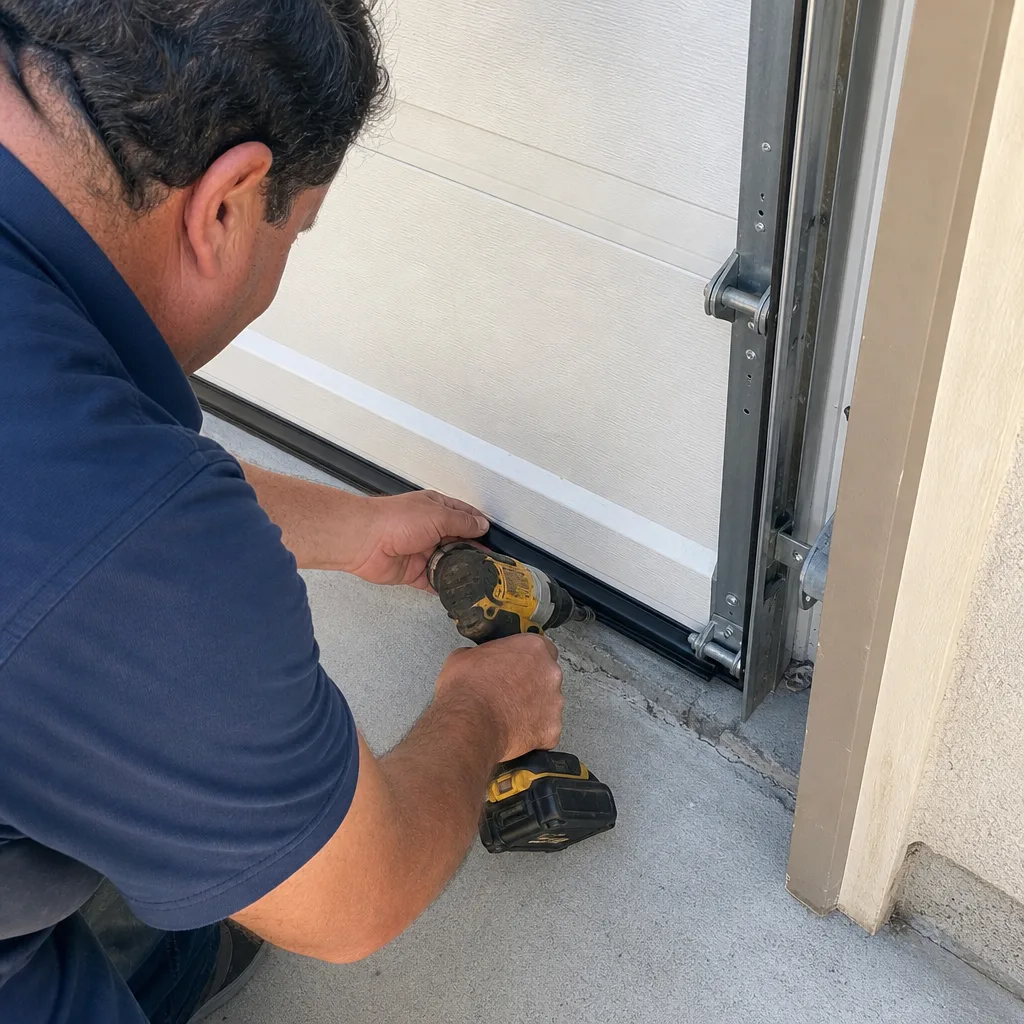
Call today if the door can be lifted from outside with a push, if it’s come off its track, if a spring is visibly broken or popping under load, if the cables are frayed, or if the door is stuck open. These are the situations where a trained professional is not optional. For everything else on the timeline, you can call to schedule: an uneven bottom gap, a jerky travel, an opener that’s sounding strained, or a door that binds only in the morning. Our technicians have up to 11 years of experience and can tell you on the call whether the sign you’ve described is a wait-and-watch or a come-today. Servo Garage Doors Winchester offers free estimates in Winchester. Call (855) 517-0284, and you’ll get a live person, day or night, with a written price before any work starts.
Frequently Asked Questions
The earliest are resistance on manual lift, a faint popping sound under load, and visible rust on the torsion spring coils. A door that used to lift easily and now takes effort is telling you the spring is fatigued. These signs typically appear days to weeks before a failure, which is why they’re worth acting on the day you notice them. Call (855) 517-0284 for an exact quote. Estimates are free.
Torsion springs usually last 7 to 12 years in Winchester’s climate, with the shorter end of that range more common in garages that face west and take the afternoon heat all summer. A door with rust bloom and a visible gap between coils is closer to replacement than its age alone suggests. If you’re unsure, a same-day visual check settles it. Call (855) 517-0284 for an exact quote.
No. A torsion spring stores enough force to cause serious injury when it releases, and this is not a component for home repair. We recommend stopping use of the door and calling a technician. The professional should show you the failed spring before quoting a price, which is exactly what we do on every call. Call (855) 517-0284 for an exact quote. Estimates are free.
That overnight pattern is temperature and humidity at work on the tracks, hinges, and panels, and it usually points to a developing hardware issue. The door itself didn’t change overnight. The conditions exposed a roller that’s bound, a bracket that’s slipped, or a panel that’s warped. It’s a worth-a-call sign, not an emergency. Call (855) 517-0284 for an exact quote.
Treat it as a same-day call. A door that can be pushed up from outside, even a little, means the latch isn’t doing its job and the door isn’t securing the house. Check the bottom seal, the release cord reach, and the opener’s safety reverse; then call. Call (855) 517-0284 for an exact quote. Estimates are free.
A popping sound under load is a warning sign, not always an emergency, but it should be diagnosed rather than ignored. It usually means a spring coil is binding, and it can precede a failure within days or weeks. The right move is to stop using the door and get it looked at. Call (855) 517-0284 for an exact quote.
The Bottom Line
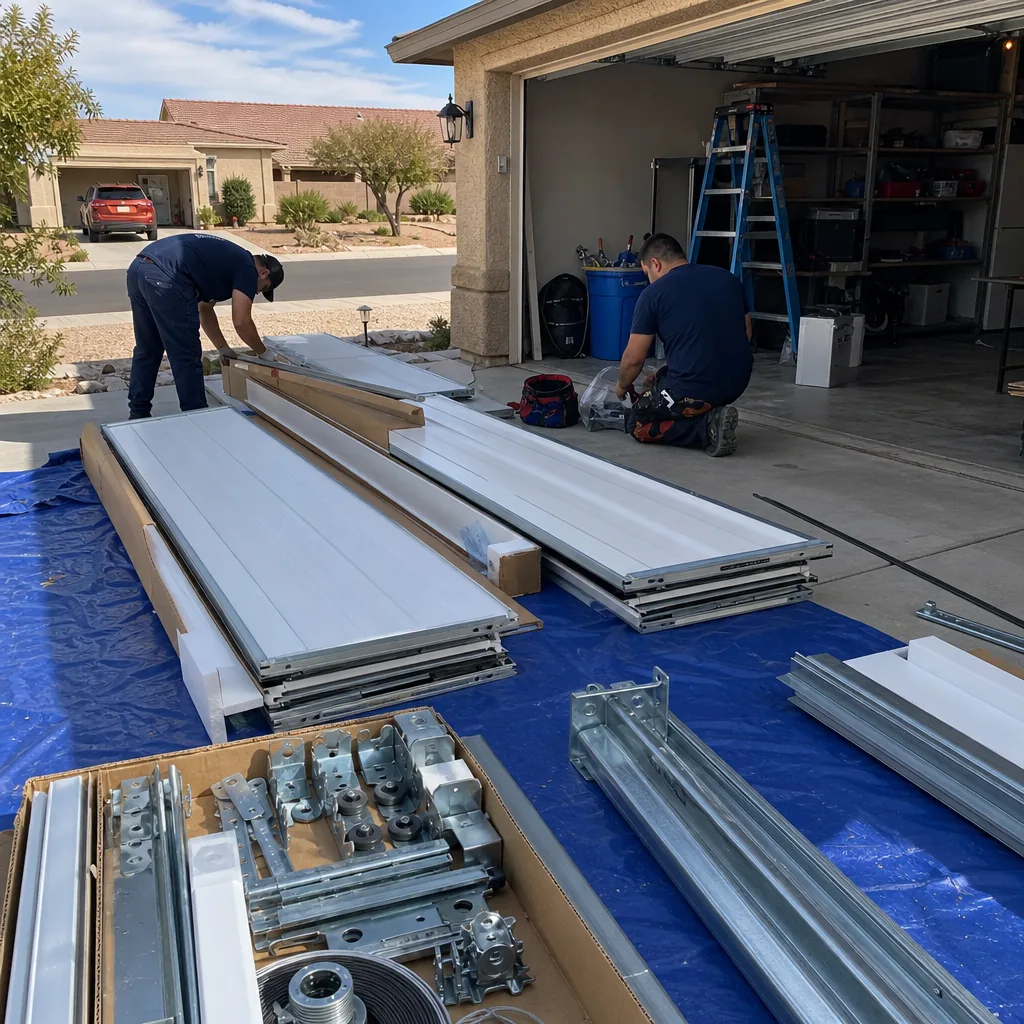
Every garage door emergency in Winchester has a lead-up. Read the five signals, put them on the timeline, run the overnight test, and check the door from the outside once a month. When you find a sign, photograph it, note the date, and call. Our technicians have up to 11 years of experience, and we quote a written, flat price and a written scope before any work starts. Every visit closes with a photo record of what we found and what we did, and the 365-Day Done Right Promise stands behind the repair. Call (855) 517-0284 for a free estimate, and if it’s not the emergency you feared, we’ll tell you so plainly.
Written by the team at Servo Garage Doors Winchester.