
Last updated November 18, 2026
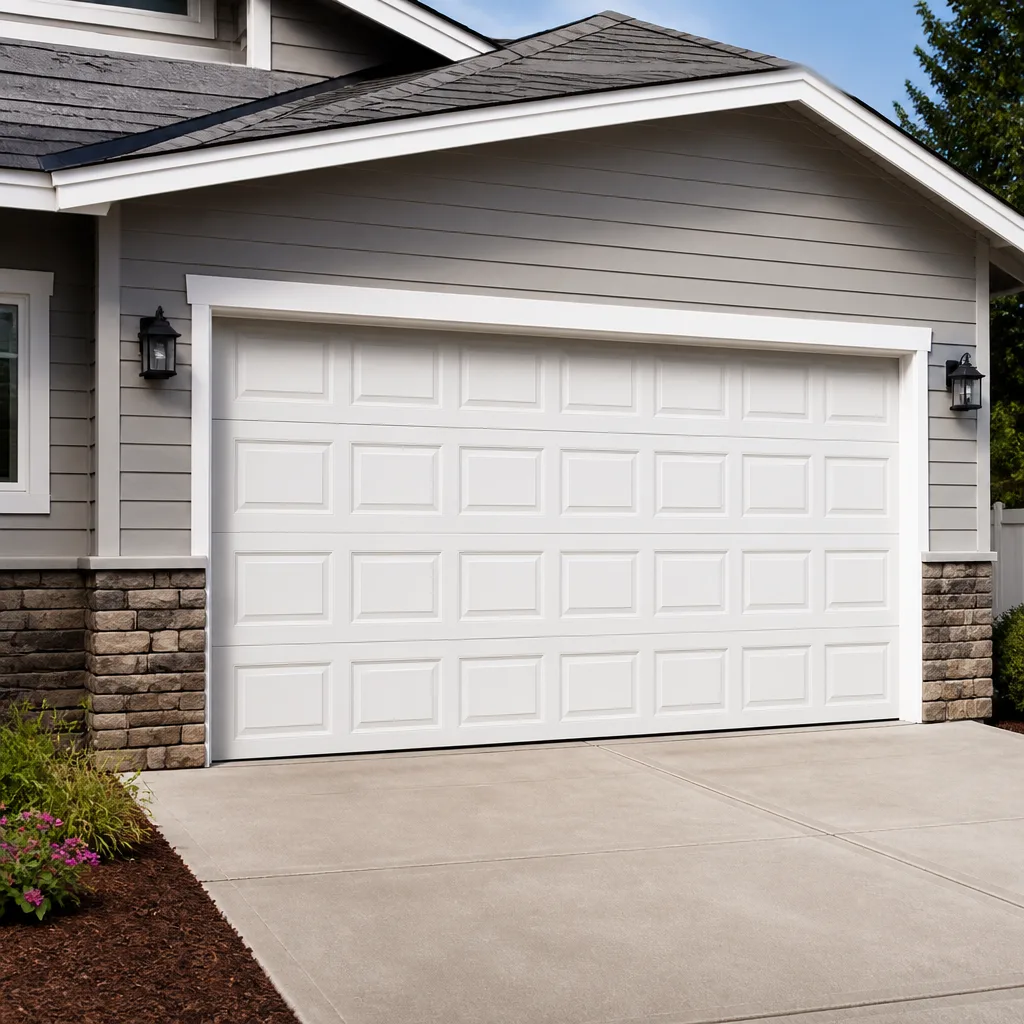 Raised-panel steel
 Carriage house
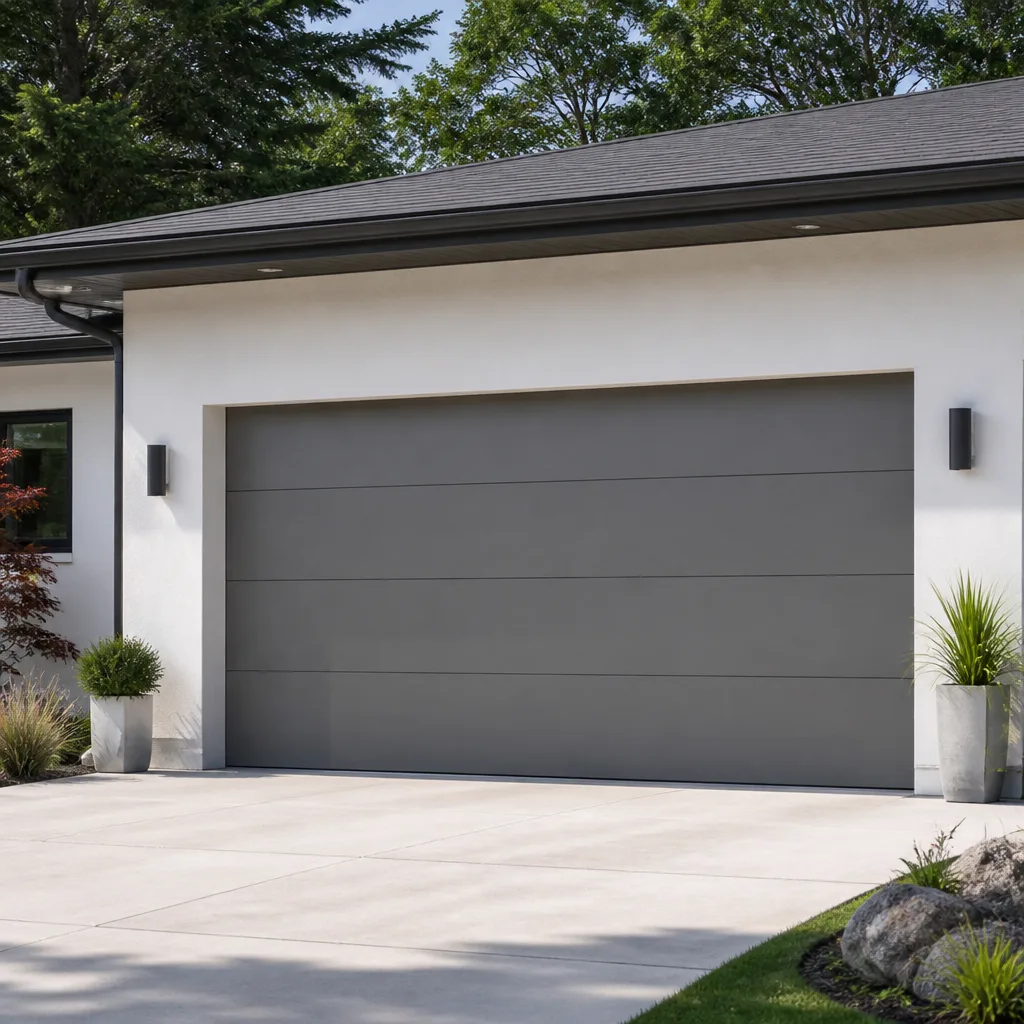 Modern flush
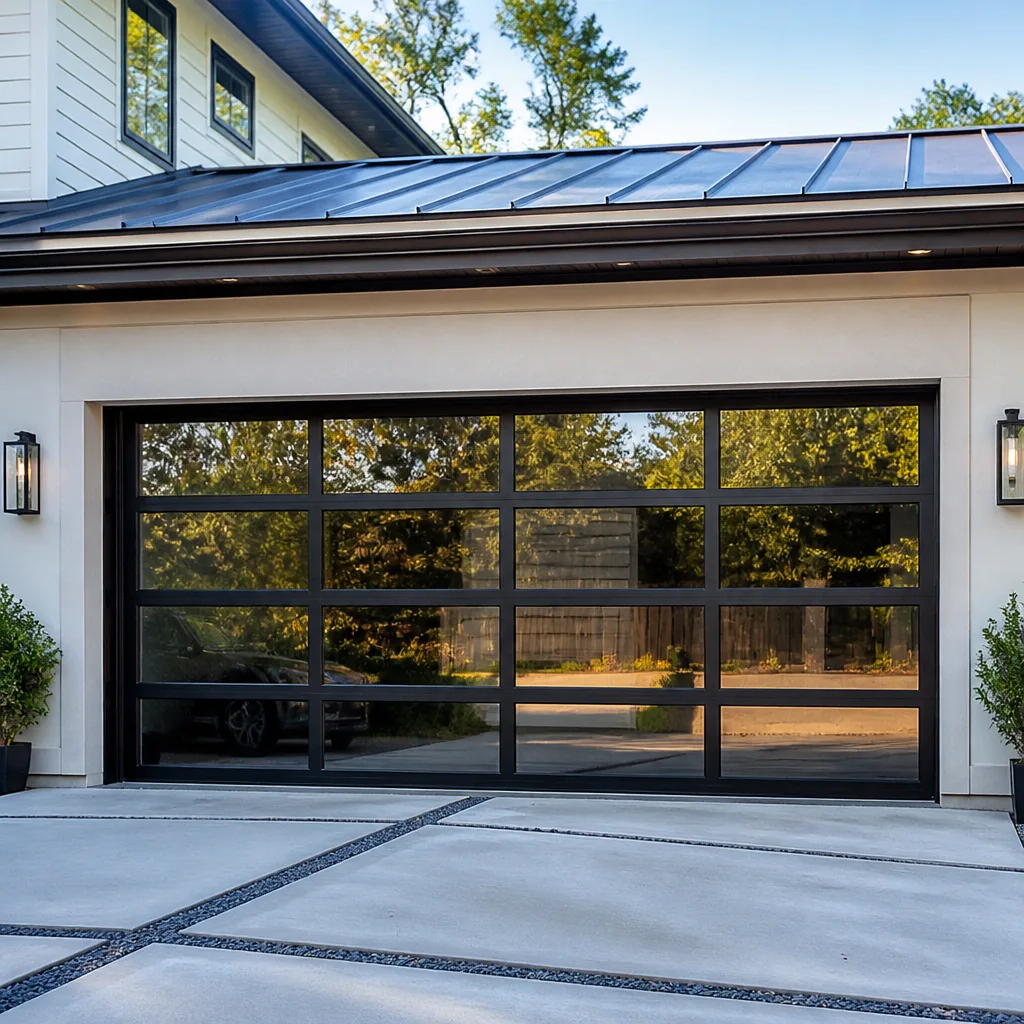 Full-view glass
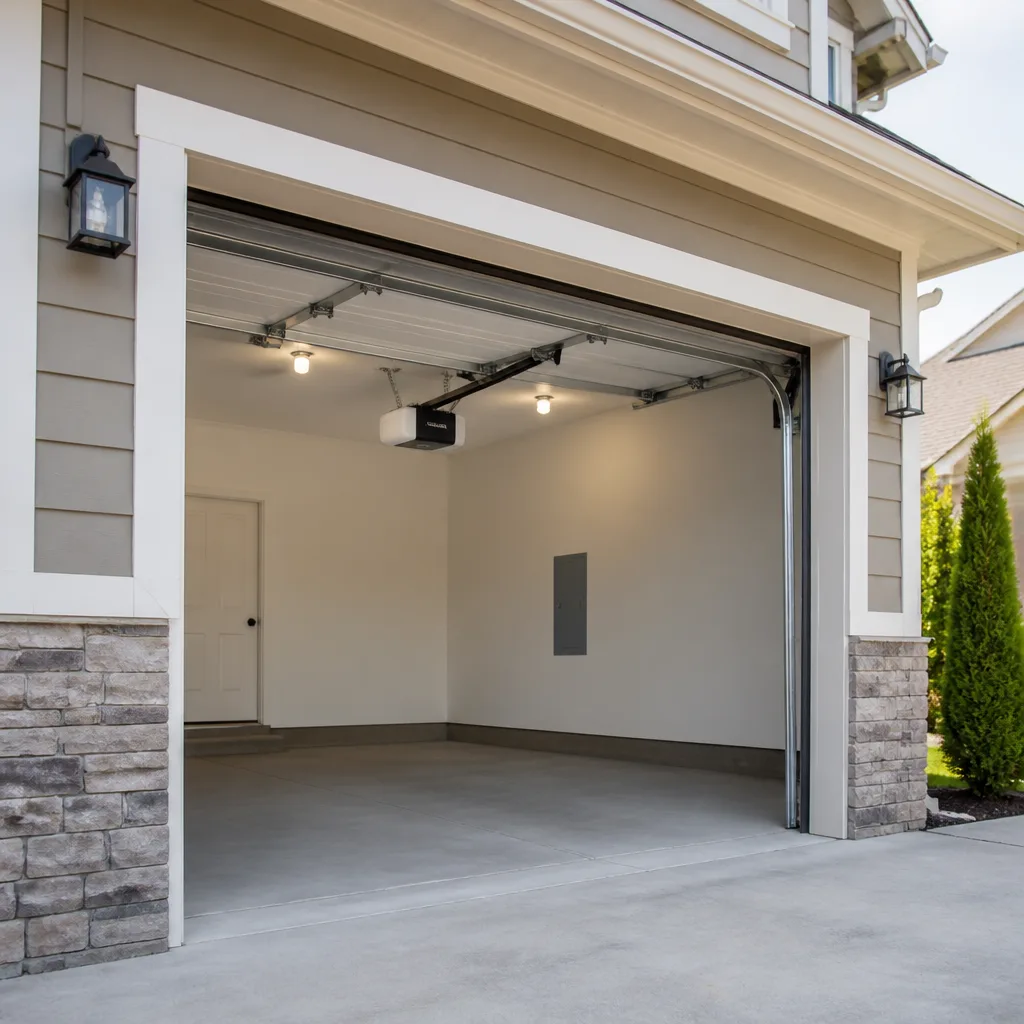 LiftMaster openers
 Chamberlain openers
Full 25-point door and opener safety check with every visit - springs, cables, rollers, tracks, and your LiftMaster or Chamberlain opener included
You get a price before we start. It does not change when the pro arrives.
Get your free estimateGarage Door Installation Maintenance Schedule: What to Do and When
New hardware vibrates loose. That’s not a defect; it’s physics. Lag screws holding the spring anchor plate, hinge bolts, and track brackets all see their heaviest movement in the first 500 cycles of a door’s life, and the standard “check it in six months” advice skips that window completely. A door that gets its first inspection at month six has already been running with loosening fasteners through its most vulnerable stretch. This guide lays out the break-in maintenance schedule most installers never mention, then walks through the cycle-based schedule that carries a door for the next decade. We’ve watched this play out on plenty of Winchester installations, and the pattern holds.
Quick Answer
A new garage door needs an inspection at 30 days (roughly 300 to 500 cycles), re-torquing of the spring anchor plate lag screws, hinge bolts, and track brackets, a travel check for cable stretch, and a seal inspection before the first summer. After that first year, shift to a cycle-based schedule: lubrication every 500 cycles, a hardware check every 2,500, spring inspection at 10,000, and a full professional service every 10,000 to 12,000 cycles.
Styles & brands we work with
- Raised-panel steel
- Carriage house
- Modern flush
- Full-view glass
- LiftMaster openers
- Chamberlain openers
Table of Contents
- The Break-In Phase: Why the First 90 Days Matter Most
- The 30-Day Check: What to Inspect and Re-Torque
- How New-Cable Stretch Affects Door Travel
- The Long-Term Schedule by Operation Count
- Winchester Climate and New Installations
- What to Record at Installation Close-Out
- Common Mistakes to Avoid
- When to Call a Professional
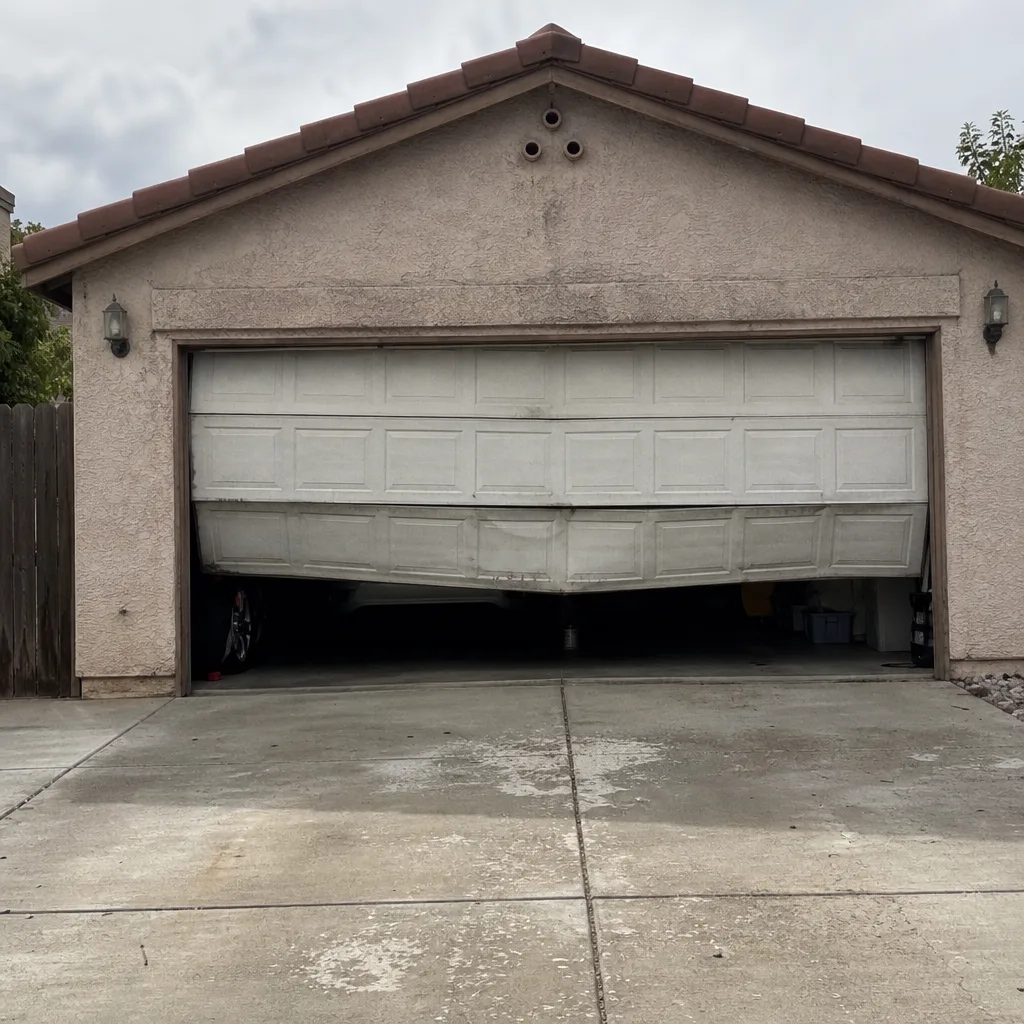 Before
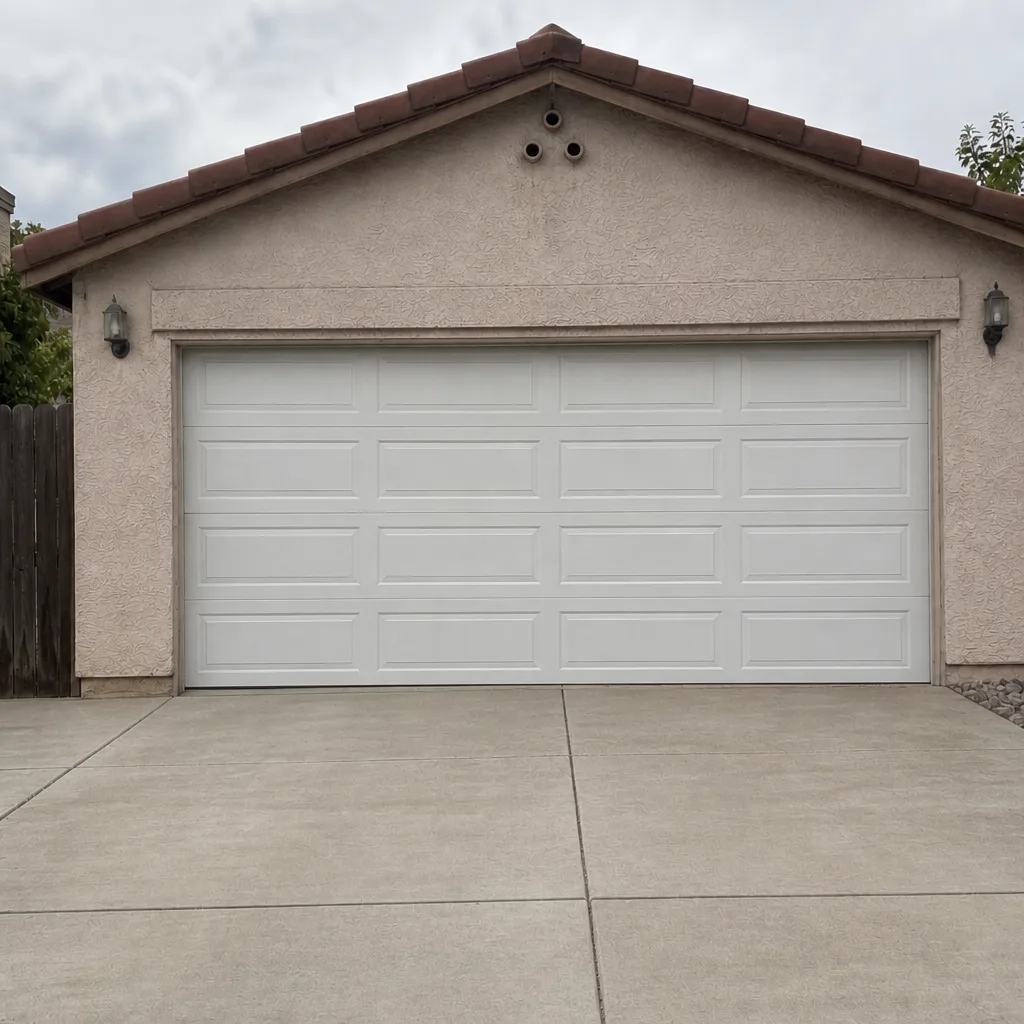 After
The Break-In Phase: Why the First 90 Days Matter Most
A garage door is a mechanical system in motion every time it runs. In a typical Winchester household, that’s four to six cycles a day, which puts a new door past 500 cycles within the first three months. Every one of those cycles transfers force through the same short list of fasteners: the lag screws anchoring the spring plate to the header, the bolts joining hinge leaves to panels, and the brackets holding track sections to the jamb.
Wood and metal both flex under that load. A lag screw driven into a header at installation may sit snug at day one and back out an eighth of an inch by day 60. A hinge bolt that felt solid at close-out can develop visible clearance after a few hundred cycles. None of this is a sign of bad workmanship. It’s the settling process every mechanical installation goes through, and it’s exactly why the industry’s standard six-month check is too late.
What a break-in inspection actually catches:
- Spring anchor plate lag screws that have loosened from vibration
- Hinge bolts developing vertical clearance between panels
- Track bracket bolts backing off from the jamb
- Vertical and horizontal track misalignment from thermal movement
- Roller stems seating into their hinges (a one-time process)
- Bottom seal compression against an uneven floor
Miss the window and the consequences compound. A loosened spring plate can put uneven load on the torsion spring. A hinge with clearance lets panels shift slightly, which wears rollers faster. Small problems caught at 30 days are adjustments. Caught at 12 months, they’re replacement parts. If your installation was recent, our Garage Door Installation in Winchester page covers what a proper close-out should include.
The 30-Day Check: What to Inspect and Re-Torque
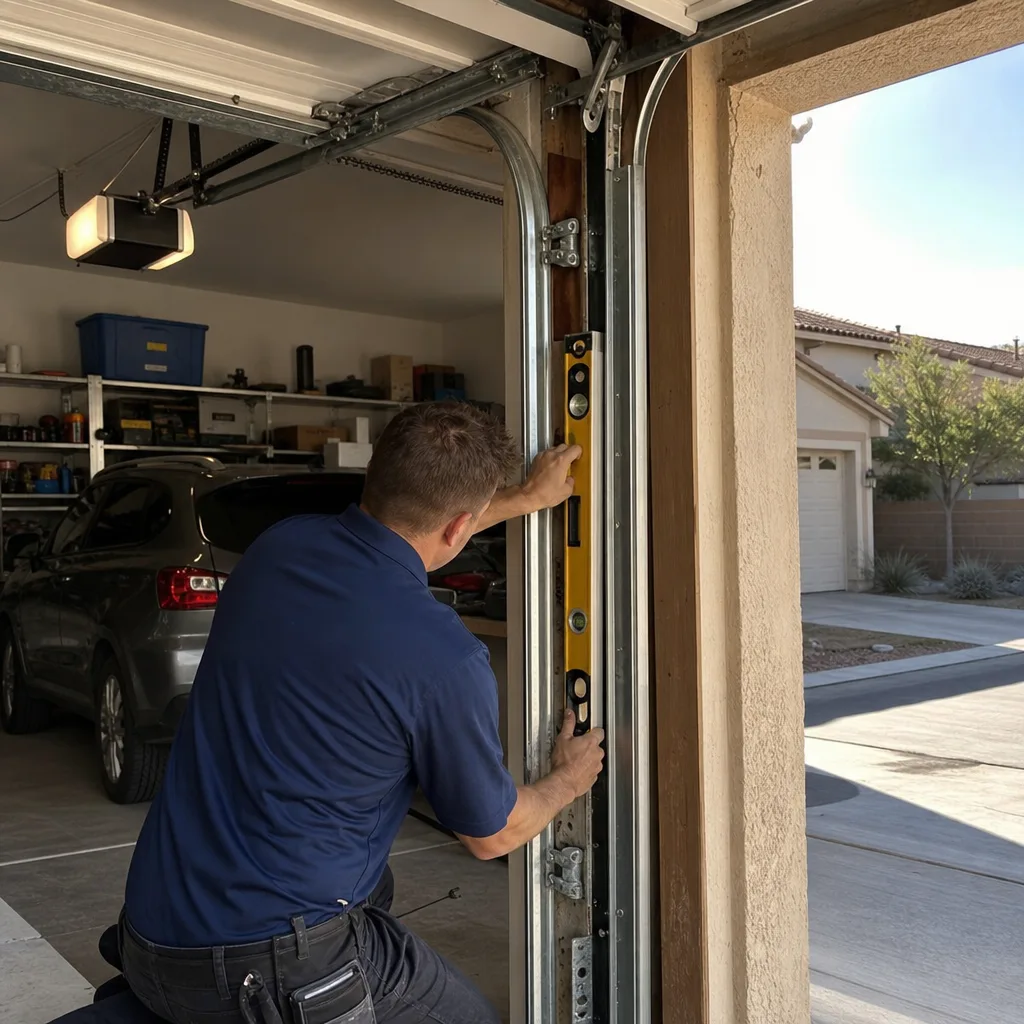
The 30-day check is a visual and tactile inspection, not a DIY repair session. You’re looking for loose fasteners and misalignment, then either tightening what’s safely accessible or calling a professional for anything involving the spring system. Here’s the sequence we recommend:
- Disconnect the opener first. Pull the red emergency release cord so the door is on manual operation. Never inspect a door under opener tension.
- Inspect the spring anchor plate. Look at the lag screws holding the plate to the header above the door. Check for gaps between the plate and the wood, rust stains (a sign of movement), or screws that have backed out. Do not tighten these yourself. The springs are under extreme tension, and any movement near the plate can release stored energy. Photograph the condition and call a technician.
- Check hinge bolts. Run a hand along each hinge. Any bolt with visible clearance or wiggle should be snugged with the correct wrench, not overtightened.
- Inspect track brackets. Look at the bolts attaching vertical and horizontal track to the jamb. If any have backed off, tighten them by hand until firm. Don’t over-torque; you’ll strip the jamb.
- Run the door manually. Lift it halfway. It should move smoothly with the springs doing the heavy lifting. If it feels heavy or binds, stop and call a professional.
- Re-engage the opener and test travel. Once the door runs manually, reconnect it and run a full open-close cycle to confirm the limits haven’t drifted.
That’s the inspection. Any spring-system finding, and any binding or heaviness, belongs to a trained technician. High-tension torsion springs store enough energy to break bones, and the fasteners near them are where a serious injury is most likely. The 30-day check is about catching the loose bolt, not fixing it yourself.
How New-Cable Stretch Affects Door Travel
Cables are steel wire rope, and steel wire rope stretches. On a brand-new installation, the lift cables will settle by a small but measurable amount in the first few hundred cycles. That stretch runs through the cable drums and changes how the door tracks up and down. On a door with a manual lock, you might notice the door not latching cleanly. On an opener, you might see the door reverse too early or the light blink an error code.
Two separate adjustments come into play here, and they’re often confused:
- Cable drum adjustment. The cables wrap around the drums at the top of the shaft. When stretch changes drum position, the cable needs to be re-seated. This is a professional task. It involves releasing tension on the torsion spring.
- Opener limit settings. The opener has up and down travel limits set at installation. If the door path has changed even slightly, these need re-calibration. Most openers from LiftMaster, Chamberlain, or Genie allow this through the control panel or by the limit screws on older units.
Adjusting the limits without addressing drum position is a temporary fix. The door will drift again within a few weeks. Proper sequencing matters: cables first, then limits. If you’re seeing travel problems on a new door, our Garage Door Opener Repair & Installation in Winchester team handles both adjustments together.
The Long-Term Schedule by Operation Count
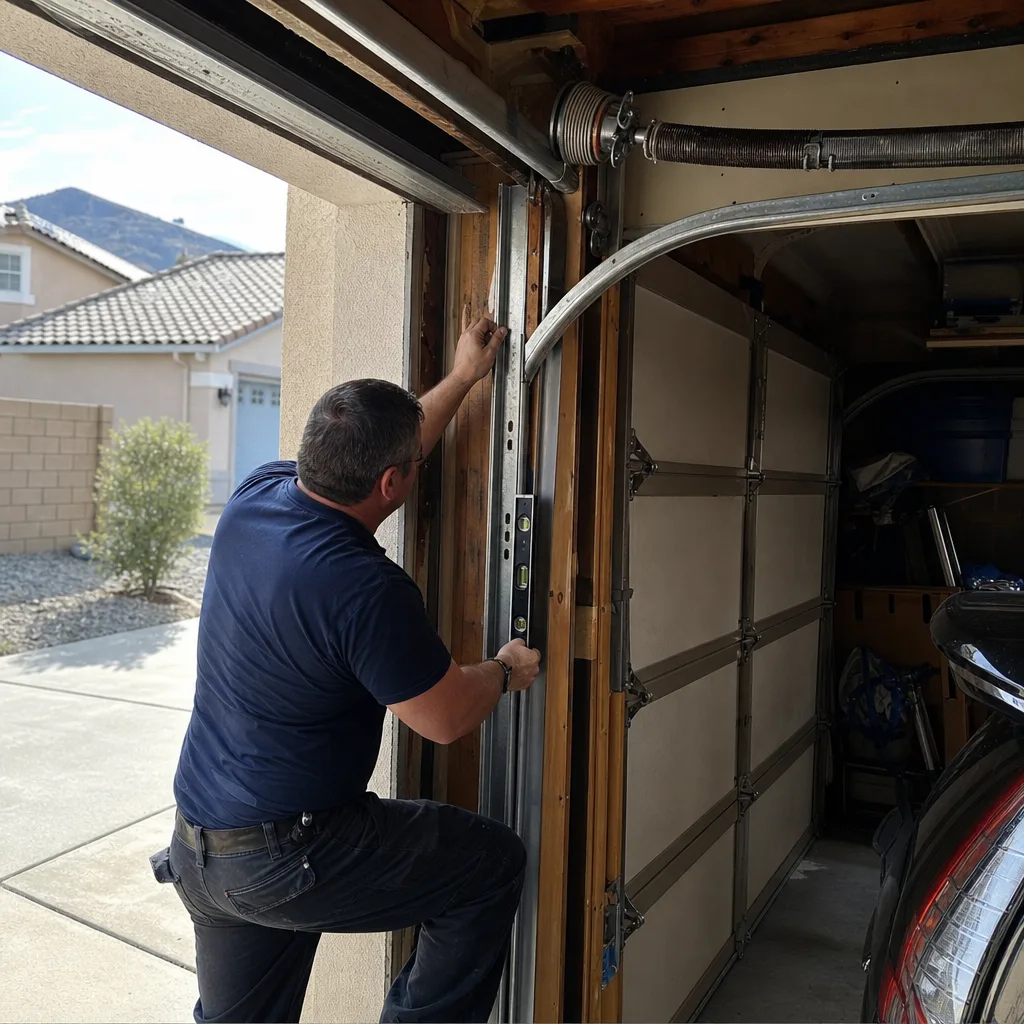
Calendar-based maintenance doesn’t work for garage doors. A two-person household that parks both cars and uses the door twice a day puts a door through 700 cycles a year. A family with teenagers coming and going, a dog walker, and a delivery driver logging in and out might hit 3,000 cycles a year on the same door. Same hardware, wildly different wear.
A cycle is one full open plus one full close. Count your household’s daily cycles for a week, multiply by 52, and you have your annual load. Then use this schedule:
- Every 500 cycles: Lubricate hinges, rollers, and the torsion spring with a silicone or lithium-based spray. Wipe down the track and apply a spot of lubricant where the rollers meet the hinge stems.
- Every 2,500 cycles: Full hardware inspection. Check every hinge bolt, bracket, and track fastener. Look for roller wear and test the door balance manually.
- Every 5,000 cycles: Bottom seal inspection and replacement if it’s cracked or compressed. Check weather stripping at the sides and top.
- Every 10,000 cycles: Torsion spring inspection. A cycle rating doesn’t mean the spring fails exactly at that number, but it’s when a trained eye should look closely at wire diameter, coil condition, and overall tension.
- Every 10,000-12,000 cycles: Full professional service. Balance test, cable inspection, drum condition, roller replacement as needed, and opener force/safety reversal check.
Put a small tally sheet or a counter app on the opener for the first month so the schedule runs on real numbers instead of guesses. It takes five minutes and it’s the difference between maintaining the door on evidence and maintaining it on hope.
Component-Specific Service Intervals
Some parts wear by different rules than the door overall. Rollers typically last 10,000 to 15,000 cycles depending on material; nylon rollers run quieter and longer than steel. Springs wear by cycle count, full stop. Openers themselves, on LiftMaster or Chamberlain units in typical residential use, run for years before needing service, but the safety reversal test should be run every month, not on a cycle schedule. Slide a 2×4 flat on the ground, close the door, and confirm it reverses on contact. If it doesn’t, stop using the opener and call for service.
Winchester Climate and New Installations
Southern Nevada is hard on garage doors in ways that installer manuals don’t fully prepare a homeowner for. The first-summer inspection on a new installation should be a scheduled event, not an if-then.
Two climate factors dominate:
- UV exposure degrades bottom seal rubber. A new rubber bottom seal will show surface cracking faster in a Las Vegas-area household than in a cooler, wetter climate. The seal is cheap and easy to replace; a hardened, cracked seal lets hot air, dust, and insects in through the gap. Inspect the seal in June, not December.
- Thermal expansion in aluminum track sections. Aluminum track expands as it heats. A door installed in cooler months may develop slight track misalignment by its first July. The symptom is a door that runs slightly rougher than it did at close-out, or a roller that pops audibly as it moves through a track section.
Schedule a first-summer inspection for any installation done between October and April. Verify track alignment, inspect the bottom seal, and check the weather stripping on the east or south-facing wall where afternoon sun hits hardest. If your installation was done with Amarr or Wayne Dalton panels, their factory-applied finishes hold up well, but the seals and trim still need this check. Building permits and inspections in Winchester run per local code, and if your installer pulled a permit, the close-out documentation should include the inspection sign-off.
What to Record at Installation Close-Out
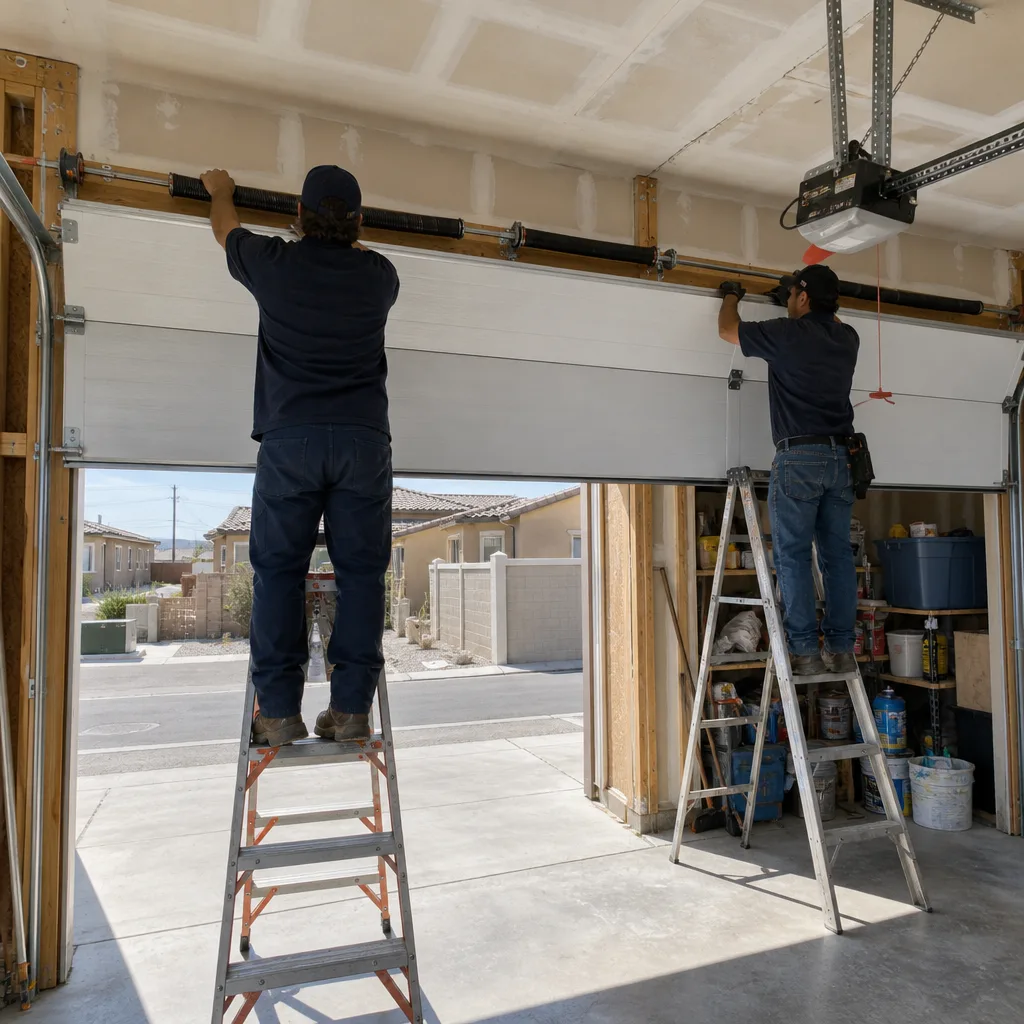
The single most useful thing you can do at installation is to leave with a written record. This is what turns a future service call into a fifteen-minute diagnostic instead of a forty-five-minute investigation, and it’s what we mean when we talk about a documented photo record on every job.
Record these items at close-out:
- Spring specifications. Both the torsion spring wire diameter and the coil count, plus the wind (left or right). This is stamped on the spring or in the install docs. It’s the number a technician needs to match a replacement.
- Door panel weight. Manufacturer spec sheet or the sticker on the panel. This determines the spring balance needs and opener force settings.
- Opener model and serial. Photograph the label on the motor unit and the wall control. If the opener is a Craftsman or Raynor unit, get the manual model from the unit itself.
- Date-stamped photos of every major hardware connection. Spring anchor plate, hinges, track brackets, drum assemblies. Photographed at close-out, these let you or a technician see exactly what “settled” looks like in your home.
- Torsion cycle rating. Standard springs are rated around 10,000 cycles; upgrade springs run 20,000 or more. Knowing your spring’s rating tells you when to expect service.
- Installation date and installer contact. Not for the company’s marketing, but so a future technician knows the door’s age and who did the work.
If you don’t have all of these, a single photograph of the spring with a ruler alongside the wire gives a trained eye most of what it needs. If you inherited a door with no documentation, our Garage Door Repair in Winchester team can measure it during a service visit and build the record from scratch.
Common Mistakes to Avoid
- Skipping the 30-day check because “it’s new.” New doors are exactly when fasteners are loosening. The absence of a problem today is not evidence of absence tomorrow.
- Over-tightening track bracket bolts. A stripped jamb bracket is worse than a slightly loose one, and it’s a common result of a homeowner with a socket wrench the day after installation.
- Using the wrong lubricant. WD-40 is a solvent, not a lubricant. White lithium grease or a silicone spray is what the track and hinges need. Motor oil attracts dust and grime.
- Adjusting the opener limits before the cables. If the cables have stretched, limit calibration on a stretched cable drifts back within a week or two.
- Waiting for a failure to schedule service. A spring at the end of its cycle rating gives no warning before it breaks. In Winchester, a broken spring in July after the cars are trapped in a closed garage is a two-hour wait for the call you should have scheduled in April.
- Missing the first-summer seal inspection. Bottom seals in Winchester degrade from UV exposure and dry heat far faster than the manual assumes. A $20 replacement at month eight becomes a door that runs hard and leaks air by year two.
- Not keeping the close-out record. Spring specs and panel weight are the two facts that save the most time on a future call. Without them, every technician starts from scratch.
When to Call a Professional
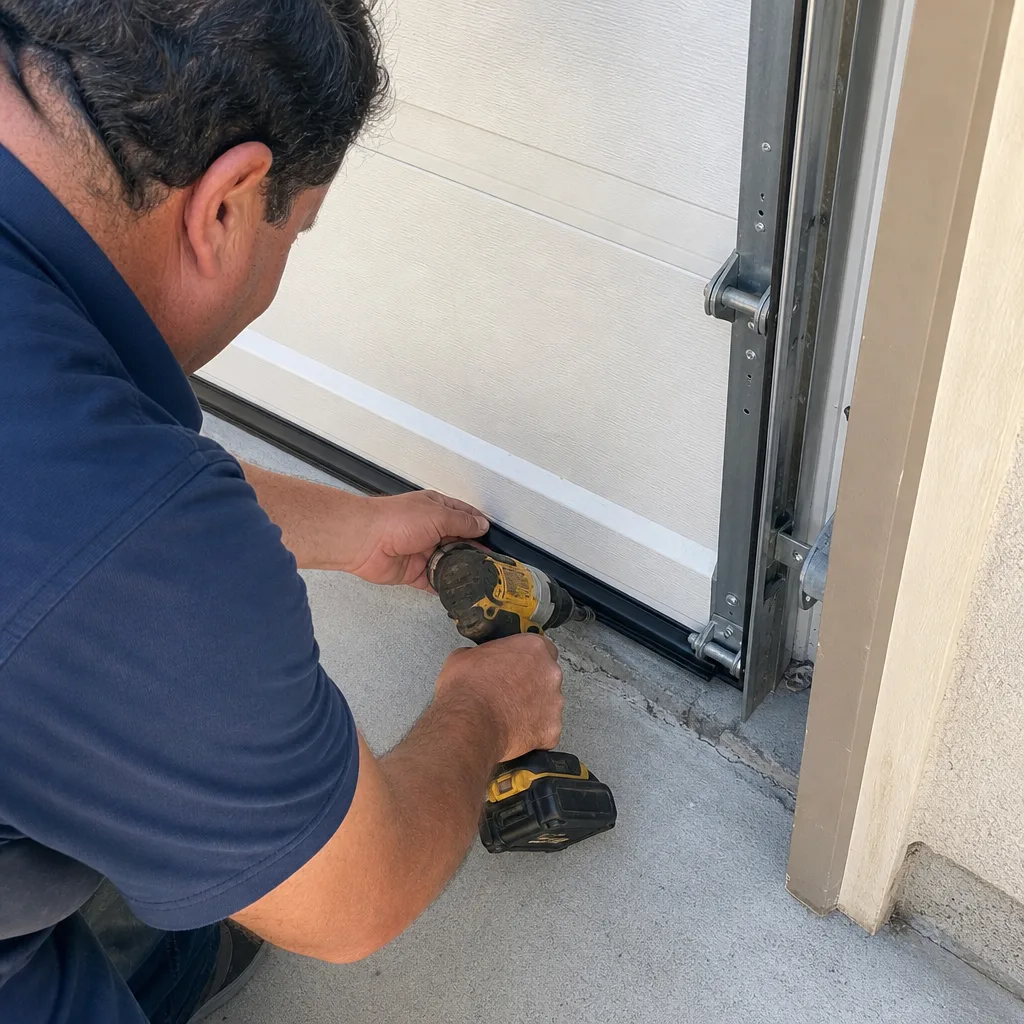
Some of this schedule is homeowner maintenance: lubrication, visual inspection, a monthly safety reversal test, seal inspections. Other parts are professional-only. Any work involving torsion springs, cables, drums, or anything you’re reaching over your head while the spring is under tension is a job for a trained technician. High-tension springs are where injuries happen, and no amount of online instruction changes the physics.
Call a professional for:
- Any spring-system finding (loose anchor plate, rust, uneven tension, or a door that’s heavier than it was a month ago)
- Any cable, drum, or track binding
- Opener travel limits that won’t hold after adjustment
- A safety reversal test that fails
- Any symptom you’re not sure about
Servo Garage Doors Winchester offers free estimates in Winchester. Our technicians carry up to 11 years of experience, quote a flat, written price before any work starts, and leave every job with a documented photo record of findings and completed work. Call (855) 517-0284 and a live person will pick up.
See the difference
BeforeAfter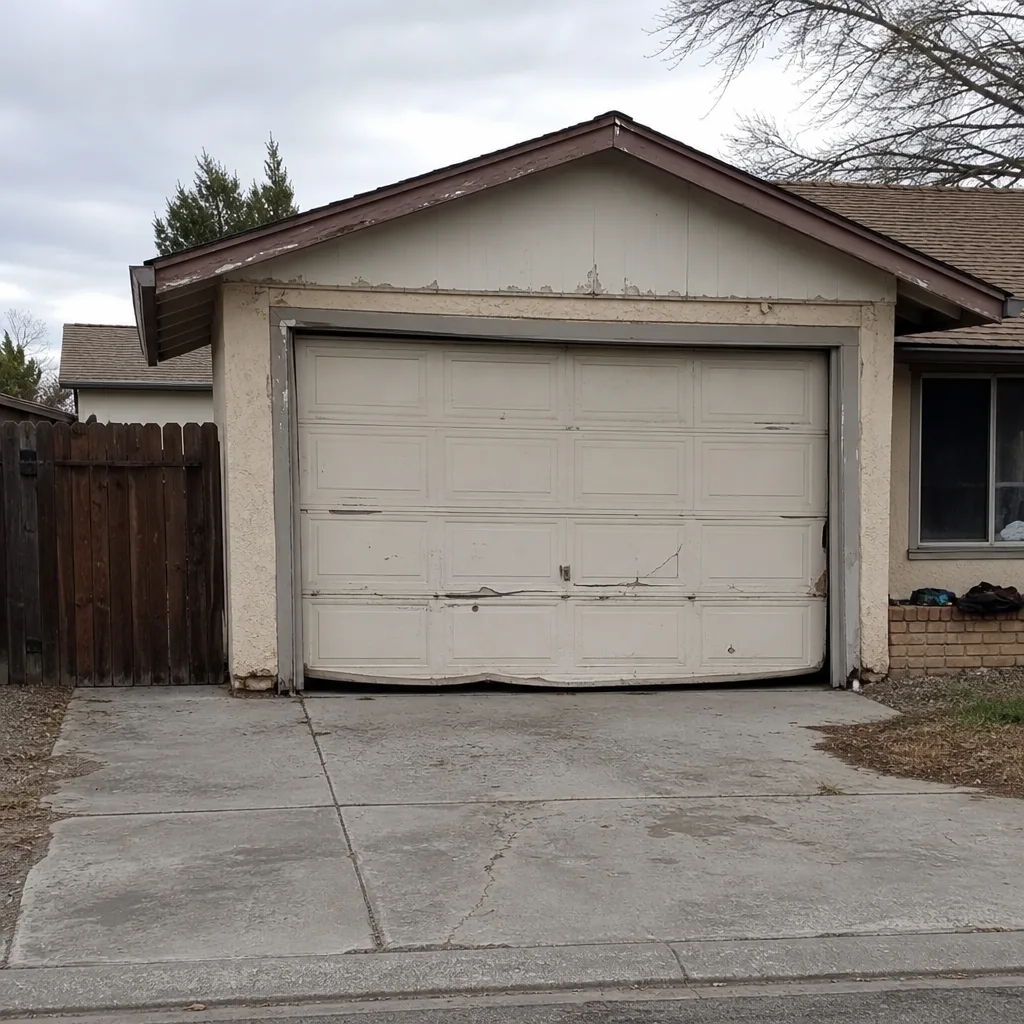 Before
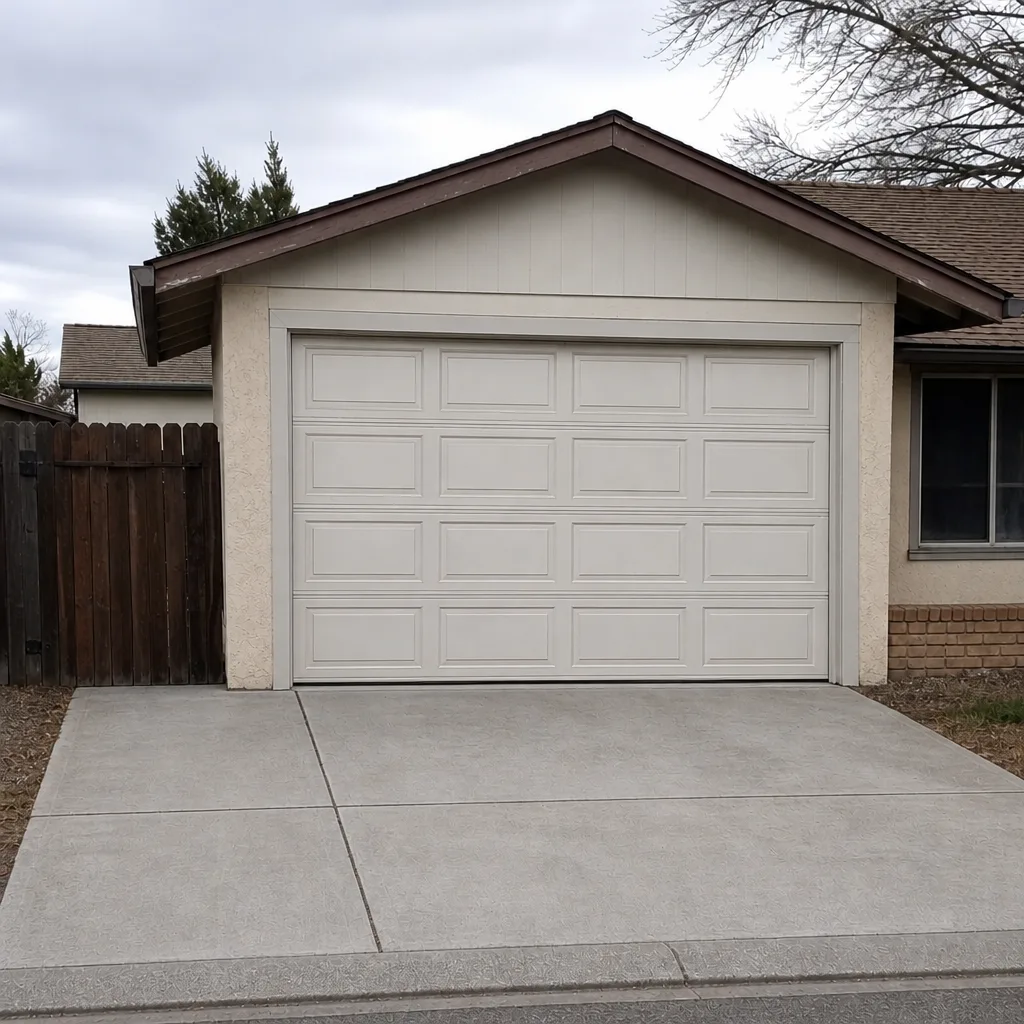 After
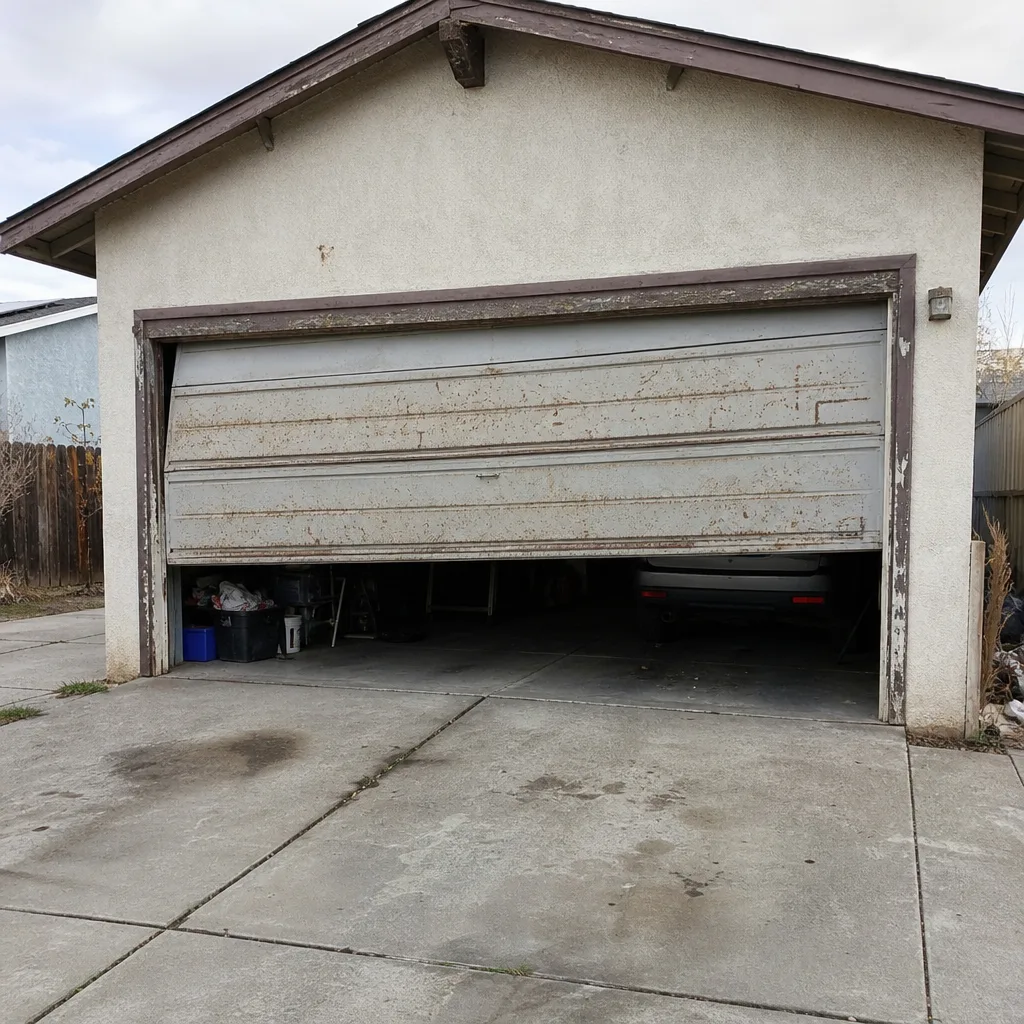 Before
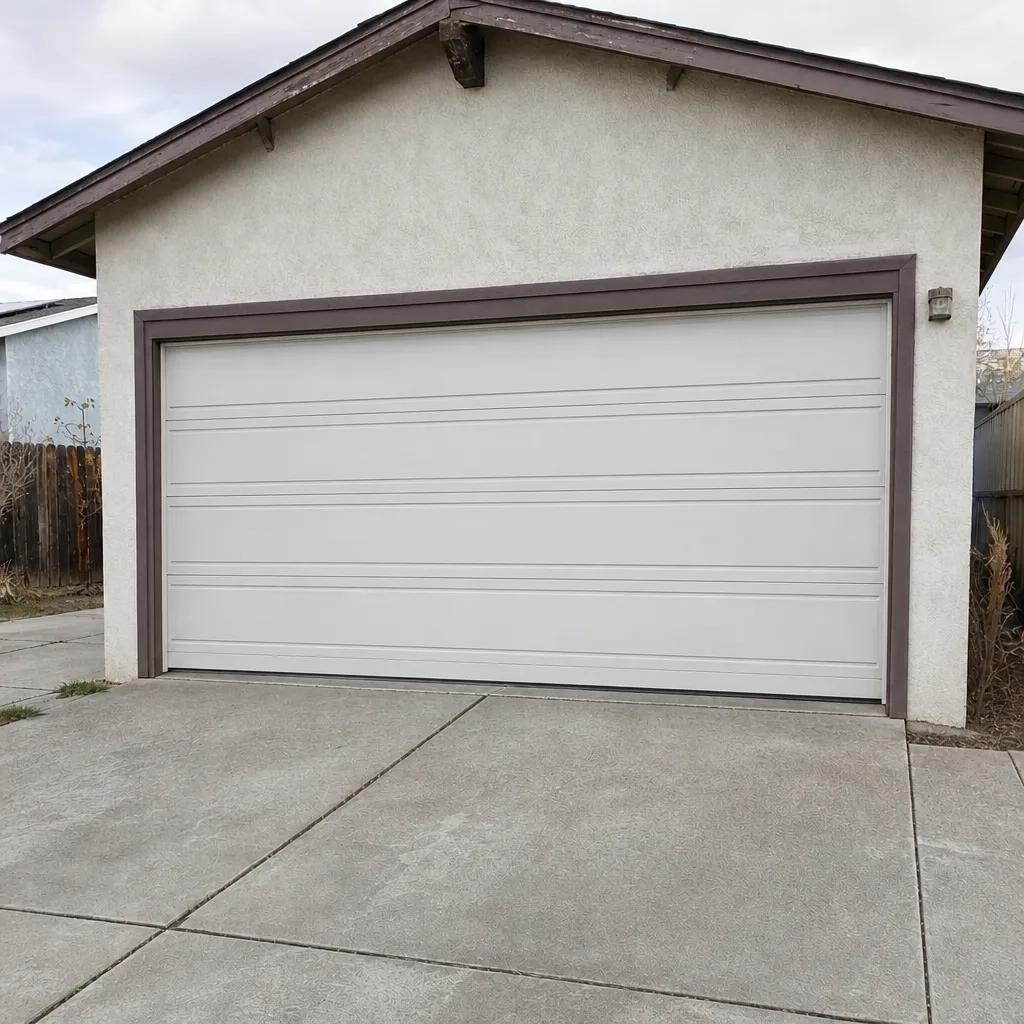 After
Frequently Asked Questions
Schedule the first inspection at 30 days, which is roughly 300 to 500 cycles on a typical household. After that, service on a cycle-based schedule: lubrication every 500 cycles, full hardware check every 2,500, and professional service around 10,000 to 12,000 cycles. For a home with average use, that’s about once a year. Call (855) 517-0284 for a free estimate on a first-year inspection in Winchester.
Check the spring anchor plate lag screws, hinge bolts, and track brackets for looseness. Verify that the door runs smoothly in manual operation. Confirm the opener travel limits haven’t drifted. Do not tighten anything in the spring system yourself; that’s a professional call. Inspect the bottom seal for any compression or cracking. If you’re unsure about any of it, our Servo Garage Doors Winchester home page lists what a service visit covers.
New steel cables stretch during their first few hundred cycles, which changes where the cable seats on the drum and shifts the door’s travel path. The fix is a drum adjustment (professional), then an opener limit re-calibration. Adjusting the limits alone is a temporary fix; the door will drift again in a few weeks.
Yes, mostly around UV and heat. Winchester’s summer sun degrades bottom seal rubber faster than in milder climates, so the first-summer seal inspection is a scheduled item, not optional. Aluminum track sections also expand more in Winchester’s July heat, so a track alignment check in the first summer is worth the visit. Call (855) 517-0284 for a first-summer inspection quote; the price is written before any work starts.
Lubrication, visual inspection, monthly safety reversal testing, and seal inspection are homeowner tasks. Anything involving the torsion spring, cables, drums, or track adjustment while the spring is under tension is professional-only. The spring stores enough energy to cause serious injury, and that’s not a job for a homeowner with a wrench. When in doubt, call (855) 517-0284. Estimates are free.
No. Every job at Servo Garage Doors Winchester is quoted with a flat, written price and written scope before any work starts, per Clause 1 of The Haven Standard. There are no surprise invoices after the technician sees the door. If something else needs attention, you’ll get a written second quote to approve before that work begins. Call (855) 517-0284 for a free estimate.
The Bottom Line
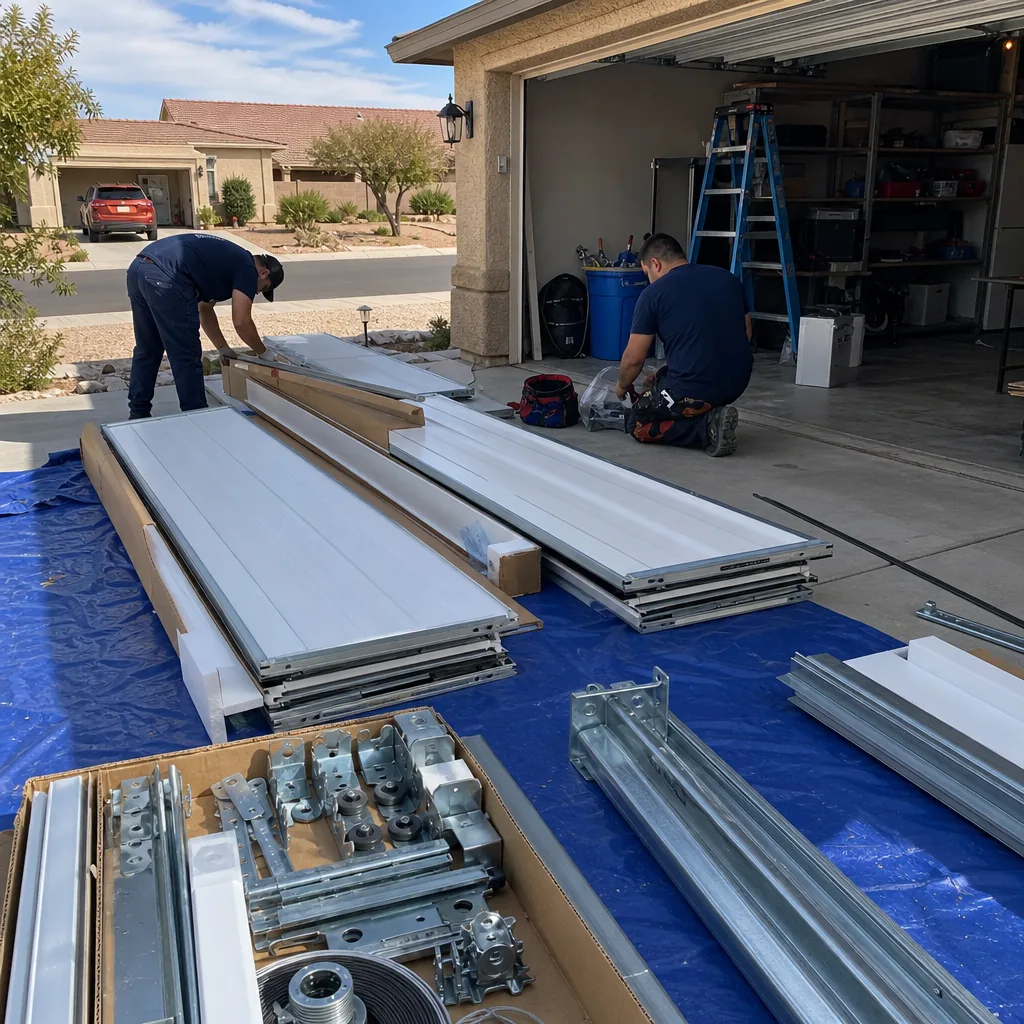
New garage door hardware settles hard in the first 500 cycles, and almost nobody tells homeowners this. The 30-day check is the most important service a new door will ever get. After that, run maintenance on a cycle-based schedule instead of a calendar, because your door doesn’t care what month it is; it cares how many times it’s opened. In Winchester, add a first-summer seal and track inspection for UV and thermal expansion. Keep the close-out record, and future service calls will be faster, cheaper, and more accurate. If you want the schedule built for you, call (855) 517-0284. A live person answers, day or night.
Written by the team at Servo Garage Doors Winchester.