
Last updated November 18, 2026
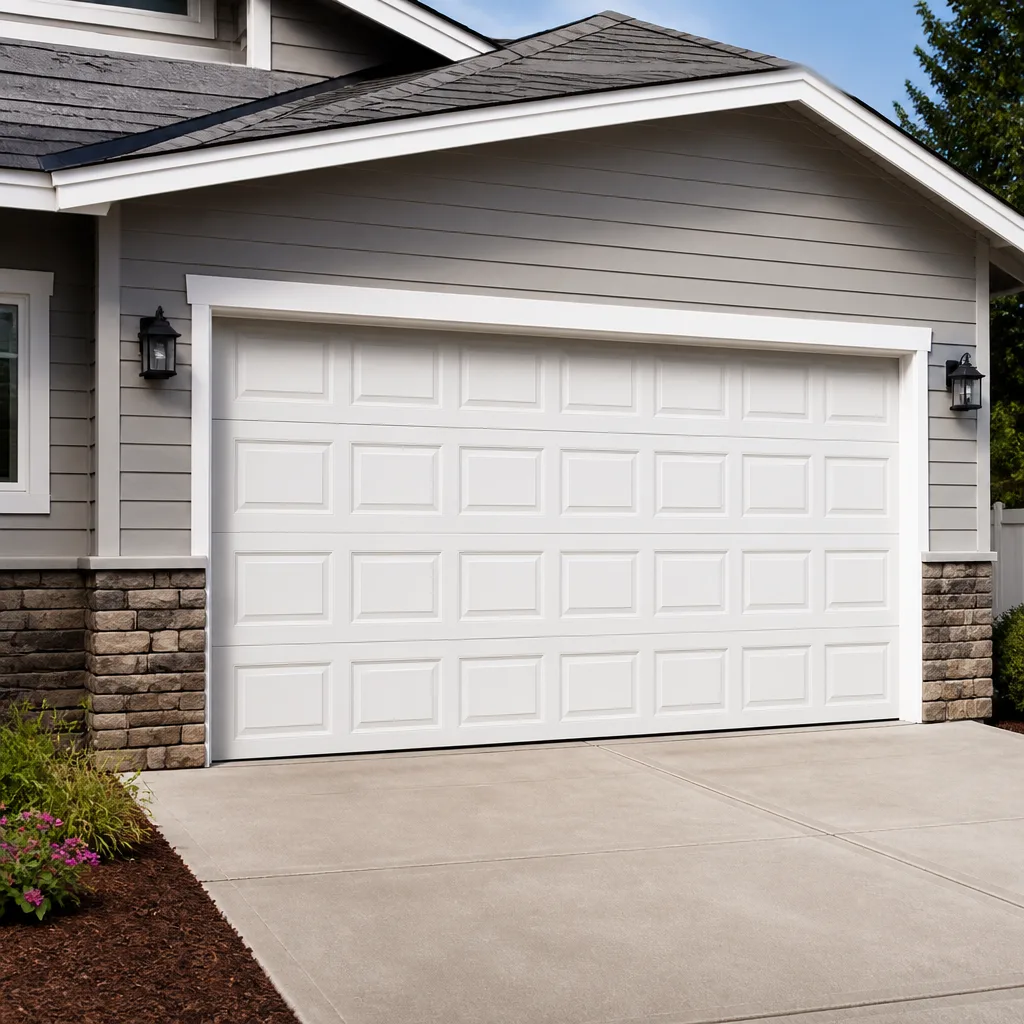 Raised-panel steel
 Carriage house
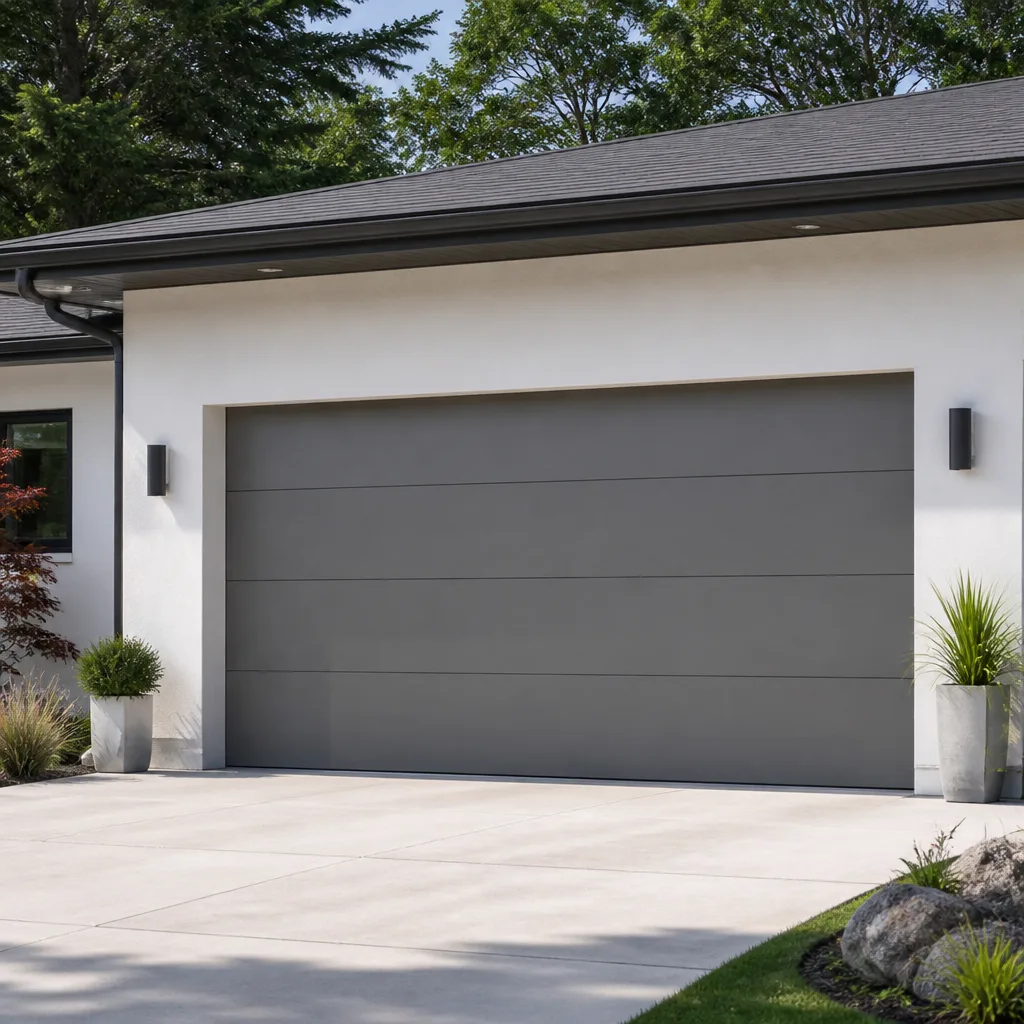 Modern flush
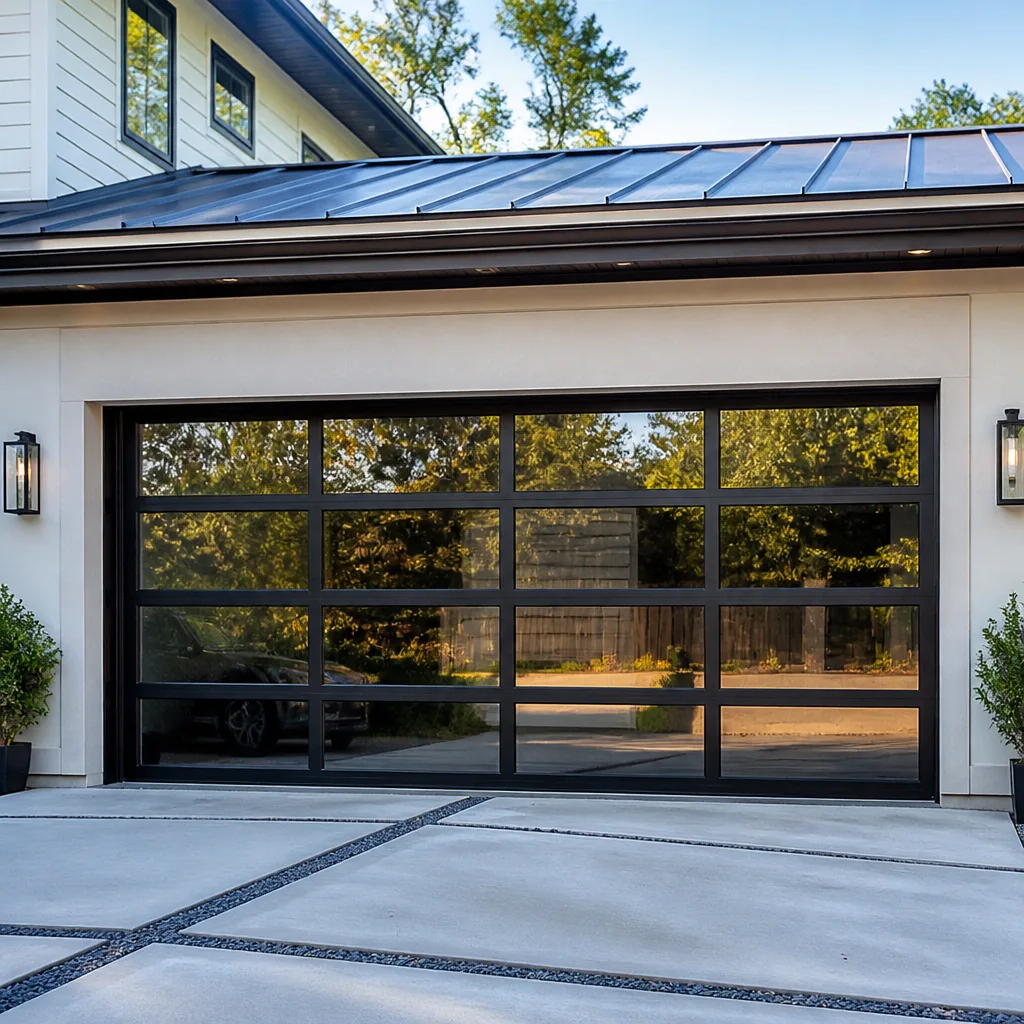 Full-view glass
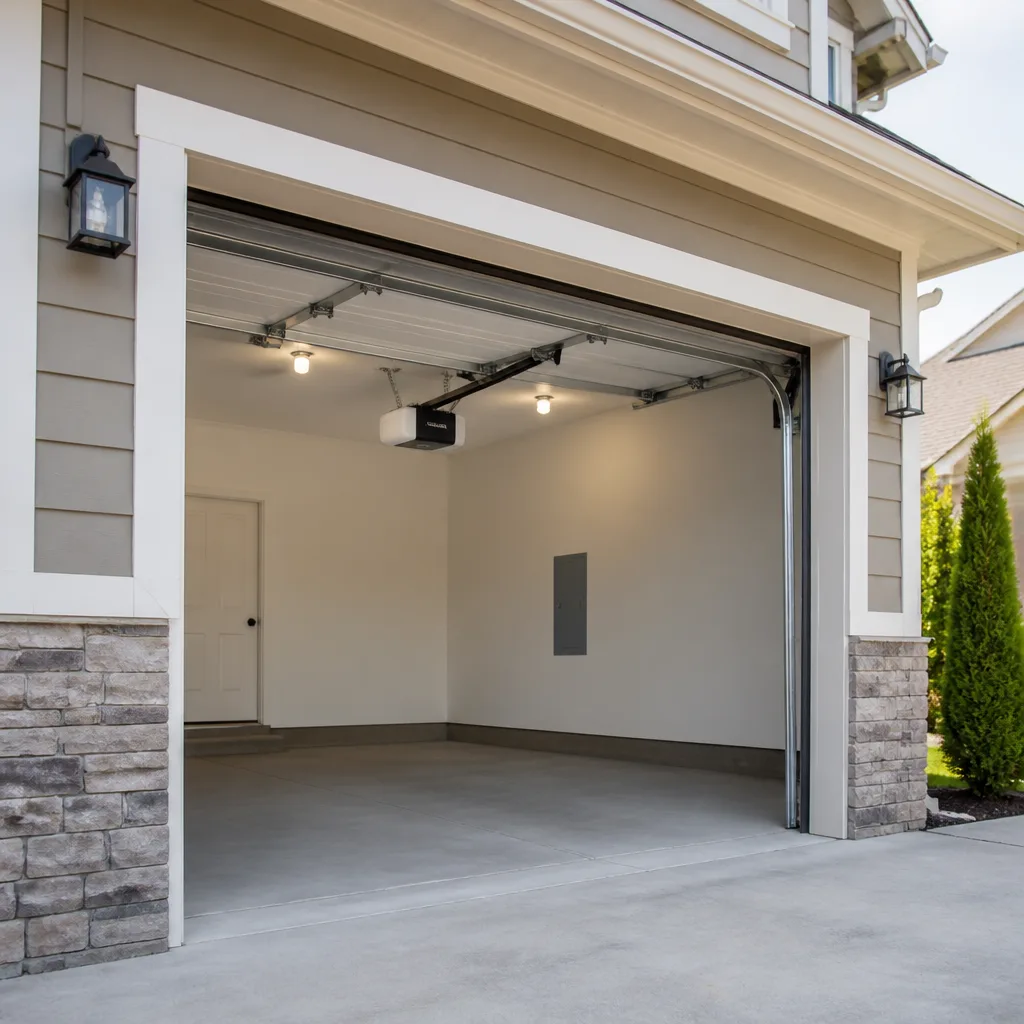 LiftMaster openers
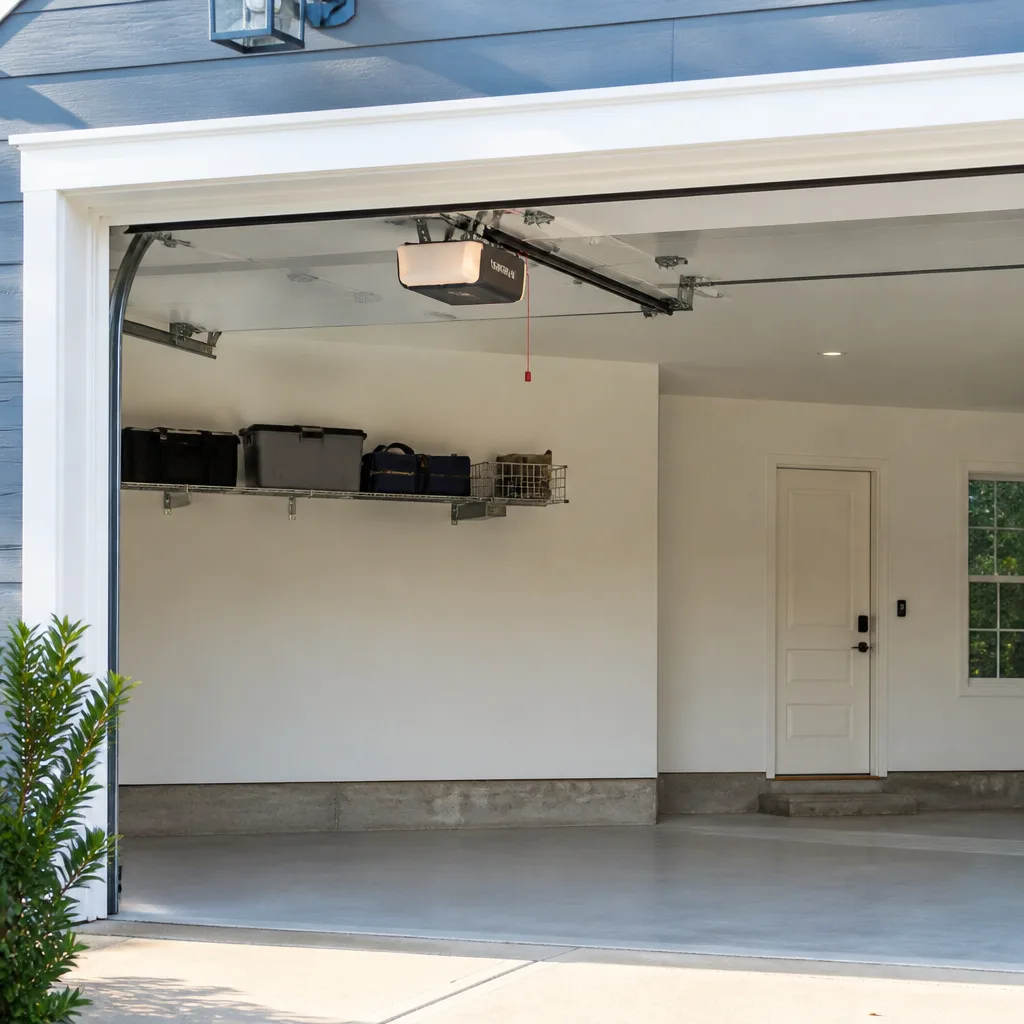 Chamberlain openers
Full 25-point door and opener safety check with every visit - springs, cables, rollers, tracks, and your LiftMaster or Chamberlain opener included
You get a price before we start. It does not change when the pro arrives.
Get your free estimateGarage Door Repair Maintenance Checklist for Winchester Homeowners
If your maintenance checklist says “lubricate moving parts,” it has told you nothing. The question is which lubricant, which parts, and how much – because the wrong answer on torsion spring coils accelerates wear instead of preventing it. Most garage door checklists floating around the internet are decorative. They name tasks without tolerances, so you finish the job with a vague impression instead of a record. This guide is different. Every inspection point here gets a pass/fail criterion, a spec, and a date. For Winchester homeowners, that documented baseline is what makes the next repair quote verifiable rather than negotiable.
Quick Answer
A proper garage door maintenance checklist assigns a measurable pass/fail to each component: lubrication spec by part, a balance test with a defined threshold, and visual criteria for wear that tell you when to replace rather than wait. Run it every six months in Winchester – sooner for the bottom seal given the desert UV – and date-stamp and photograph each inspection so your record reads like a log, not a memory.
Styles & brands we work with
- Raised-panel steel
- Carriage house
- Modern flush
- Full-view glass
- LiftMaster openers
- Chamberlain openers
Table of Contents
- Lubrication by Component: What Goes Where
- The Balance Test and Its Pass/Fail Threshold
- Cable Inspection: When to Replace vs. When to Watch
- Bottom Seal and Weatherstripping: The Winchester UV Problem
- Opener and Safety Reverse Check
- Building Your Maintenance Log: Date-Stamping and Photographing
- Common Mistakes to Avoid
- When to Call a Professional
 Before
 After
Lubrication by Component: What Goes Where
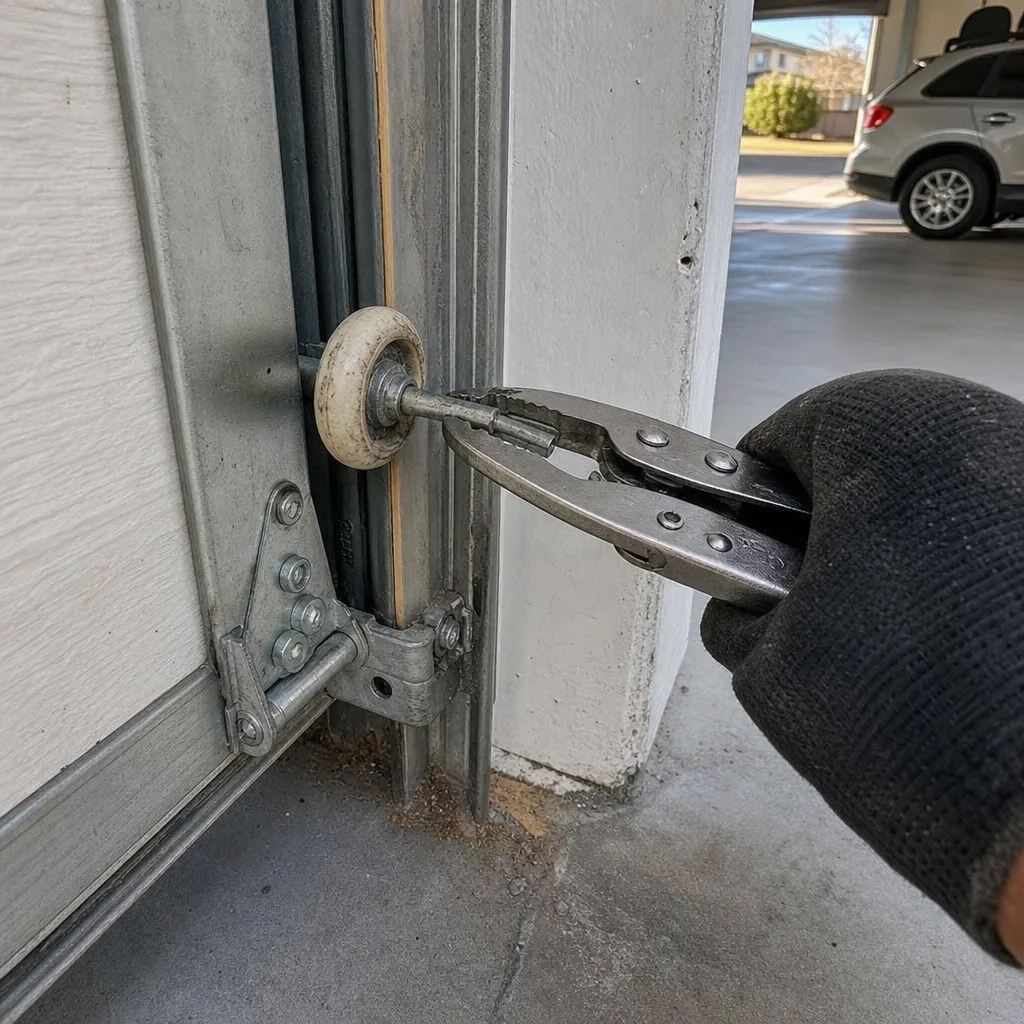
The single most-mishandled step on any checklist is lubrication. “Oil the moving parts” is worse than no instruction at all, because the wrong product on the wrong component does active harm. On torsion spring coils, for example, a spray of the wrong lubricant attracts grit that grinds into the coils and accelerates the wear you were trying to prevent. Here is the spec, component by component.
- Torsion spring coils: Lithium-based grease, applied lightly to the coils. This is the one place grease belongs. A thin film is enough; excess collects dust in a dry climate like Winchester’s.
- Rollers and hinges: Silicone spray. It penetrates without leaving a tacky surface, which matters on rollers that track up and down thousands of times a year. Never grease here.
- Tracks: Nothing. The track should be clean and dry. Grease on a track catches grit and turns a smooth channel into a grinding one. Wipe it down, don’t lubricate it.
- Opener rail and trolley: Follow the opener manufacturer’s spec. For a LiftMaster or Chamberlain unit, that’s typically a light grease on the rail, not the chain.
Use the trade’s real names when you inspect: the torsion spring is the wound coil above the door that counterbalances its weight; the rollers are the wheels in the track; the hinges connect the door panels. When a technician reads your log later, they’ll know exactly what you serviced and when. If you’re unsure which components your door actually has, our Garage Door Repair in Winchester team documents the full assembly on every visit.
The Balance Test and Its Pass/Fail Threshold
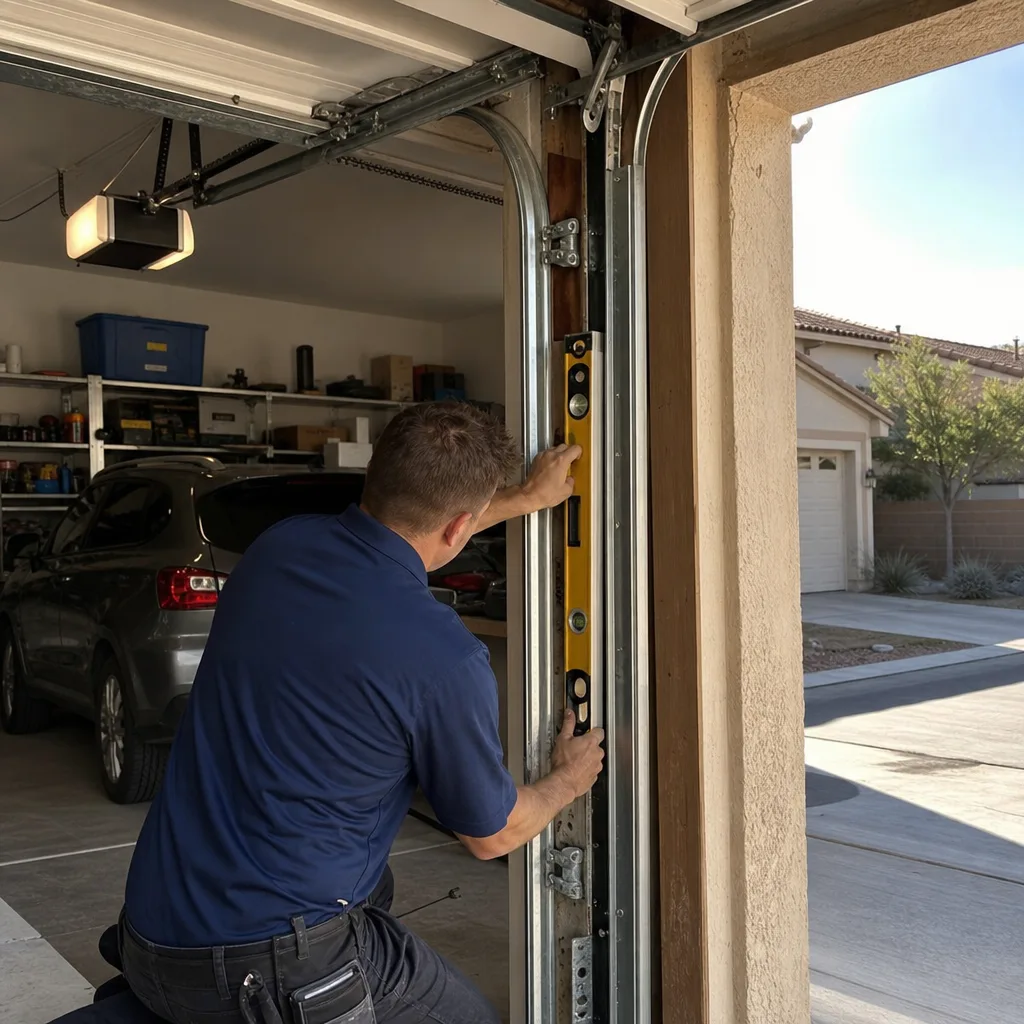
A balance test tells you whether the springs are still counterbalancing the door’s weight correctly. Springs weaken with cycles, and a door that has lost balance strains the opener and eventually fails. Most homeowners eyeball this. A checklist that assigns a threshold makes it measurable. Here is the procedure and the numbers.
- Close the door fully, then pull the opener release to disconnect the door from the motor. The door should be movable by hand.
- Lift the door to roughly waist height – about 3 to 4 feet off the ground.
- Let go and watch. A correctly balanced door stays stationary where you left it.
- Time it. If the door drifts more than 2 inches in 60 seconds, the springs need adjustment.
A door that sinks on its own means the springs are under-tensioned; one that rises means over-tensioned. Either way, the pass/fail line is the same: less than 2 inches of drift in a minute is a pass. More than that is a fail, and adjustment is a job for a trained technician, not a weekend project. Springs store enormous energy, and a winding bar that slips under tension can cause serious injury. We don’t recommend homeowner spring adjustment on any door, and we say so plainly.
Cable Inspection: When to Replace vs. When to Watch
The cables are the steel lines that lift the door along the track. Their failure mode is not gradual – a worn cable can snap suddenly, and a snapped cable under tension whips. So the inspection criterion is not “look worn.” The criterion is: replace at the first broken wire strand, not when the cable snaps. A cable is made of many small strands wound together; a single broken strand poking out is the early warning. Catch it there and it’s a scheduled replacement. Miss it and it’s an emergency call.
What to look for on a Winchester door:
- Fraying: Any strand sticking out from the bundle. One broken strand means replace.
- Uneven tension: One cable noticeably tighter than the other, visible as a lop-sided door.
- Rust or corrosion: Rare in Winchester’s dry air, but check the drum windings where cables spool.
- Sharp bends or kinks: A kink creates a stress point that fails first.
Cables are a safety-critical component and sit under the same spring tension that makes the door operate. Do not attempt to remove or re-spool a cable yourself. If you see a broken strand, stop using the door and have it looked at.
Bottom Seal and Weatherstripping: The Winchester UV Problem
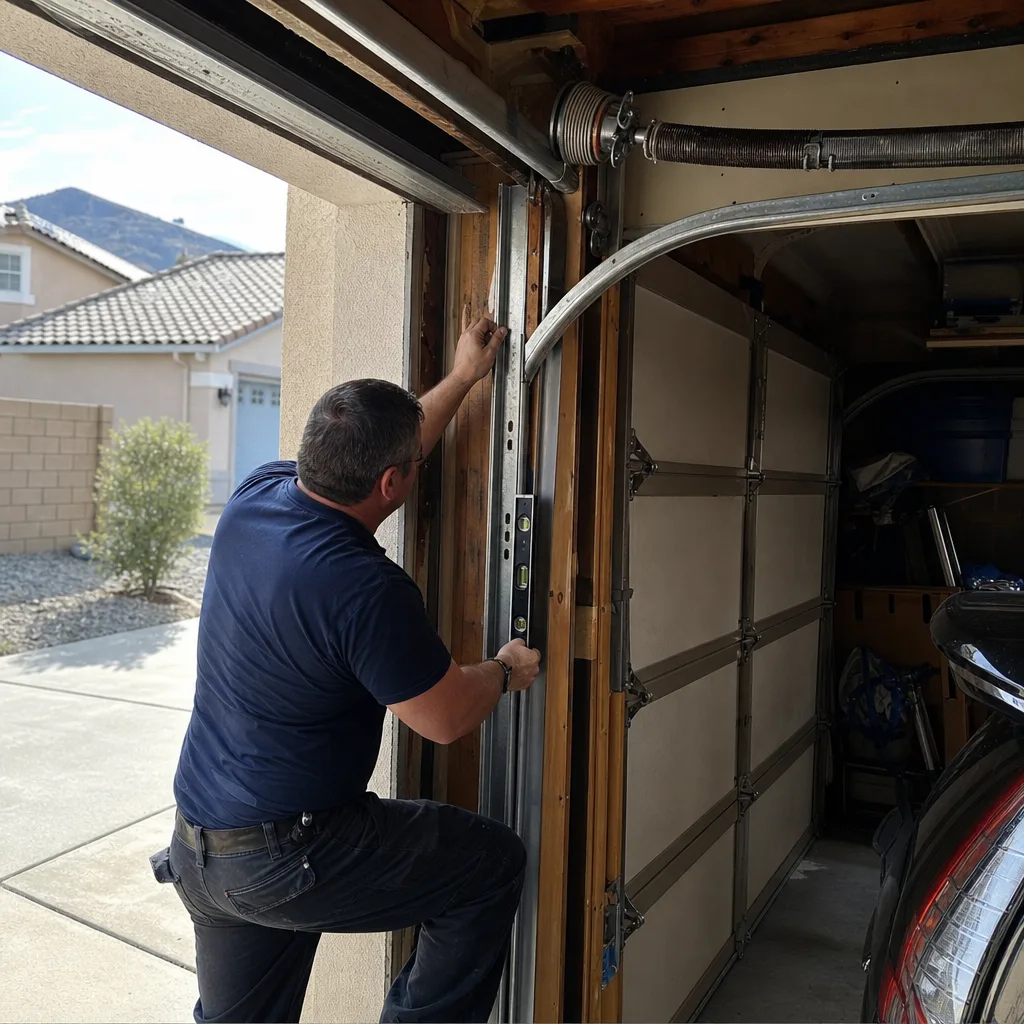
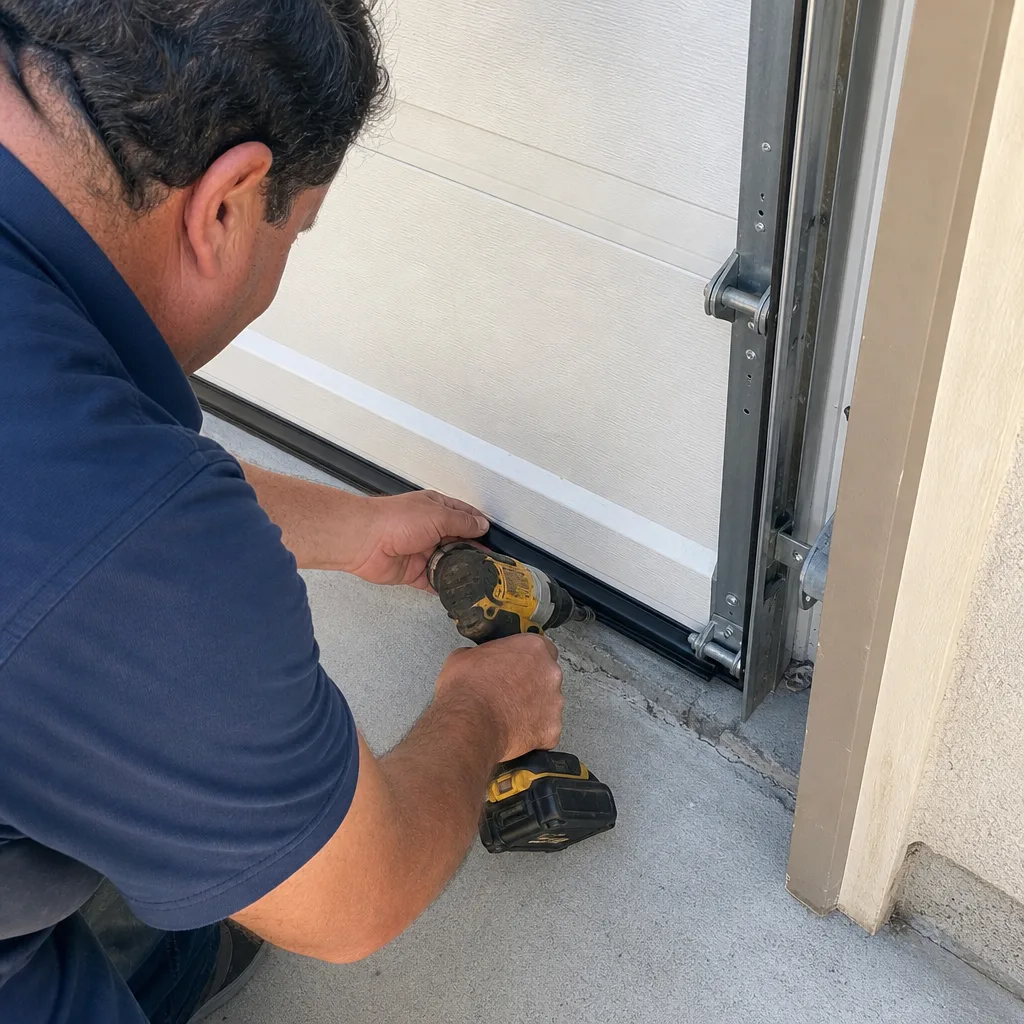
Here is where Winchester’s climate changes the interval. The high-desert sun and dry air are hard on rubber and vinyl, and the bottom seal – the flexible strip along the bottom edge of the door – degrades faster here than the general “inspect annually” advice assumes. UV exposure makes the seal brittle and cracks it, and once it cracks you lose the weather seal that keeps dust and pests out. Inspect the bottom seal every six months, not every year.
Check for cracking, hardening, or a seal that no longer contacts the floor evenly. Press a fingernail into the rubber; if it doesn’t spring back, it’s hardening. The weatherstripping around the door frame gets the same treatment – look for gaps, pulled staples, or a seal that has shrunk away from the jamb. In Winchester’s dry air, seals dry out and shrink, so gaps that grow over a season are the tell.
Replacing a bottom seal is one of the few maintenance steps a confident homeowner can do, provided the door is balanced and the track is clear. If the seal is part of a larger assembly or the door won’t seat properly afterward, that’s a technician’s job. Our Garage Door Installation in Winchester team can also tell you whether the seal you have is the right fit for the door’s make and model.
Opener and Safety Reverse Check
The opener is the part of the system most likely to fail electronically rather than mechanically. Modern units – a LiftMaster, Chamberlain, or Genie – have a safety reverse feature that must be tested. The test has two parts and both are pass/fail.
- Obstruction test: Place a 2×4 flat on the floor in the door’s path. Close the door. It should reverse on contact with the board. If it doesn’t reverse, the opener fails.
- Photo-eye test: With the door open, wave an object across the safety sensors at the bottom of the track. The door should not close, or should reverse immediately. If it closes through the beam, the sensors fail.
If the opener groans, jerks, or won’t hold the door at the top, suspect the trolley carriage (the part that travels the rail) or the limit switch (the setting that tells the opener where “open” and “closed” are). A failing logic board can also cause inconsistent behavior. Any of these is a real repair, not a tweak. Our Garage Door Opener Repair & Installation in Winchester service handles all of it, and we test the safety reverse before we leave.
Building Your Maintenance Log: Date-Stamping and Photographing
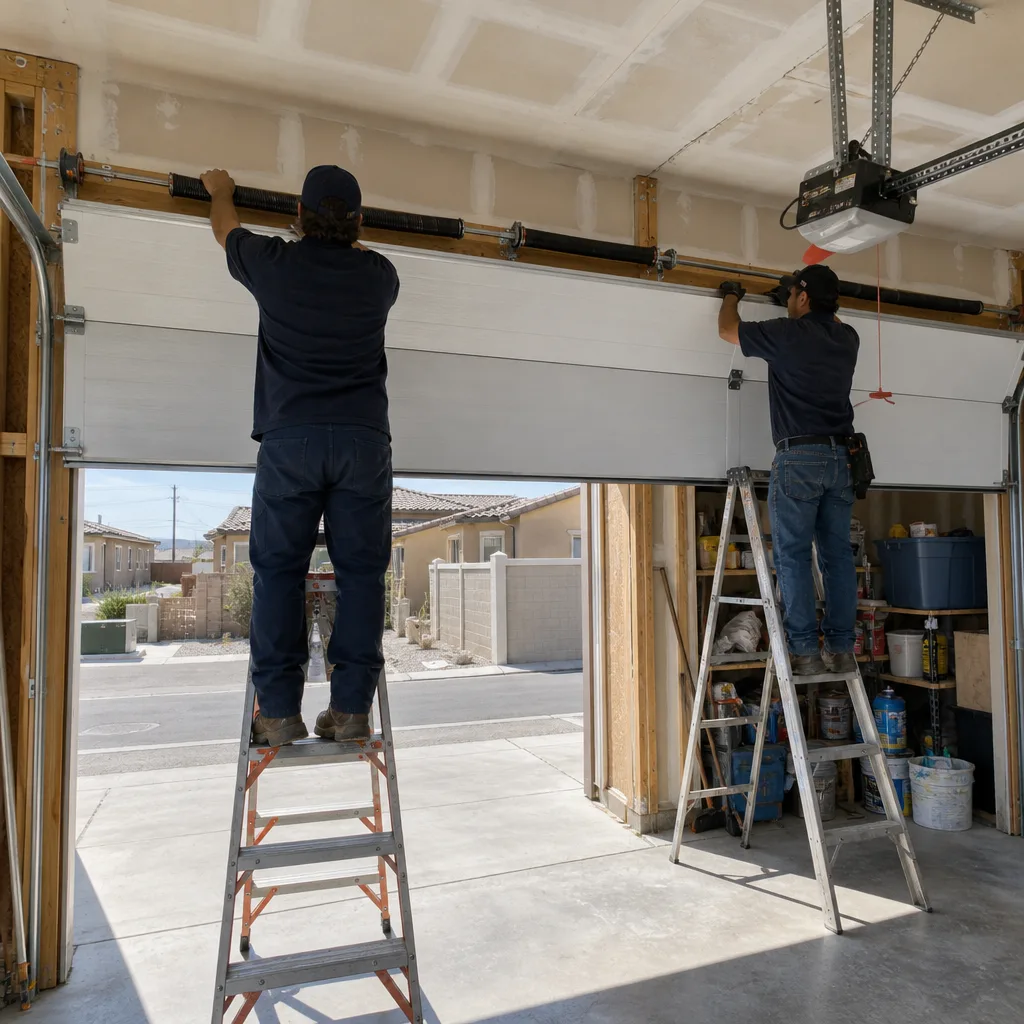
A checklist without a record is a service you perform once and forget. The point of documenting is that the next person to work on the door – whether that’s you in a year or a technician you call – can read exactly what you found and when. Do it like a professional does: photograph and date-stamp every inspection point.
- Photograph the springs, cables, bottom seal, and photo-eyes at each inspection, from the same angle each time so wear is comparable side by side.
- Write the date and the pass/fail on each photo or in a note next to it. “March, balance test: 0 inches drift, pass” reads clearer than a photo alone.
- Note what you lubricated and with what. “Lithium grease on spring coils, silicone on rollers” tells the next technician the service history at a glance.
- Keep it in one place – a labeled folder on your phone is enough. A maintenance log that isn’t searchable might as well not exist.
This is the same documentation principle we work by. Clause 4 of The Haven Standard is the reason a technician photographs the failed component before quoting a replacement, and every Servo visit closes with a documented photo record of findings and completed work delivered to you. Your own log is the other half of that record, and it’s what makes your next quote verifiable. If you want the full picture of how a Winchester door system fits together, start at Servo Garage Doors Winchester home.
Common Mistakes to Avoid
- Greasing the tracks. It’s the most common error, and it turns a clean channel into a grit trap. Tracks stay dry; only the coils, rollers, and hinges get lubricant.
- Using the wrong lubricant on the coils. A light spray there, instead of lithium grease, attracts the high-desert dust and accelerates wear.
- Adjusting the springs yourself. Springs and cables store dangerous energy. A slipped winding bar under tension can break a wrist. This is not a homeowner task, in Winchester or anywhere.
- Skipping the six-month bottom-seal check in summer. UV in Winchester dries and cracks seals faster than the annual advice assumes, so miss this and you’ll lose your weather seal between inspections.
- Waiting for the cable to snap. A single broken wire strand is the replace signal. Waiting turns a scheduled replacement into an emergency call.
- Testing the balance without releasing the opener. A balance test run with the motor connected tells you nothing – the opener masks the drift. Release it first.
- No date on the inspection. A maintenance log without dates is a photo album. The value is in the timeline.
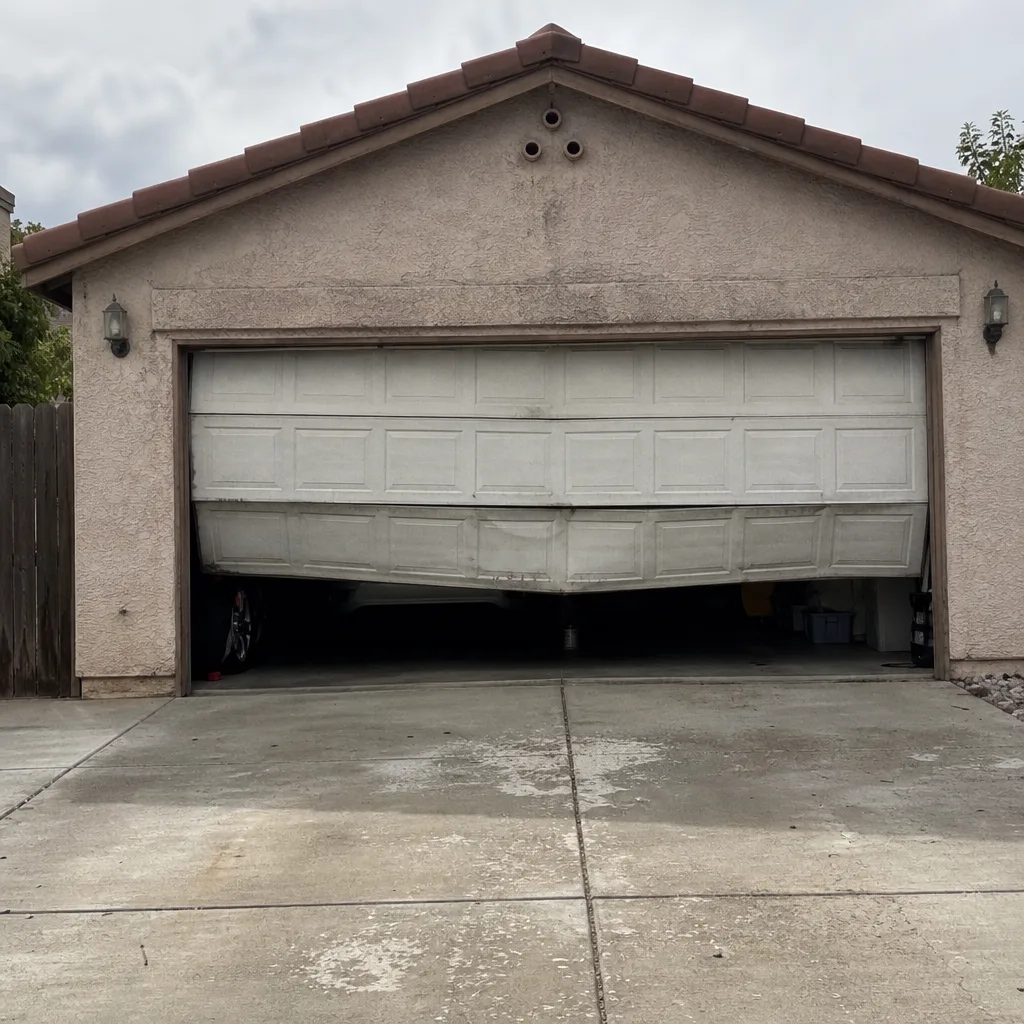
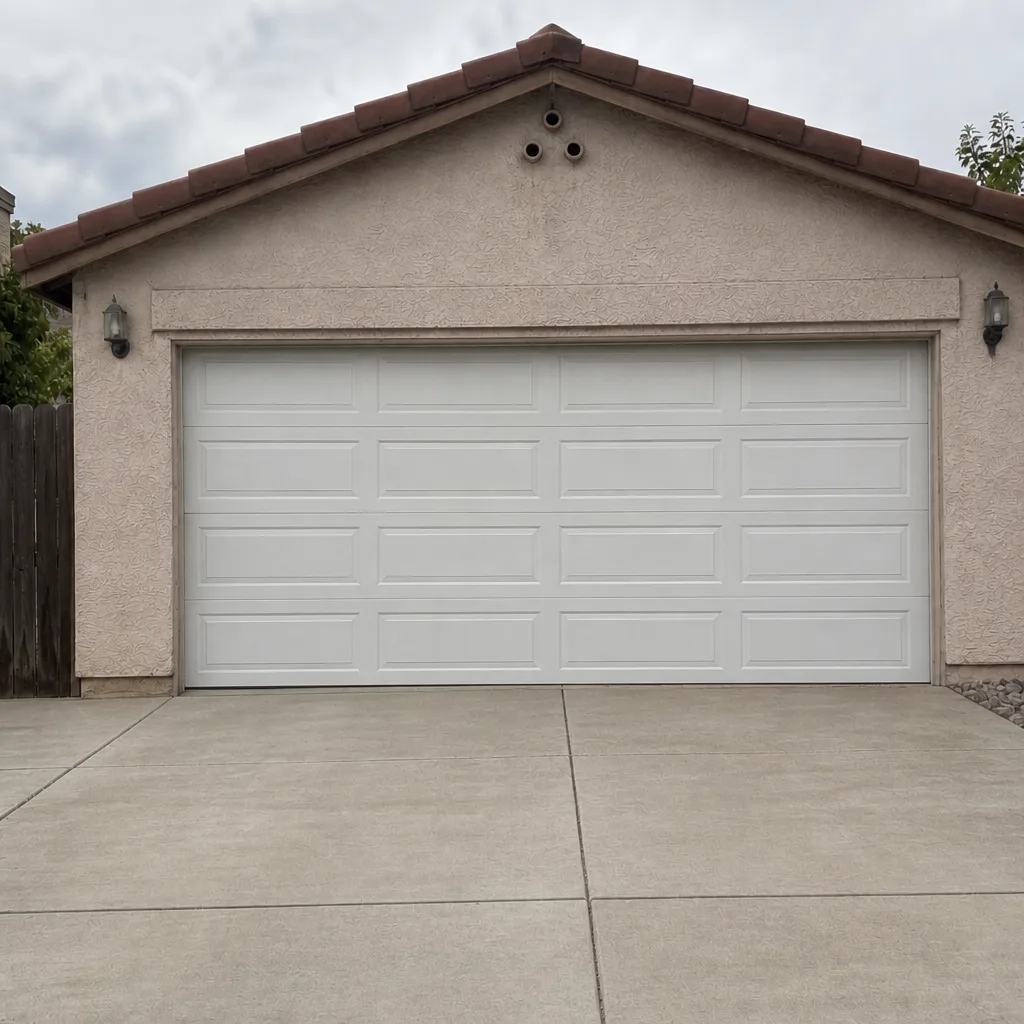
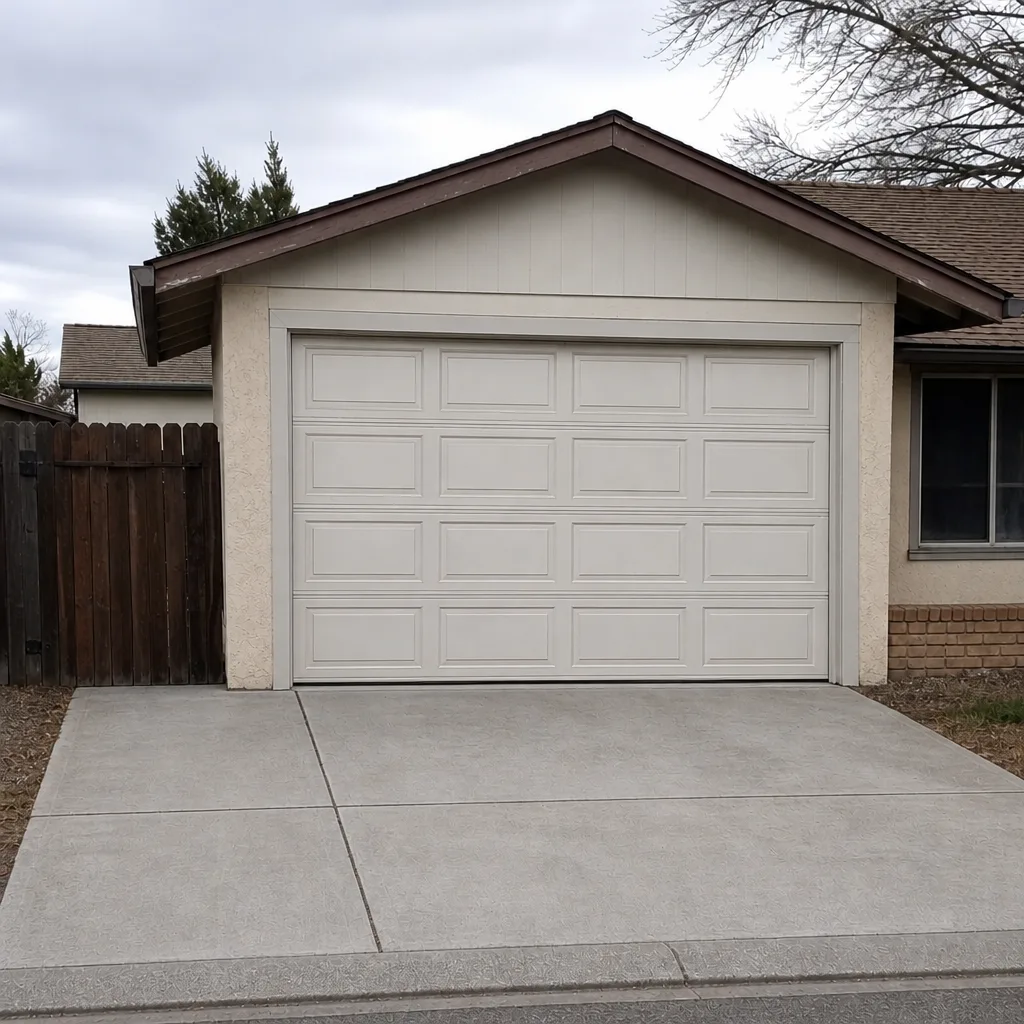
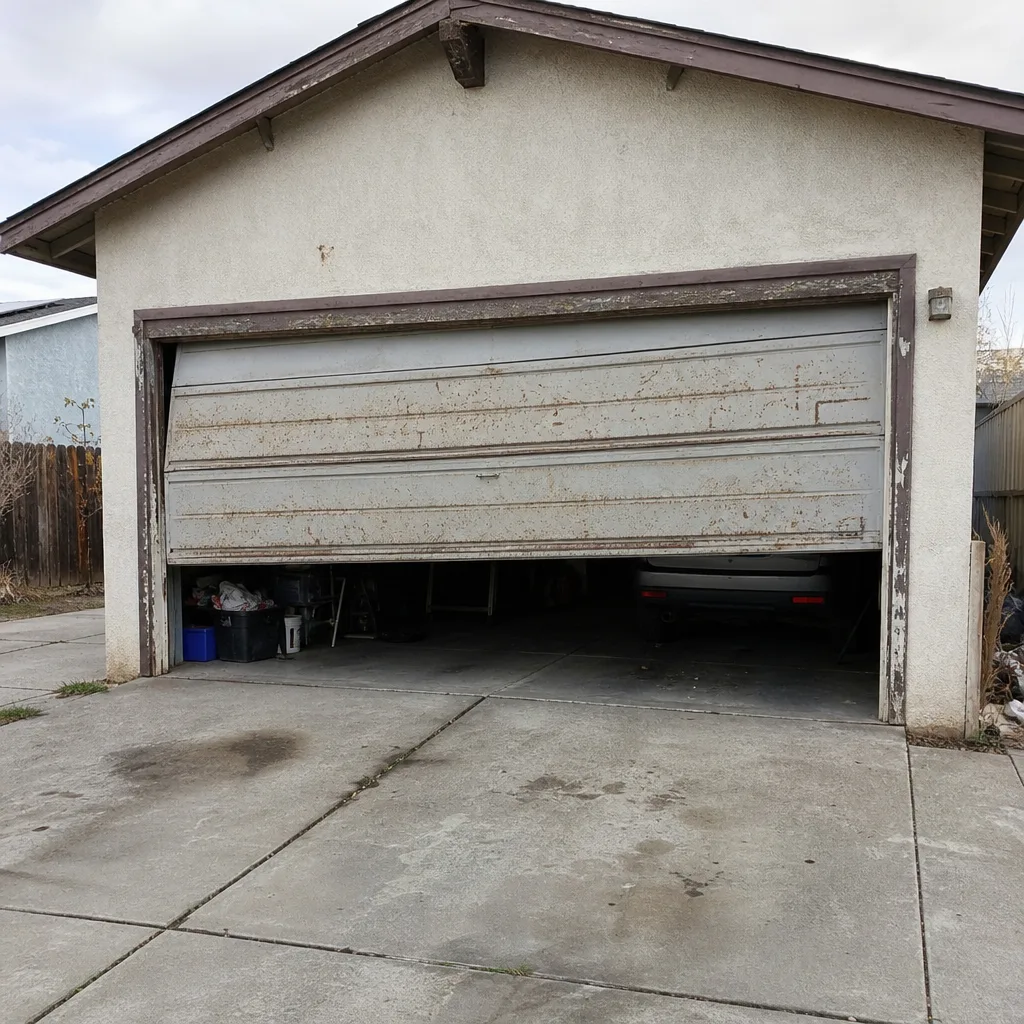
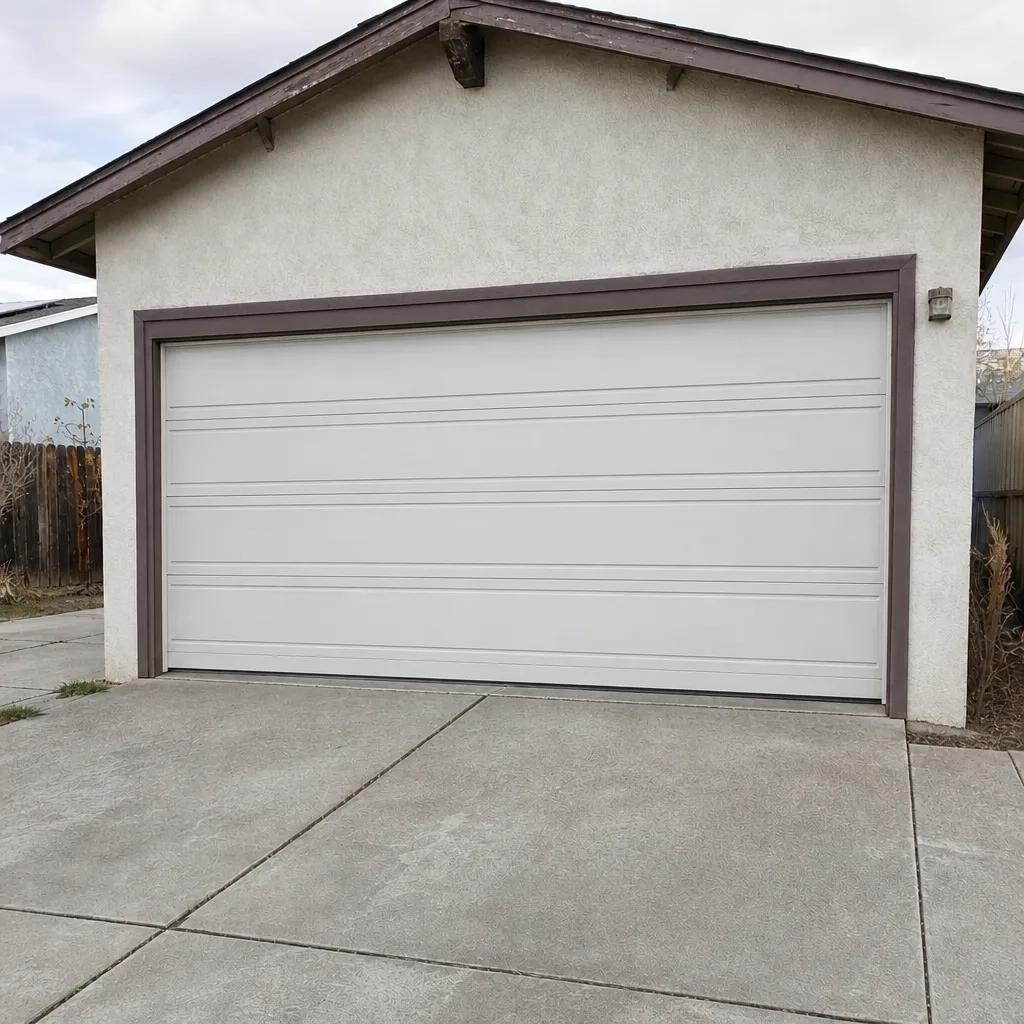
See the difference
BeforeAfter Before
 After
 Before
 After
When to Call a Professional
Some steps in this checklist are yours to run. Others are not, and knowing the line protects you. Call a professional if the balance test fails by more than 2 inches in 60 seconds, if you find even one broken wire strand in a cable, if the safety reverse test doesn’t reverse on contact, or if the door is off its track or has a visible broken torsion spring. A snapping or popping sound from the springs, a door that jerks and stops partway, or an opener that runs but doesn’t move the door are all signs to stop using it and have it checked. If your door uses a LiftMaster, Chamberlain, or Genie opener and the electronic behavior is inconsistent, that’s a repair too – not something to live with. Servo Garage Doors Winchester offers free estimates in Winchester – call (855) 517-0284.
Frequently Asked Questions
Inspect every six months, with the bottom seal checked at that same interval rather than annually. Winchester’s dry, high-UV climate hardens and cracks seals faster than the general rule assumes, so the six-month cadence is the local adjustment. Date and photograph each inspection so the intervals stay on record.
Lithium-based grease on the torsion spring coils, silicone spray on the rollers and hinges, and nothing on the track itself. The track stays clean and dry because grease there catches grit. Getting this spec right is what makes a maintenance checklist useful instead of decorative.
Yes. A door that drifts more than 2 inches in 60 seconds after you release it at 3 to 4 feet is out of balance and the springs need adjustment. Under 2 inches is a pass. Don’t attempt a spring adjustment yourself – it’s a job for a trained technician. Call (855) 517-0284 for an exact quote; estimates are free.
Replace a cable at the first broken wire strand, not when it snaps. A single strand poking out of the bundle is the early warning, and a snapped cable under tension is a hazard. If you see one, stop using the door and have it looked at.
Yes, at every inspection. Place a 2×4 on the floor and close the door – it should reverse on contact. Then wave an object across the photo-eyes – the door should not close through the beam. If either fails, that opener needs repair before the door is used.
Yes, if it’s dated and photographed. A log that shows what you lubricated, when, and the result of each balance test gives a technician a verifiable service history. That’s what makes the next repair quote verifiable, and it traces back to the same principle behind Clause 1 of The Haven Standard – a flat, written price and written scope before any work starts.
The Bottom Line
A checklist is only useful if each step has a number attached. Run your Winchester door against the specs here: lithium grease on the coils, silicone on rollers and hinges, nothing on the track; a balance test that passes at under 2 inches of drift in 60 seconds; a bottom seal inspected every six months for UV cracking; and cables replaced at the first broken strand. Date-stamp and photograph each inspection so you build a log a technician can read. That record is your leverage at the next repair – a documented baseline makes a written quote checkable. If anything on the list fails, our Winchester repair team documents what it found before quoting a replacement, and every quote comes as a flat written price before work starts. Call (855) 517-0284 for a free estimate.
Written by the team at Servo Garage Doors Winchester.