
Last updated November 18, 2026
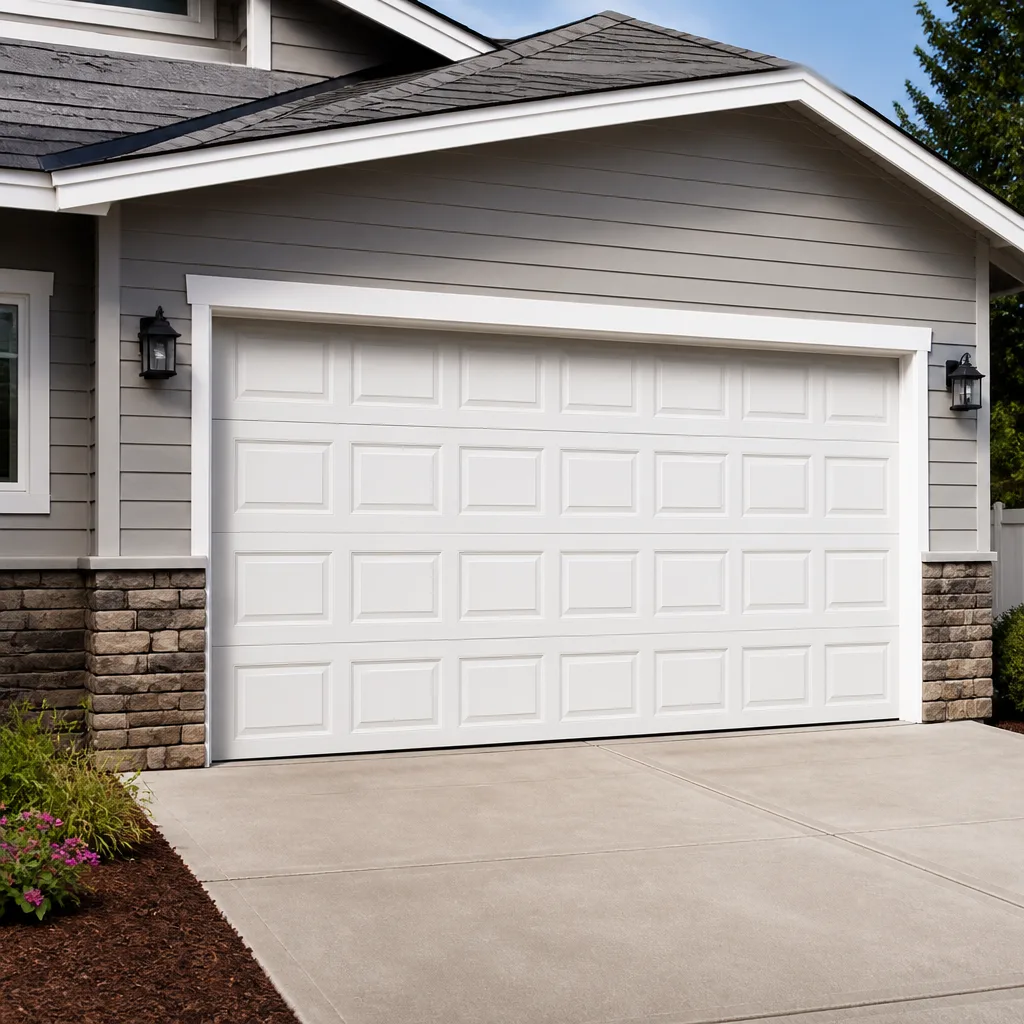 Raised-panel steel
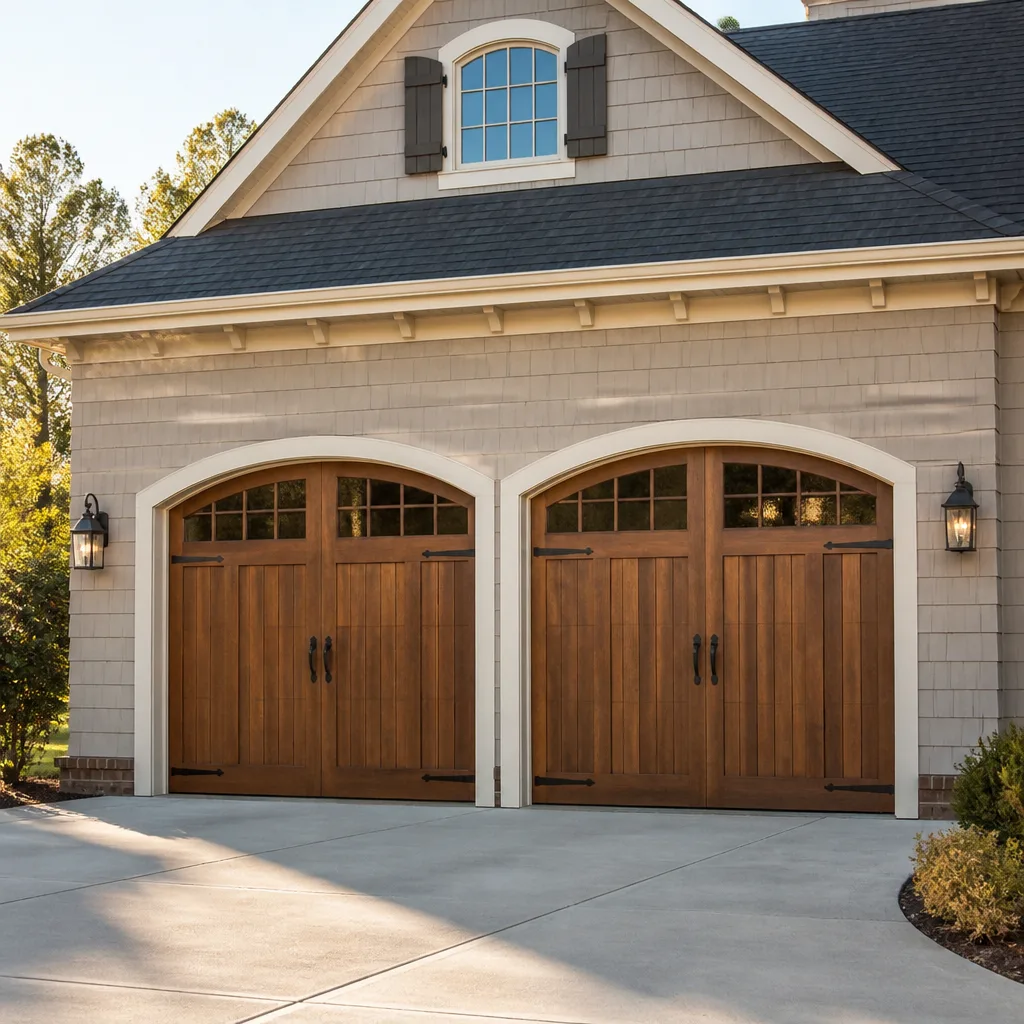 Carriage house
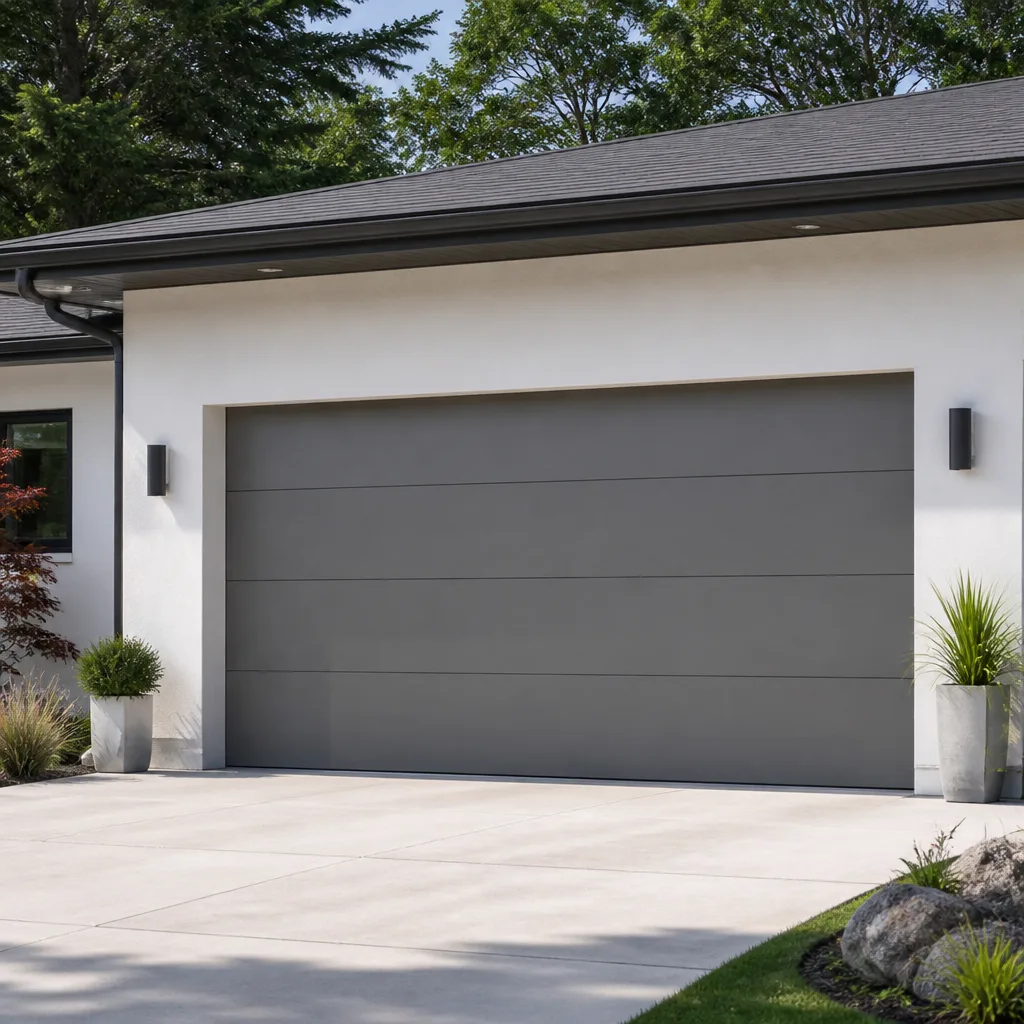 Modern flush
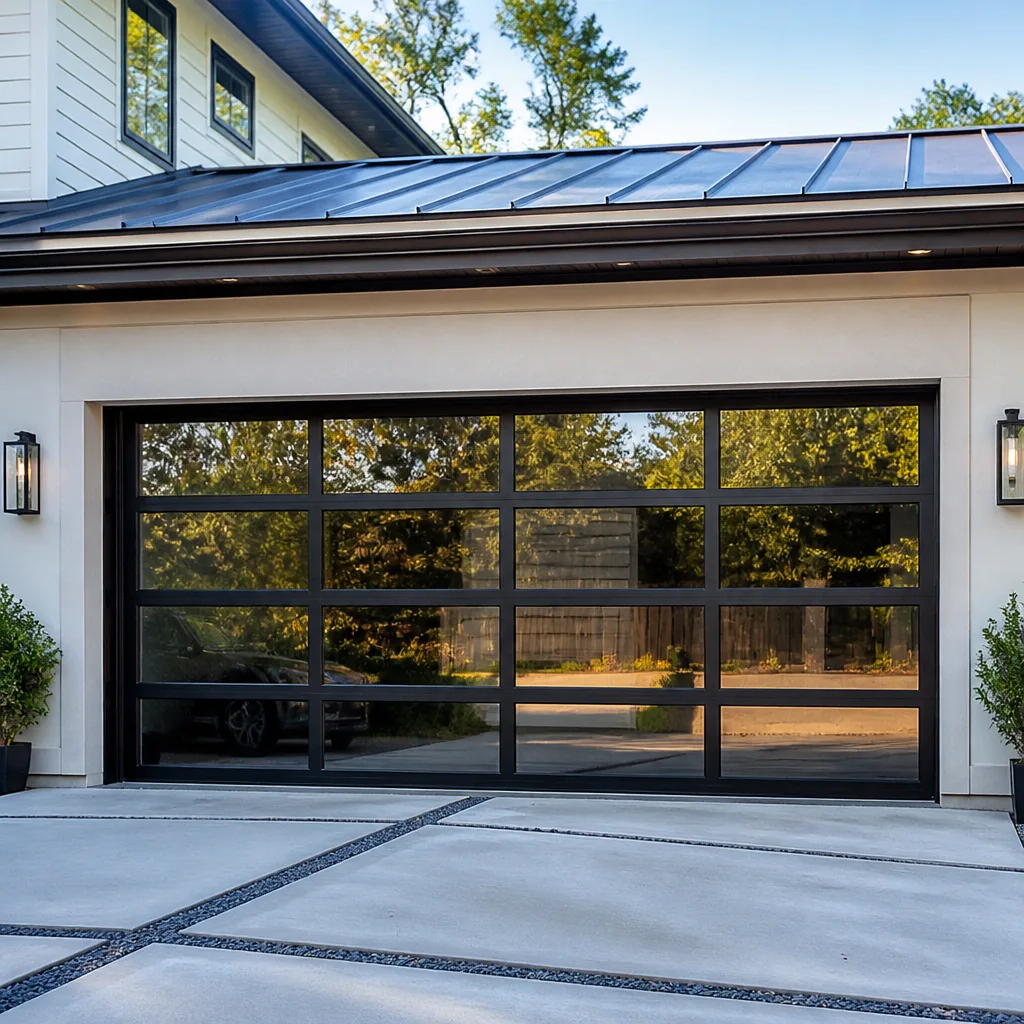 Full-view glass
 LiftMaster openers
 Chamberlain openers
Full 25-point door and opener safety check with every visit - springs, cables, rollers, tracks, and your LiftMaster or Chamberlain opener included
You get a price before we start. It does not change when the pro arrives.
Get your free estimateDIY vs Professional Garage Door Parts: What’s Safe to Do Yourself
A standard torsion spring on a seven-foot residential door stores roughly 100 to 200 foot-pounds of torque when it’s wound. That’s not a number copied off a warning sticker. It’s a physics calculation you can run yourself: the spring has to lift a door weighing 130 to 200 pounds, and it does that work by holding energy in a coil of steel wire. That stored energy is the real dividing line in garage door repair, and it’s a better guide than the vague feeling that some jobs are “too hard.” In this guide we’ll walk through which parts you can safely replace yourself, which ones put you in the emergency room when they let go, and where the middle ground sits. We’ve watched a lot of homeowners in Winchester wrestle with this exact question, so we wrote the answer down properly.
Quick Answer
The safe DIY garage door parts are weatherstripping, bottom seals, non-load-bearing hinges, sensor alignment, and remote programming. Anything that holds tension or carries the door’s weight – torsion springs, extension springs, high-tension cables, and the drums they wind around – is not a DIY job, no matter how handy you are, because the energy stored in those parts can release in a fraction of a second and cause serious injury. Rollers and cable-drum inspections sit in the middle: safe only if the door’s tension is fully released first.
Styles & brands we work with
- Raised-panel steel
- Carriage house
- Modern flush
- Full-view glass
- LiftMaster openers
- Chamberlain openers
Table of Contents
- What “Stored Energy Components” Actually Means
- Parts You Can Genuinely Replace Yourself
- The Middle Ground: Rollers and Drum Inspections
- Why Improvised Tools Make Springs Non-DIY
- What a Technician Documents That You Can’t
- DIY Cost vs. Pro Cost vs. Failed-DIY Cost
- Common Mistakes to Avoid
 Before
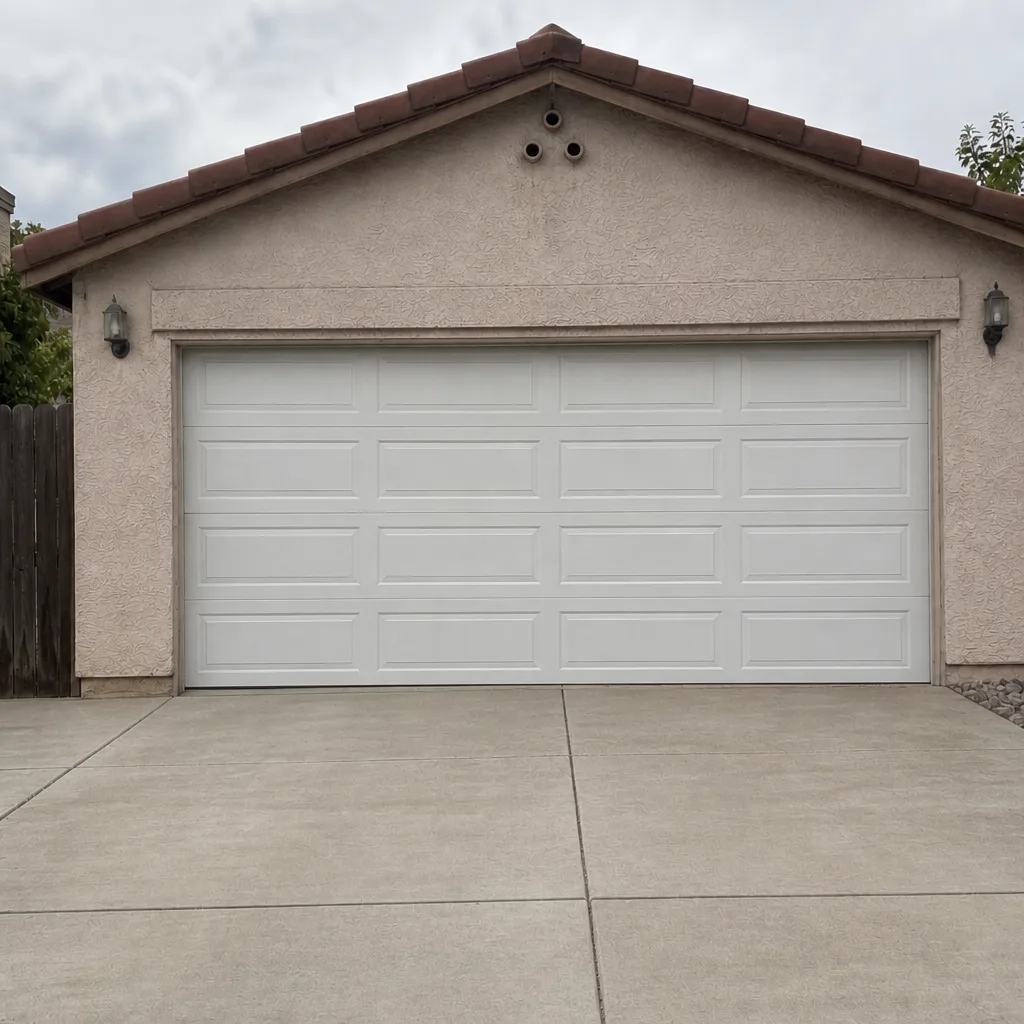 After
What “Stored Energy Components” Actually Means
A stored energy component is any part that holds mechanical force while the door is at rest. On a standard sectional door there are three: the torsion spring (or springs) mounted on the header above the opening, the extension springs mounted along the horizontal tracks on older doors, and the high-tension cables that run from the bottom corners up to the drums. All three are under load every second of the day, even when the door is closed and the opener is unplugged.
That last part trips people up. Cutting power to the opener feels like making the door safe. It doesn’t. The springs don’t care whether the motor has current. They’re holding the door’s weight with nothing but wire tension, and the cables are holding several hundred pounds of it. When a cable snaps or a spring breaks mid-wind, the energy doesn’t dissipate politely. The door can drop, the cable can whip, and the spring can throw fragments. Emergency departments see these injuries regularly, and in our experience the people who get hurt are rarely the ones who “didn’t know what they were doing.” They’re often experienced DIYers who understood the concept and underestimated the release.
Winchester’s climate adds a wrinkle competitors don’t mention. Our dry summers and cool valley winters cycle springs through big temperature swings, and the desert dust that collects on the coils acts like a mild abrasive over thousands of cycles. Springs in Winchester homes tend to fail at the coil rather than at the anchor, which puts the break point closer to the middle of the assembly and harder to predict. A spring that looks intact can be a few cycles from letting go.
Parts You Can Genuinely Replace Yourself
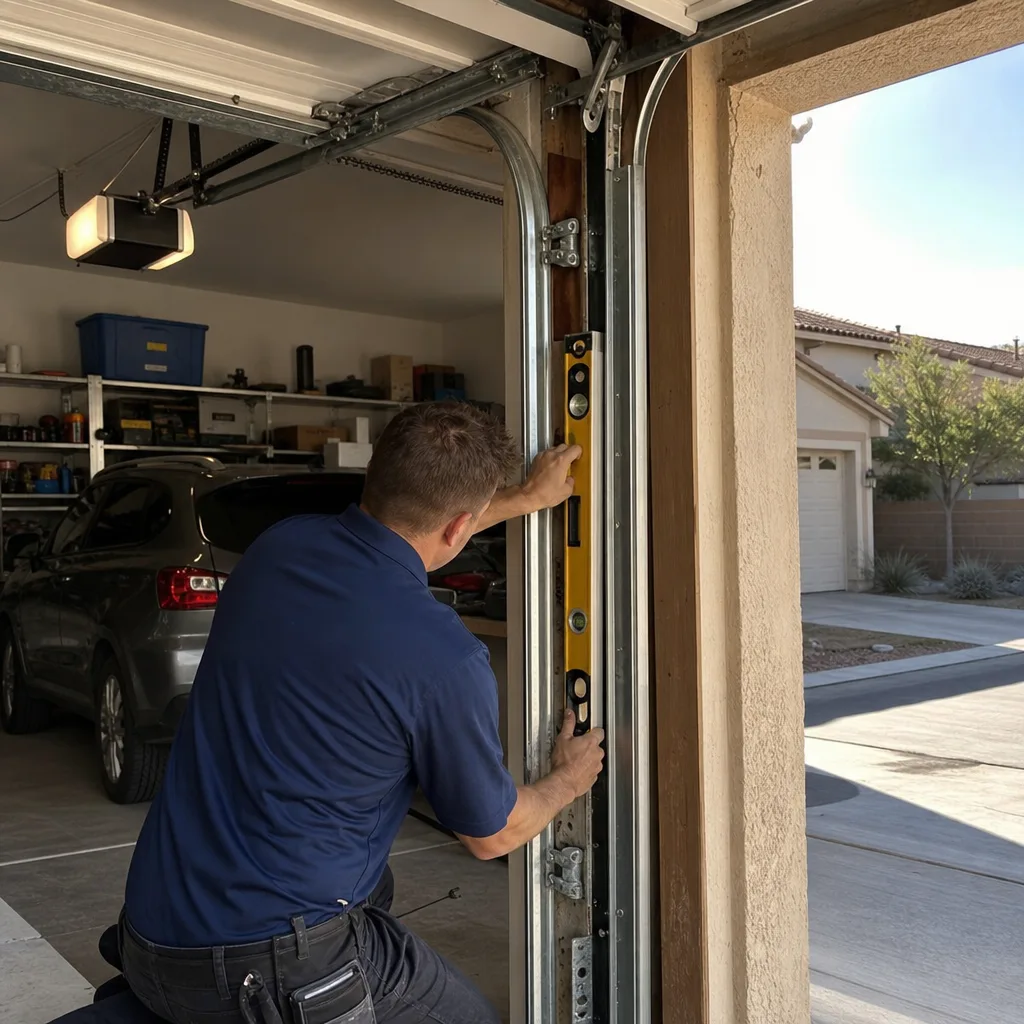
Here’s the good news: a real chunk of garage door maintenance is owner-serviceable with basic tools and no special training. These parts don’t hold tension and can’t drop the door.
- Weatherstripping and side seals: the flexible strips along the jambs and header that keep dust, wind, and insects out. Pull the old strip, clean the channel, press in the new one. A screwdriver and a utility knife handle the whole job.
- Bottom seal (astragal): the rubber or vinyl tube that runs along the bottom edge of the door. On most doors it slides into a channel or tucks under a retainer. Measure the width, buy the matching profile, slide it in. This one matters in Winchester because a cracked bottom seal lets desert dust and summer heat into the garage and stresses the opener on every close.
- Non-load-bearing hinges: the hinges on the upper panels that connect sections but don’t carry spring tension. Replace one at a time with the door fully open and the opener disconnected. Never touch the bottom hinge or the hinge bracket the cable attaches to – those are load-bearing.
- Safety sensor alignment: the two small lenses near the floor on either side of the opening. If the door reverses for no reason, check that both LEDs are solid, that nothing blocks the beam, and that the brackets are snug. A five-minute fix that solves a large share of “my door won’t close” calls.
- Remote programming and keypad codes: pairing a new remote, changing a code, or reprogramming a keypad on a Chamberlain or Genie opener is a manual-and-a-button-press job. Every opener model has its own sequence, and the learning button on the motor head is where you start.
Those five tasks cover most of what actually goes wrong on a door that’s otherwise healthy. If you want the full rundown on what belongs to which system, our page on Garage Door Repair in Winchester breaks it down by symptom.
The Middle Ground: Rollers and Drum Inspections
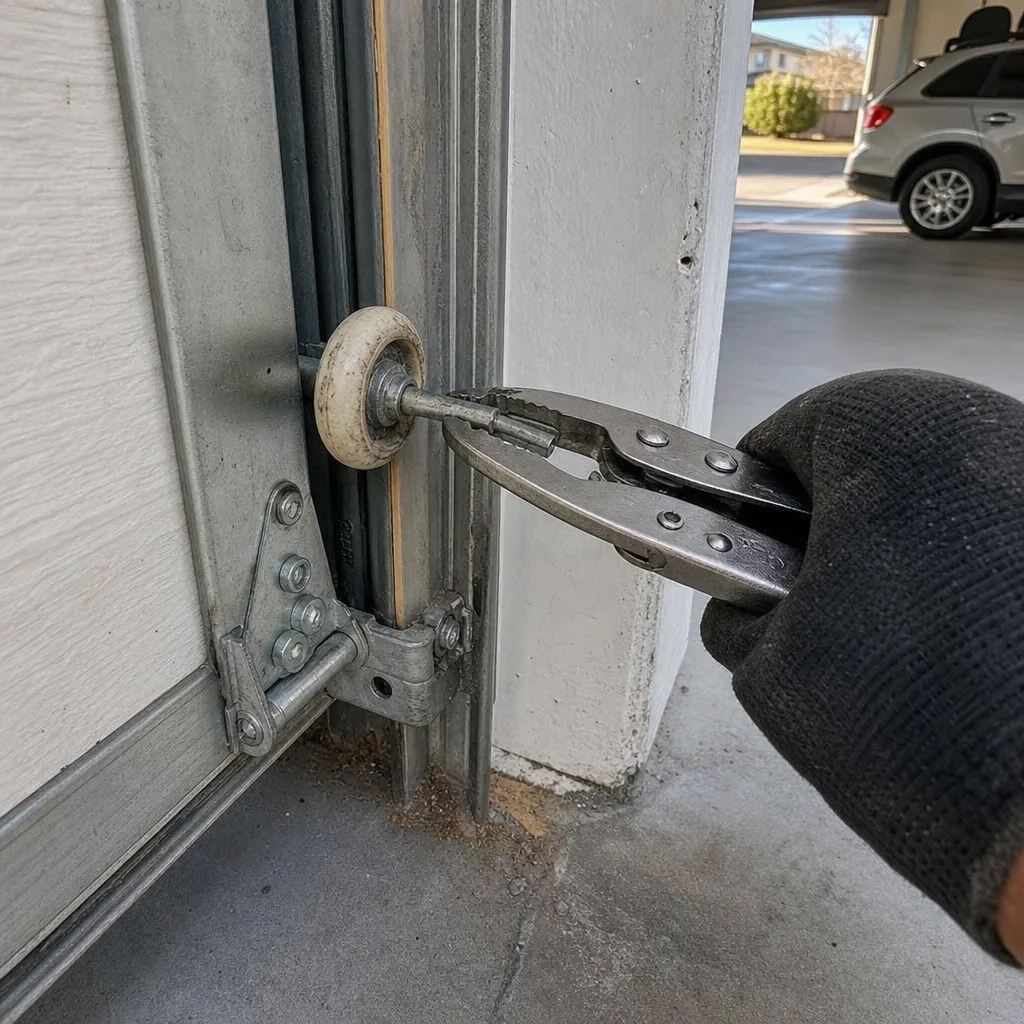
Roller replacement is the classic “depends” job. Rollers themselves are cheap and simple – nylon rollers last longer and run quieter than steel, and swapping them is a matter of sliding the old stem out of the hinge and the new one in. The catch is load. A roller under a door that’s holding tension can bind and shift when you release it, and if the door drops a few inches while your hand is in the hinge, you’ll remember it.
So the rule is simple: never replace a roller unless the door is fully relieved of tension first. That means the door is all the way up, the opener is disconnected, and the spring tension is released by a technician if it hasn’t been already. For the top rollers this is usually fine. For anything on a section still under spring load, it isn’t. Cable drum inspection is the same story. Looking is safe. Touching is not, because the drum is where the cable winds and a cable that slips off the drum under tension is exactly the scenario we described above.
If you’re not certain whether your door is relieved, it isn’t. That’s not a dodge. It’s the honest answer, and it’s why our team photographs the spring assembly before touching anything on a Garage Door Opener Repair & Installation in Winchester visit, so the customer can see the state of the system before we quote. You can read the process standard behind that on our Servo Garage Doors Winchester home page.
Why Improvised Tools Make Springs Non-DIY
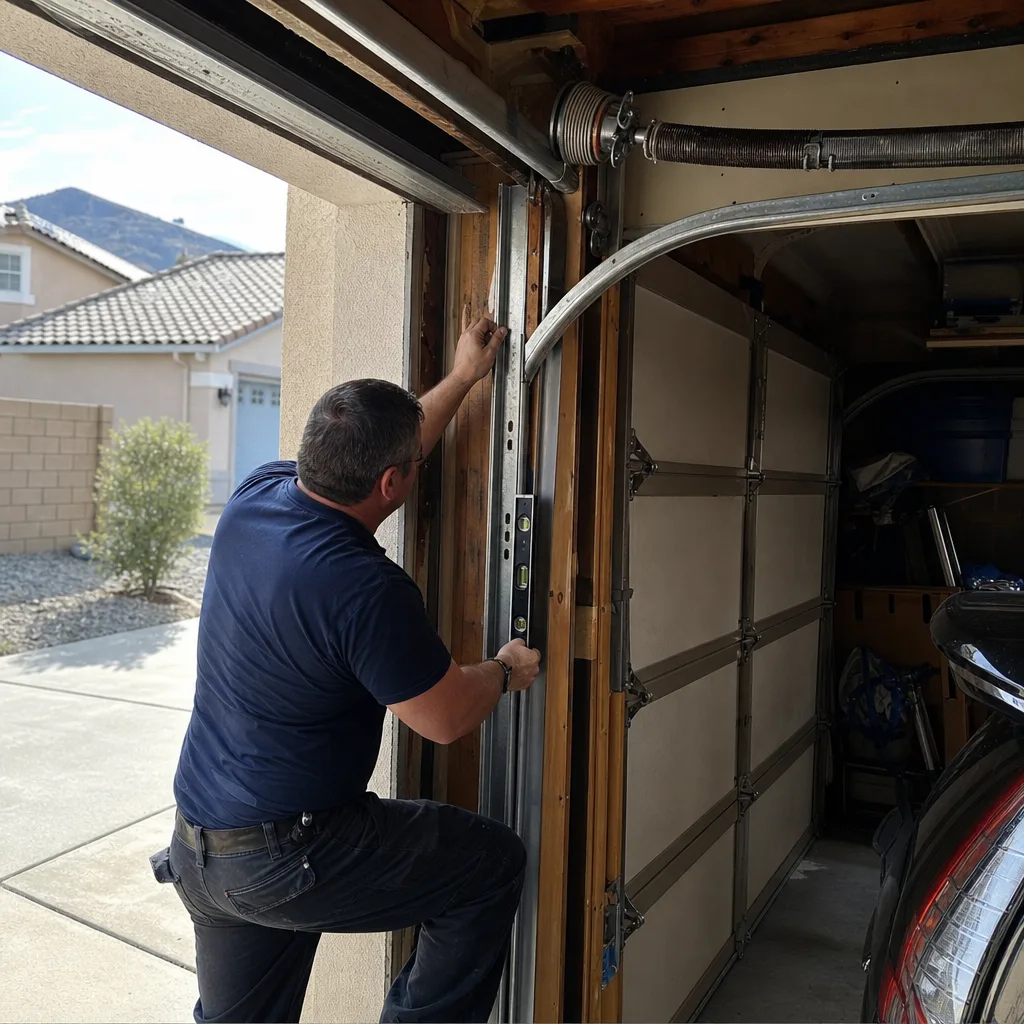
People sometimes ask whether a spring job is doable with the right YouTube video and a pair of winding bars from the hardware store. The honest answer is that the tool isn’t the problem – the improvisation is. Torsion springs are wound with two steel bars inserted into the winding cone, and the job requires holding one bar while moving the other in controlled increments while counting quarter-turns. A screwdriver, a socket extension, or a piece of rebar will fit in the holes. None of them give you the control to stop a spring that’s already under load.
What actually goes wrong, in our experience:
- The improvised bar bends or slips out of the hole mid-wind, and the spring unwinds instantly with the bar still attached.
- The door is left connected to the opener or not blocked, so releasing tension shifts the whole door.
- The spring is replaced with the wrong wire gauge or inside diameter, so the door is either too heavy to lift or comes down too fast.
- The cables were never re-seated on the drums after the spring swap, and the door runs crooked and chews the tracks.
None of these are skill failures. They’re physics failures. The stored energy in a wound spring doesn’t negotiate, and the margin for error is measured in fractions of a second. That’s the whole reason this line exists, and it’s why a technician with up to 11 years of experience treats spring work as a two-bar, block-the-door, verified-tension job every single time.
What a Technician Documents That You Can’t
Here’s a piece of this that most guides skip. When a professional replaces a part, the value isn’t only in the labor. It’s in the record. Our technicians photograph the failed component before quoting a replacement – Clause 4 of The Haven Standard – and the customer gets that photo record along with a written scope of what was found and what was done. That record isn’t ceremony. It’s the thing that makes a warranty claim on a partially serviced door actually work.
Say you replaced the bottom seal and a hinge yourself, then a spring fails eight months later and the manufacturer asks what happened. A photo of the spring break, the wire diameter measurement, and the date of service gives you something to stand on. A verbal description of “it just snapped” doesn’t. It also matters for the 365-Day Done Right Promise: if a repair isn’t right, it gets made right, and the documentation is how both sides know what “right” was supposed to look like. For a homeowner in Winchester who installed a Clopay or Amarr door in the last decade, that paperwork has real dollar value when a parts warranty question comes up.
You can’t produce that record yourself with a phone photo, because the useful part is the measurement and the interpretation, not the picture. That’s the difference between a snapshot and a documented finding.
DIY Cost vs. Pro Cost vs. Failed-DIY Cost
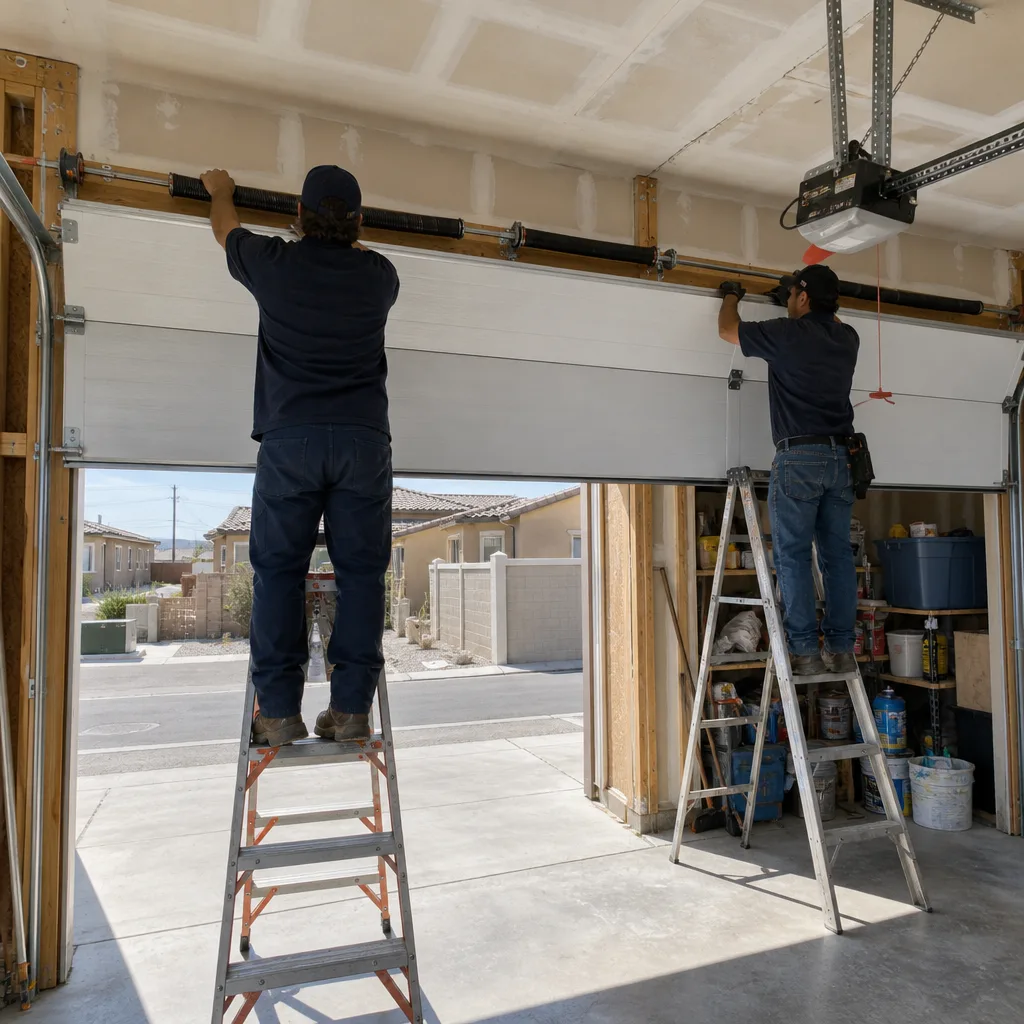
The math on garage door parts is less obvious than it looks, because the failure case is expensive. Here’s the framework we use when a Winchester homeowner asks whether to do it themselves.
- DIY part cost: a bottom seal runs roughly $25 – $60, weatherstripping $20 – $50 per side, a set of nylon rollers $30 – $70, a remote $25 – $45. Sensor alignment and remote programming are $0 in parts.
- DIY part cost for springs and cables: a torsion spring is $30 – $90, a cable set $20 – $50. Cheap on paper, and the reason so many people try. This is where the framework breaks down.
- Professional repair cost: spring replacement typically runs $180 – $340 installed, cable replacement $150 – $300, roller replacement $100 – $200, and a full tune-up $75 – $150. Every one of these is quoted as a flat written price before work starts, per Clause 1 of The Haven Standard. “Call for a quote” is not how we work.
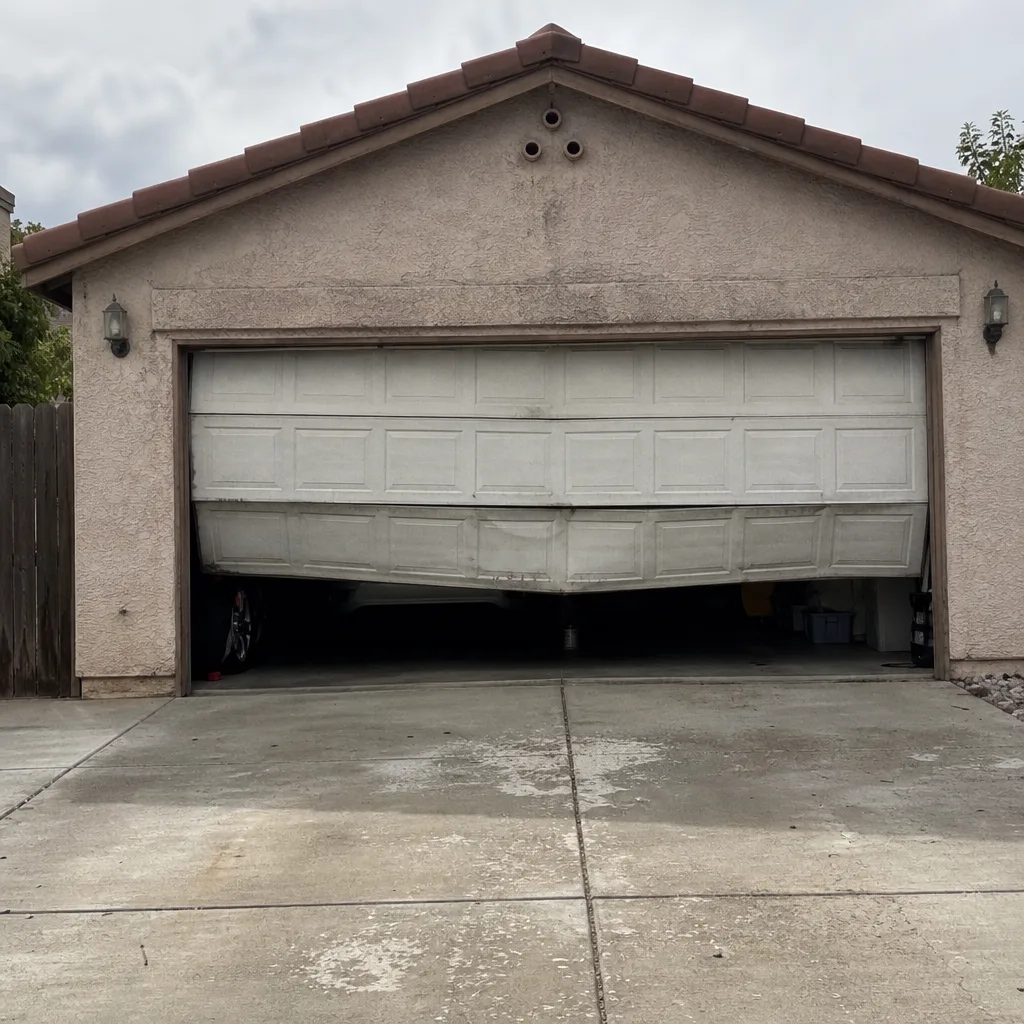
- Failed-DIY cost: a botched spring job that drops the door can bend tracks, crack panels, and stress the opener – a $400 to $900 repair that didn’t need to happen, plus the emergency call premium. A door that misses the sensor and closes on a car adds bodywork to the invoice.
The pattern is straightforward: on the cheap parts, DIY saves real money with minimal risk. On the expensive parts, the gap between a pro price and a part price is $150 to $250, and the downside of a failure is several times that. If you’d rather see the numbers in writing for your exact door, we’ll put them on one page before anything gets touched.
Common Mistakes to Avoid
- Disconnecting the opener and calling it safe. Cutting power doesn’t release spring tension. The door is still under load and will still come down if the spring or cable lets go.
- Replacing one torsion spring when the door has two. Twin springs are matched and cycle together, so replacing the survivor usually means the new one fails early or the door runs unlevel. Both should be replaced together.
- Using the wrong bottom seal profile. A seal that doesn’t seat into the retainer leaves a gap, and in Winchester’s dusty summers that gap pulls grit into the garage and wears the tracks.
- Replacing a hinge you can’t confirm is non-load-bearing. The bottom hinge and the cable bracket at the door’s corner carry load. If you’re unsure which is which, stop and photograph it before you touch anything.
- Buying a “universal” spring off a shelf. Springs are specified by wire gauge, inside diameter, and length. The wrong one either overworks the opener or lets the door fall too fast.
- Turning a limit switch adjustment into a track adjustment. A door that won’t close all the way on a Chamberlain opener is usually a travel limit or sensor issue, not an alignment problem. Diagnosing first saves you from making it worse.
- Ignoring a single loud bang from the garage. That’s a spring breaking. The door should not be operated afterward, even once, because the opener will try to lift a door that has no counterbalance and can bend the panels.
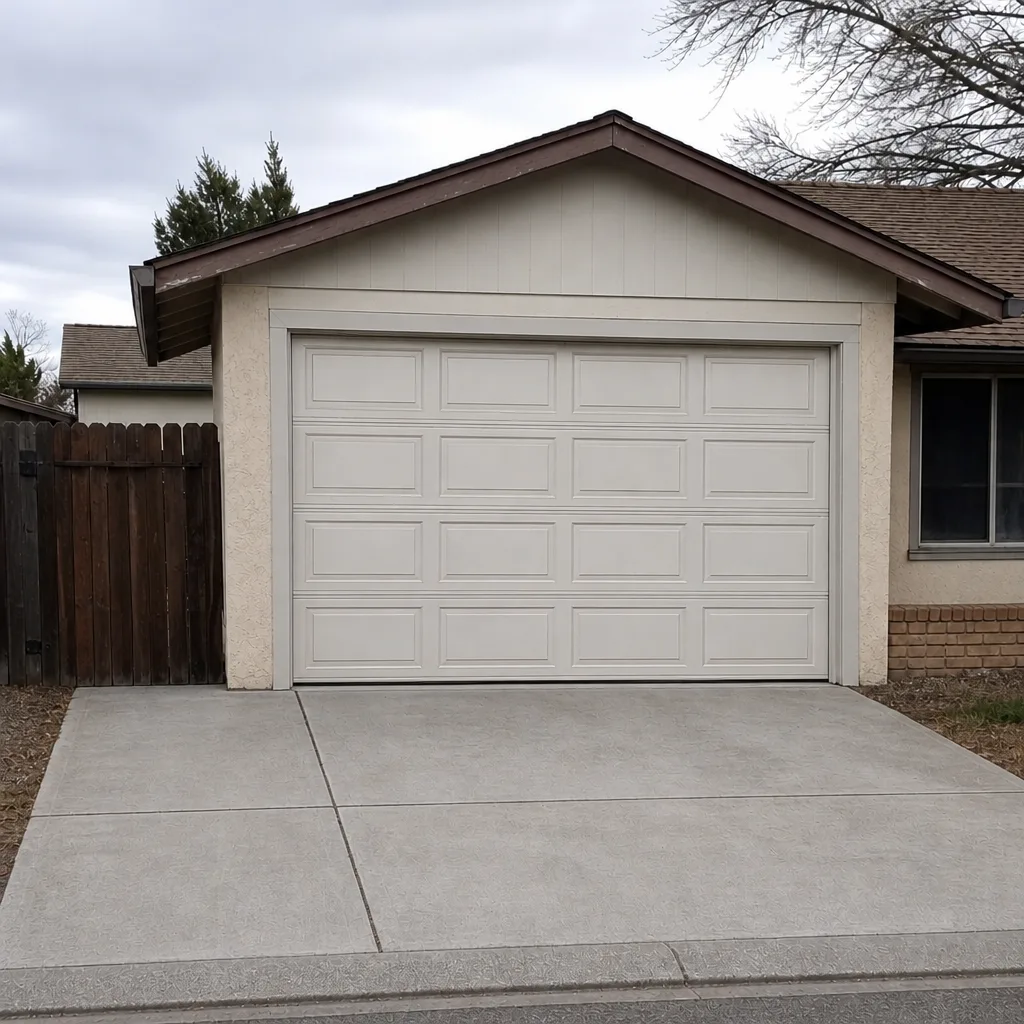
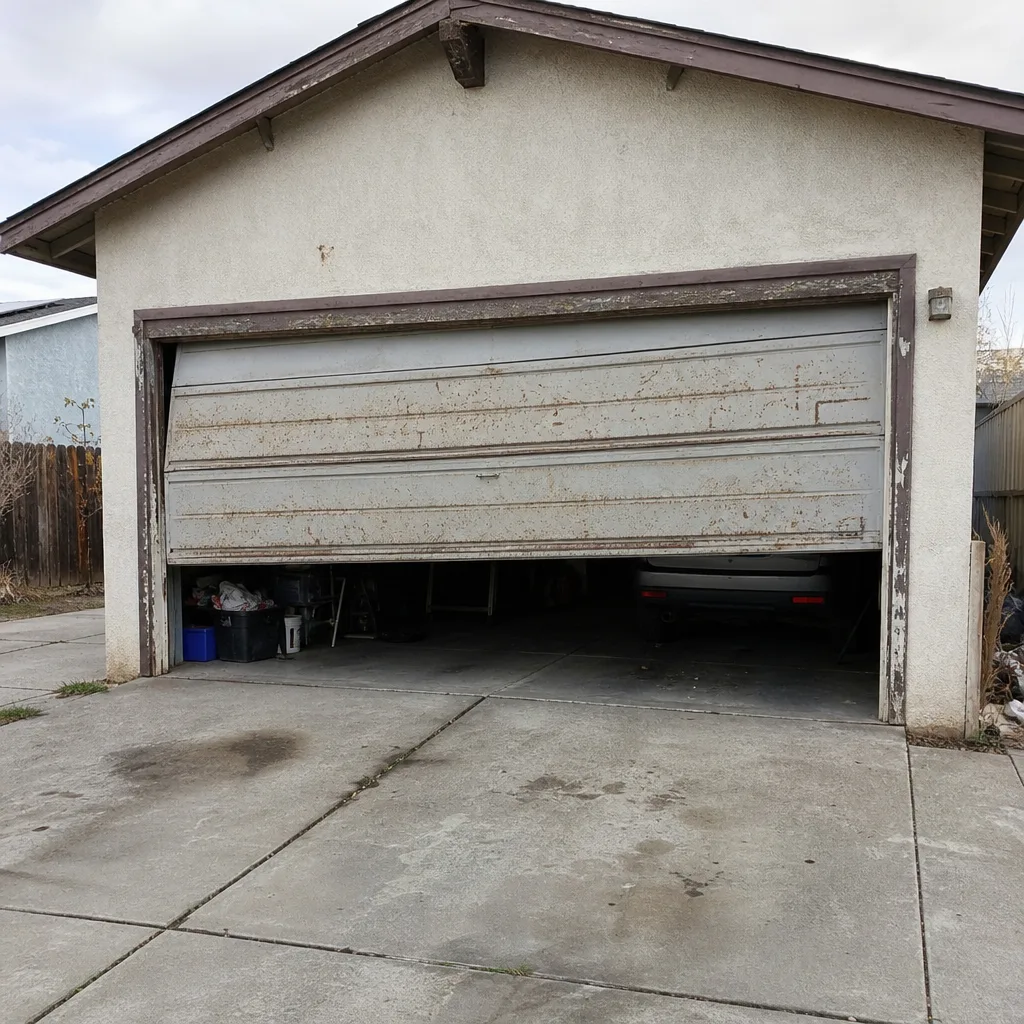
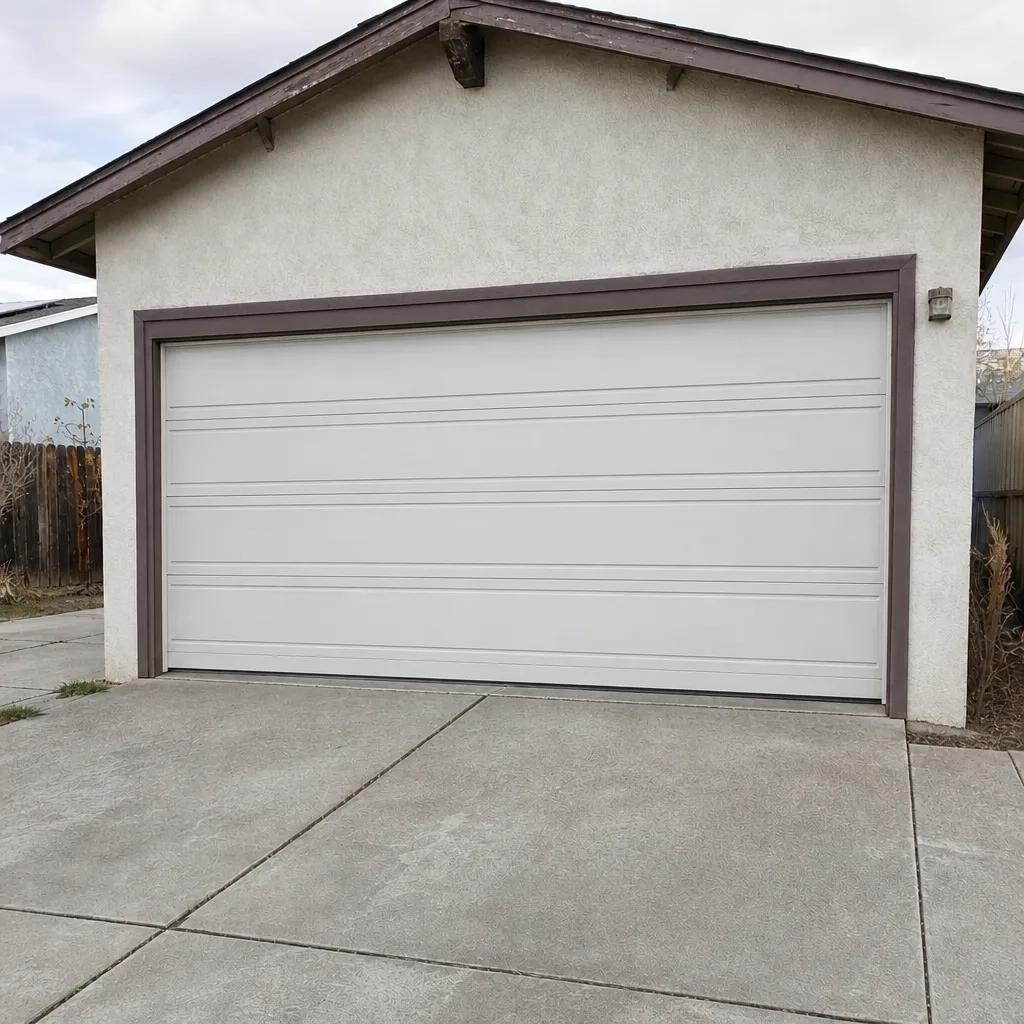
See the difference
BeforeAfter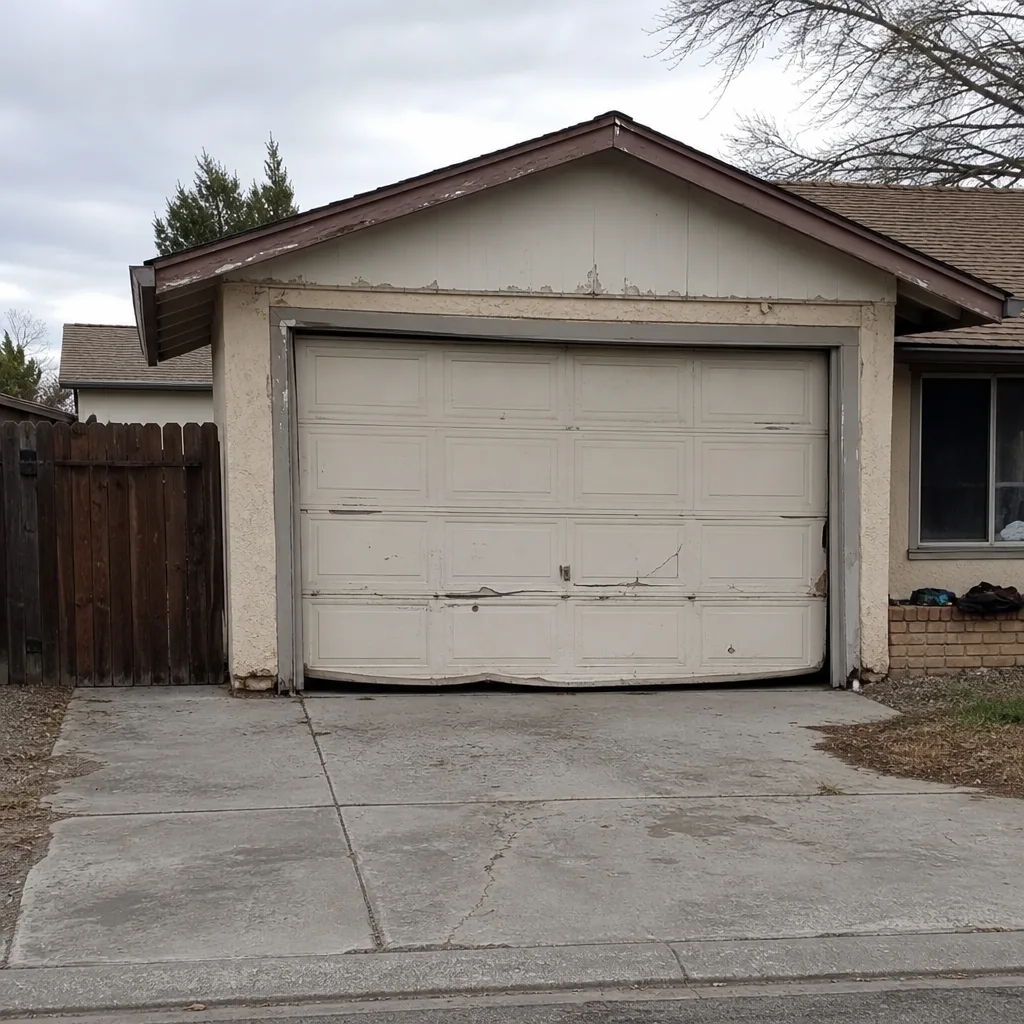 Before
 After
 Before
 After
When to Call a Professional
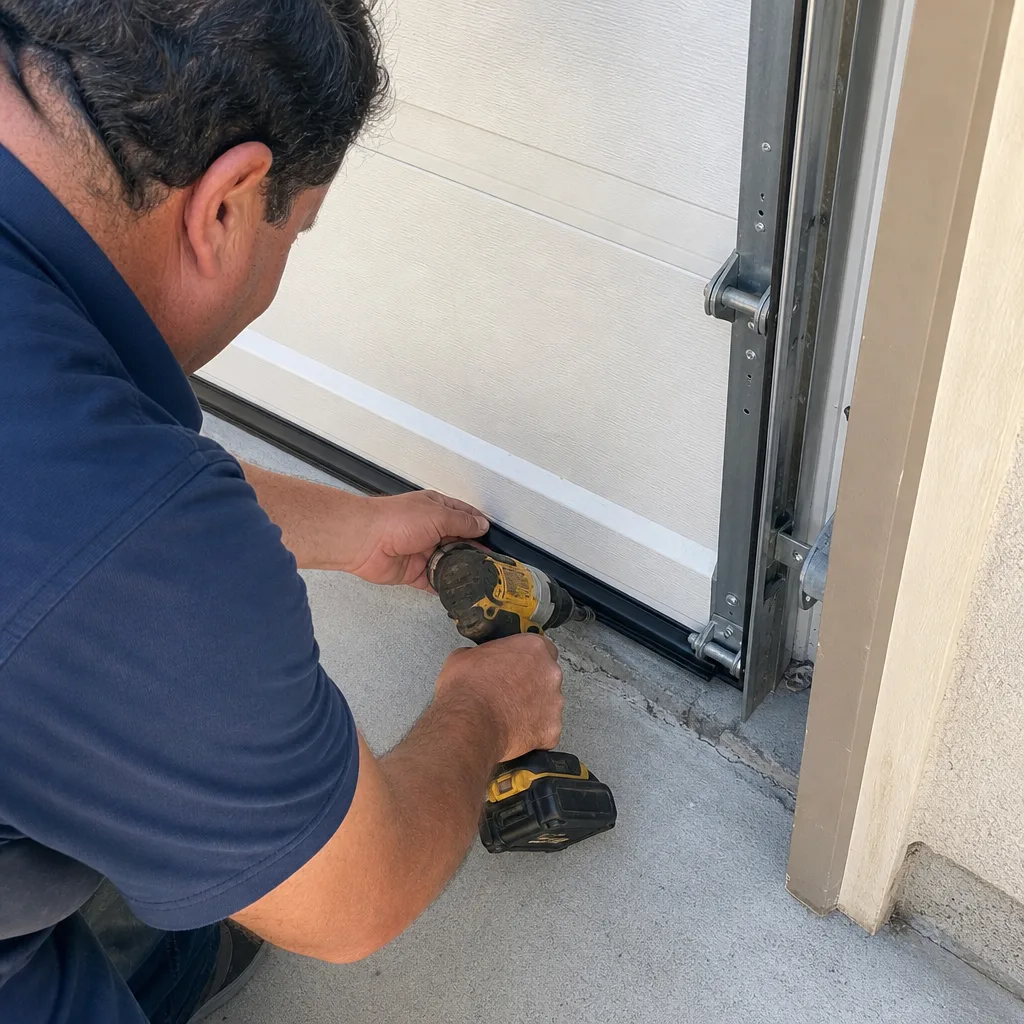
Call a professional for anything under tension or anything that moves the door’s weight: torsion springs, extension springs, cables, cable drums, bottom brackets, and any roller on a section still under spring load. Call immediately if you hear a loud bang from the garage, the door won’t open, a cable is slack or off its drum, or the door hangs crooked. Call if you’ve inspected and aren’t sure – the honest unknown is the most important time to stop. Spring and cable failures don’t announce themselves before they happen, and the safety margin on this part of the trade is too thin to gamble. Servo Garage Doors Winchester offers free estimates in Winchester – and a free second opinion on any written estimate from another company, no coupon needed. Call (855) 517-0284 and we’ll give you a flat written price before any work starts.
If you’re weighing a full replacement rather than a repair, our team handles Garage Door Installation in Winchester from measurement through final balance, with the same written-scope rule.
Frequently Asked Questions
No. Torsion springs store 100 to 200 foot-pounds of torque, and a mistake during winding or unwinding releases that energy in a fraction of a second with enough force to seriously injure a hand or arm. The risk isn’t about skill – it’s about stored energy, which is why pro tools don’t remove the danger. Call (855) 517-0284 for a flat quote on spring replacement in Winchester.
Weatherstripping, bottom seals, non-load-bearing hinges, safety sensor alignment, and remote or keypad programming are all owner-serviceable with basic tools. Rollers are safe only if the door is fully relieved of tension first. Anything that holds the door’s weight isn’t a candidate. If you’re not sure which category a part falls into, call (855) 517-0284 and we’ll tell you straight.
Spring replacement in Winchester typically runs $180 – $340 installed, while the part alone is $30 – $90. The gap looks small until you price a failed attempt, which can bend tracks or crack panels and run $400 – $900 to put right. You get a written price before work starts, so there’s no surprise on the invoice. Call (855) 517-0284 for an exact quote – estimates are free.
No. Our technicians give a flat written price and written scope before any work begins, per Clause 1 of The Haven Standard, and the invoice matches that number. If the technician finds something different once the door is opened up, the change is discussed and re-quoted in writing before anyone proceeds. Bring a written estimate from another company and we’ll give a free second opinion on it.
That’s fine – partial DIY service on non-load-bearing parts doesn’t void future service, and our team photographs the failed component before quoting so you see what was found. The documented photo record also supports any parts warranty question later. The only thing that changes is that we’ll note what was already serviced. Call (855) 517-0284 and describe what you did; we’ll tell you what’s next.
Yes. The technicians who serve Winchester are background-checked, and the local business holds its own license and insurance, with the license number provided in writing rather than buried in fine print. Servo operates as an independently owned and operated business under The Haven Standard. Call (855) 517-0284 to request the credentials before you book.
The Bottom Line
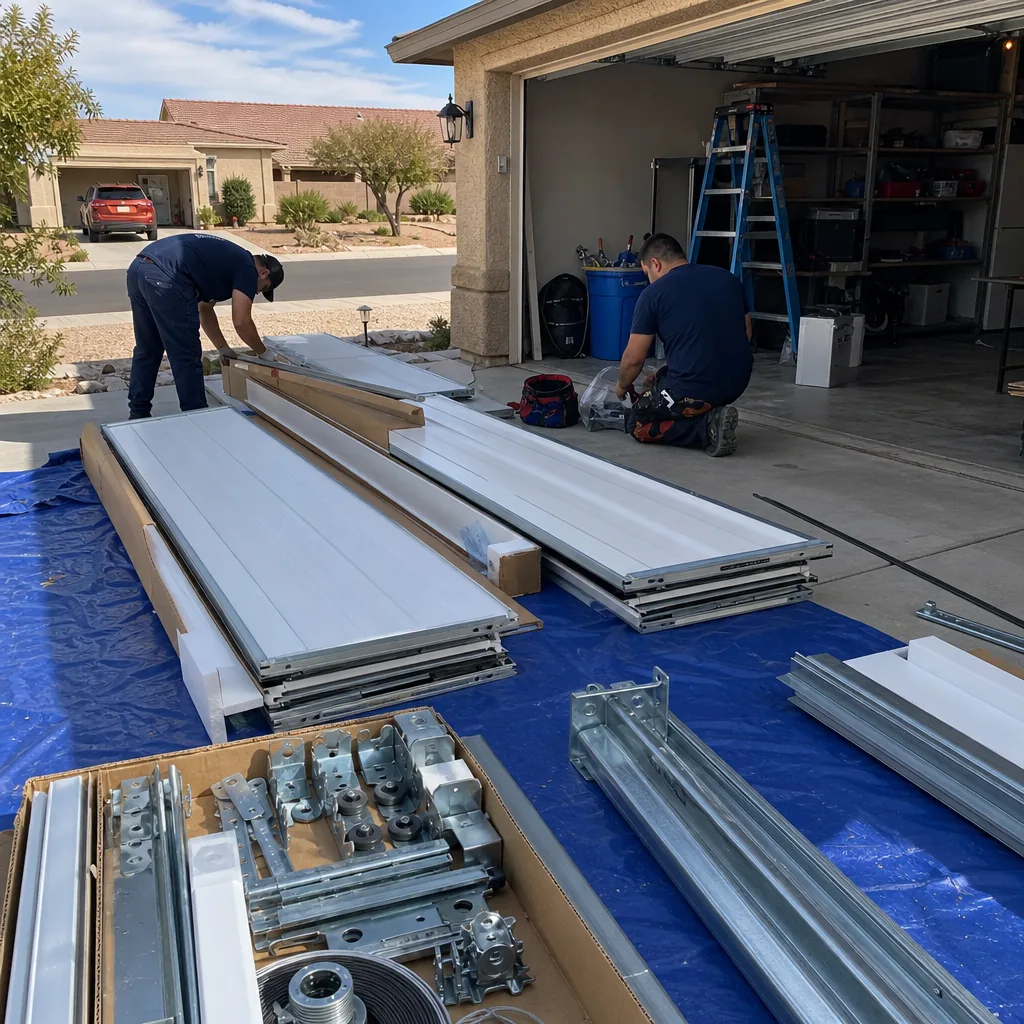
The DIY decision comes down to stored energy, not confidence. Seals, weatherstripping, non-load-bearing hinges, sensor alignment, and remote programming are yours to do and worth doing. Springs and cables aren’t, because the price of a bad attempt is measured in injuries and four-figure repairs, not a $50 part. Rollers sit in the middle and depend entirely on whether the door is relieved of tension first. When in doubt, a written price and a documented photo record cost you nothing to get, and you keep the safety margin. That’s the whole framework, and it holds whether the door is a Chamberlain or a Clopay, whether it’s new or twenty years old.
Ready for a flat written price before anything is touched? Servo Garage Doors Winchester answers the phone live, 24/7, including emergencies, and provides free estimates in Winchester with no code or coupon required. Call (855) 517-0284 today – we’ll tell you exactly what’s safe to leave alone and what needs a technician, and you’ll see the failed part before anyone quotes a replacement.
Written by the team at Servo Garage Doors Winchester.