
Last updated November 18, 2026
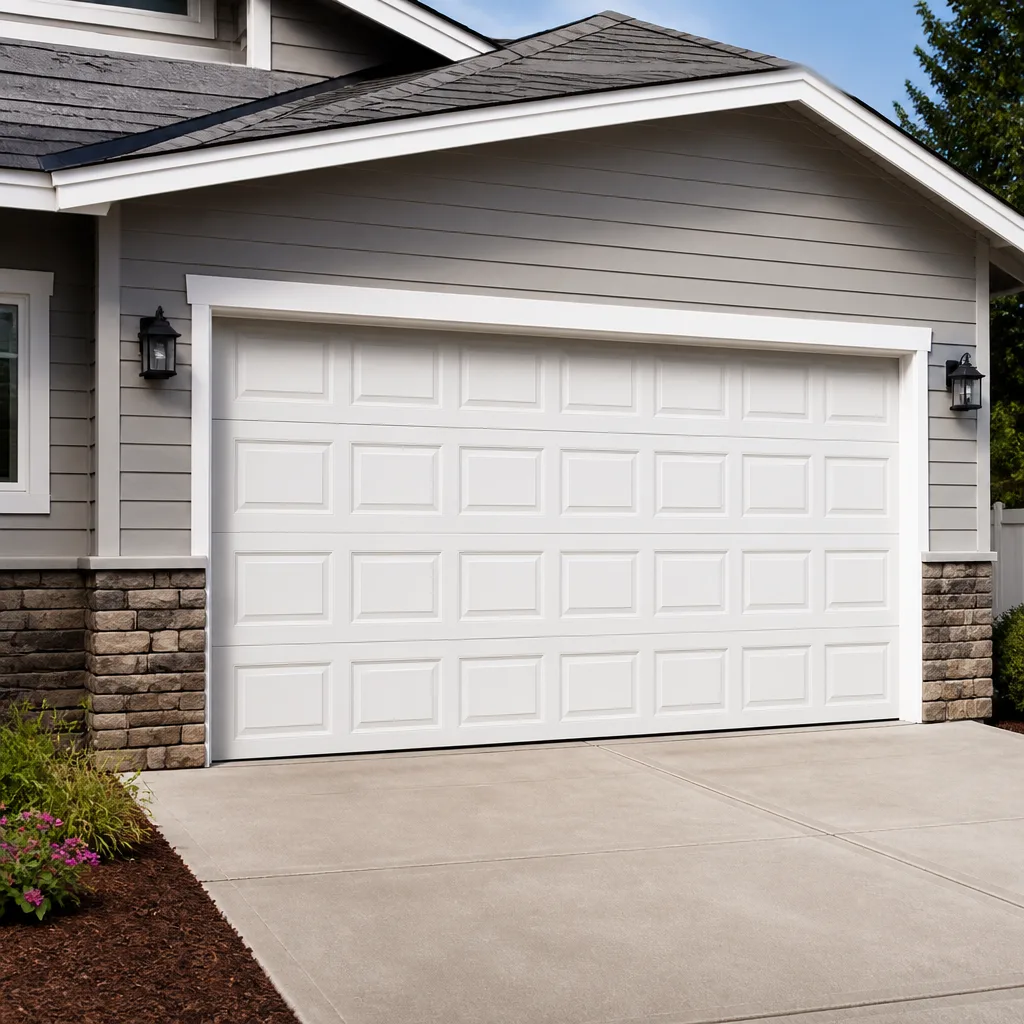 Raised-panel steel
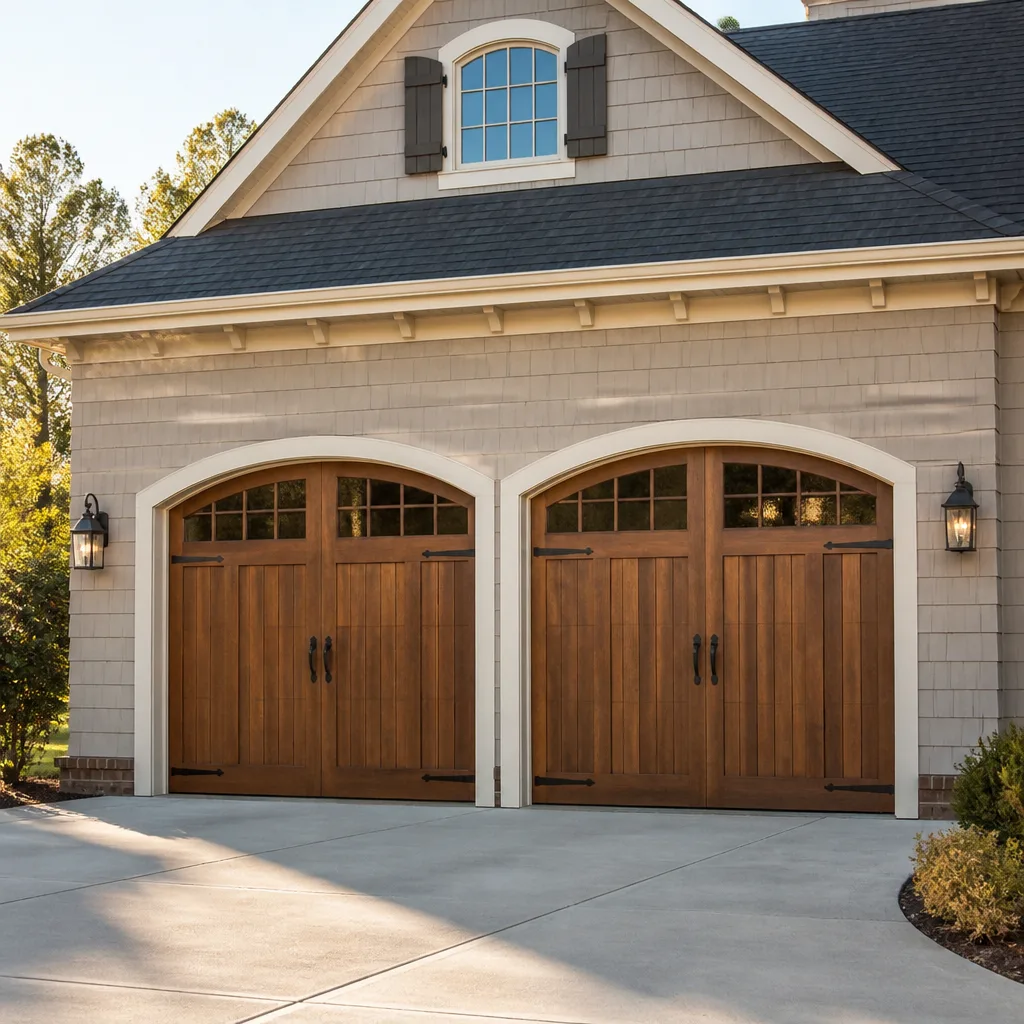 Carriage house
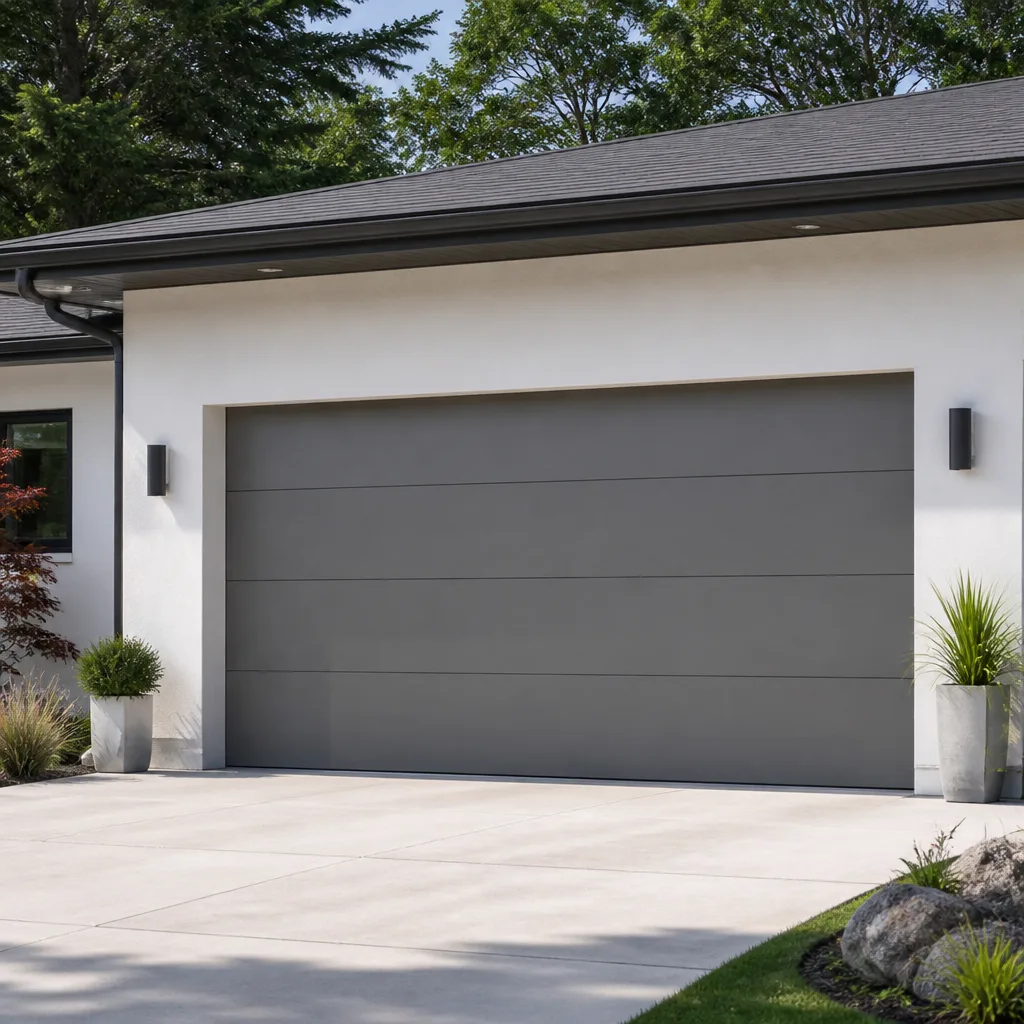 Modern flush
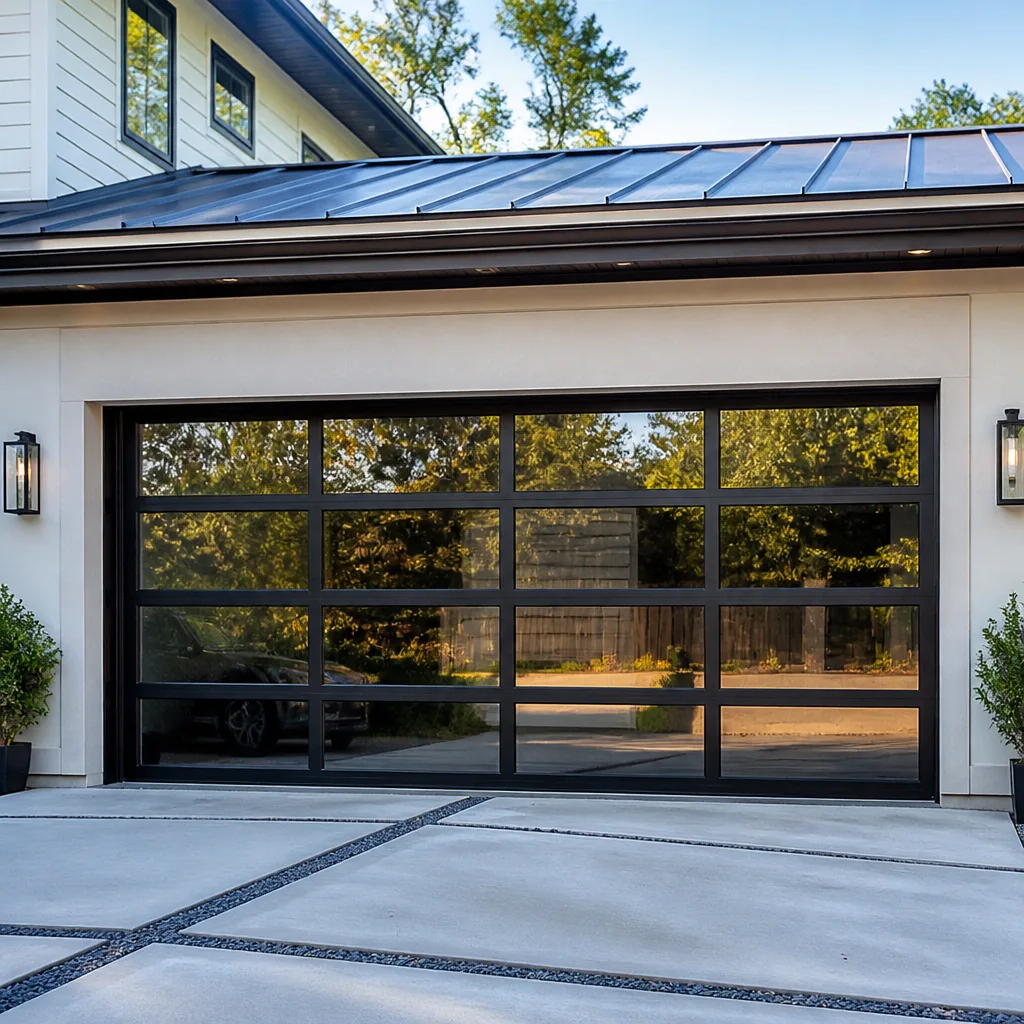 Full-view glass
 LiftMaster openers
 Chamberlain openers
Full 25-point door and opener safety check with every visit - springs, cables, rollers, tracks, and your LiftMaster or Chamberlain opener included
You get a price before we start. It does not change when the pro arrives.
Get your free estimateDIY vs Professional Garage Door Repair: What’s Safe to Do Yourself
A wound torsion spring on a standard seven-foot door stores roughly 100 foot-pounds of torque. Release that energy without the correct winding bars and body position and it doesn’t politely unwind – it throws. That fact is not a liability disclaimer tacked onto the bottom of a page. It is the mechanical reason the DIY-versus-professional question has a clean, defensible answer, and it’s the line this guide draws. We’re going to separate the jobs you can genuinely handle on a Saturday in Winchester from the ones that belong behind a professional boundary, with the real parts-versus-all-in math for each.
Quick Answer
Safe DIY garage door work is limited to anything not under tension and not carrying the door’s weight: weatherstripping, safety-sensor alignment, remote and keypad reprogramming, and tightening hinge bolts on non-bottom brackets. Everything that stores energy or holds a 200-plus-pound panel – torsion springs, cables on live drums, bottom brackets – belongs to a trained professional, regardless of your skill level. The dividing line is stored energy, not confidence.
Styles & brands we work with
- Raised-panel steel
- Carriage house
- Modern flush
- Full-view glass
- LiftMaster openers
- Chamberlain openers
Table of Contents
- Why Stored Energy Is the Real Line
- Safe-to-DIY Repairs (and How to Do Them)
- Do-Not-DIY Repairs and the Mechanical Reason for Each
- The Real Cost Comparison: DIY Parts vs Professional All-In
- How to Verify a Spring Replacement Was Done Correctly
- Partial DIY: Buying the Part and Handing It Off
- What Winchester Homeowners Deal With Specifically
- Common Mistakes to Avoid
 Before
 After
Why Stored Energy Is the Real Line
Most DIY advice frames garage door repair as a skill test. Can you turn a wrench? Can you follow a video? That framing is wrong, and it’s why people get hurt. A garage door is a balanced machine. The springs – torsion on most modern doors, extension on some older ones – are wound to counteract the door’s weight so a child can lift it with one hand. That balance is the whole design. It also means the system is permanently loaded, even when the door is sitting closed and looks perfectly still.
A torsion spring holds its energy in the coiled steel itself. A cable holds energy in tension along its length, and it’s anchored at the bottom bracket, which is under load even when the door is down. When one of those components fails during a repair attempt, the release is instantaneous and doesn’t care where your hands are.
Compare that to the parts on the safe side of the line. Weatherstripping is rubber. A safety sensor is a low-voltage photoelectric eye. A hinge bolt on an upper bracket holds a hinge to a panel that isn’t tensioned. None of these can hurt you if you make a mistake – the worst outcome is a door that doesn’t close quite right and a second attempt.
That’s the distinction. Not easy versus hard. Loaded versus unloaded. When you understand which parts of a garage door carry stored energy, the DIY decision stops being about courage and starts being about physics.
Safe-to-DIY Repairs (and How to Do Them)
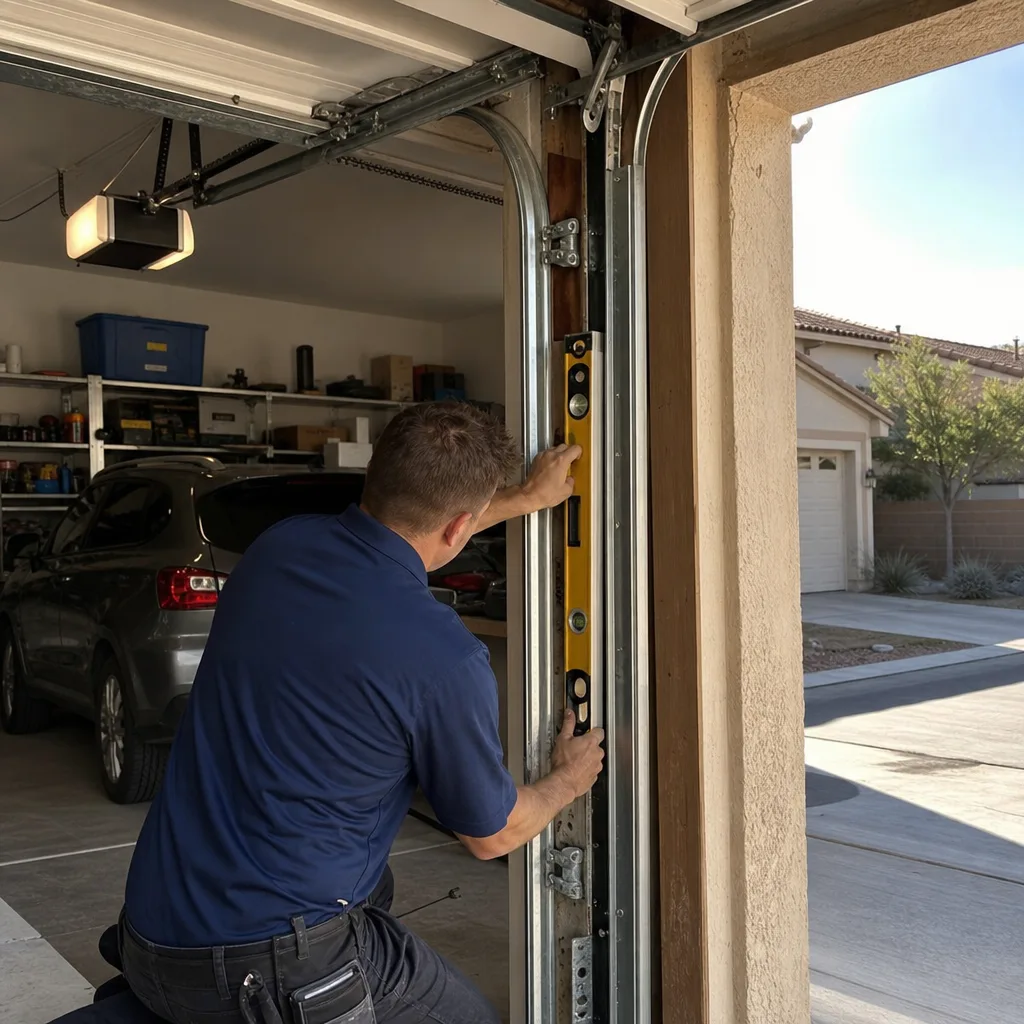
These are the repairs we’d tell a friend in Winchester to handle themselves without a second thought. They involve no stored energy, no door weight, and no specialty tools beyond a socket set and a screwdriver.
Weatherstripping replacement
The rubber seal along the bottom of the door and the vinyl strips around the frame take a beating. They crack, flatten, and let in cold air and desert dust. A replacement bottom seal runs $15 to $40 at any hardware supplier, and installation is a matter of pulling the old seal out of its track and sliding the new one in. Frame weatherstripping is nailed or stapled on. Fifteen minutes of work.
Safety-sensor realignment
The two photoelectric eyes near the floor on either side of the opening need to see each other. If one gets bumped, the door reverses or refuses to close. Check that both LEDs are solid (not blinking), wipe the lenses, and adjust the bracket until they line up. If a bracket is bent, straighten it or replace it – the sensors themselves are inexpensive and plug in.
Opener remote and keypad reprogramming
Lost a remote? Bought a new one? On a LiftMaster or Chamberlain unit, the learn button on the motor head takes about thirty seconds to pair a new remote. Genie and Craftsman units use a similar process with slight variations in button location. The manual for your model covers it, and the process is genuinely foolproof if you follow the sequence.
Hinge bolt tightening on non-bottom brackets
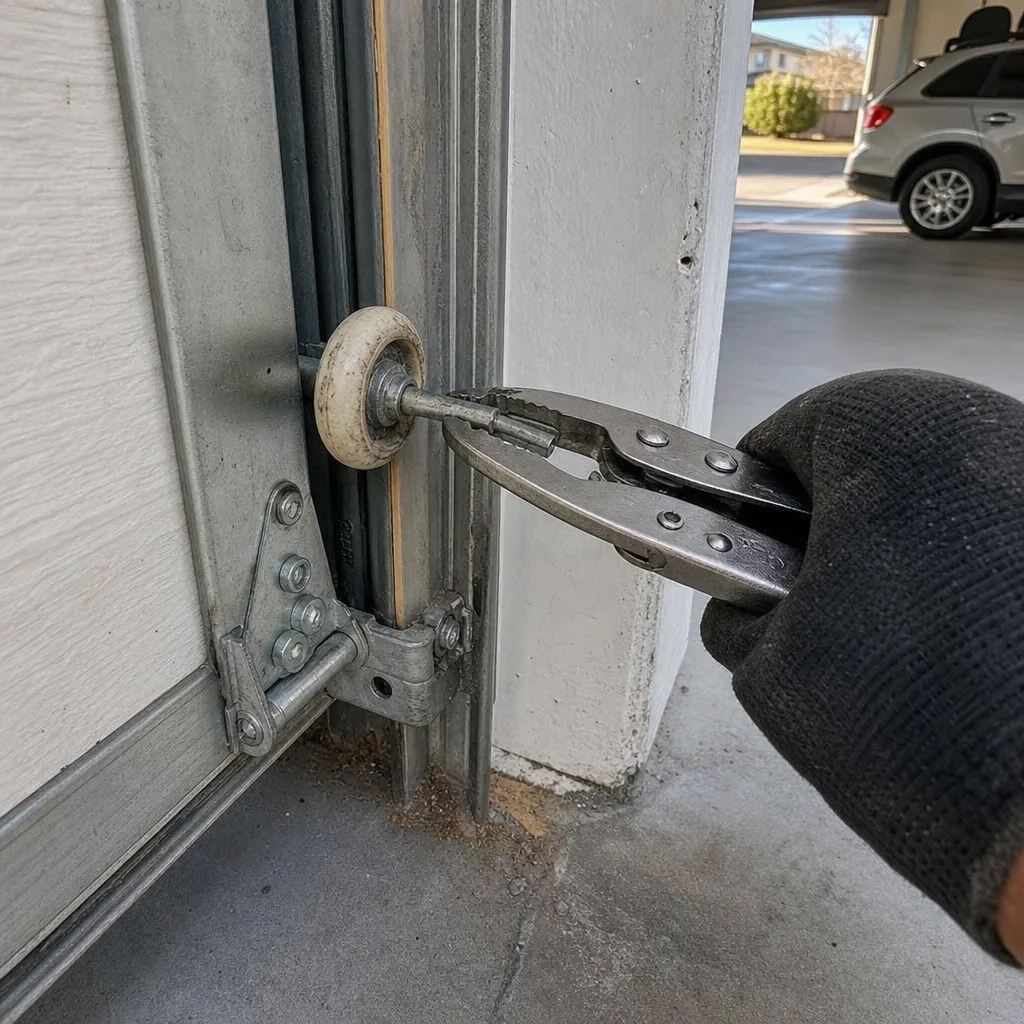
Doors rattle and squeak when hinge bolts work loose. Tighten them with a socket wrench – but only on hinges attached to the upper panels. The bottom bracket and the hinges nearest it are a different story, and we’ll cover that in the next section. A drop of lubricant on each roller stem and hinge pivot quiets a door noticeably.
Roller and track cleaning
Wipe down the tracks with a damp rag, clear debris, and lubricate the rollers and hinges with a silicone spray (not grease – grease attracts grit). This isn’t a repair, but it prevents the wear that leads to one.
Do-Not-DIY Repairs and the Mechanical Reason for Each
Each of these involves either stored energy or the full weight of the door. None of them belong in a homeowner’s hands, and the reason is mechanical, not a matter of skill.
Torsion spring winding and replacement
The torsion spring, mounted on the shaft above the door, is wound to a specific number of turns to match the door’s weight. Winding or unwinding requires two steel bars inserted into the winding cones, worked in sequence while the spring is under load. If a bar slips or a spring breaks mid-wind, the release has injured hands, caused finger amputations, and thrown debris toward the eyes. The only safe way to handle a torsion spring is with the correct winding bars and the door weight to know how many turns to apply. That’s not a DIY job, full stop.
Cable replacement on live drums
The lift cables run from the bottom bracket up to drums on the torsion shaft. They’re under hundreds of pounds of tension whenever the door is down. A cable that’s cut or unseated without first relieving the spring tension will whip free at speed. Cables are the single most dangerous component to touch on a loaded door.
Bottom bracket removal
The bottom bracket is the metal corner where the cable attaches to the door panel. It looks like a simple bolt-on piece. It is not – the cable tension runs straight through it, and removing those bolts while the door is closed releases that tension instantly. Even with the door open, the spring may still carry residual load. This is the mistake that catches experienced DIYers, because the bracket looks so unassuming.
Track realignment after a bend
A bent track can be straightened in theory, but the door’s weight rides on those tracks and the geometry has to be exact. A poorly straightened track causes rollers to bind, which accelerates wear and eventually fails a cable. A pro will replace the bent section with the correct gauge rather than persuade it back into place.
Opener logic board or gear replacement
Not dangerous, but the diagnosis is. A door that won’t respond could be a failed logic board, a stripped drive gear, a limit switch out of adjustment, or a broken spring pulling the opener into overload. Swapping the board when the real problem is the spring wastes a part and leaves the door non-functional. Diagnostics belong to someone who can isolate the fault.
The Real Cost Comparison: DIY Parts vs Professional All-In
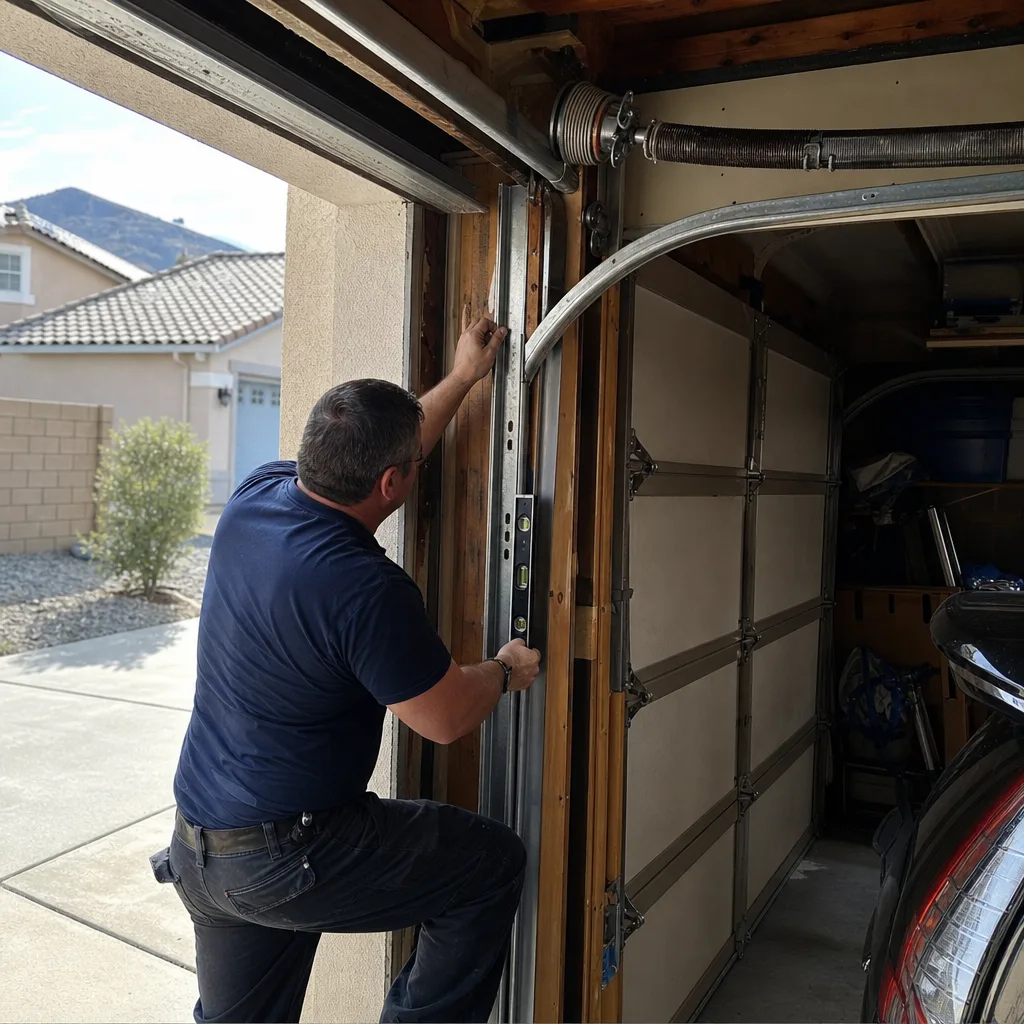
Here’s the honest math for the five repairs people most often consider DIYing. Parts pricing reflects what we see at Nevada suppliers; the professional all-in pricing includes labor, the written price before work begins, and the documented photo record. Your numbers will vary by door and by season, but the ranges give you a real starting point.
| Repair | DIY Parts (approx.) | Professional All-In (approx.) |
|---|---|---|
| Bottom weatherstripping | $15-$40 | $90-$150 |
| Safety-sensor realignment | $0-$25 | $85-$130 |
| Remote / keypad reprogram | $0 (existing remote) | $75-$120 (or included with a service call) |
| Torsion spring replacement (single spring) | $45-$90 (part only) | $185-$340 |
| Cable replacement (per cable) | $25-$50 (part only) | $160-$290 |
Read the table carefully. On weatherstripping, sensors, and remotes, the DIY savings are real and the work is genuinely safe. The professional price reflects a service call, and if you’re handy, the case for DIY is clear. On springs and cables, the DIY parts price looks tempting until you consider that the part alone isn’t most of the cost – the torsion spring is $45 to $90, but the door still needs to be balanced, wound to the correct turns, and tested. A DIY spring swap that gets the turns wrong wears out twice as fast or fails the door’s balance entirely, which then damages cables and rollers.
Our experience in Winchester is that the spring and cable jobs are where DIY saves money on paper and costs more in the end. If you want a written price before you decide, that’s what we do – a flat, itemized number, not a phone estimate.
How to Verify a Spring Replacement Was Done Correctly
Whether you hire a pro or decide to go it alone, you need to know the new spring is correct for the door. The spec that matters is the IPPT rating – inch-pounds per turn. It describes how much lifting force the spring delivers per turn of the winding cone. Get it wrong and the door is either too heavy to lift or too light and won’t stay down.
Here’s how to check any spring replacement, ours or anyone else’s:
- Confirm the wire diameter and inside diameter match the old spring. These are stamped on the winding cone or printed on the packaging. A tech who swaps in a “close enough” spring is guessing.
- Ask for the IPPT rating. For a standard seven-foot door, the correct spring should produce roughly 25 to 30 inch-pounds per turn depending on the door’s weight. A pro can tell you the number and where they got it.
- Balance test the door. Disconnect the opener (pull the red release cord) and lift the door to waist height. It should hold there with no hands on it. If it drifts down, the spring is too light; if it wants to rise, it’s too heavy.
- Count the turns applied. A pro who knows what they’re doing winds to a specific turn count, not “until it feels right.”
- Look at the documentation. The photo record we deliver includes the new spring spec alongside the old one. That’s the paper trail that makes this checkable a year later when the warranty question comes up.
If a company can’t tell you the IPPT rating and the wire diameter they installed, that’s a signal worth paying attention to.
Partial DIY: Buying the Part and Handing It Off
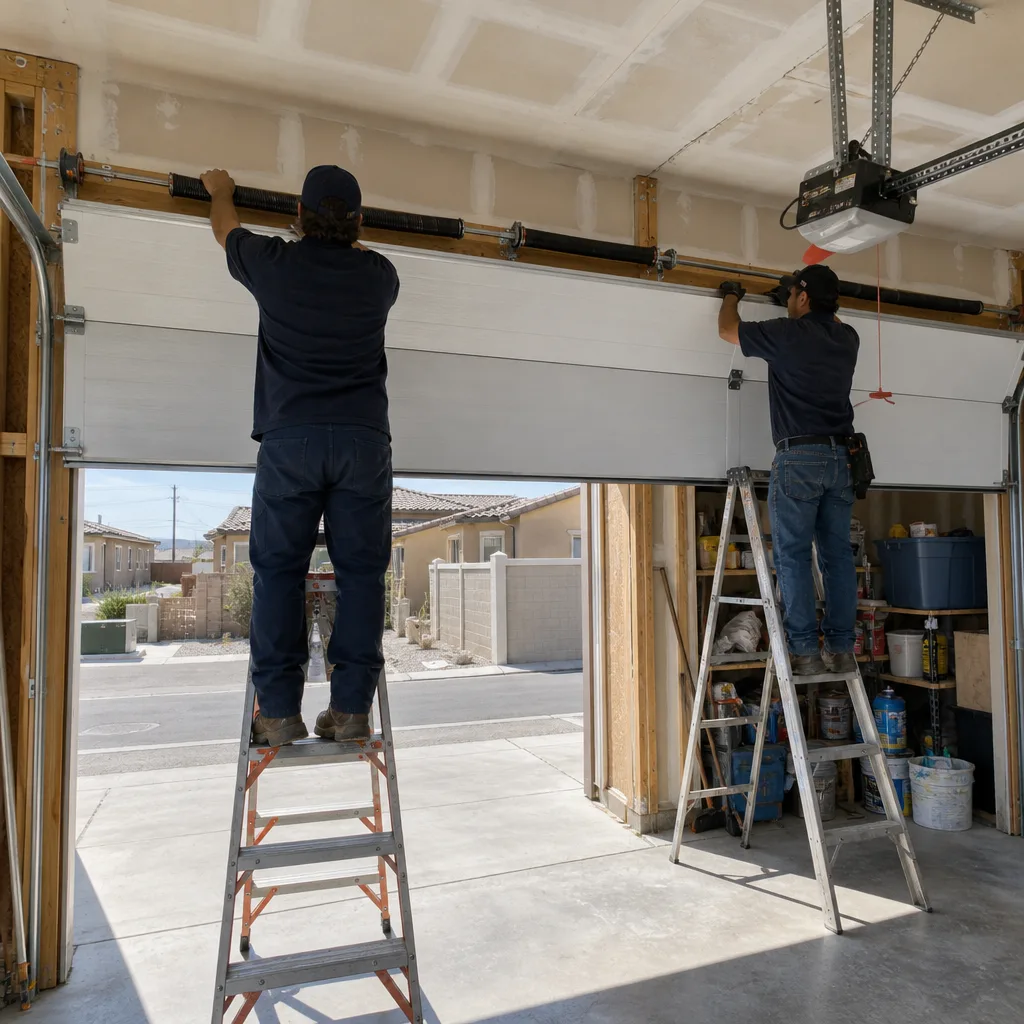
There’s a middle path most homeowners don’t know about, and it’s the one we recommend most often to readers in Winchester who want to save where they can without touching the dangerous components. You buy the correct replacement part. We install it.
Say your bottom seal is shredded and you’ve already identified the exact replacement at a local supplier. Buy it. Call us and tell us you have the part. The service call drops because you’ve removed the retail markup and the supply trip. The installation itself is still documented, still under a written price, still warrantied for the work.
Same logic applies to a remote or a keypad – buy the correct model, and the installation and programming become a short visit instead of a full retail transaction. It’s not a fit for every job (springs still need to match the door’s weight, and we won’t install a part that isn’t the right spec for your door), but for the safe repairs, bringing your own part is a legitimate way to reduce the bill.
What partial DIY is not: it isn’t buying a torsion spring at a big-box store and having someone wind it for cash. A spring that doesn’t match the door’s weight is a mechanical problem dressed as a bargain. If you’re going to source the part, source the right one, and let the professional tell you what “right” means.
What Winchester Homeowners Deal With Specifically
Winchester’s climate shapes which garage door failures show up most. The desert swings between intense summer heat and cold winter nights, and that thermal cycling works on springs, seals, and lubricants. Spring steel fatigues faster in a climate that asks it to expand and contract across a wide temperature range every year, and the seals around the door dry out and crack sooner than they would in a milder climate.
Dust is the other factor. Winches and neighborhoods across the valley see fine grit work its way into rollers, hinges, and tracks. That grit is abrasive. A door that would run clean for a year in a wetter climate needs its tracks wiped and rollers lubricated more often here. It’s cheap maintenance and it extends the life of the moving parts.
The other local reality: a lot of Winchester homes were built or renovated between 2015 and 2025, which means many of the doors in the neighborhoods around here are newer than the springs inside them are being treated. A door that looks new can still have a spring that’s at the end of its cycle life, and the failure will look sudden even though it was building for years.
When a spring does fail, that’s the one moment in this trade where speed matters – a door stuck open is a security problem, and a door stuck closed traps a car. Our emergency line is answered by a live person around the clock, and a named technician gets an on-the-way text to the homeowner. You can see our full Garage Door Repair in Winchester service for what a repair call includes.
Common Mistakes to Avoid
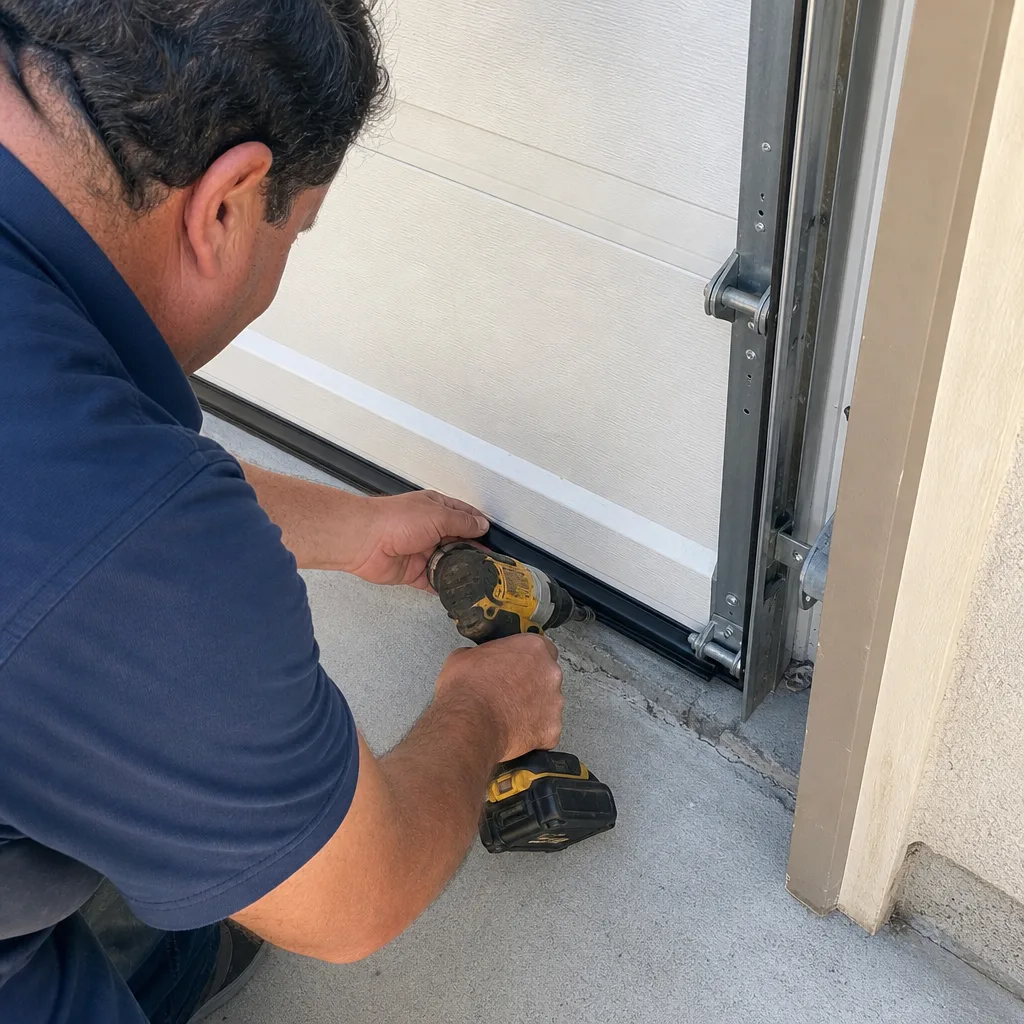
- Cutting a cable to “see what happens.” A cable under tension doesn’t just drop – it whips. If a cable ever looks frayed or slack, stop and call. This is the mistake that produces the worst injuries.
- Winding a torsion spring with screwdrivers. Screwdrivers are not winding bars. They’re too short, the tips don’t seat in the cone, and they slip under load. The correct bars are the only tool for the job, and the job still isn’t a DIY one.
- Removing the bottom bracket with the door closed. The bracket looks like it’s just bolted on, but the cable tension runs through it. Removing it with the door down is how serious injuries happen.
- Ignoring the balance test. A door that won’t hold at waist height is telling you the spring is failing. Most homeowners read it as “the opener is struggling” and burn out the opener motor before the spring gets looked at.
- Using WD-40 or grease on the tracks. Grease attracts grit, and grit on a track in Winchester’s dusty climate wears rollers fast. Silicone spray is the correct lubricant.
- Straightening a bent track with a hammer. The track geometry is precise. Persuading a bent section back into place usually leaves a kink that binds the rollers and takes a cable out within months.
- Letting a “free inspection” turn into a pressure sale. A spring replacement should come with a written price and the failed part photographed. If the price only appears after the inspection and nobody shows you the failed spring, ask why not.
See the difference
BeforeAfter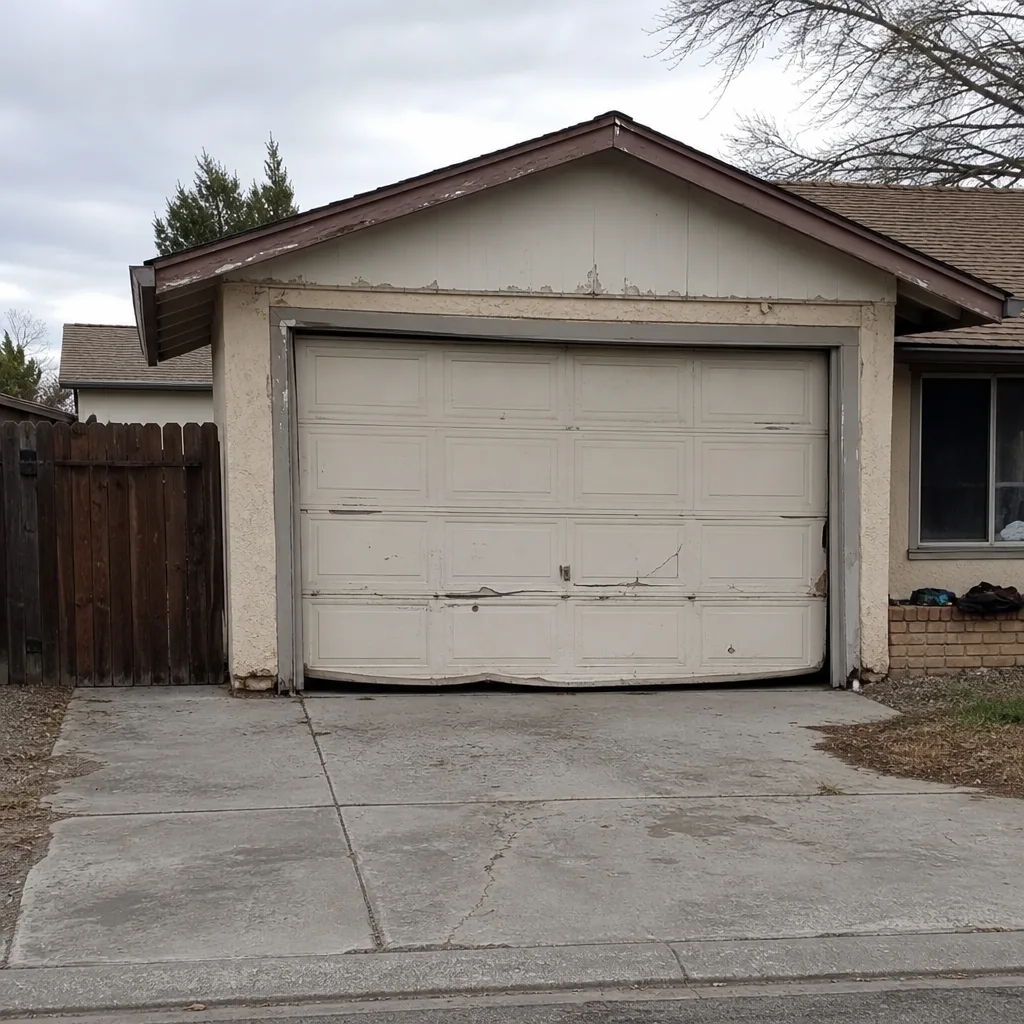 Before
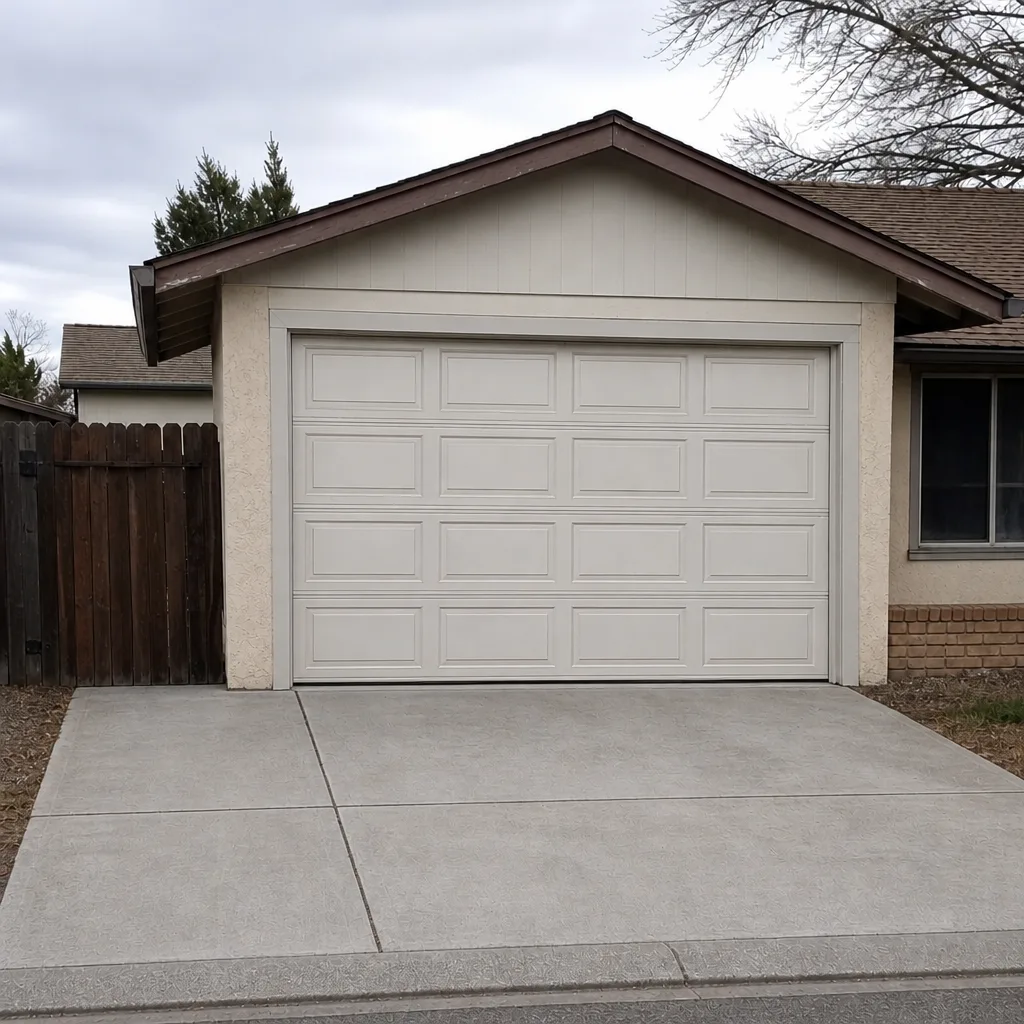 After
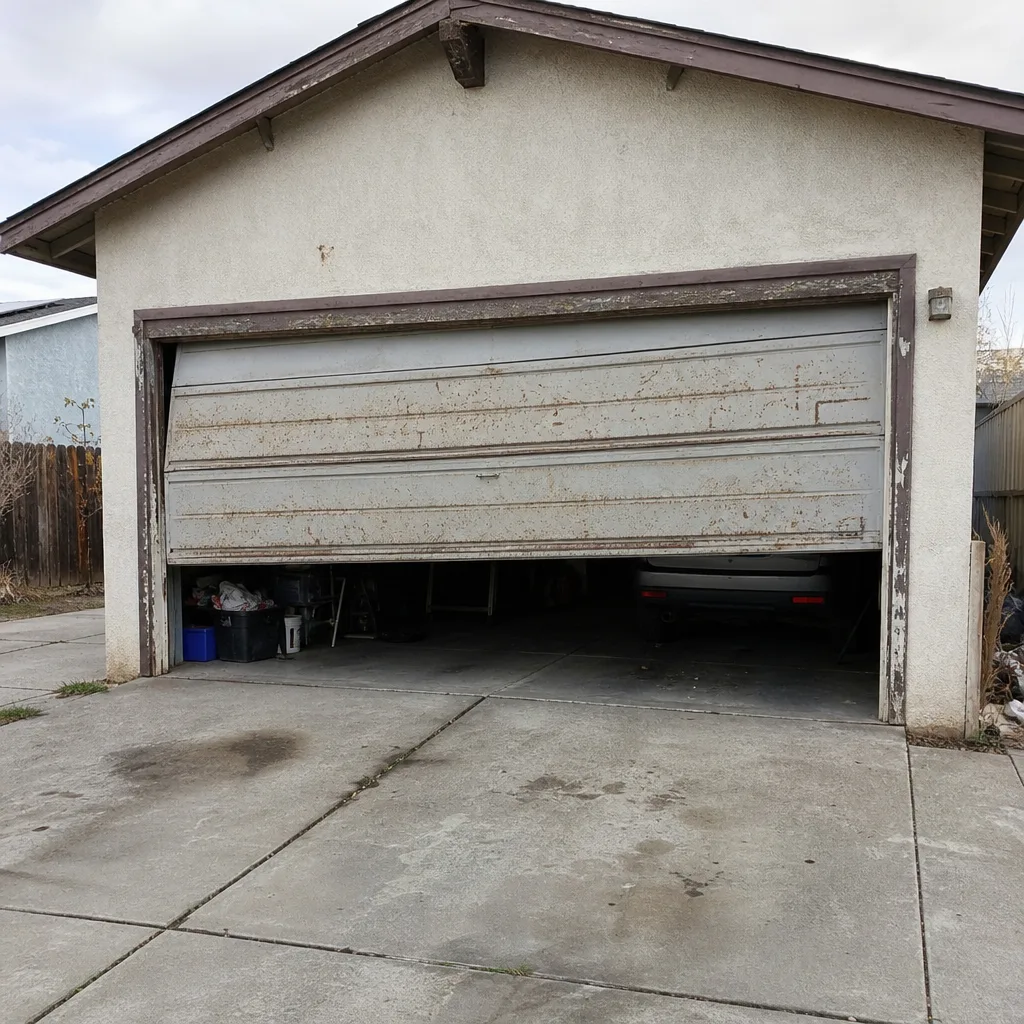 Before
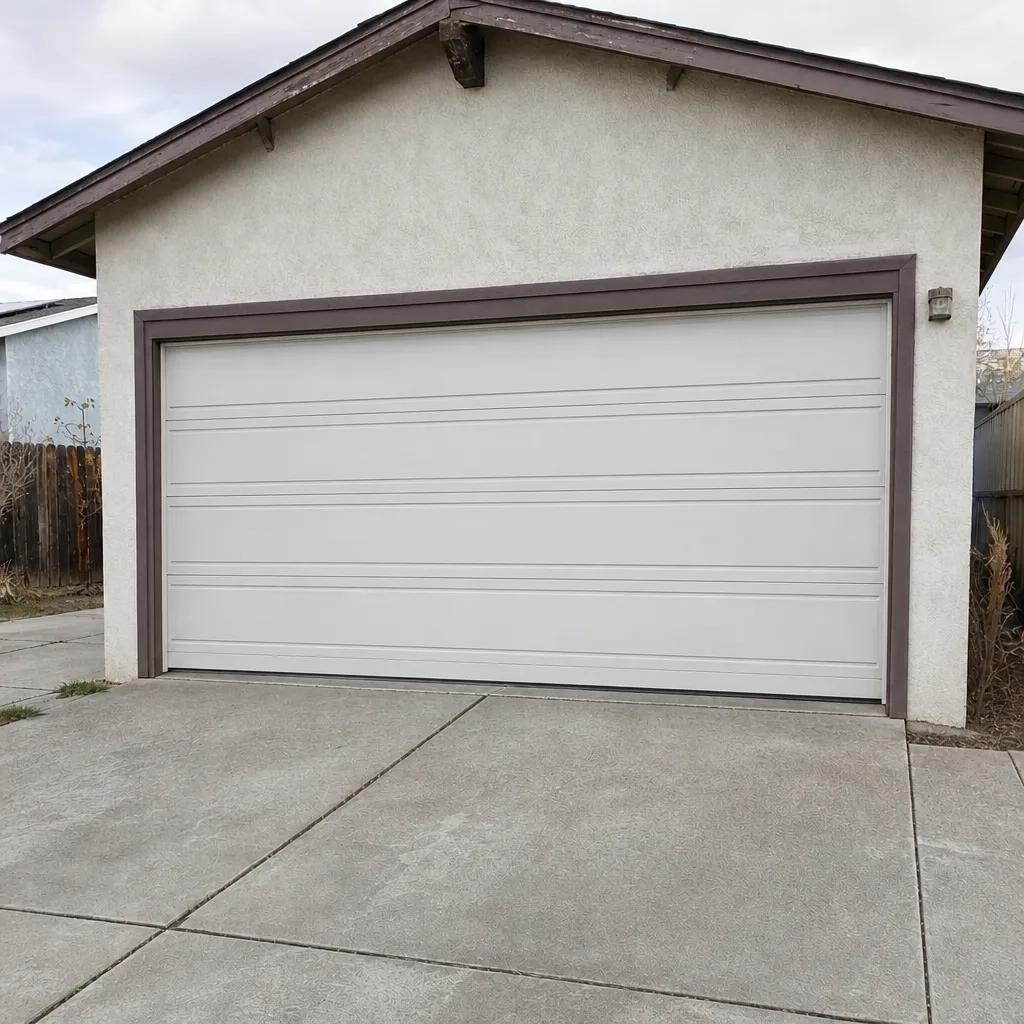 After
When to Call a Professional
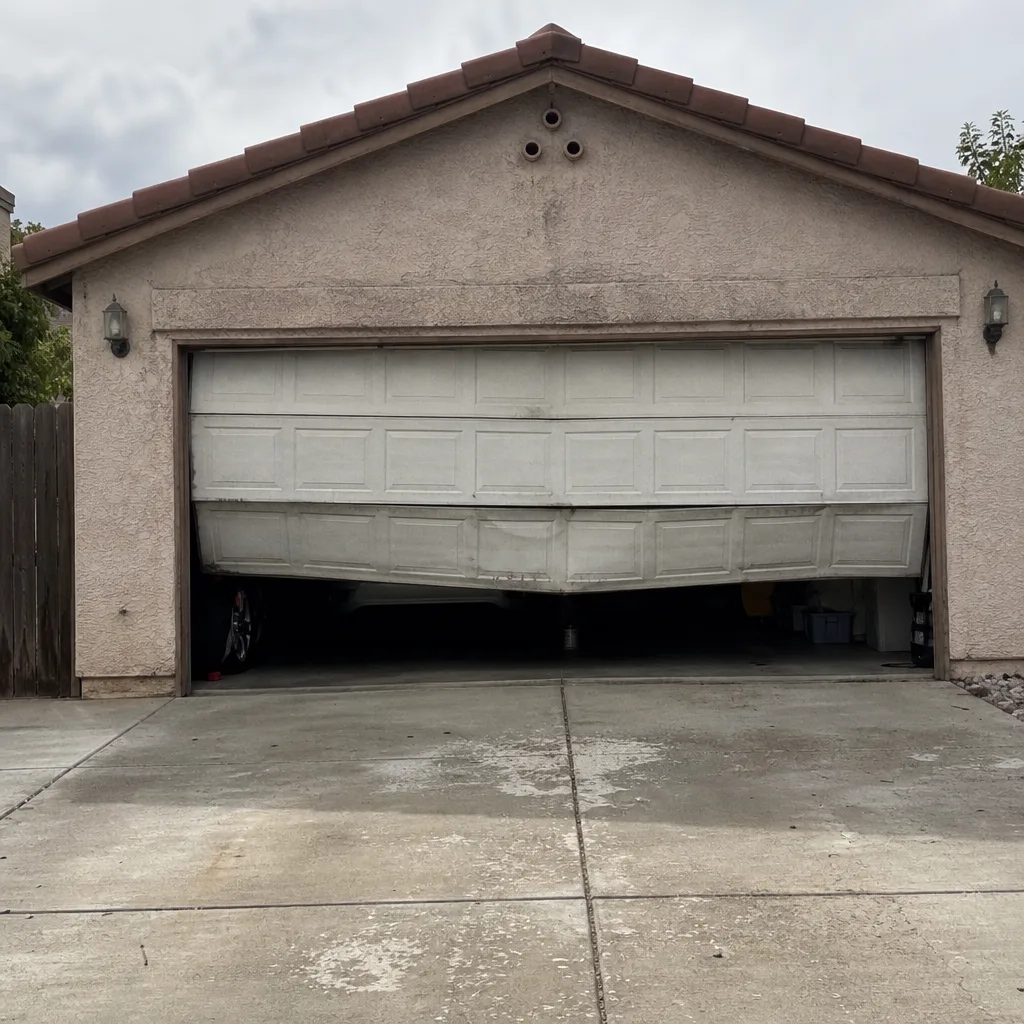
Call a professional the moment any of these appear: a broken or visibly winding-separated torsion spring, a frayed or slack cable, a door that’s come off its track, a bottom bracket that’s loose or damaged, an opener that runs but won’t lift the door, or a door that failed the balance test. Don’t wait on any of these. A misaligned door running on a tired spring damages cables, rollers, and the opener on every open-cycle, turning a spring job into a larger repair.
For the smaller repairs on the safe list, call if you’re not sure what you’re looking at or if a repair you attempted didn’t fix the problem. Servo Garage Doors Winchester offers free estimates in Winchester. We’ll photograph what we find, put a flat written price in front of you before anything starts, and give you a documented record when we leave. Call (855) 517-0284.
Frequently Asked Questions
No, and the reason is stored energy, not skill. A wound torsion spring holds roughly 100 foot-pounds of torque, and an uncontrolled release has caused finger amputations and eye injuries. The correct winding bars and the door weight (to know the right turn count) are not things a homeowner typically has in a garage, and getting the turn count wrong damages the door. Call a professional for anything involving a spring.
Yes. Bottom seals and frame weatherstripping are safe, inexpensive, and don’t involve any stored energy. A replacement bottom seal runs $15 to $40, and installation is a matter of pulling the old seal from its track and sliding in the new one. If you’d rather have it done in Winchester, it’s a quick, low-cost service call.
A cable under tension releases instantly, and it whips. That’s why a frayed or slack cable is not a “look closer” situation – it’s a stop-and-call situation. Leave the door closed, don’t open it, and call for help. A trained technician relieves the spring tension before touching the cable.
Yes. The local team we work with holds its own license and insurance, and the license number is on the documentation you receive. Our technicians have up to 11 years of experience. If you’re checking any garage door company in Winchester, ask for the license number and the written scope before work begins – both should be easy to produce.
Yes – broken spring calls are exactly the emergency case we prioritize, and we answer emergency calls around the clock with a live person. You’ll get a named technician and an on-the-way text, not a callback window. Call (855) 517-0284 and we’ll get a price in front of you before any work starts.
No. A flat written price and written scope are delivered before any work begins – that’s the core of how we operate. If the diagnosis changes what’s needed, we stop and quote the new scope before proceeding. You never get an invoice larger than the written price you agreed to, and every visit includes a documented photo record of what was found and what was done.
The Bottom Line
The DIY-versus-professional question for garage door repair comes down to stored energy, not skill. Weatherstripping, safety sensors, remote programming, and hinge bolts on upper panels are genuinely safe to handle yourself, and the parts cost is trivial. Springs, cables on live drums, and bottom brackets carry the door’s weight and its stored tension, and no amount of confidence makes them safe to touch. The partial-DIY path – buying the correct safe part and having a pro install it – reduces the bill without touching the dangerous components. When the job involves a spring, a cable, or a door off its track, call a professional. Servo Garage Doors Winchester has been making doors right since 2015, with a written price before work starts and a documented photo record when we leave. Call (855) 517-0284 for a free estimate in Winchester.
Written by the team at Servo Garage Doors Winchester.