
Last updated November 18, 2026
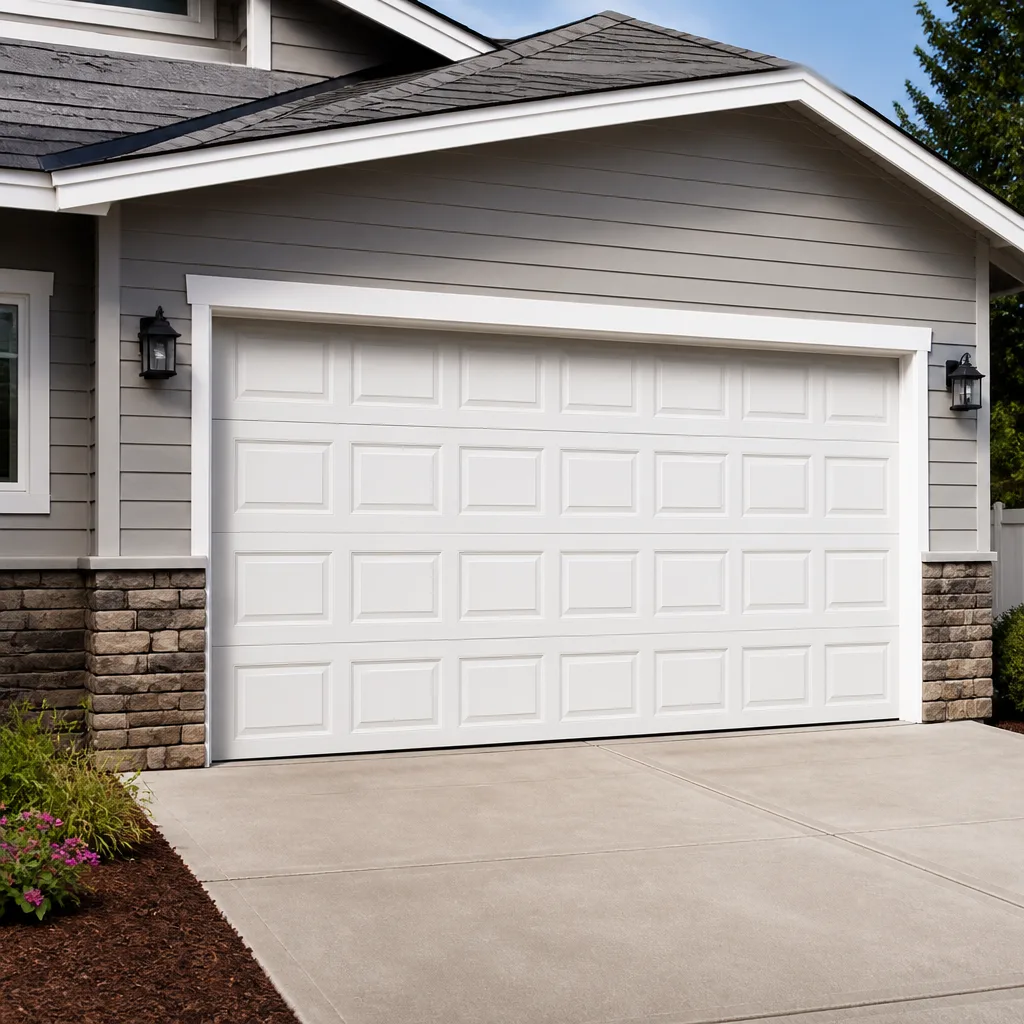 Raised-panel steel
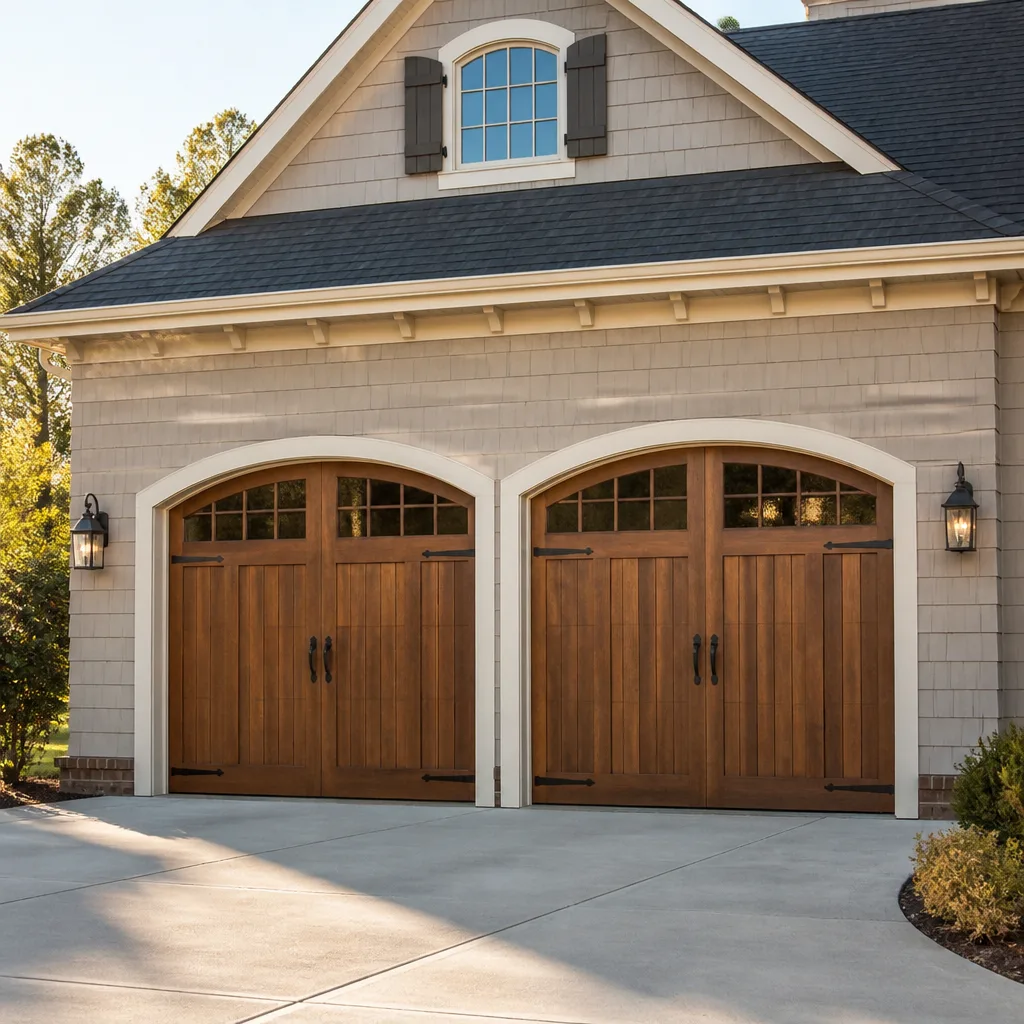 Carriage house
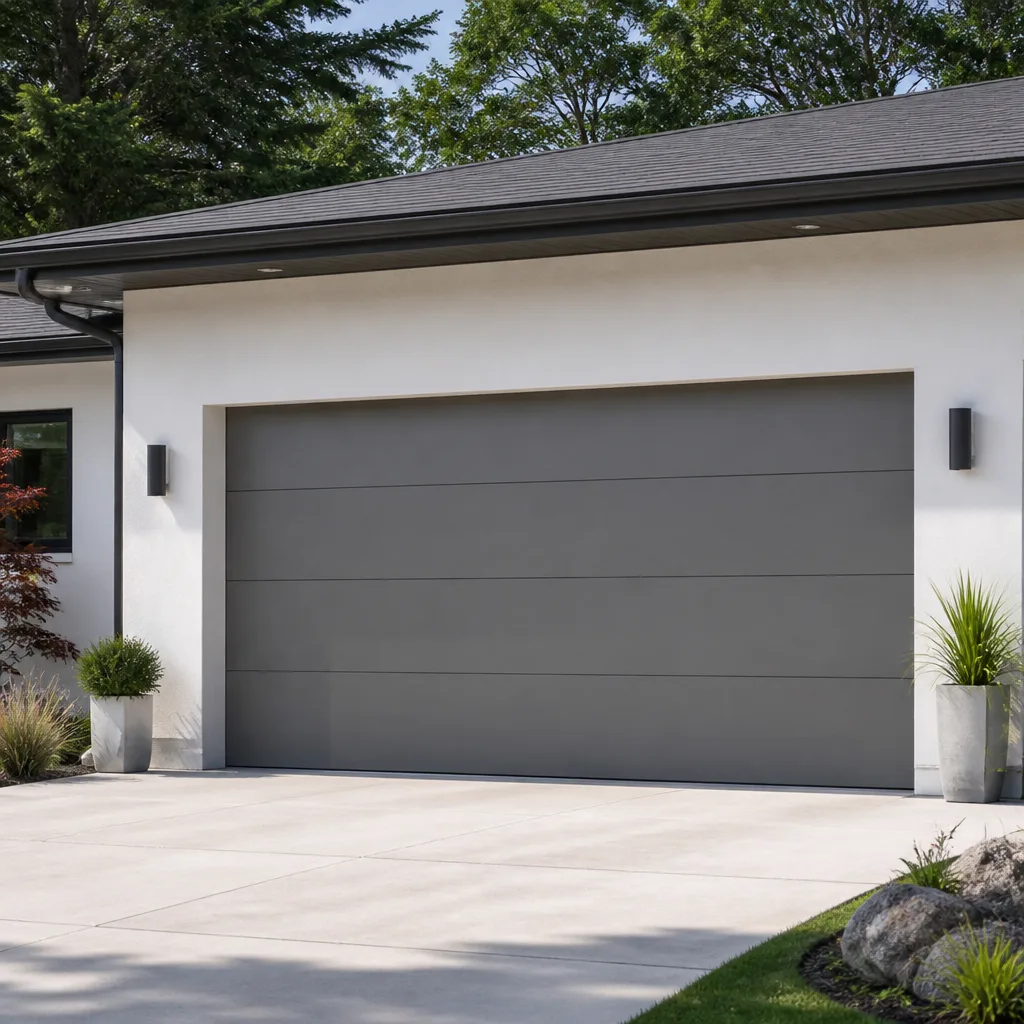 Modern flush
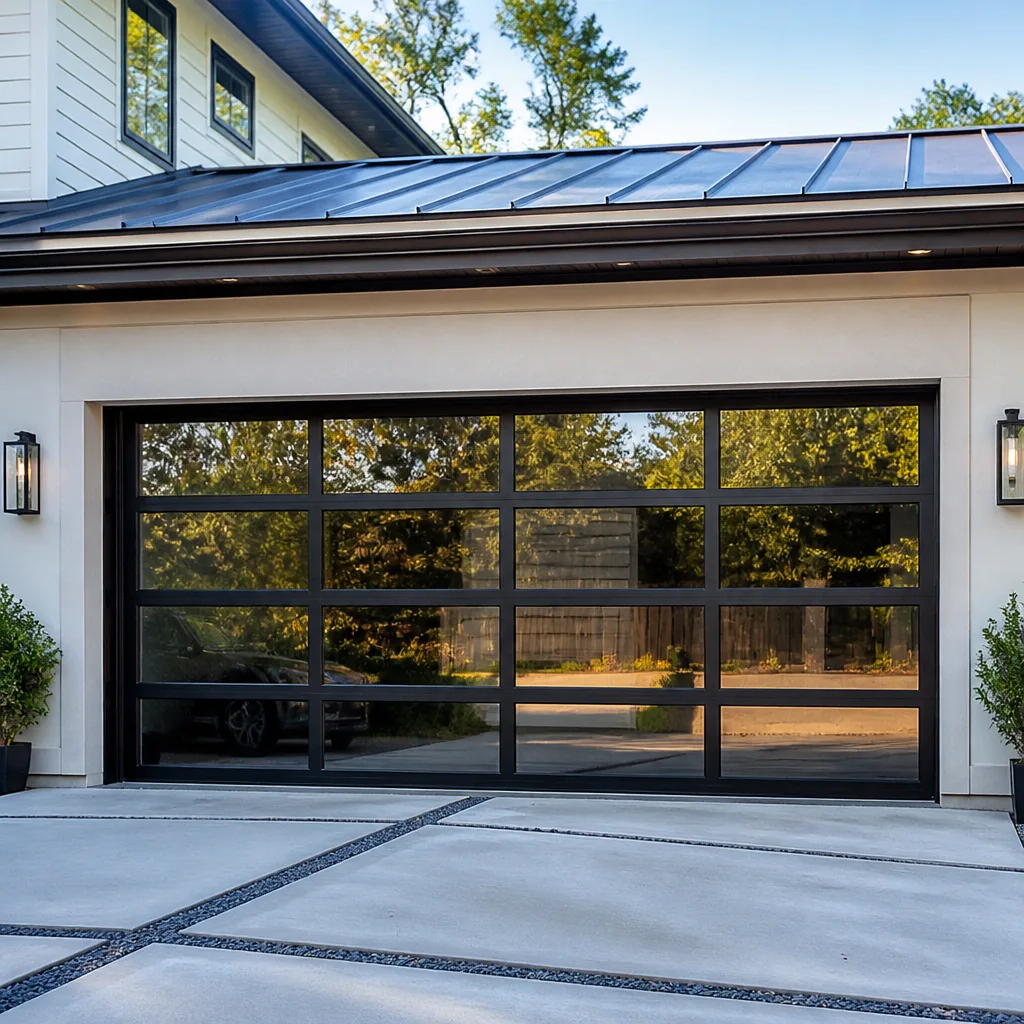 Full-view glass
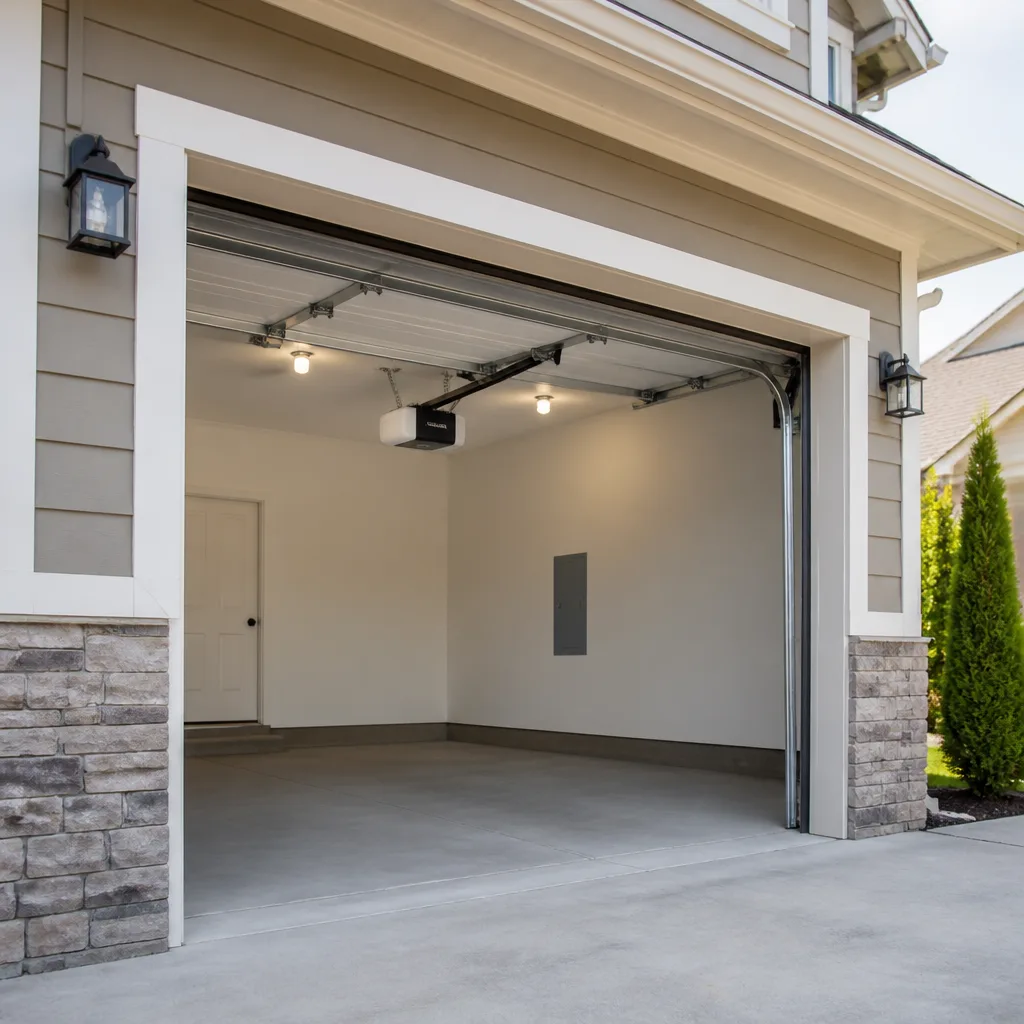 LiftMaster openers
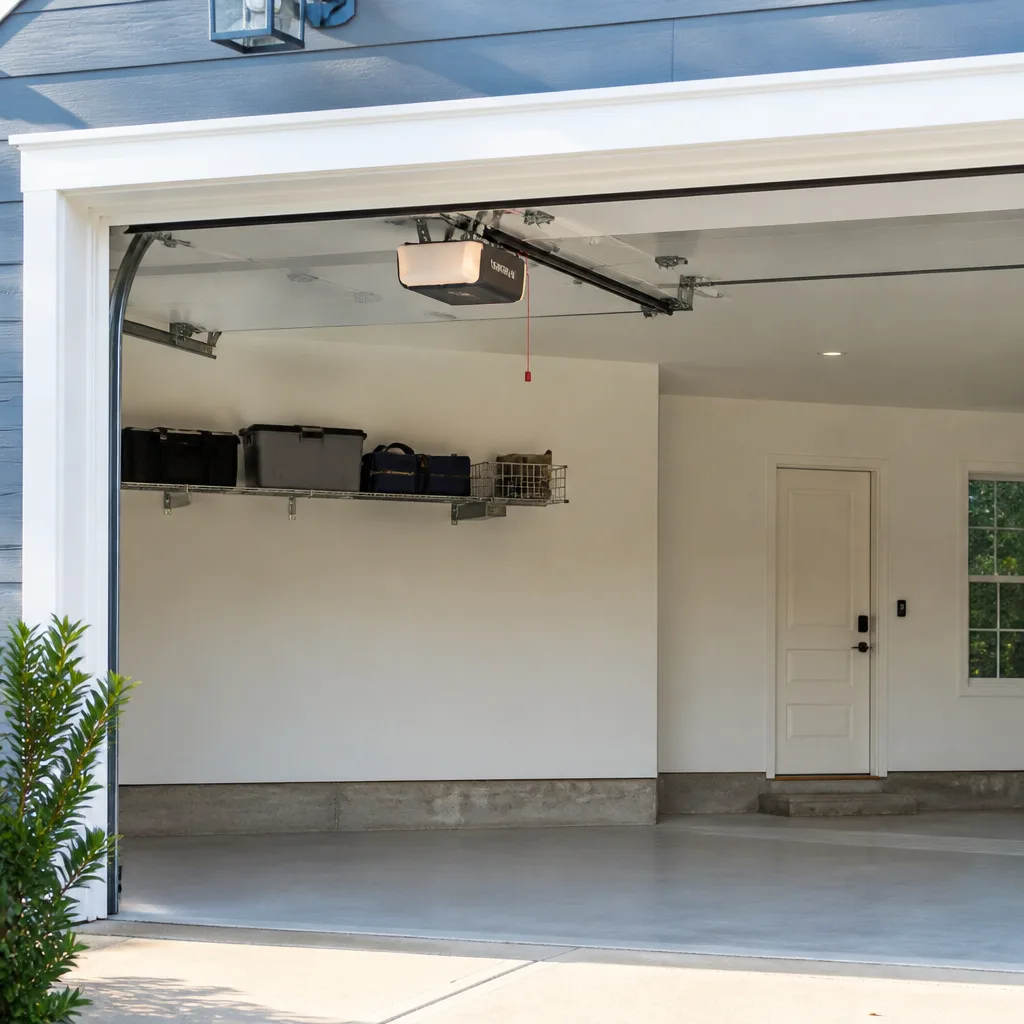 Chamberlain openers
Full 25-point door and opener safety check with every visit - springs, cables, rollers, tracks, and your LiftMaster or Chamberlain opener included
You get a price before we start. It does not change when the pro arrives.
Get your free estimateDIY vs Professional Emergency Garage Door: What’s Safe to Do Yourself
Disconnecting an opener from a door with a broken spring is not the same as disconnecting an opener from a door with a working spring. One leaves a safely static door. The other leaves a door held up by nothing, and the difference sits entirely in whether the spring above your head is intact. That one procedural detail is why “pull the red cord” is not universal emergency advice, and why most garage door injuries happen to people doing a reasonable thing at the wrong moment. This guide separates what’s genuinely safe for a homeowner to handle in a Winchester emergency from what only looks safe until it isn’t.
Quick Answer
The only DIY work that’s safe in a garage door emergency is making the door static and keeping people away from it: securing an open door against wind, clearing loose debris from the track path, and disconnecting the opener only when the springs are intact. Actual repair of springs, cables, drums, and bottom brackets is professional work in every circumstance, and especially at 11 p.m. when you have no replacement parts and a partially disassembled door is more dangerous than a stuck one.
Styles & brands we work with
- Raised-panel steel
- Carriage house
- Modern flush
- Full-view glass
- LiftMaster openers
- Chamberlain openers
Table of Contents
- The Three Emergency Roles: Safety, Stabilization, Repair
- What You Can Legitimately Do Before Help Arrives
- Why a Broken Spring Changes Everything
- Why Half-Finished Repairs Make Things Worse
- The Cost Math of a Failed DIY Attempt
- Photograph the Before-State: Why Documentation Protects You
- Common Mistakes to Avoid
- When to Call a Professional
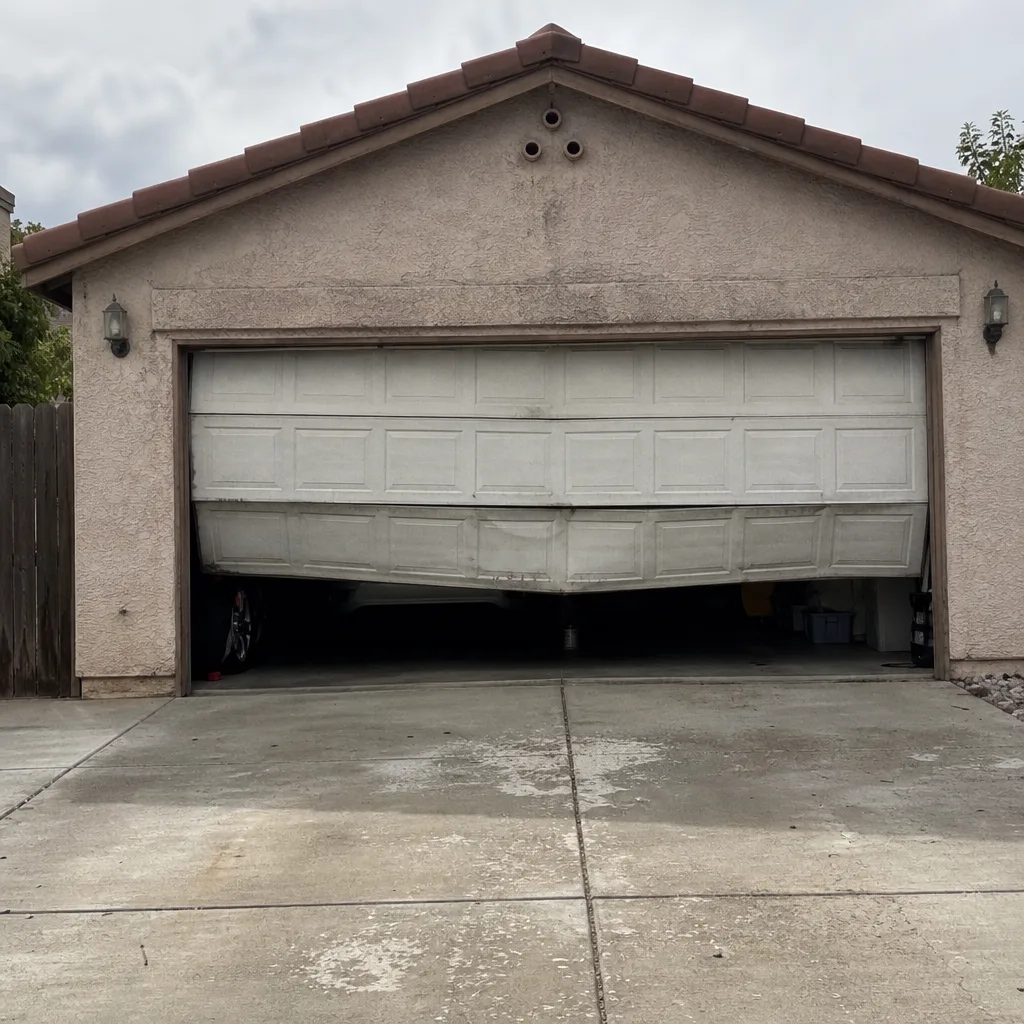 Before
 After
The Three Emergency Roles: Safety, Stabilization, Repair
Most garage door advice collapses every emergency task into one bucket labeled “fix it.” That’s the core mistake. In a real emergency there are three distinct jobs, and only the first two belong to the homeowner.
- Immediate safety actions. Get people and pets away from the door. Keep cars from parking under it. Prop nothing against a door that’s under tension. These take seconds, require no tools, and are always owner-appropriate.
- Temporary stabilization. Lock an open door so wind can’t swing it, clear loose debris from the track path so it doesn’t jam a door mid-travel, and – only when the springs are intact – disconnect the opener so the door can be handled by hand. This is owner-appropriate with caveats, and the caveats matter.
- Actual repair. Replacing a torsion spring, re-spooling a cable that’s jumped its drum, straightening a bent bottom bracket, replacing a snapped lift cable. This is professional territory, and in a genuine emergency it should never be attempted by the homeowner at all.
In Winchester, we see this confusion play out most often after a Friday night cable snap in the older neighborhoods off the 95 corridor, where a homeowner with a flashlight and good intentions starts loosening a bottom bracket before realizing the door is still partially under tension. The role they needed to play was role one and role two, not role three. Our Garage Door Repair in Winchester team gets called when the door is stuck. The best outcome is when the homeowner has only done roles one and two before we arrive.
What You Can Legitimately Do Before Help Arrives
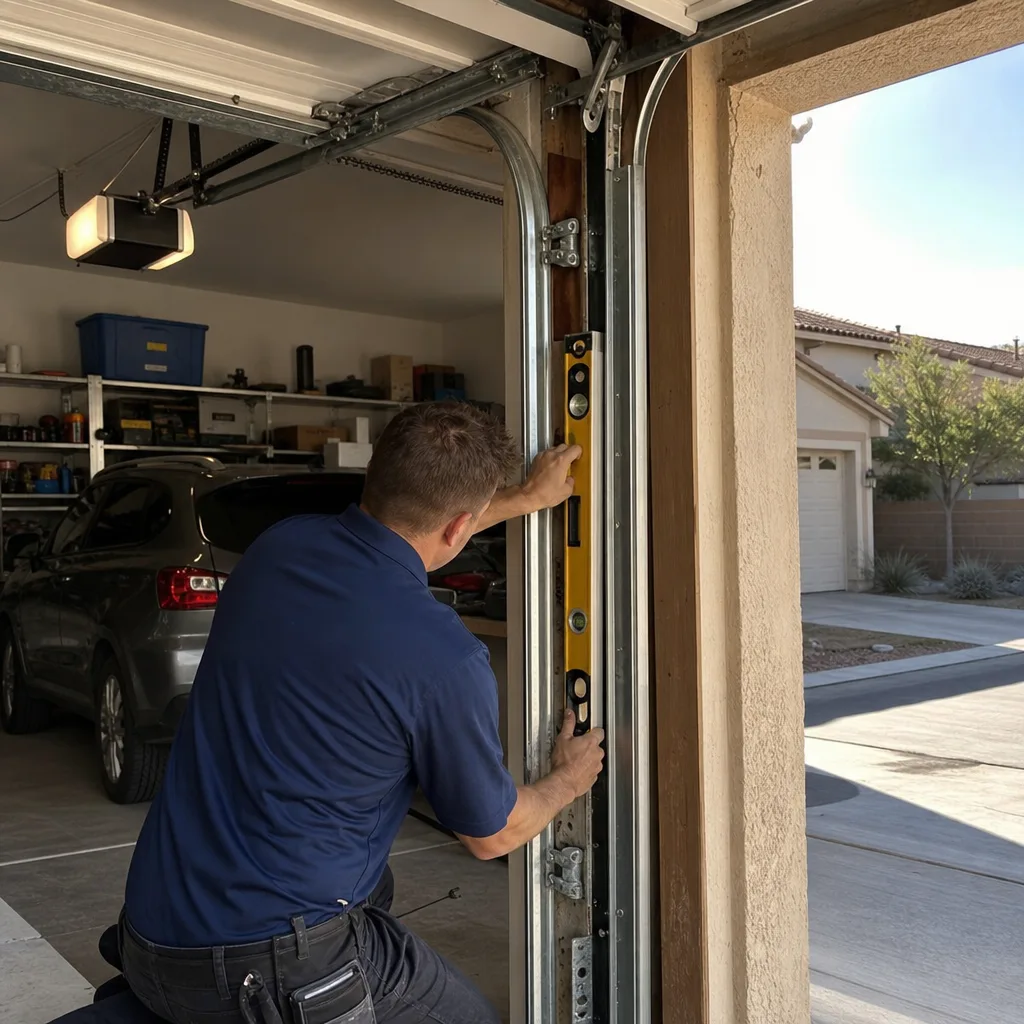
The legitimate owner actions in a garage door emergency are narrower than most homeowners expect. Each one is about making the door static and predictable, not about making it work again.
- Secure an open door against wind. A door raised and left open with no counterbalance is a sail. Use a locking bar or clamp to keep the panels from moving. Do not try to lower a door that’s lost its spring tension by hand – the panels will fall.
- Clear loose debris from the track path. A small stone, a bent hinge pin, or a fallen screwdriver in the track can bend the panel and derail the door. Sweep it out with a broom handle – no fingers, no reaching under a resting door.
- Disconnect the opener on an intact-spring door. If you’re certain the springs are whole and the door is balanced, pulling the release cord detaches the trolley so you can raise and lower the door by hand. This is the one action most people think of as “emergency advice.” It only applies to this case.
- Block the door from closing on its own. If the opener has failed and the door is drifting closed, prop a sturdy object under the bottom edge only if the door is stationary, and then get out from under it. Never try to catch a falling door.
- Call the emergency line. In Winchester, the right move once the door is static is to get a live person on the phone who can talk you through the next fifteen minutes and dispatch a technician. Live phone coverage 24 hours a day including holidays, and an on-the-way text with a named technician, is what you’re looking for.
Notice that none of these actions require a wrench, a replacement part, or a ladder. Those three objects belong to a different kind of task, and that task is not yours in an emergency.
Why a Broken Spring Changes Everything
Garage doors weigh 150 to 250 pounds on average. The torsion spring above the door – or the extension springs running along the sides, depending on the model – is what holds that weight in balance. A door with a working spring can be lifted with one hand. A door with a broken spring is a two-hundred-pound slab hanging over a track, and every panel below the break is under load.
When a torsion spring snaps, it usually makes a sound like a gunshot, and the door drops a few inches and stops. That stop is deceptive. It doesn’t mean the door is stable; it means something else in the system caught the weight. The cable, the drum, the bottom bracket – any of these could be one jolt away from letting go.
This is where “pull the red cord” becomes dangerous advice. Disconnecting the opener from a door with a broken spring removes the only thing holding the door up, and the door comes down. Emergency room visits for garage door injuries in Winchester almost always trace back to this exact sequence: spring fails, homeowner follows generic advice, door falls.
What to check instead of pulling the cord: look up. If you can see a two-inch gap in the torsion coil, or a clearly over-stretched extension spring, do not disconnect anything. Leave the door where it is, keep cars and people out from under it, and call. The spring is the part below; the professional is the person who replaces it.
Why Half-Finished Repairs Make Things Worse
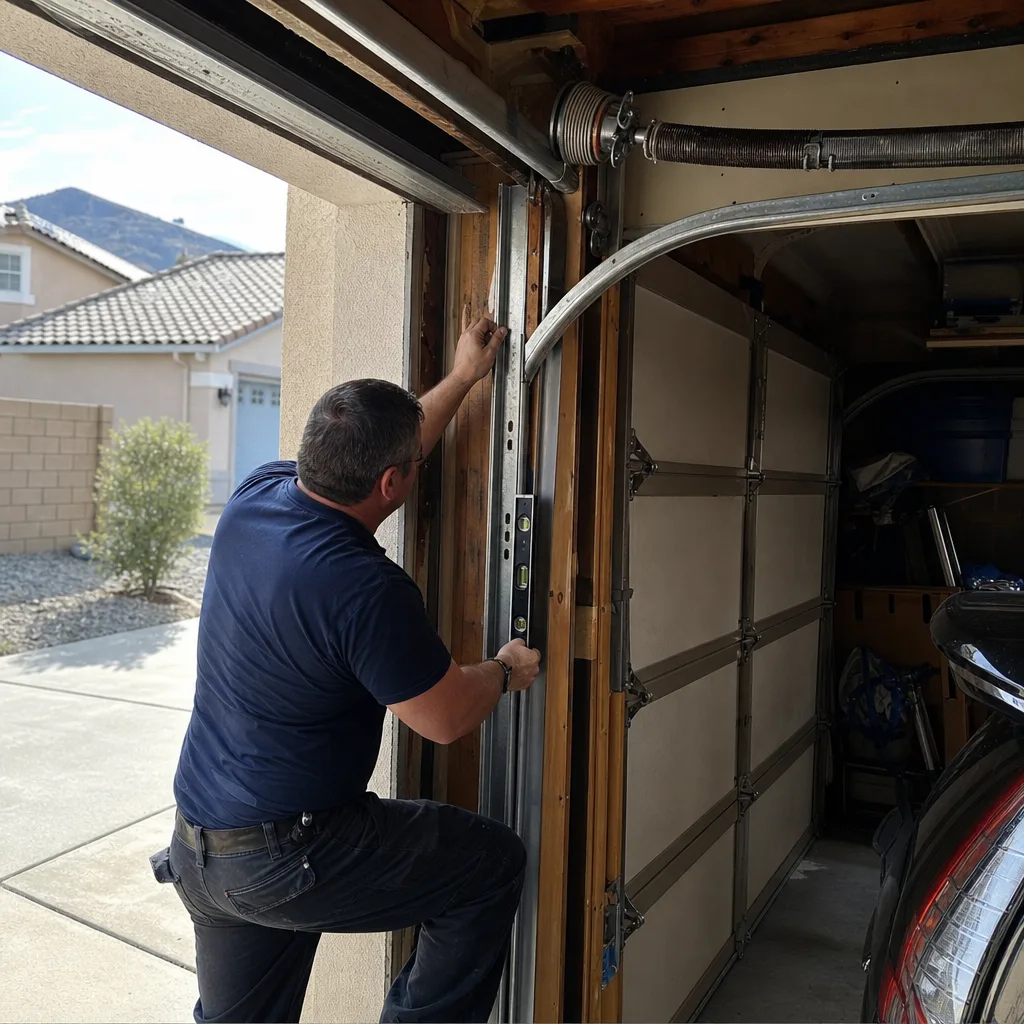
A stuck door on a Friday night is inconvenient. A door with its brackets loosened, its cables half off, and its panels held in place by hope is a genuine hazard, and it costs more to fix in the morning. This is the practical reason a no-parts emergency DIY attempt fails on its own logic.
Consider what a real emergency repair requires:
- The correct spring wire gauge and inside diameter (torsion springs are matched to door weight within a fraction of a gauge).
- A proper winding bar and the knowledge of how many quarter-turns to wind the new spring – typically 7 to 9, adjusted for door height.
- Replacement cables rated for the door’s weight, with correctly seated drums on both sides.
- A tension check on the bottom bracket, which is what could release and seriously injure the homeowner if the spring is wound wrong.
None of this is on hand at your house on a Tuesday night, and none of it should be improvised. The moment a homeowner removes the bottom bracket or unwinds a torsion spring without a winding bar, they’ve created a stored-energy situation no drill or vice grip can safely handle. Meanwhile, if you’ve started disassembling and then stopped, you’ve left the door in a state the technician now has to reverse before the repair can begin – which adds time, cost, and risk to a job that started as a clean spring replacement.
A quietly stuck door is what a good repair looks like. A partially disassembled one is what a worse situation looks like.
The Cost Math of a Failed DIY Attempt
The dollar math on emergency DIY is where the argument for professional help gets concrete. A failed attempt rarely fails cheaply.
- Baseline repair: A snapped lift cable in Winchester typically runs $150 to $250 depending on door height and drum condition. This is the number you’re trying to avoid.
- A $40 DIY cable kit: The “replacement” cable usually has the wrong swage fitting or the wrong drum seat, and the door derails on the first cycle.
- The real cost after that: A bent panel, a scored drum, and a twisted bottom bracket typically land a homeowner at $550 to $750, plus emergency service and a possible panel replacement.
So the $40 attempt to avoid a $200 repair can reliably turn into a $600 repair. The math is not unusual. In our experience, homeowners who try DIY emergency repairs on a cable and derail the door are paying roughly triple the clean repair cost by the time the door is running again.
The other piece of the math is time. A stranded door means a stranded car, a cancelled morning, and sometimes a hotel bill. The cost of a same-night emergency service call is real; the cost of a door that’s suddenly a two-day job is usually bigger.
The right way to think about it: price the repair against the cost of making it worse. For spring and cable work, making it worse is easy and mostly free to avoid. Call a professional, get a written price before work starts, and let the repair stay a repair. Our overview of Servo Garage Doors Winchester home walks through what pricing looks like in practice across the different job types.
Photograph the Before-State: Why Documentation Protects You
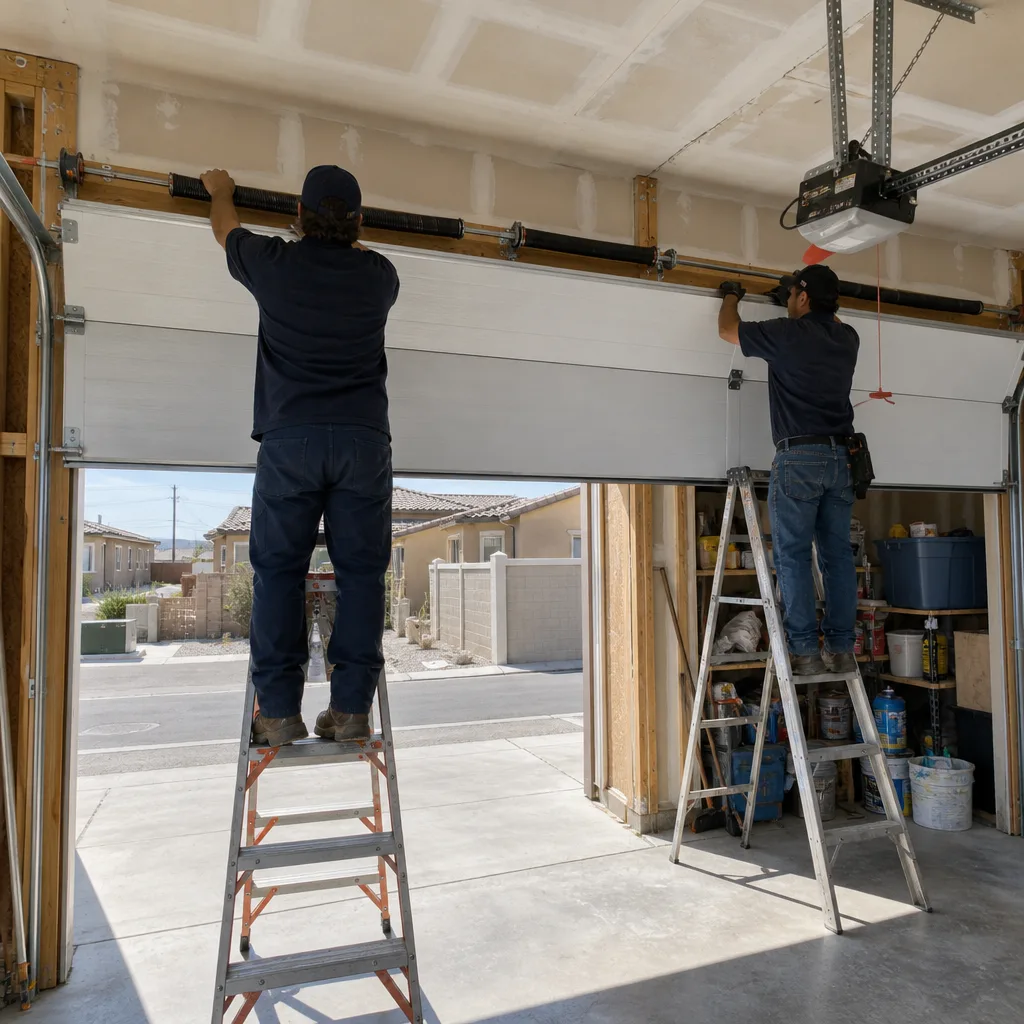
If you’ve taken any stabilization action before the technician arrives – secured the door, cleared the track, disconnected the opener on an intact-spring door – photograph what you did and what you saw. Take a few shots of the door from the inside, the spring above it, the track, and any panels that got bent in the incident.
This isn’t paranoia. It’s how the written quote stays honest in both directions. The technician arrives, sees the door in its current state, and writes a scope and a flat price based on what’s there. If you can show the before-state, the quote doesn’t have to account for a mystery scratch or a panel bend the technician can’t tell was preexisting. The scope stays tight and the price stays flat.
The photo record also lets you confirm that the quoted part actually matches the failed part. This is Clause 4 of The Haven Standard in miniature: the customer sees the failed component before anyone quotes a replacement. On every visit, the technician also delivers a documented photo record of what was found and what was done, so you end up with both a before-state (yours) and an after-state (theirs).
On the documentation point, one extra suggestion for Winchester homeowners: keep the written estimate from any previous garage door service, even if it wasn’t ours. It’s the baseline for a Free Second Opinion if a new quote comes in higher than expected. Any competitor’s written estimate can be reviewed at no charge, no coupon or code needed.
Common Mistakes to Avoid
- Pulling the red cord on a broken-spring door. This is the single most common costly mistake. The door will fall when you pull it, and it’s heavier than you expect.
- Propping an open door with a chair or a broom. A door in a broken-spring state has no counterbalance, and any prop is holding the full weight of the door against gravity. Use a locking bar rated for the job, or don’t leave the door open at all.
- Reaching into the track for a jammed object. A door can move a few inches when the jam releases, and fingers don’t negotiate. Use a broom handle or a long screwdriver, never hands.
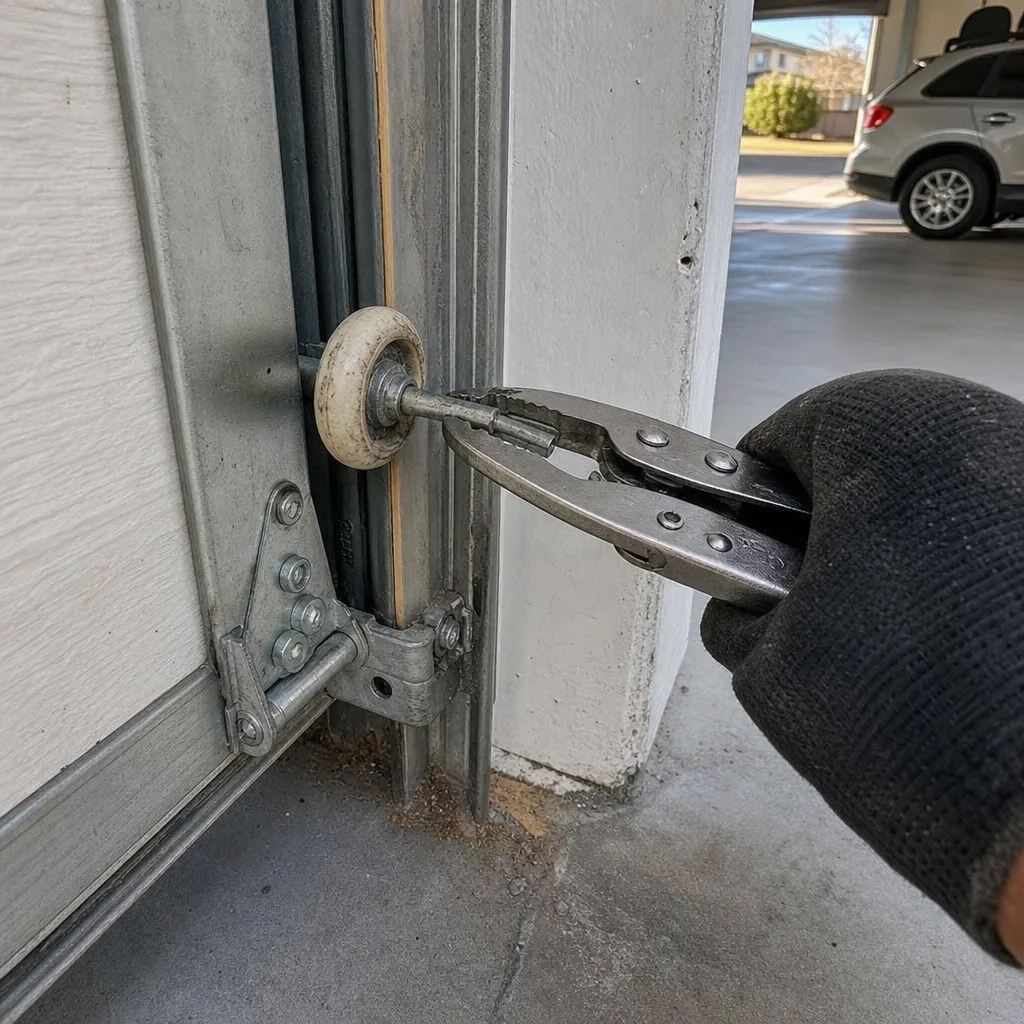
- Loosening the bottom bracket to “check” the cable. The bottom bracket is where the lift cable tension concentrates, and it can fire loose and cause serious injury. This is a “look, don’t touch” part.
- Winding a torsion spring without a winding bar. There are no safe shortcuts here. A screwdriver or a pair of vise grips is not a torsion bar, and the stored energy in a wound spring will not humbly wait while you reposition.
- Assuming a stuck door can be fixed with a different opener brand. We service LiftMaster, Chamberlain, Genie, Clopay, Amarr, Wayne Dalton, Craftsman, and Raynor, and a mechanical failure is almost never solved by swapping a Chamberlain for a Genie. The opener is the motor, not the problem.
- Leaving a half-disassembled door overnight and calling it “not urgent.” Every hour a partially disassembled door sits, more load shifts to brackets that were never designed to hold the door alone. Call before the sun goes down, even if “before the sun goes down” is midnight.
When to Call a Professional
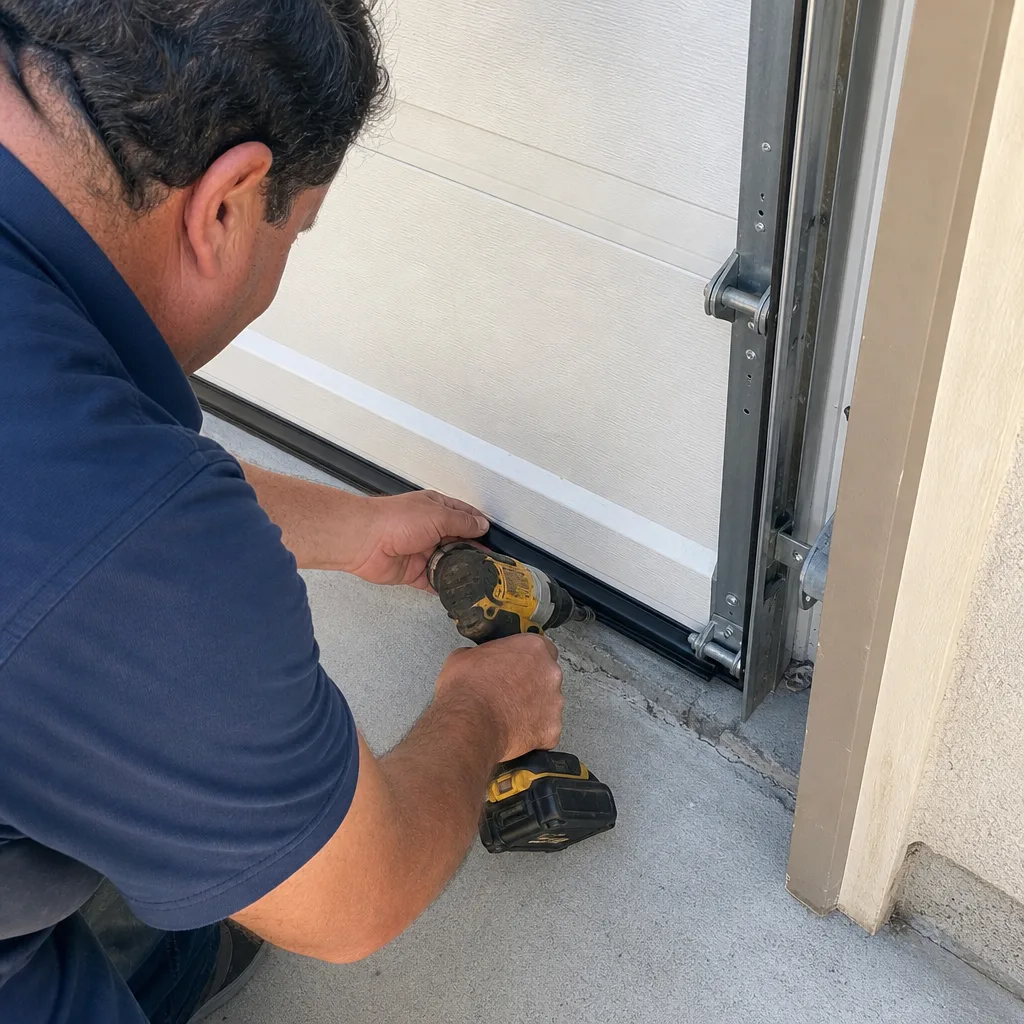
Call a professional in Winchester the moment you see a broken spring, a snapped or slack cable, a door off its track, a bottom bracket that’s bent or loose, or a door that moves unevenly or slams. These are the true emergencies, and all of them require a technician with parts. Call a professional if you’ve already disconnected something and aren’t sure you put it back correctly, or if the door is currently partway open and won’t stay in place. Call a professional if a panel is cracked or a drum is scored – those need to be inspected before the door runs again. Servo Garage Doors Winchester offers free estimates in Winchester, written prices before any work begins, and live phone coverage 24 hours a day for emergency calls. Call (855) 517-0284. When your door needs a full replacement, Garage Door Installation in Winchester covers what measuring and scheduling look like for that project.
Frequently Asked Questions
No, not for spring, cable, drum, or bottom bracket work. The safe homeowner actions in a garage door emergency are limited to making the door static, blocking wind, clearing loose debris, and disconnecting the opener only when the springs are intact. Every actual repair demands a trained technician with balanced tools and replacement parts on hand. Call (855) 517-0284 for a free estimate and a written price before anything is touched.
Yes, if and only if you are certain the springs are intact and the door is balanced. Pulling the cord disconnects the trolley carriage so the door can be raised and lowered by hand. If a spring is broken, the cord can release the door’s only hold on the closed position and the door will fall. When you’re not sure, leave the cord alone and call a professional.
Spring replacement typically runs $180 to $340, and cable replacement $150 to $250 depending on door height and drum condition. After-hours emergency service adds a premium on top of that. The flat written price is quoted and agreed before any work starts, so the number you’re given is the number you pay. Call (855) 517-0284 for an exact quote – estimates are free.
Look for a two-inch gap in the torsion coil above the door, or an extension spring that’s clearly over-stretched. You may also hear a sharp bang when the spring fails, and the door will drop a few inches and stop. If any of those signs are present, don’t run the door and don’t disconnect the opener. Call for service and stay clear of the door.
Secure the door first with a locking bar or another rigid object rated for the door’s weight, and keep cars and people out from under it. If the door can’t be secured, stay out of the garage until help arrives. Emergency calls are answered by a live person, with a named technician and an on-the-way text, not a callback window. Call (855) 517-0284.
Yes. Take photos of the door from inside the garage, the spring above it, the track, and any bent panels. The photo record helps the technician write an accurate written scope and protects both parties against a dispute over preexisting damage. Our technician also delivers a documented photo record of findings and completed work on every visit, so you end up with a complete before-and-after file. Call (855) 517-0284 to schedule and start the documentation.
The Bottom Line
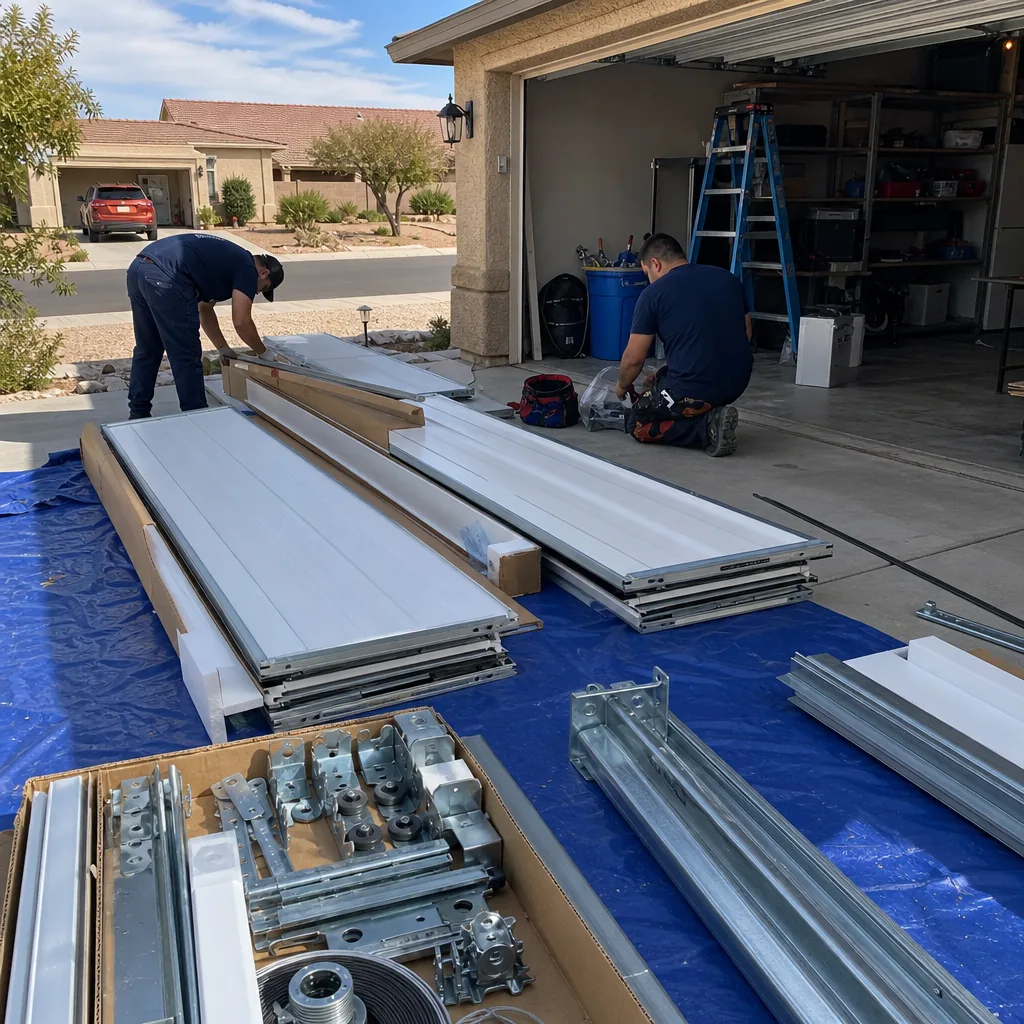
In a garage door emergency, the DIY question isn’t “can I fix this?” – it’s “can I make this safe to leave until a technician arrives?” Those are different tasks. Making the door static, blocking wind, clearing loose debris, and disconnecting the opener on an intact-spring door are owner-appropriate. Replacing springs, cables, drums, or brackets is not, and attempting it without parts on hand turns a clean repair into a worse one. If anything above your head is broken, call, get a written price before work starts, and photograph the before-state. Servo Garage Doors Winchester can be reached at (855) 517-0284 for a free estimate in Winchester, and our Garage Door Opener Repair & Installation in Winchester team handles the opener side once the door itself is back to a stable state.
Written by the team at Servo Garage Doors Winchester.
See the difference
BeforeAfter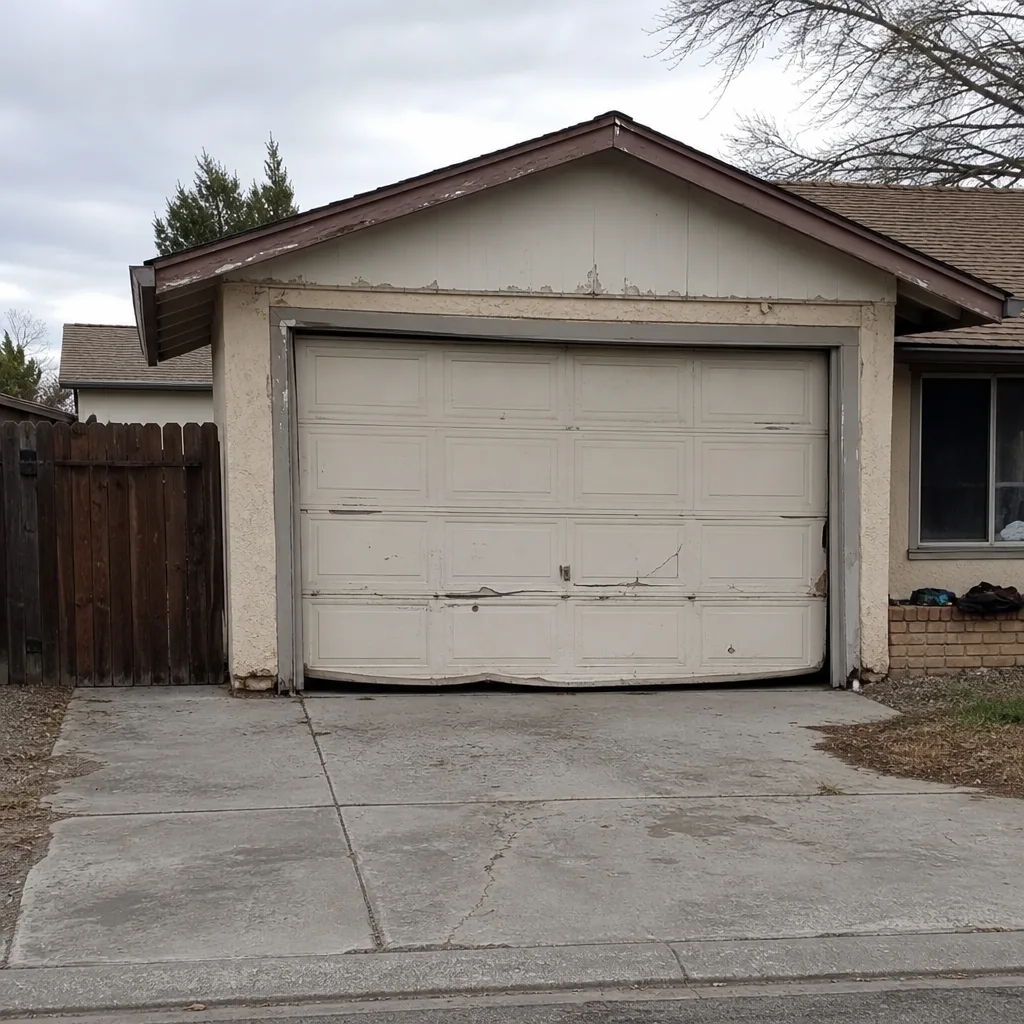 Before
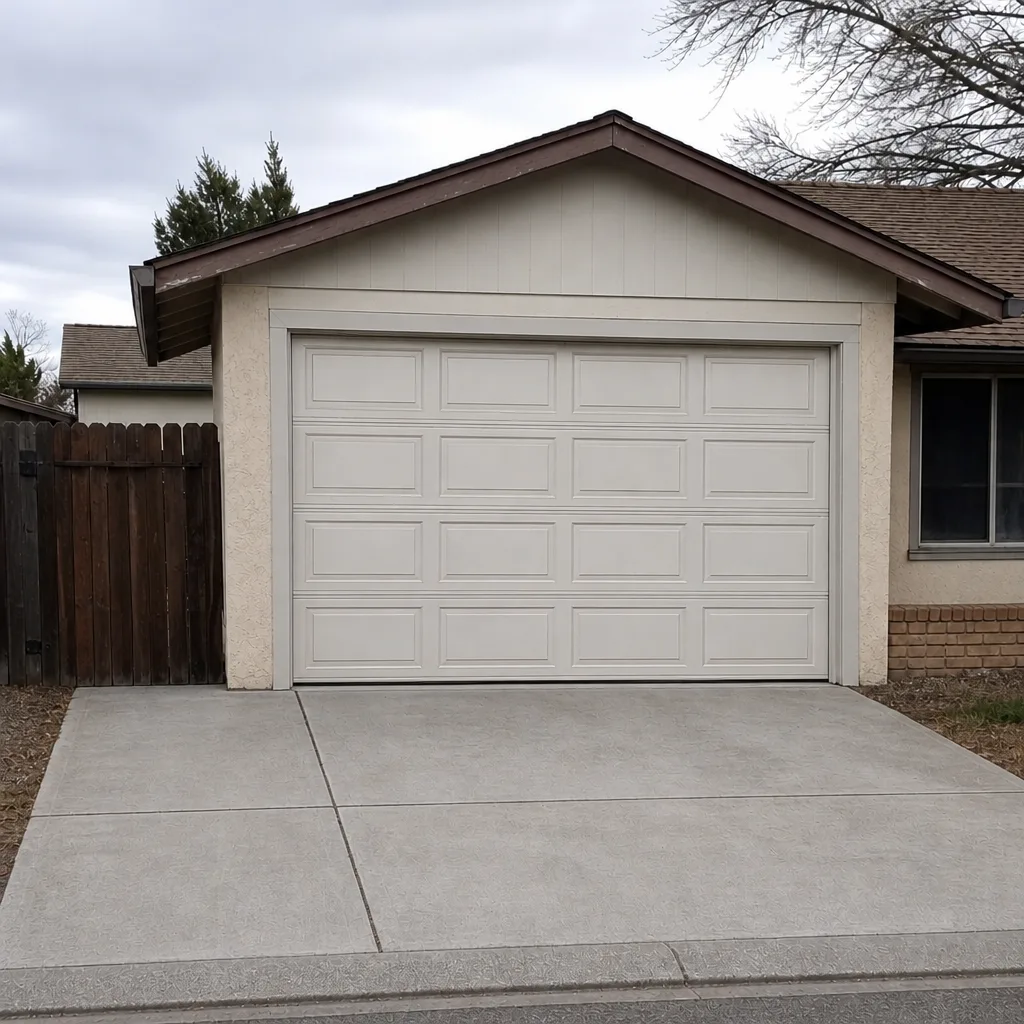 After
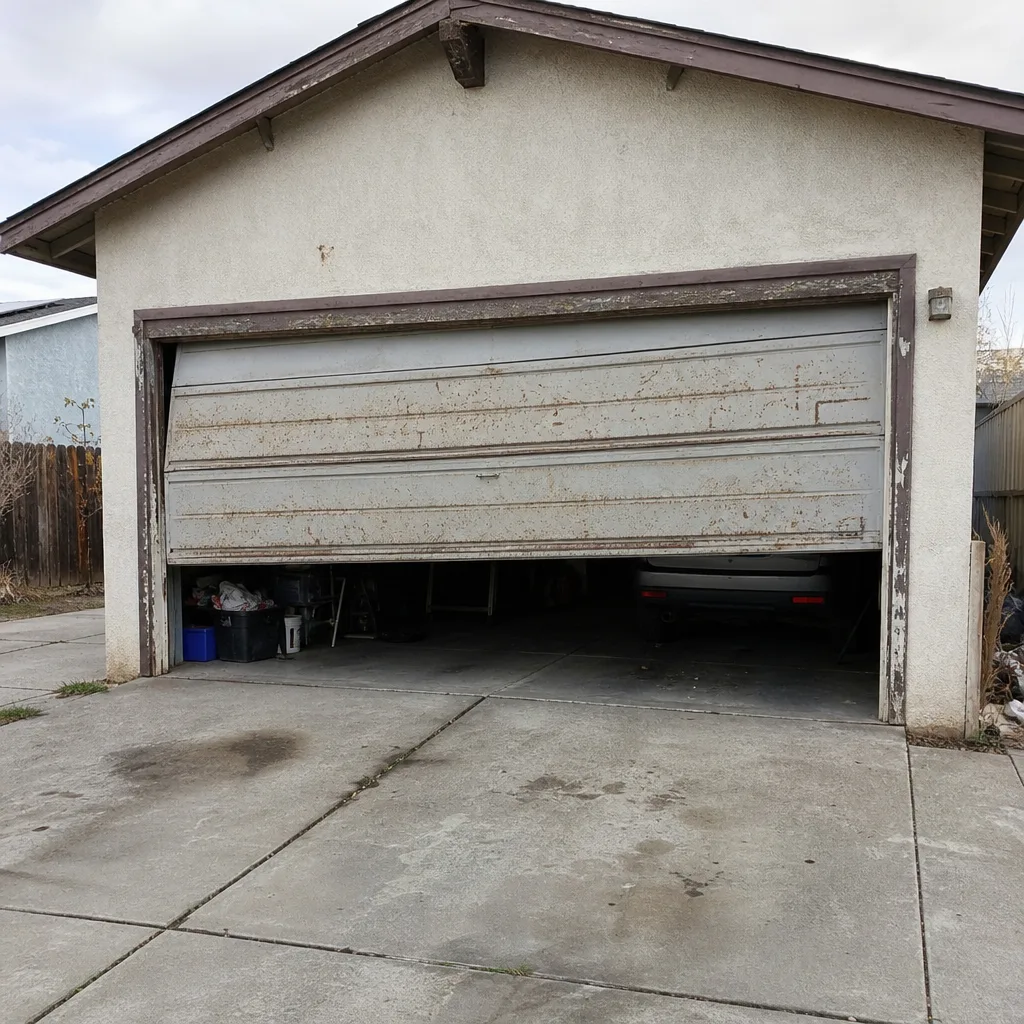 Before
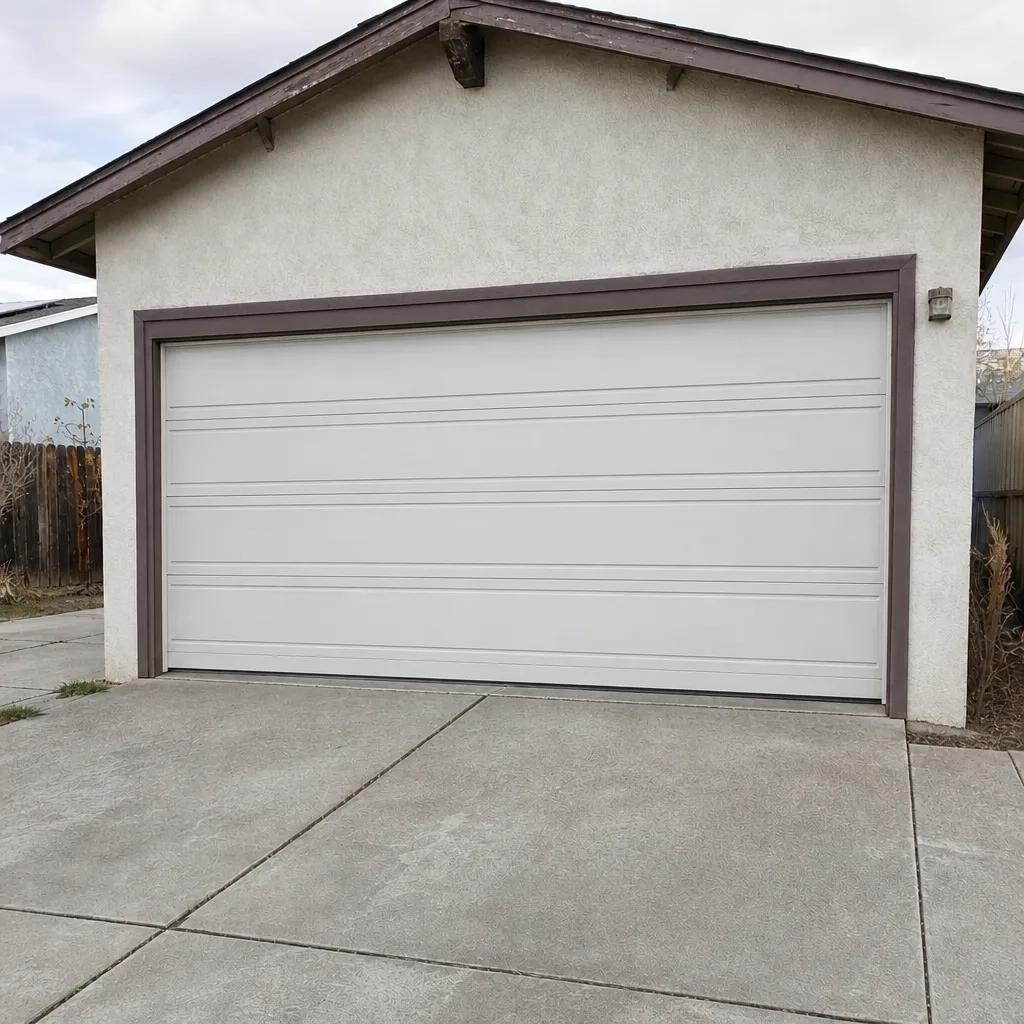 After