
Last updated November 18, 2026
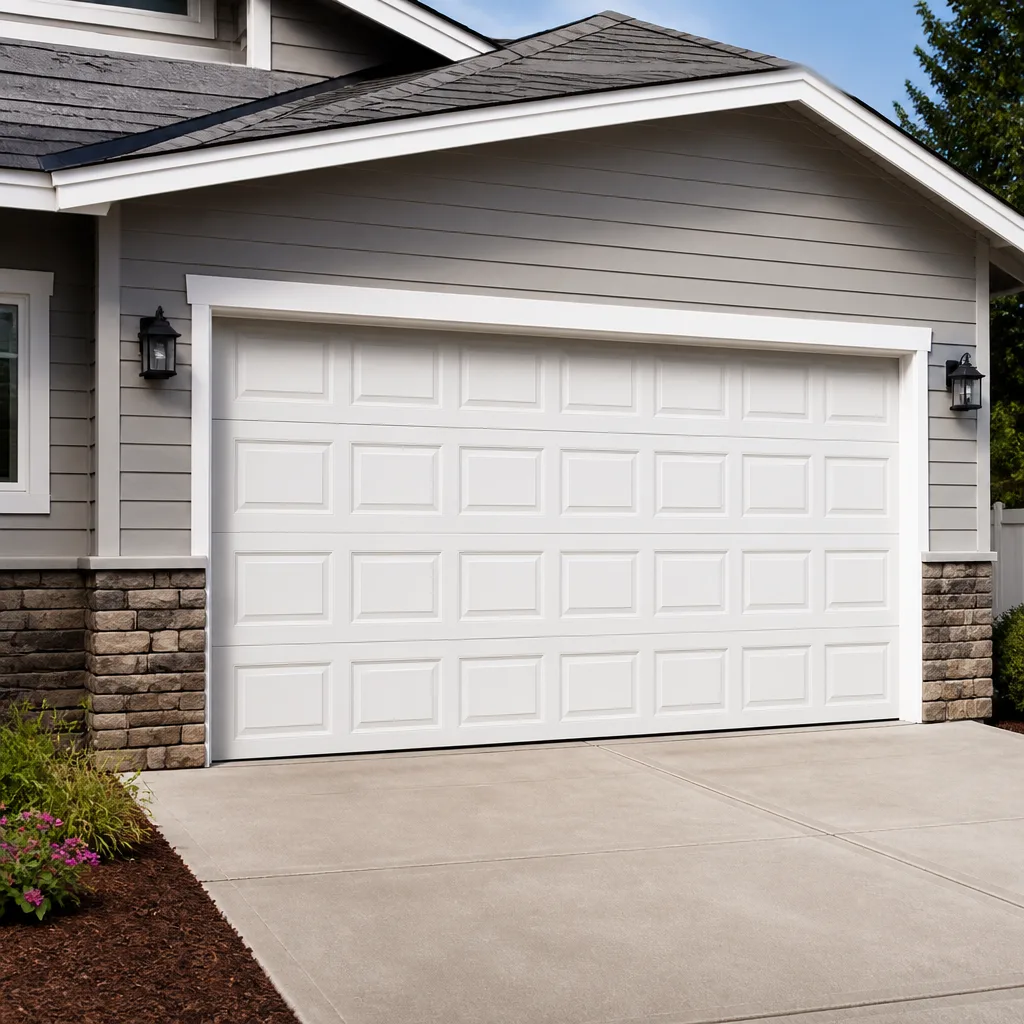 Raised-panel steel
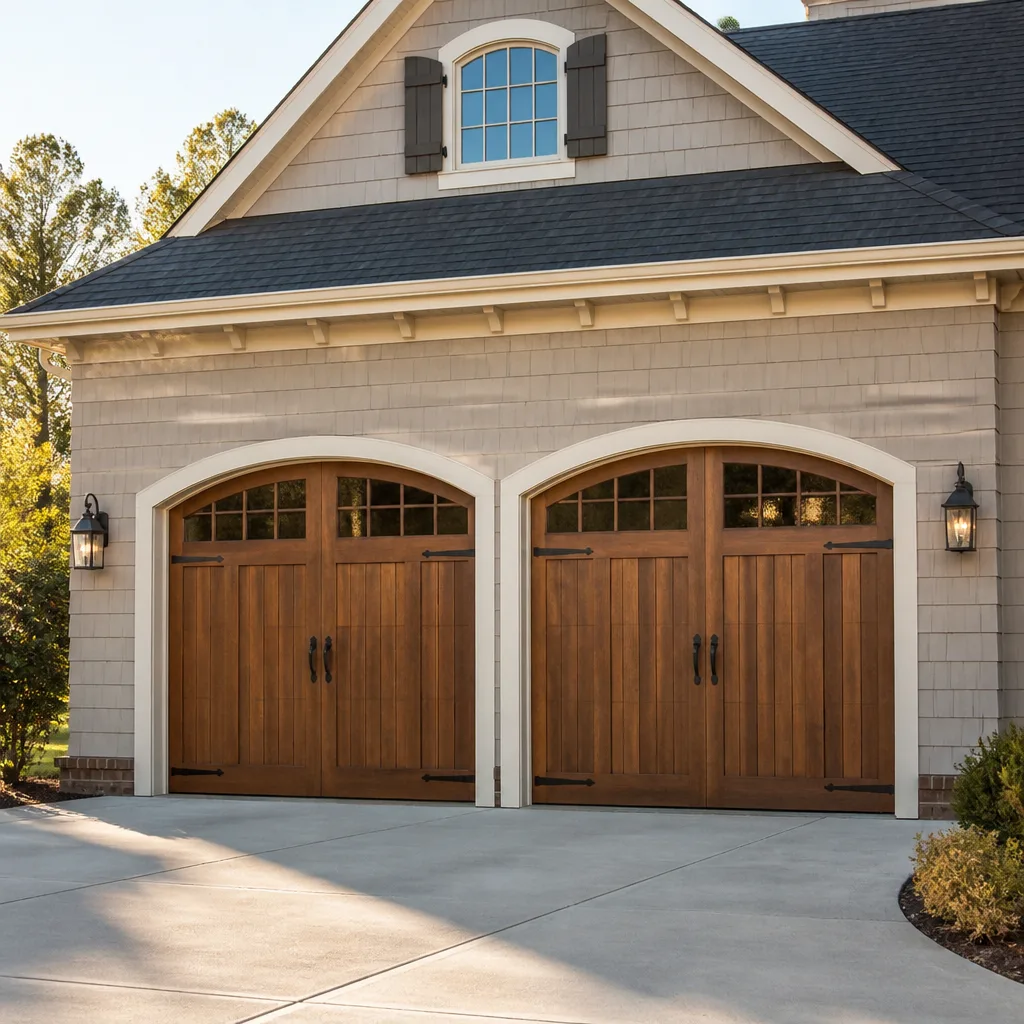 Carriage house
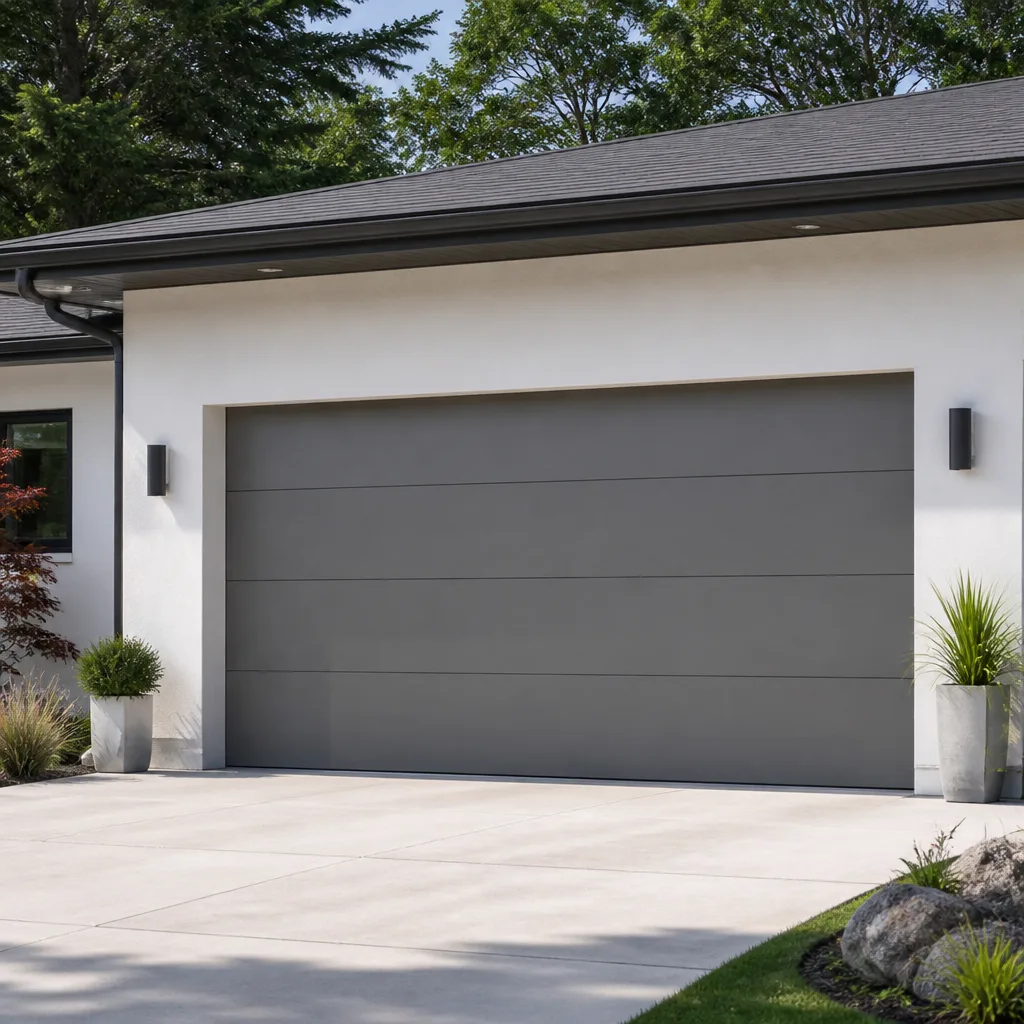 Modern flush
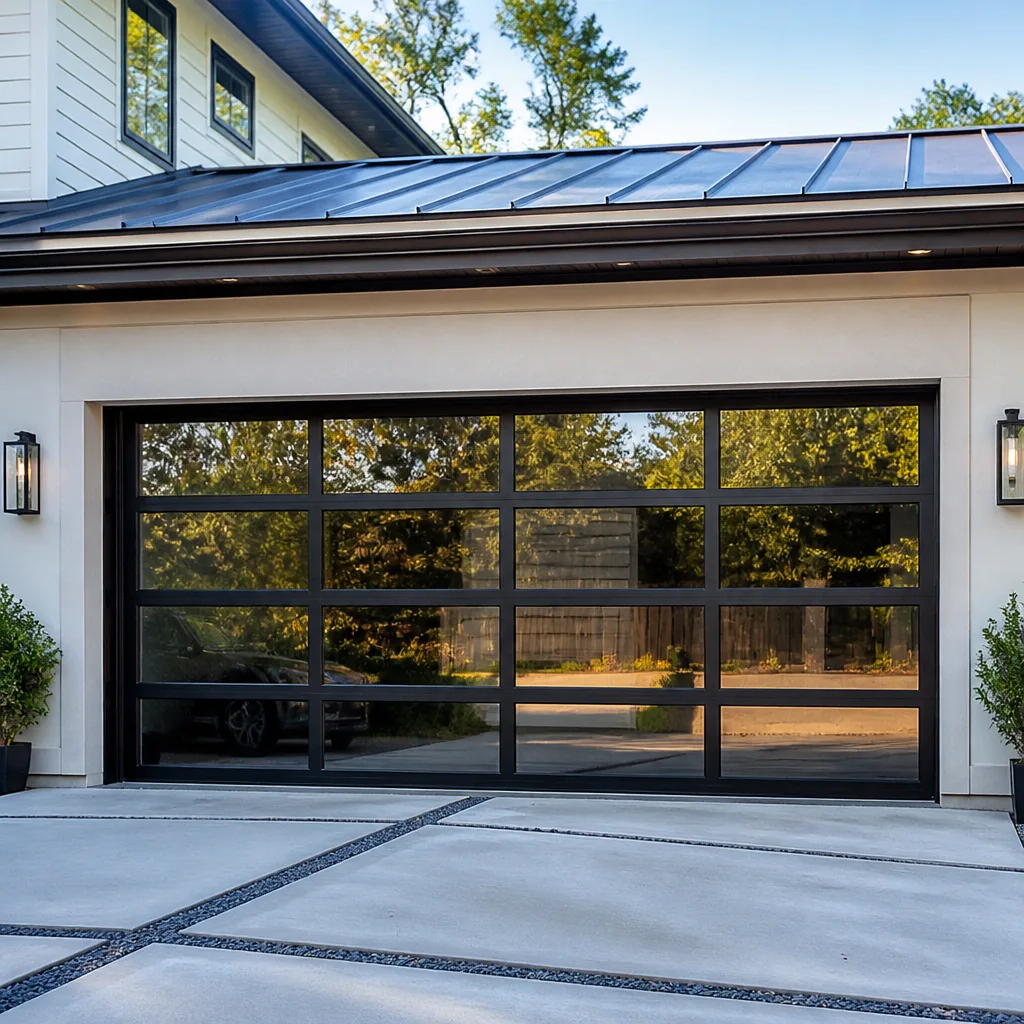 Full-view glass
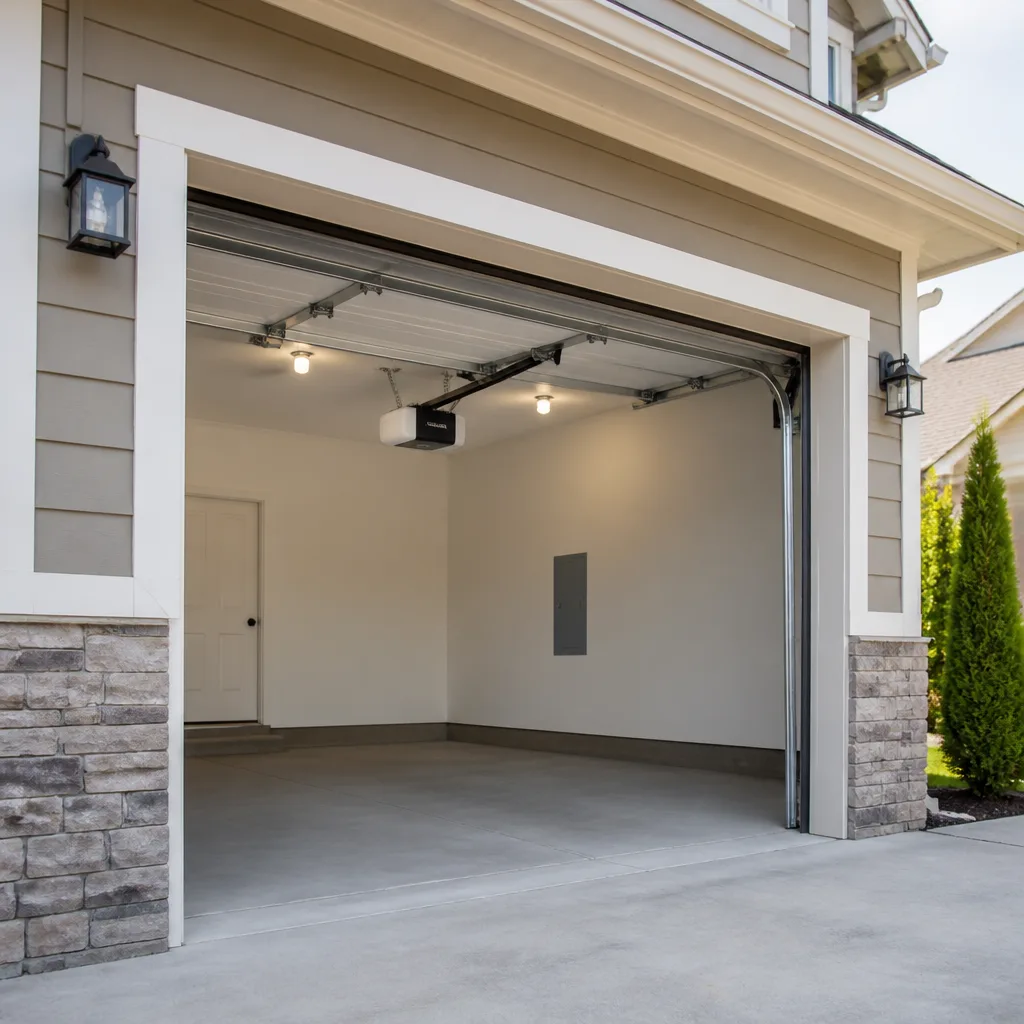 LiftMaster openers
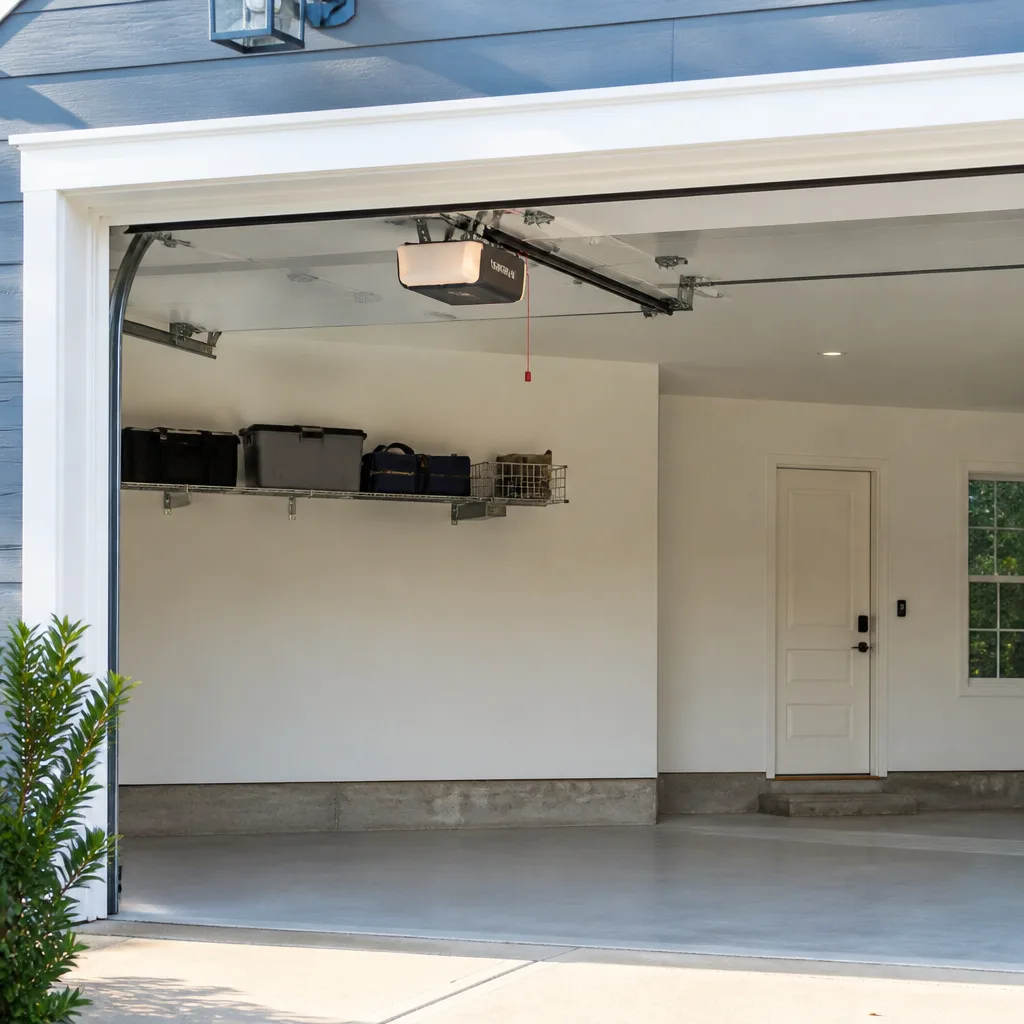 Chamberlain openers
Full 25-point door and opener safety check with every visit - springs, cables, rollers, tracks, and your LiftMaster or Chamberlain opener included
You get a price before we start. It does not change when the pro arrives.
Get your free estimateGarage Door Opener Repair & Installation Warning Signs Every Homeowner Should Know
An opener that quits on a Monday morning didn’t fail on Monday morning. In our experience, it failed across the previous 60 to 180 days, and the door gave three measurable notices in that window that nobody read. A slow lift. A remote that needed a second push. A sound at the halfway point. Each one is a data point, not a mood. This guide maps the failure sequence for the three most common opener failures in Winchester, separates the signs that mean “service soon” from the ones that mean “cut the power now,” and gives you a symptom log you can fill in before the technician arrives.
Quick Answer
The most reliable garage door opener warning signs are a door that moves more slowly than it used to, a remote or wall button that needs repeated presses, grinding or clicking during travel, and any reversal that happens without an obstruction. Those four signs typically appear 60 to 180 days before a full failure. A loud bang from the torsion bar above the door is different: it means a spring has broken and you should stop using the door and call for emergency service.
Styles & brands we work with
- Raised-panel steel
- Carriage house
- Modern flush
- Full-view glass
- LiftMaster openers
- Chamberlain openers
Table of Contents
- Why Openers Fail in a Sequence, Not at Once
- The Three Most Common Failure Modes and Their Warning Signs
- “Service Soon” vs. “Disconnect Power Now”
- Why Cycle Time Is Your Best Early Warning
- Warning Signs by Drive Type: Chain, Belt, and Screw
- A Symptom Log You Can Keep in Two Minutes
- Warning Signs That Point to Replacement, Not Repair
- What We See in Winchester Homes
 Before
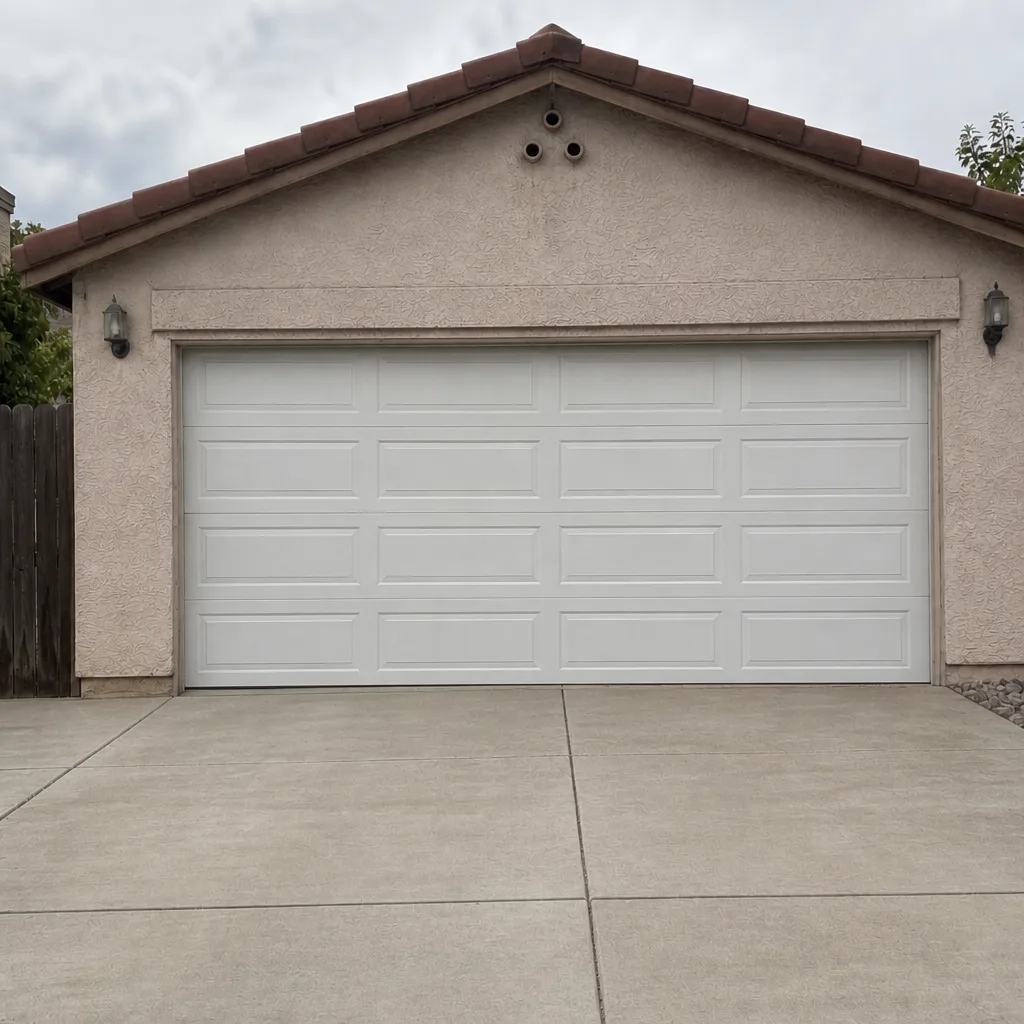 After
Why Openers Fail in a Sequence, Not at Once
An opener is a small motor, a gear train, a control board, and a set of safety sensors, all pushing a door that weighs between 130 and 300 pounds depending on material and insulation. Every part in that chain wears at a different rate, which is why failures arrive in order instead of all at once. The drive gear loses teeth before the motor burns out. The capacitor weakens before the motor refuses to turn. The logic board’s solder joints crack before the board stops responding.
That order is useful. It means the door tells you what’s coming if you know where to look and when to write it down. The failure sequence for most openers looks like this:
- Stage 1 (roughly 90 to 180 days out): Travel gets slower, or the motor sounds like it’s working harder. Nothing has broken yet.
- Stage 2 (roughly 30 to 90 days out): Intermittent symptoms appear. A press that doesn’t register. A grind at one spot in the travel. A reversal with nothing in the way.
- Stage 3 (days to weeks out): Consistent symptoms. The door hesitates, the motor strains audibly, or the opener stops mid-travel and won’t resume.
- Stage 4: Full failure. The motor runs but the door doesn’t move, or nothing happens at all.
Stage 1 and Stage 2 service is almost always repair. Stage 4 is often replacement, and it’s the stage that arrives at 6 a.m. on a workday. Catching the sequence early is the whole point of the categories below.
The Three Most Common Failure Modes and Their Warning Signs
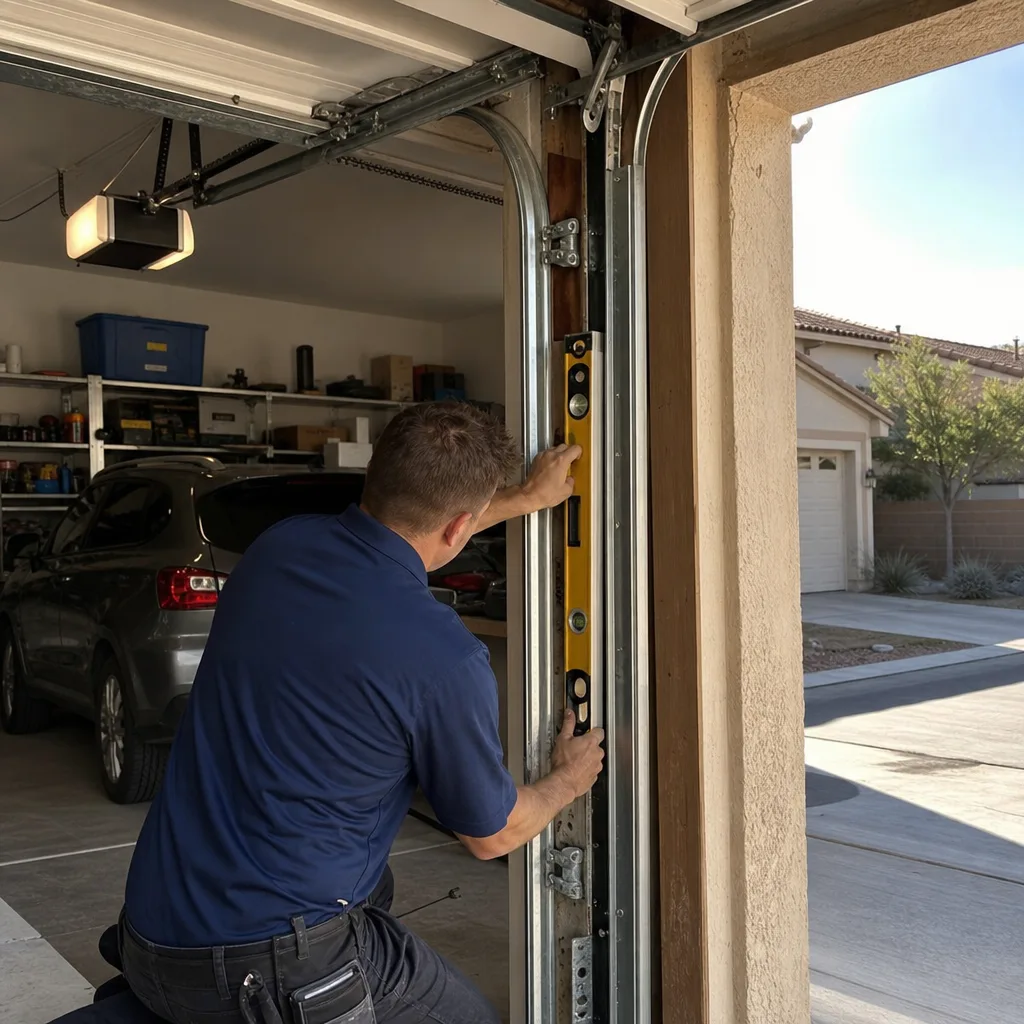
Most opener failures in Winchester fall into three categories. Each has an observable sign at every stage, and each sign is specific enough to name in a symptom log.
1. Drive gear wear
The drive gear is the plastic or nylon gear inside the opener head that turns the chain, belt, or screw. It wears because it’s designed to be the sacrificial part – cheaper to replace than the motor. The warning signs:
- Stage 1: A faint grinding noise during the first few feet of travel, often at the same spot every time.
- Stage 2: The grind becomes audible across the whole travel, and the door may pause briefly at the same point in the cycle.
- Stage 3: The motor runs and the door doesn’t move, or moves a few inches and stops. Plastic shavings may be visible under the opener head.
- Stage 4: Motor runs freely with no movement at all.
A worn drive gear is a straightforward repair. Replacing it at Stage 2 costs a fraction of replacing the whole opener after a Stage 4 failure that takes the motor with it.
2. Capacitor degradation
The capacitor stores the burst of energy the motor needs to start from a dead stop. As it degrades, it delivers less of that burst, and the motor labors. The warning signs:
- Stage 1: The opener takes a moment longer to start – a half-second hesitation before the motor engages.
- Stage 2: The motor hums briefly before turning, especially in cold weather. The door may need a second button press to start.
- Stage 3: The motor hums but doesn’t turn, particularly on the first cycle of the day, then starts on the second or third press.
- Stage 4: Humming with no movement, no matter how many presses.
Capacitors hold a charge even after the power is off. This is not a part to test or replace without training – the stored energy can deliver a serious shock. A technician with the right meter and the right discharge procedure handles it safely.
3. Logic board failure
The logic board is the opener’s control center. It handles remote signals, safety reversals, travel limits, and force settings. Failures usually start as intermittent oddities rather than hard stops.
- Stage 1: A remote that occasionally needs a second press, or a wall button that works when the remote doesn’t.
- Stage 2: Random reversals with nothing in the sensor path, or the door stopping short of fully open or fully closed.
- Stage 3: The opener ignores one control entirely (remote or wall button) while responding to the other.
- Stage 4: No response to any input, or the opener cycles without command.
Logic board damage is the failure most often caused by something outside the board – a power surge, a lightning strike, or a bad wall control. If your home has taken a surge, that’s worth noting in the log.
“Service Soon” vs. “Disconnect Power Now”
Not every warning sign carries the same urgency, and the difference is mechanical. Signs that indicate a worn or failing component let you keep using the door for a few days while you schedule service. Signs that indicate a broken or compromised mechanical component mean you stop using the door entirely until it’s fixed.
Signs that mean “schedule service this week”
- Travel speed has visibly slowed
- A grinding or clicking noise during travel
- A remote that needs repeated presses
- The door reverses without an obstruction
- Intermittent hesitation at the start of a cycle
These are consistent with gear wear, capacitor degradation, or a logic board issue. The opener is working harder than it should, and each cycle adds wear, but the mechanism is intact.
Signs that mean “stop using the door and call now”
- A loud bang from above the door (a torsion spring has likely broken)
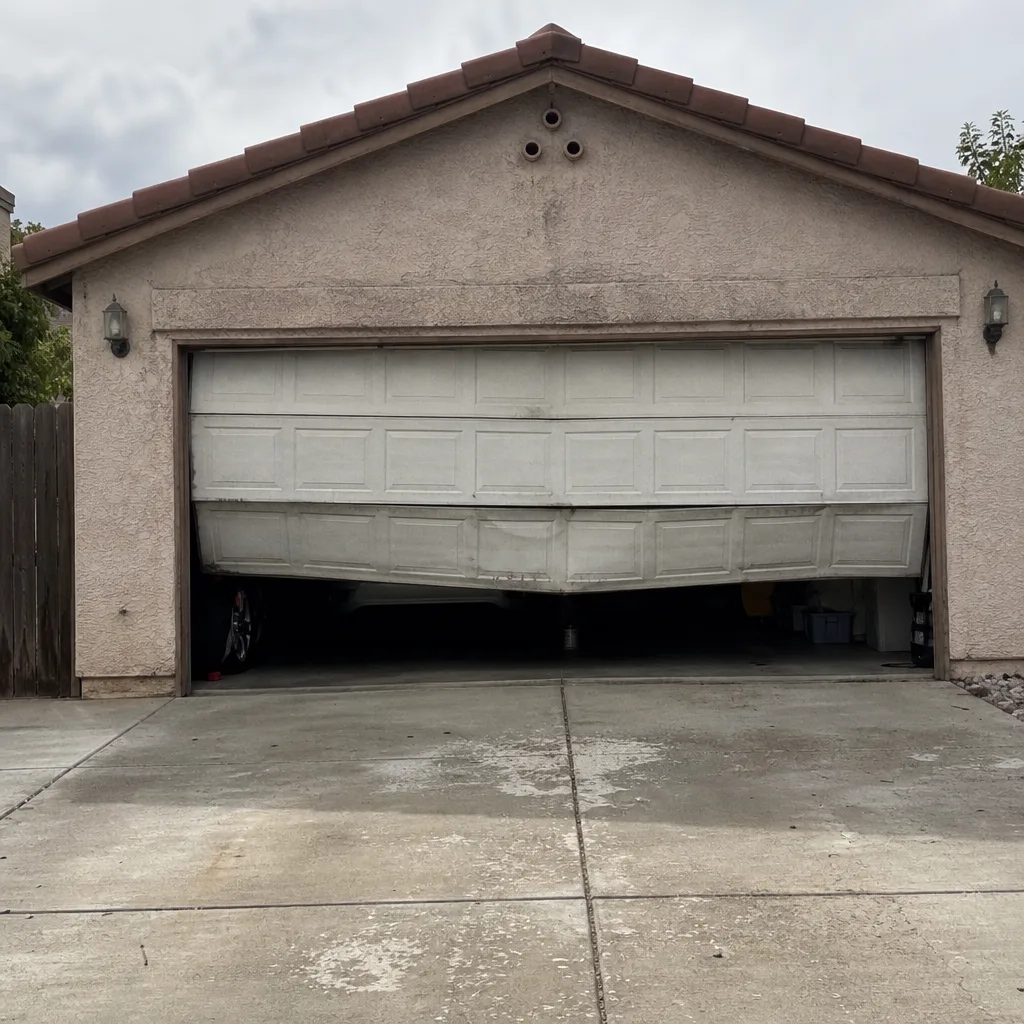
- The door hangs crooked or one side lifts before the other
- A visibly frayed cable, or one that has come off its drum
- The door won’t stay up when raised by hand
- Burning smell or visible scorching at the opener head
These are not warnings – they’re failures of components that hold the door’s weight or supply its power. A broken torsion spring means the opener is now lifting a door that weighs 130 to 300 pounds with nothing counterbalancing it, which can twist the door panel, damage the opener, or drop the door. Disconnect the opener (pull the emergency release only if the door is fully closed), keep people clear, and call for emergency service. In Winchester, we see this most often in the first hot weeks of June, when springs that have been under load all spring finally give.
Why Cycle Time Is Your Best Early Warning
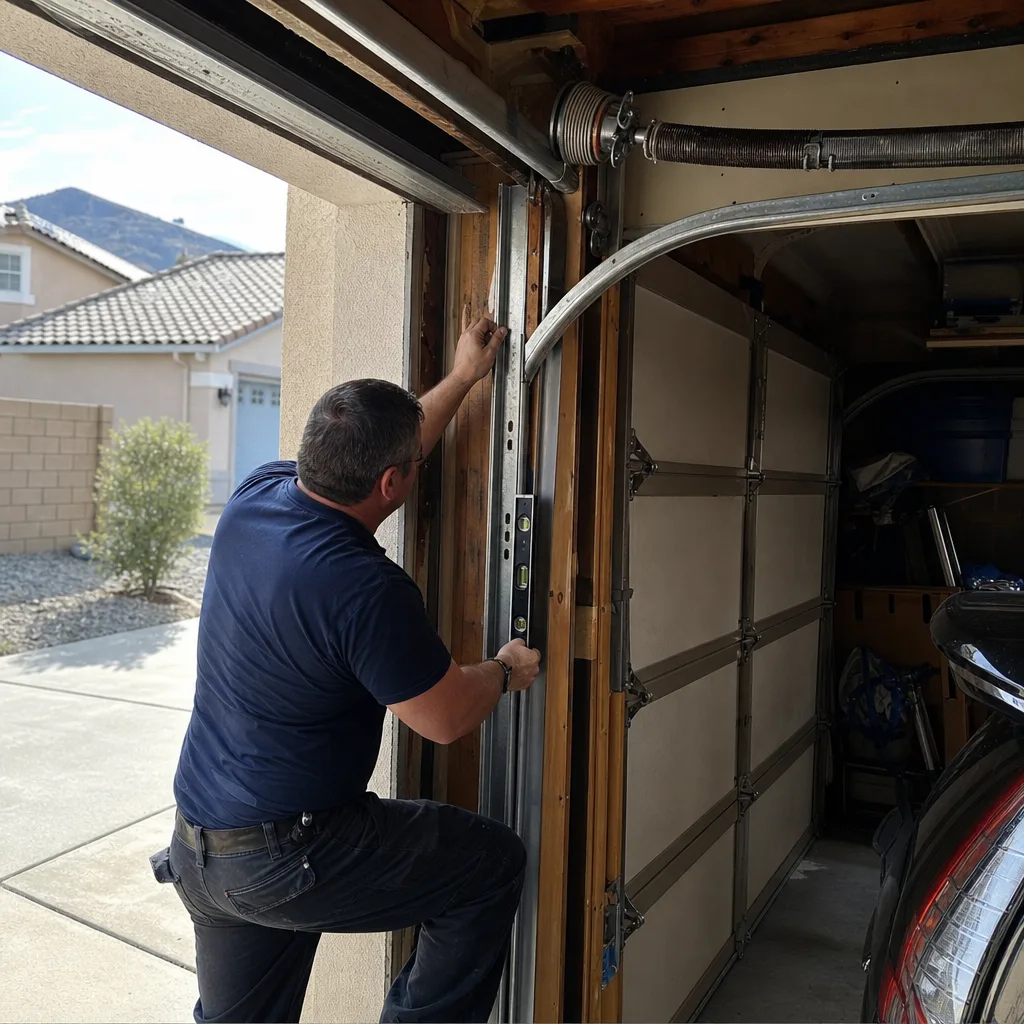
Increased cycle time – the door taking longer to open or close than it used to – is the single most reliable early indicator we’ve seen. It’s also the easiest to measure without tools, because you already have the tool: a phone timer.
- Time the full open cycle from the moment you press the button to the moment the door stops. Write the number down.
- Do the same for the close cycle. Write it down.
- Repeat once a month on the same day, ideally in the morning before the door has run several times.
- Compare. A door that opens in 14 seconds in March and takes 18 seconds in August has added roughly 30 percent to its cycle time, which is a Stage 1 or Stage 2 signal.
Cycle time catches gear wear, capacitor degradation, and roller or track friction all at once, because all three slow the door down. It also catches problems that aren’t the opener’s fault – worn rollers, dry hinges, a track that’s out of alignment – which can cause the opener to fail early if ignored. A door that moves slower than it did six months ago needs eyes on it, and the timer told you before anything broke.
Warning Signs by Drive Type: Chain, Belt, and Screw
Each drive type wears in its own way, and the sound tells you which part is talking.
Chain drive
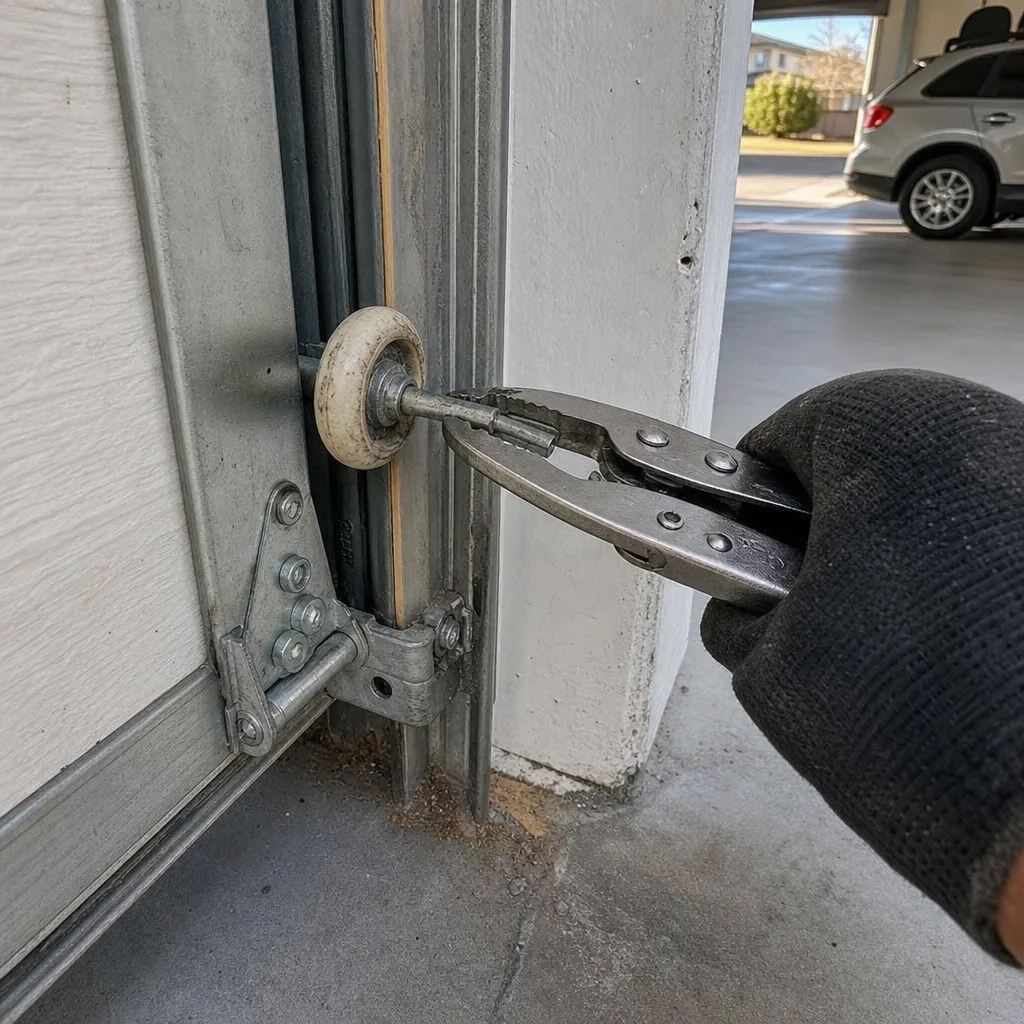
Chain drives are the most common opener in Winchester’s older housing stock, partly because they’re the most affordable and partly because they last. They get noisier as they age. The specific warning sign is elongation – the chain stretches over thousands of cycles, and a stretched chain slaps against the rail and skips on the sprocket. You’ll hear a rhythmic slap or a metallic rattle that wasn’t there a year ago. Left alone, elongation damages the sprocket and the drive gear together.
Belt drive
Belt drives are quieter and more common in newer construction. They fail differently: the belt is reinforced with steel cords, and it slips under load before it breaks. The warning sign is a door that hesitates or stalls at the heaviest point of travel – usually the first foot of the lift, when the door is heaviest – then catches and finishes. A slipping belt may also produce a soft rubbery squeak. Because belts are quieter, the slip is often the first sign anyone notices.
Screw drive
Screw drives are less common but still out there, including on older Craftsman and Wayne Dalton units. The screw is lubricated at the factory, and the grease dries out over time. The warning sign is hesitation at the top or bottom of travel – the door pulls up smoothly and then stalls or stutters in the last few inches before the limit, or does the same on the way down. That stutter is the carriage binding on a dry screw. A screw drive that hesitates at the limits will eventually stop short and reverse, which looks like a safety sensor problem but isn’t.
If you’re not sure what type of opener you have, the model number on the back of the head tells the technician everything. It also tells you whether parts are still available – LiftMaster and Chamberlain units from the last 15 years are usually serviceable, while some older models aren’t.
A Symptom Log You Can Keep in Two Minutes
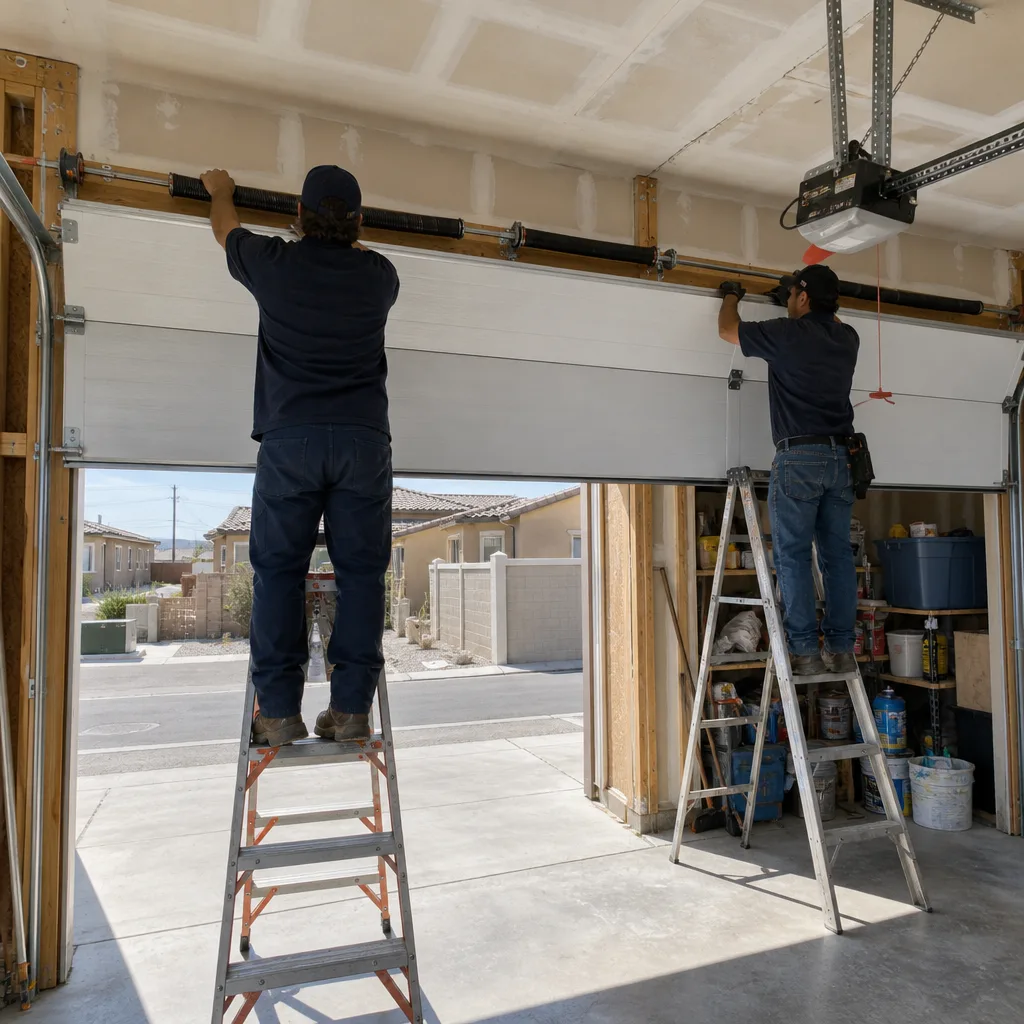
Documentation is what separates a vague service call from a diagnostic one. Keep a note on your phone or a pad in the garage and record the same five things each time something feels off.
- Date and time. Note the weather if it’s unusual – hot, cold, or after a storm.
- What happened. Use plain words: “ground at halfway up,” “needed two presses,” “reversed at the bottom,” “hummed before it moved.” Avoid “acting weird” – it tells the technician nothing.
- Which control. Remote, wall button, keypad, or app. If one works and the other doesn’t, write that down.
- Cycle time, if you noticed. A rough count of seconds is enough.
- Anything that changed. A power outage, a lightning storm, a new remote, a door that was hit, or a recent lubricant application.
Three entries in the same category within a 60-day window is your trigger to call. Three “needed two presses” entries means the remote or the logic board is failing. Three “slower today” entries means the drive train is wearing. The pattern is the diagnosis, and it’s the kind of record a technician can work from instead of guessing. It’s also why we photograph the failed component before quoting a replacement – documentation on both sides of the conversation.
Warning Signs That Point to Replacement, Not Repair
Repair is usually the right call. Replacement becomes the right call when the cost of repair approaches the cost of a new unit, or when the opener is the wrong tool for the door it’s lifting. Consider replacement when:
- The opener is more than 15 years old and has had more than one repair in the last two years.
- It lacks a photo-eye safety reversal system (required on openers manufactured after 1993, and a safety issue on anything older).
- The motor is undersized for the door – a 1/2-horsepower unit lifting a heavy insulated double door will keep failing.
- Parts are no longer available for the model.
- You’ve had two logic board failures within a year, which usually points to a power or wiring problem the board alone won’t fix.
Replacement is scheduled work, not emergency work. A technician measures the door, checks the balance and spring condition, and orders the right unit for the door’s weight and the home’s wiring. That’s a written price and a scheduled install, not a same-day promise. Our Garage Door Opener Repair & Installation in Winchester page covers the replacement options in detail.
What We See in Winchester Homes
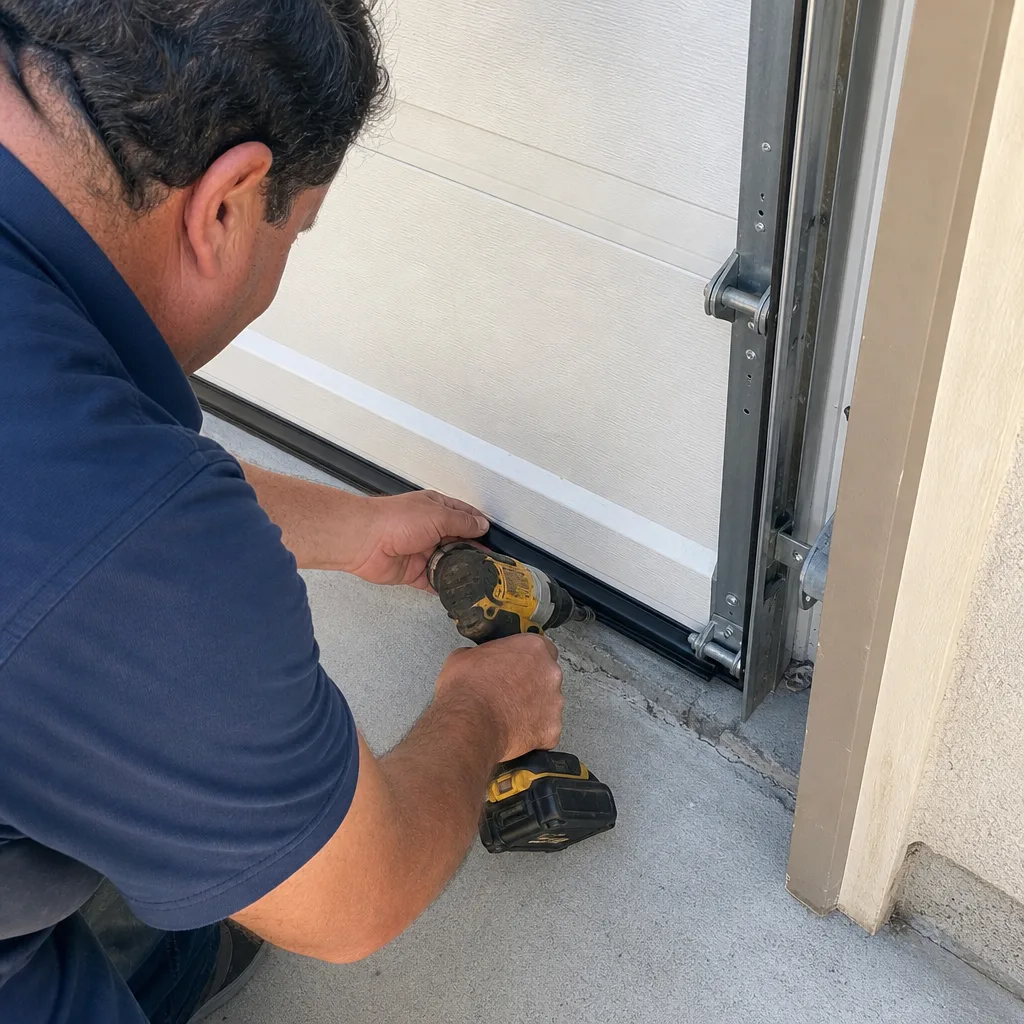
Winchester’s climate puts openers through a specific pattern. Summer heat pushes the garage interior above 110 degrees on a July afternoon, and capacitors and logic boards both age faster at those temperatures. The dry spring and fall seasons let dust accumulate on the safety sensor lenses, which produces phantom reversals that look like logic board failures but aren’t. And the occasional monsoon-season lightning storm takes out boards across whole neighborhoods in a single evening.
In the older neighborhoods around downtown Winchester, we often see chain drives that have outlasted two doors. In the newer construction on the city’s edges, belt drives are common, and the slipping-under-load symptom is the one that brings people in. Either way, the sequence is the same, and the cycle-time check catches it in every case. If you want a second set of eyes on a written estimate from another company, we offer a free second opinion – bring the paperwork.
Every job we do closes with a documented photo record of what we found and what we did, per Clause 4 of The Haven Standard: the customer sees the failed part before anyone quotes a replacement. Our technicians have up to 11 years of experience, and we service all eight major brands, including LiftMaster, Chamberlain, Genie, Clopay, Amarr, Wayne Dalton, Craftsman, and Raynor.
Common Mistakes to Avoid
- Treating a slow door as normal. A door that takes 18 seconds to open when it used to take 14 isn’t aging gracefully – it’s telling you something is wearing. Time it once a month.
- Greasing the screw drive with the wrong lubricant. Screw drives need a specific lubricant; household grease or WD-40 attracts dust and makes the binding worse.
- Adjusting the force or travel limits to compensate for a symptom. Turning up the force setting masks the problem and burns out the motor faster. The opener is telling you the door is heavy; fix the cause.
- Assuming a reversal means the sensors are broken. Most phantom reversals are dust on the lenses or a sun angle issue, not a failed sensor. Clean the lenses before you call.
- Pulling the emergency release while the door is up. If a spring is broken and the door is raised, releasing the trolley drops the door. Release only when the door is fully closed.
- Trying to replace a capacitor or logic board without training. Capacitors hold a charge after power-off and can shock you badly. Boards are easy to damage with static. This is technician work.
- Skipping the log because it feels fussy. Two minutes of notes turns a “my door is acting weird” call into a diagnosed repair, and often a cheaper one.
See the difference
BeforeAfter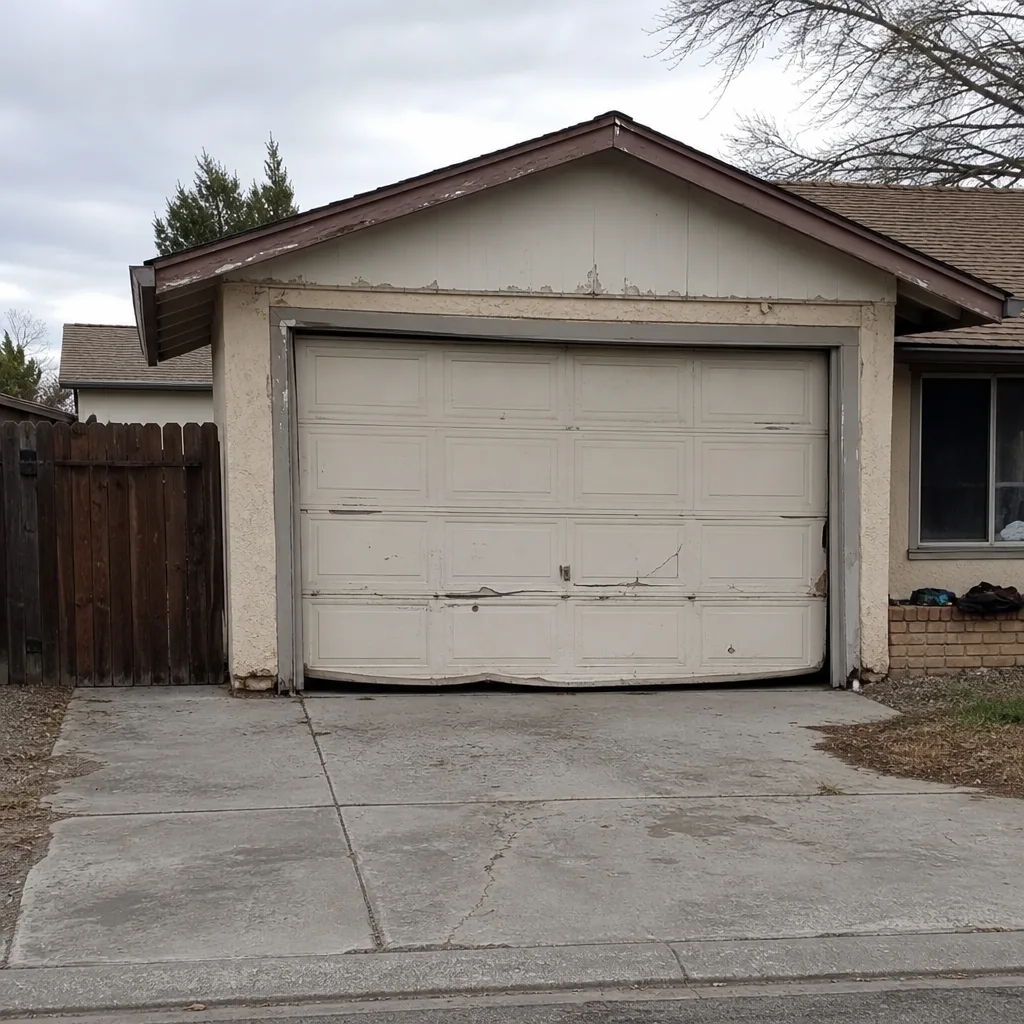 Before
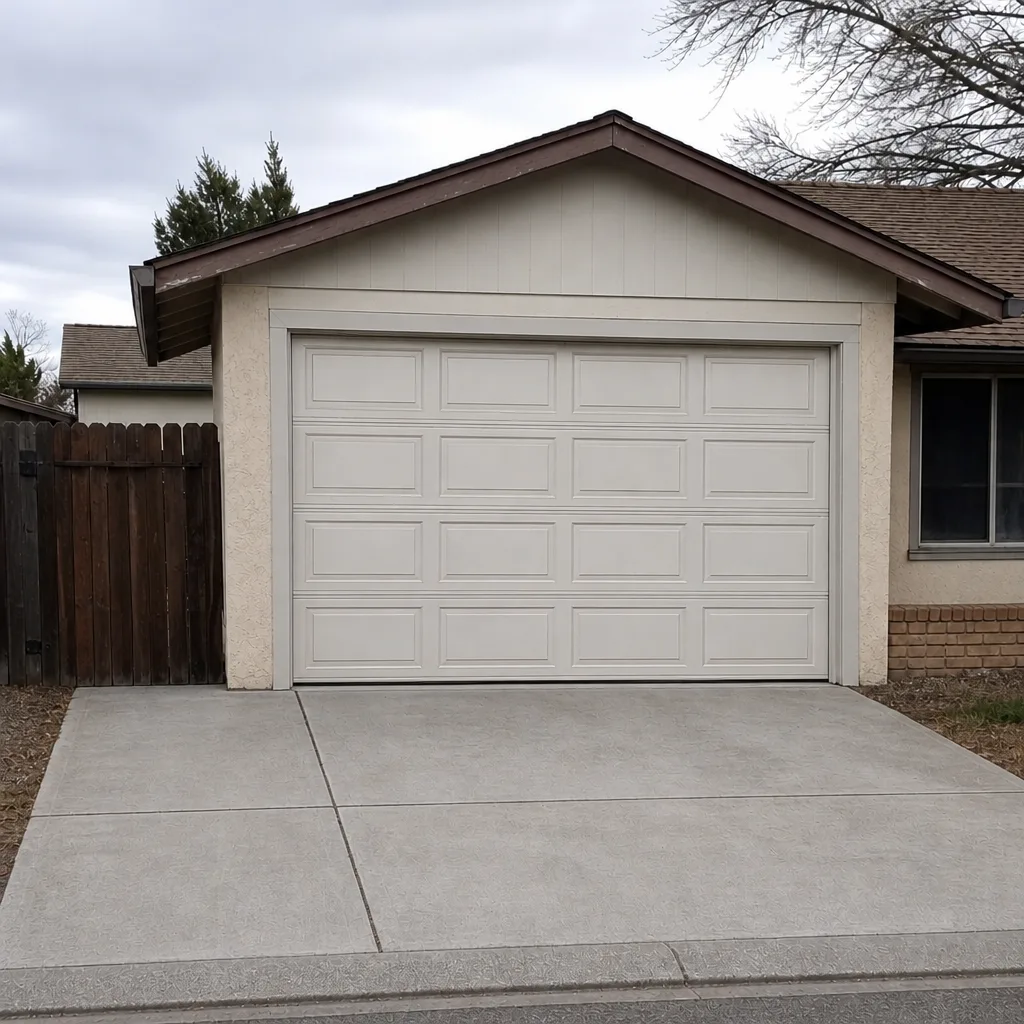 After
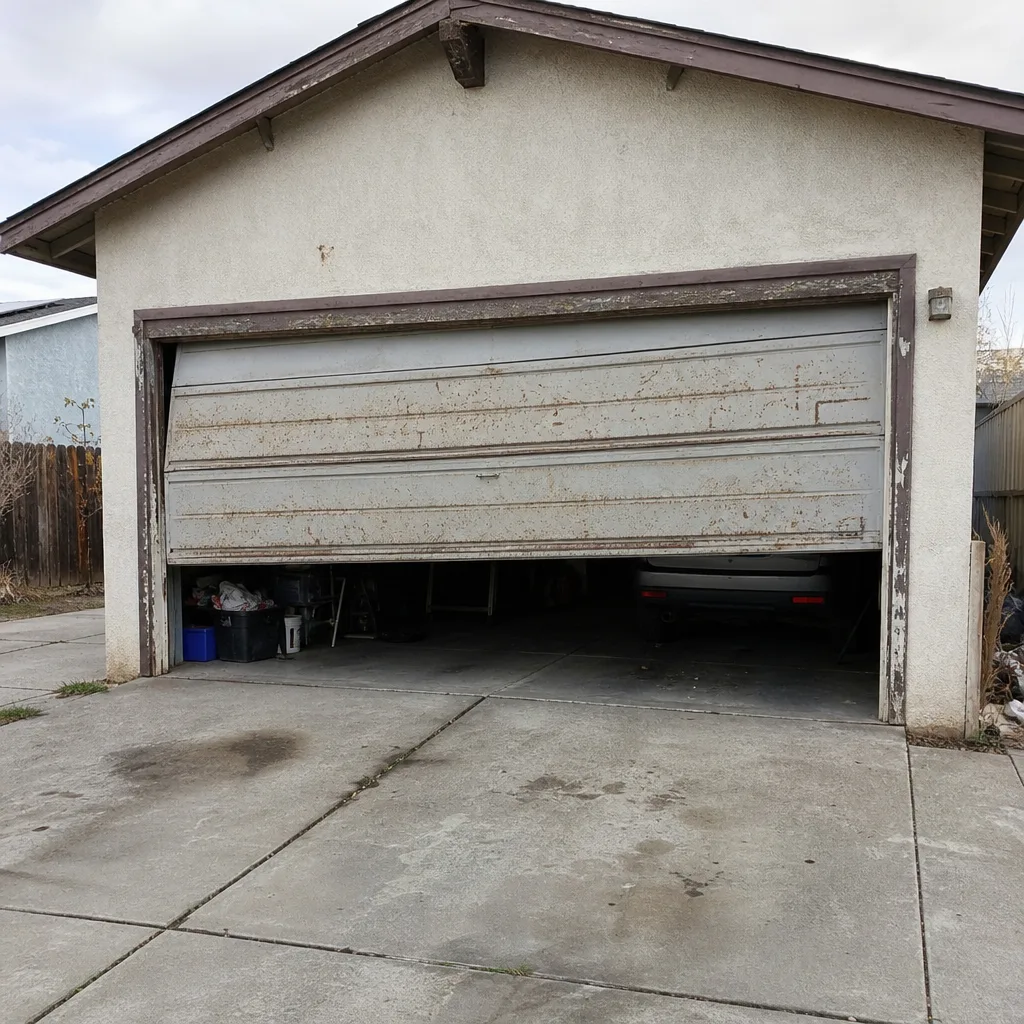 Before
 After
When to Call a Professional
Call when the symptom has become consistent, when three log entries point the same direction, or when any “disconnect power now” sign appears – a bang from the torsion bar, a crooked lift, a frayed cable, or a burning smell. Call if the door has reversed on its own more than twice in a week, if a remote works only intermittently after a battery change, or if your opener is more than 15 years old and has needed two repairs in two years. Call if you have a LiftMaster, Chamberlain, Genie, or Raynor unit that needs a part you can’t identify from the model number.
Servo Garage Doors Winchester offers free estimates in Winchester – call (855) 517-0284. A written price and written scope come before any work starts, not after. You can also start with our Servo Garage Doors Winchester home page or read more about Garage Door Repair in Winchester if the door itself is the issue rather than the opener.
Frequently Asked Questions
Most opener repairs in Winchester run between $150 and $400, with drive gear replacement on the low end and logic board replacement on the high end. Capacitor replacement is typically the least expensive repair. Prices vary with the model and part availability. Call (855) 517-0284 for an exact quote – estimates are free, and the price is written and agreed before any work starts.
Yes for emergency calls – a broken spring, a door that won’t close, or a burning smell at the opener head gets same-day dispatch. Routine repairs are usually scheduled within a few days, and a live person answers the phone around the clock, not a recording. Call (855) 517-0284 and we’ll tell you what’s available.
No. The written price and written scope are delivered before any work begins, per Clause 1 of The Haven Standard. If the technician finds something the original quote didn’t cover, you’re told before anything changes. Call (855) 517-0284 to get that written price started.
Yes. The local pro is licensed and insured as the state requires, and background-checked. The license number is on the page, not buried in a footer. Call (855) 517-0284 with any questions about credentials before you book.
Most openers last 10 to 15 years in Winchester’s climate, with belt drives typically on the longer end of that range and chain drives on the shorter end. Heat and cycle count both shorten the lifespan – a household that opens the door six times a day will wear out its opener faster than one that opens it twice. If your opener is past 12 years and has had a repair in the last two, it’s worth having it assessed before it fails. Call (855) 517-0284 for a free assessment.
Stop pressing the button and call for service. Humming with no movement usually points to a failed capacitor or a stripped drive gear, and repeated attempts can burn out the motor. Don’t try to test the capacitor yourself – it holds a charge after power-off. Call (855) 517-0284 and describe what you heard; the symptom usually tells the technician which part to bring.
The Bottom Line
Opener failures arrive in a sequence, and the sequence is readable if you know what to record. The four warning signs worth acting on are a slower-than-usual door, a remote that needs repeated presses, grinding or clicking during travel, and reversals with nothing in the way. Time your door once a month, log the date, the symptom, and which control failed, and call when three entries point the same direction. Signs like a bang from the torsion bar or a crooked lift aren’t warnings – stop using the door and call for emergency service. Catching a failure at Stage 1 or 2 keeps it a repair rather than a replacement, and that’s the whole point of the log. If you’d like a second opinion on a written estimate from another company, bring the paperwork – the second opinion is free.
Servo Garage Doors Winchester is independently owned and operated under The Haven Standard, and our technicians have up to 11 years of experience. We service all eight major brands and stand behind every repair with the 365-Day Done Right Promise. Call (855) 517-0284 for a free estimate – a flat, written price comes before any work starts, and a documented photo record comes when we leave. If you’re planning a door replacement alongside the opener, our Garage Door Installation in Winchester page is the place to start.
Written by the team at Servo Garage Doors Winchester.