
Last updated November 18, 2026
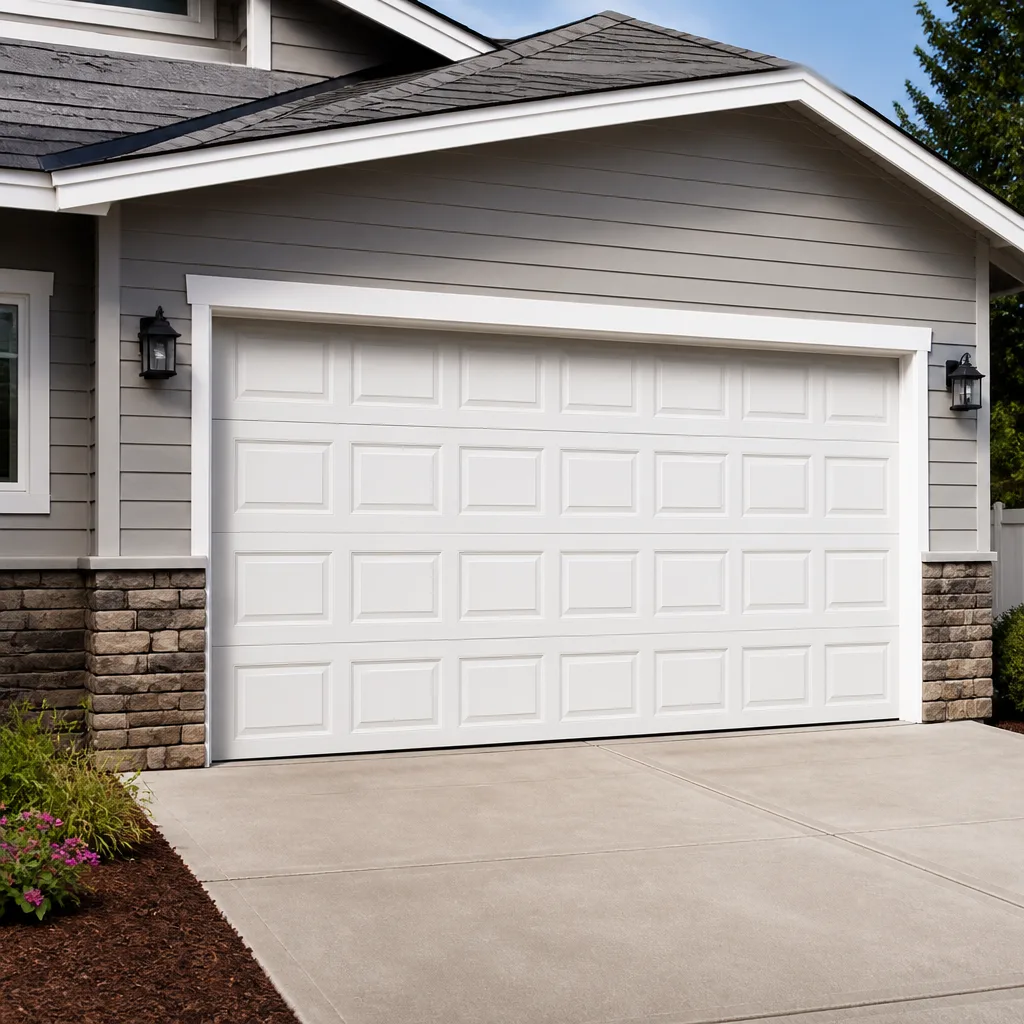 Raised-panel steel
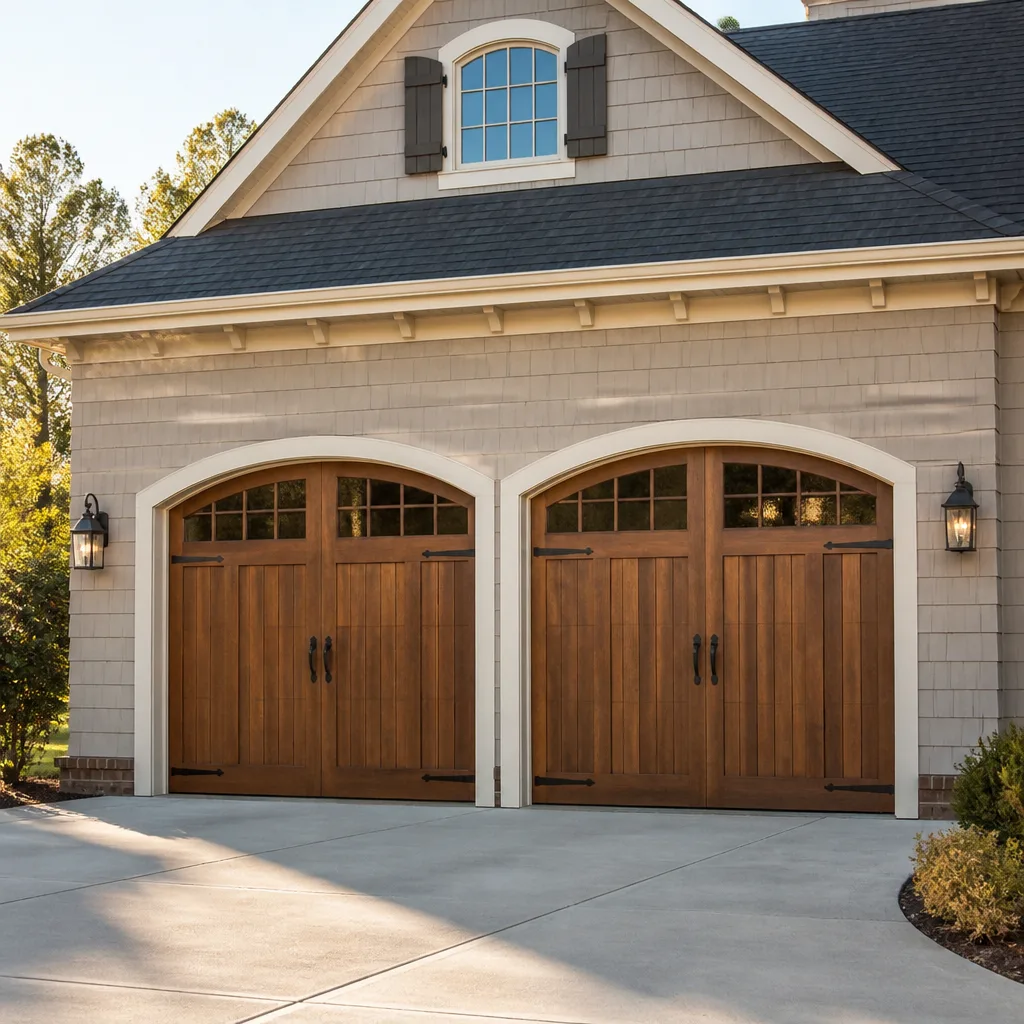 Carriage house
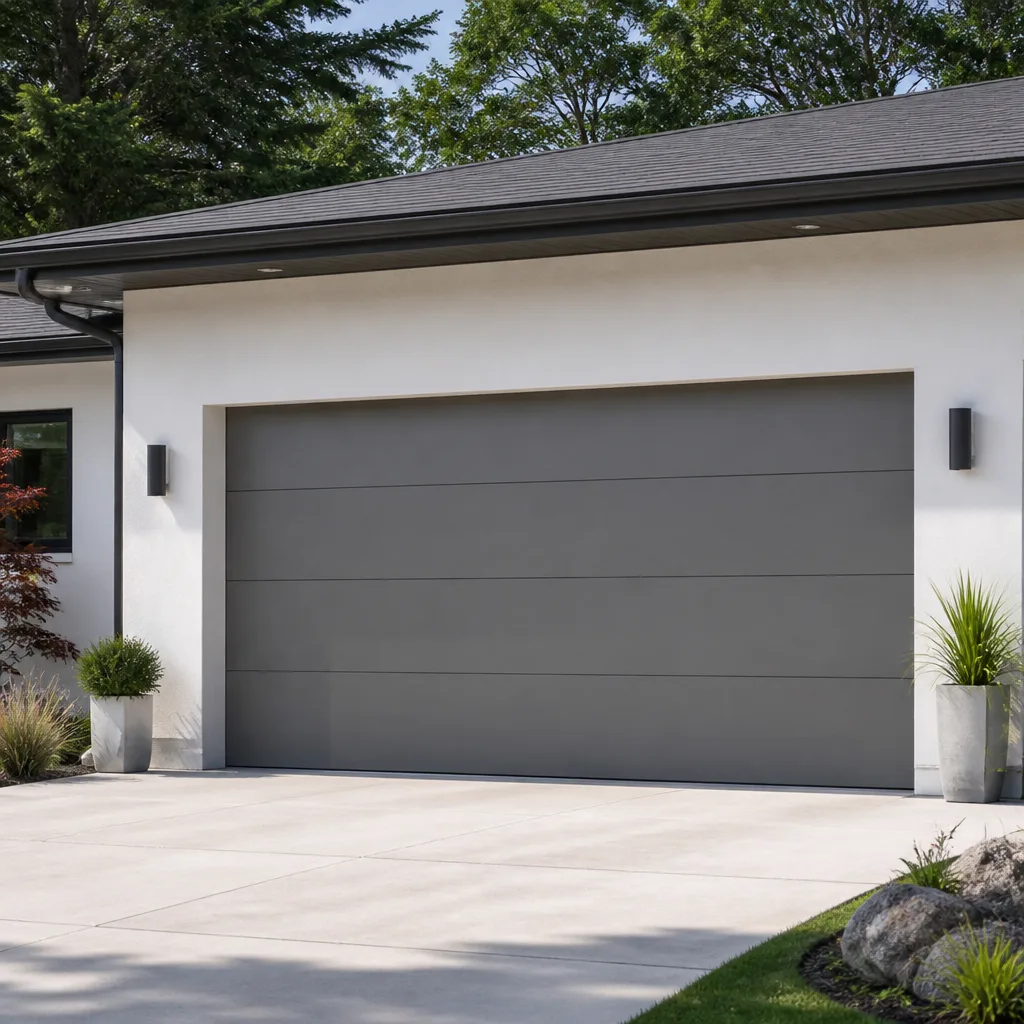 Modern flush
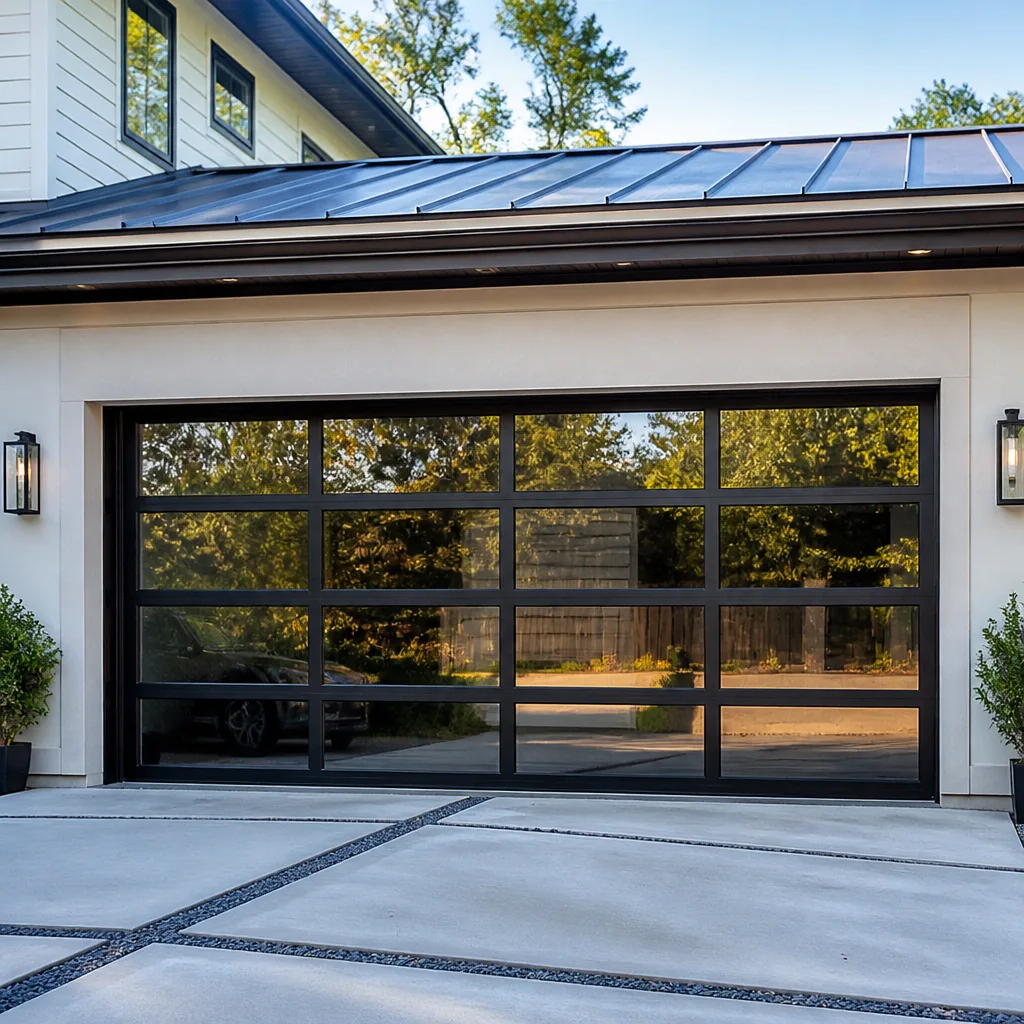 Full-view glass
 LiftMaster openers
 Chamberlain openers
Full 25-point door and opener safety check with every visit - springs, cables, rollers, tracks, and your LiftMaster or Chamberlain opener included
You get a price before we start. It does not change when the pro arrives.
Get your free estimateGarage Door Parts Maintenance Schedule: What to Do and When
Torsion springs are rated by cycle count, not by years. A standard spring is designed for roughly 10,000 cycles, and most homeowners have no idea where their spring sits on that clock right now. That single blind spot explains why so many garage doors fail without warning in Winchester. This guide organizes maintenance by component lifespan instead of calendar month, mapping every task to the part it protects and the specific failure it prevents. You’ll get annual cycle math, a component-by-component interval table, and a clear line between what you can safely check and what belongs to a technician.
Quick Answer
Lubricate rollers, hinges, and tracks every six months; inspect springs, cables, and the bottom seal monthly with a visual check; test the door balance and safety reverse every quarter; and have a technician inspect springs and cables once a year. Replace weatherstripping every two to three years and expect torsion springs to reach end-of-life around 10,000 cycles, which for most Winchester households is roughly seven to ten years of normal use.
Styles & brands we work with
- Raised-panel steel
- Carriage house
- Modern flush
- Full-view glass
- LiftMaster openers
- Chamberlain openers
Table of Contents
- Why a Part-First Schedule Beats a Calendar Schedule
- Cycle-Count Math for Winchester Homeowners
- What You Can Safely Check Yourself
- What Only a Technician Should Touch
- Component-by-Component Interval Table
- How Owner Servicing Affects Warranties
- Winchester’s High-Desert Climate and Its Effect on Parts
- Common Mistakes to Avoid
 Before
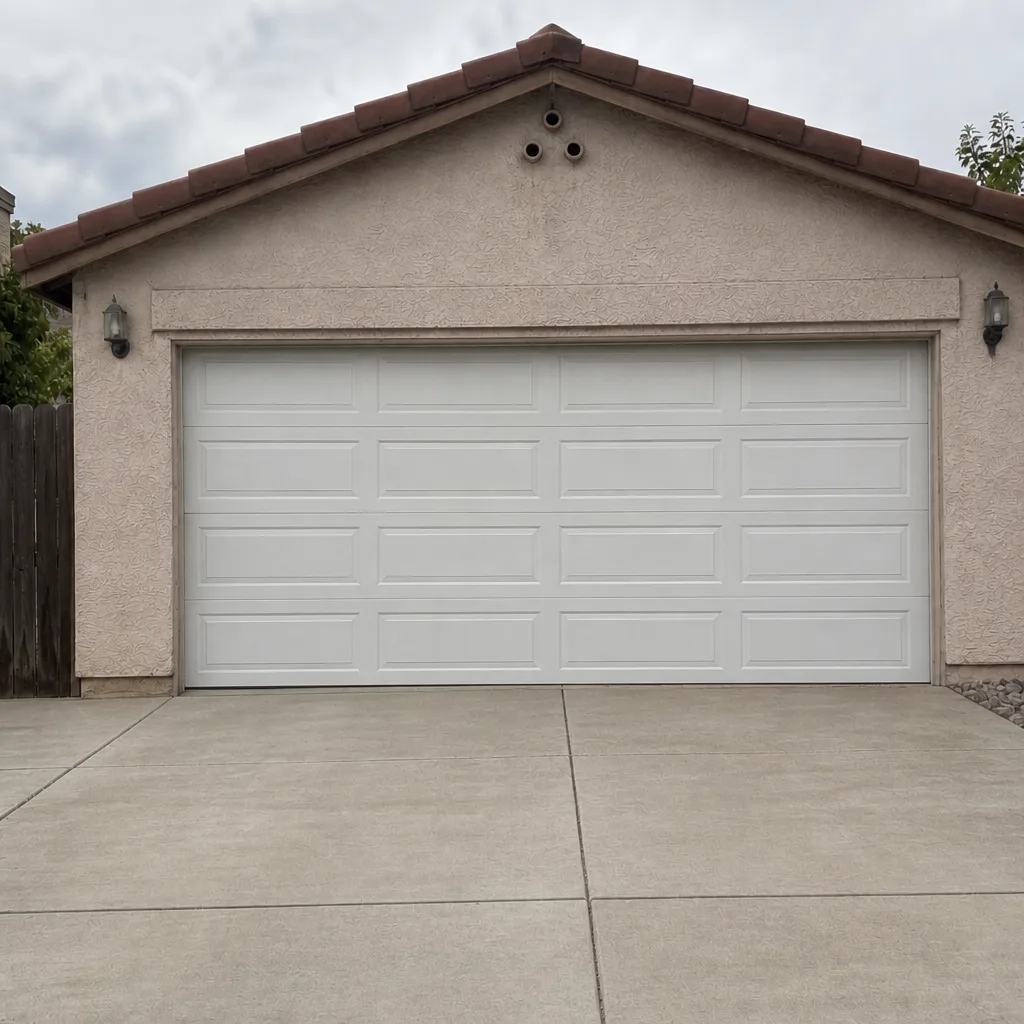 After
Why a Part-First Schedule Beats a Calendar Schedule
A calendar schedule tells you to “lubricate the door in spring and fall.” It doesn’t tell you that lubricating the rollers is about protecting the bearing inside each roller from premature wear, or that the roller’s bearing is a sealed unit that fails when grit works past its seal. Without the reason, homeowners grease the track face (wrong) and skip the hinge pivots (right). The task survives; the purpose doesn’t, so the part still fails.
A part-first schedule fixes the mapping. Each task exists because a specific component degrades in a specific way, and the task delays that degradation. Here’s the connection we walk Winchester homeowners through on a routine service visit:
- Lubricating rollers protects the roller bearing, not the track. A dry bearing grinds the roller stem and eventually seizes, which drags the whole door and strains the opener.
- Lubricating hinges protects the pivot pin. A dry pivot flexes the hinge leaf until it cracks, and a broken hinge drops the door out of alignment.
- Testing the balance protects the springs. An unbalanced door forces the springs to carry load they weren’t rated for, shortens their cycle life, and can snap a spring months early.
- Cleaning the bottom seal protects the threshold and the door’s bottom section from rot and rust where water pools.
- Testing the safety reverse protects people, not parts. It’s the one test that has nothing to do with longevity and everything to do with the door stopping when it should.
When you know which failure each task prevents, you stop lubricating the wrong surfaces and start catching the parts that actually matter before they strand you. For a door that’s already failing rather than merely aging, our Garage Door Repair in Winchester page covers how we diagnose which component gave out.
Cycle-Count Math for Winchester Homeowners
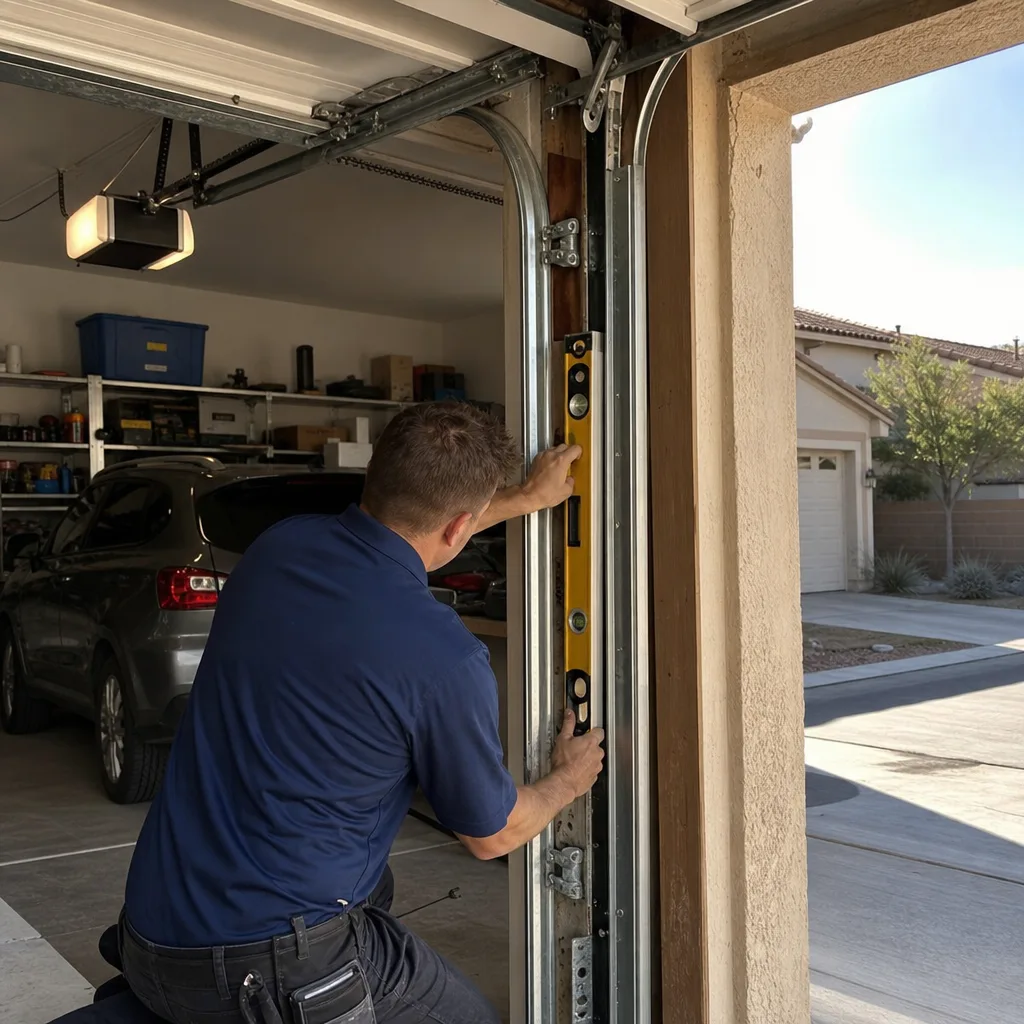
A cycle is one full open and one full close. Springs are engineered to a rated cycle life, typically 10,000 for a standard spring and higher for heavy-duty replacements. The math that matters is how fast your household burns through those cycles.
Here’s the estimate we run for Winchester homeowners:
- Count daily cycles. One car leaving and returning is two cycles. A two-car household where both drivers commute is typically four to six cycles per day.
- Multiply by days. Six cycles a day times 365 days is about 2,190 cycles a year.
- Divide into the spring rating. 10,000 divided by 2,190 is roughly 4.5 years for a busy two-driver home. A single-driver household at two cycles a day gets closer to 13 years.
That spread – 4.5 years to 13 years – is why “replace your springs every X years” advice is meaningless without knowing your household. A retired couple in a Rancho Vista home puts a fraction of the wear on their springs that a family with two commuting adults and teenagers does in the same house. If your door was installed or last sprung in the last two years, you can track your own baseline; if you moved in and don’t know the spring’s age, a technician can look at coil gap and wire diameter and give you a reasonable estimate.
The same cycle-count logic applies to openers. Opener drive gears and logic boards wear in proportion to cycles, not years, which is why a lightly used opener from a low-traffic home can outlast a heavily used one by a decade. When the opener itself is the part wearing out, our Garage Door Opener Repair & Installation in Winchester page explains the replacement-vs-repair call.
What You Can Safely Check Yourself
Some maintenance belongs in your hands. These tasks require no disassembly, no tools beyond a rag and a can of lubricant, and no proximity to loaded springs or cables.
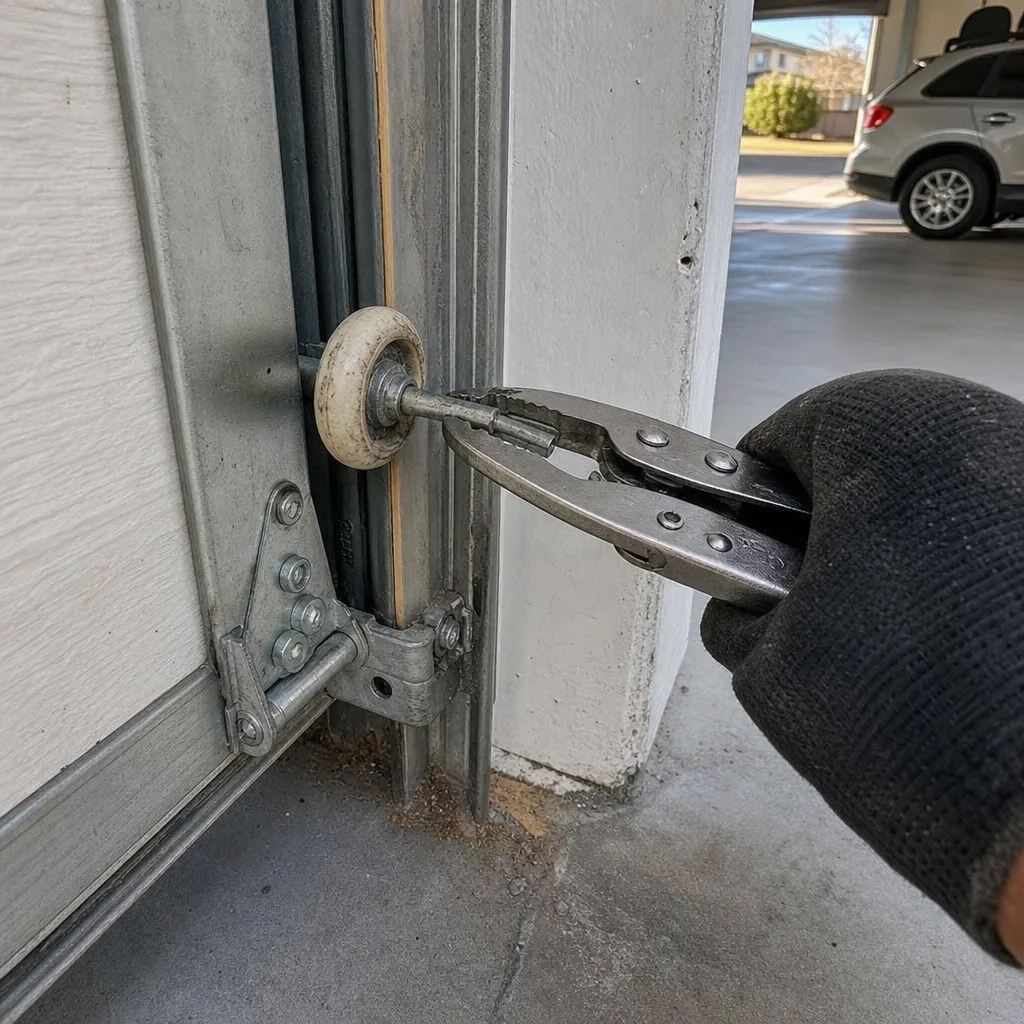
Lubrication (every six months). Use a lithium- or silicone-based garage door lubricant, not WD-40 and not wheel bearing grease. Apply to the roller stems and bearings, the hinge pivot pins, and the torsion bar bearings at the header. Wipe the track clean with a dry cloth but do not grease the track surface itself – grease attracts grit and the rollers should ride metal-on-metal.
Visual inspection (monthly). Look at the springs for a visible gap or clean break at a coil. Look at the cables for fraying, kinks, or slack. Look at the bottom seal for cracks. Check the hinges for cracks at the leaf. This takes two minutes and catches the failures that end in a no-start morning.
Balance test (every quarter). With the door closed, pull the manual release to disconnect the opener, then lift the door halfway and let go. A balanced door holds its position. A door that drifts down has weakening springs; one that drifts up has an overtightened spring or a binding track.
Safety reverse test (monthly). Place a two-by-four flat on the floor under the closing door. The door should contact it and reverse. If it doesn’t, stop using the automatic opener and have it serviced.
None of these tasks involve touching a loaded spring, loosening a cable, or adjusting track brackets. That line is where homeowner maintenance ends.
What Only a Technician Should Touch
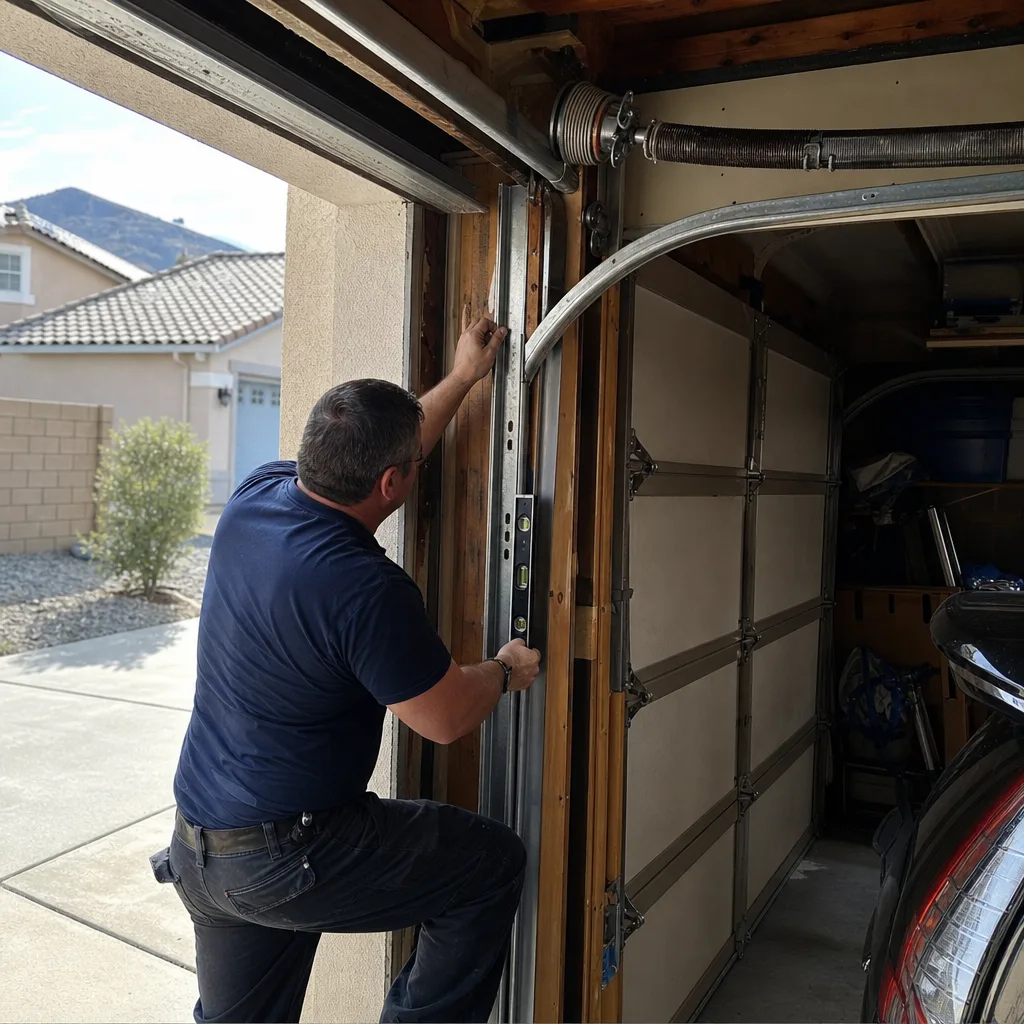
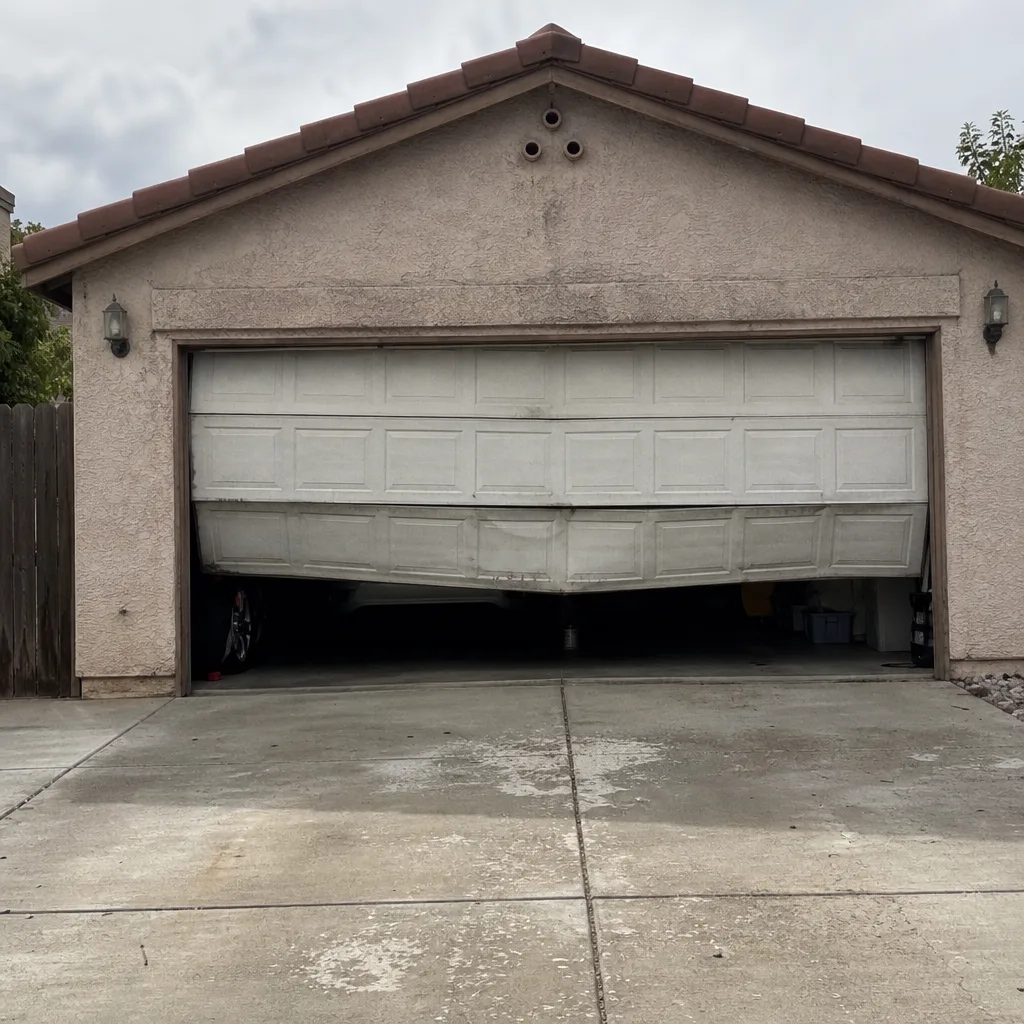
Torsion springs, extension springs, and lift cables store enough energy to cause serious injury or death if handled without the right tools and training. A torsion spring is under hundreds of pounds of tension while wound; releasing that tension incorrectly can send the winding bars across a garage at speed. Cables under tension can whip. This isn’t a warning to be dramatic – it’s the reason we won’t talk a homeowner through a spring adjustment over the phone.
These are the parts and tasks that belong to a trained technician:
- Spring replacement and tensioning – both torsion and extension springs
- Cable replacement and re-spooling on the drums
- Track alignment and bracket adjustment when the door is binding
- Opener drive and logic board diagnosis – limit switch and force adjustment, gear replacement
- Roller and hinge replacement where removing the part means supporting the door’s weight
Our technicians have up to 11 years of experience, and every one of them photographs the failed component before any replacement is quoted – Clause 4 of The Haven Standard. That photo record is included on every visit, not optional, so you can see what broke and why the replacement is warranted. When a technician tells you a spring is at the end of its cycle life, you get the picture of the clean break, not a hand-wave.
If a part fails outright, same-day repair is often possible in Winchester, and emergency calls are answered by a live person. For a planned replacement – a new door rather than a repair – the timeline is different, so our Garage Door Installation in Winchester page covers how measuring and scheduling work.
Component-by-Component Interval Table
Use this as your maintenance baseline. Intervals assume average use; adjust upward for a household burning through more than six cycles a day.
- Torsion spring – rated 10,000 cycles, typically 4-13 years depending on household traffic. Inspect monthly; technician inspection annually.
- Extension spring – rated 10,000 cycles. Same interval as torsion, but inspect the safety cable monthly for breaks.
- Lift cables – inspect monthly for fraying or kinks; replace at the first sign of wear or every 4-7 years. Technician-only task.
- Rollers – lubricate every 6 months; replace every 3-5 years or when a bearing seizes or a roller stem shows flat spots.
- Hinges – lubricate every 6 months; inspect for cracks annually; replace every 5-7 years.
- Weatherstripping (perimeter) – replace every 2-3 years, or sooner if it’s cracked and letting daylight through.
- Bottom seal – inspect monthly; replace every 2-4 years as it compresses, cracks, or pulls away from the door.
- Opener drive (belt, chain, or screw) – lubricate chain drive annually; replace a worn belt or screw drive when it starts skipping or stalling.
- Opener logic board and gear – replace on failure; typically 8-12 years of service.
Most of the parts that fail first in Winchester are the ones that see the most load – springs, cables, and rollers – not the ones with the flashiest names. A door’s major sections and stiles usually outlast several sets of springs. Brands like Clopay and Amarr design their sections to hold up for decades, but only if the moving parts beneath them are maintained on schedule.
How Owner Servicing Affects Warranties
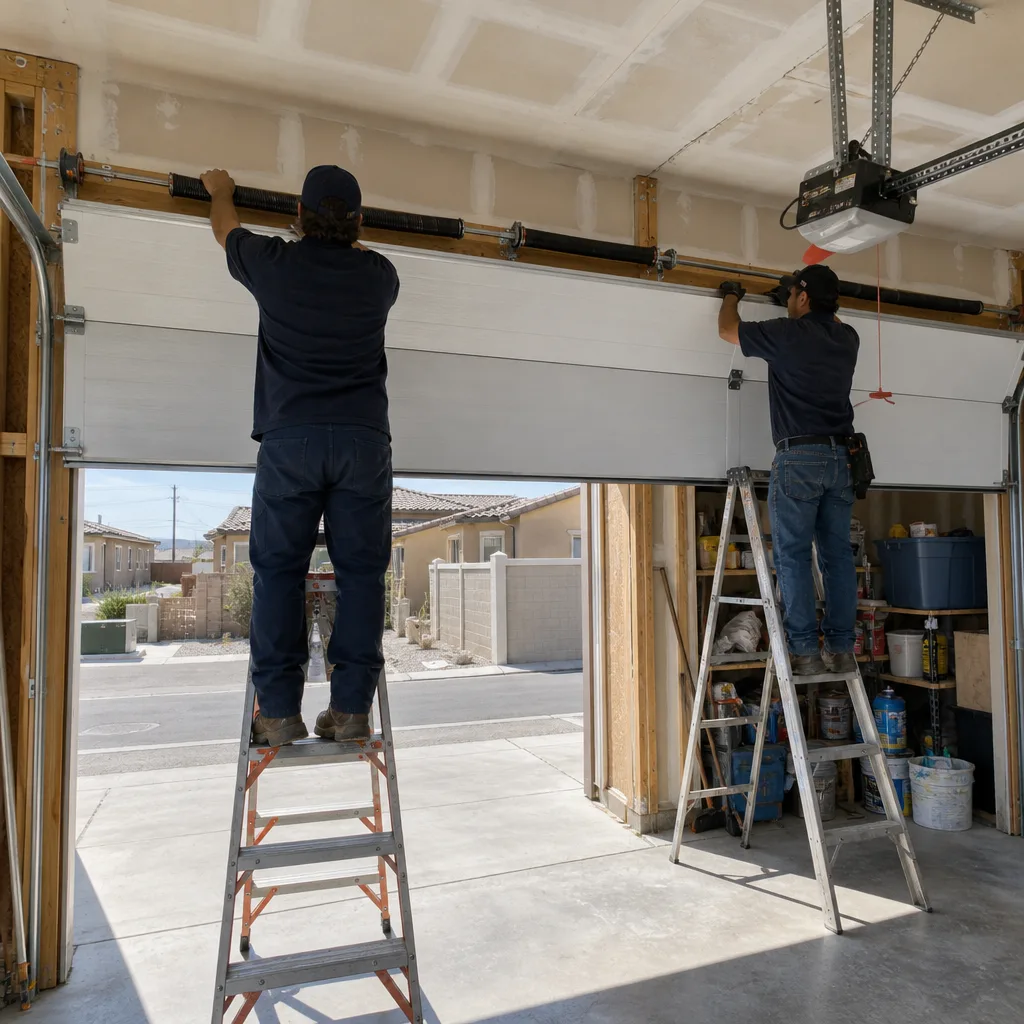
Springs, openers, and some door sections carry manufacturer warranties that can void when a homeowner performs a task the manufacturer requires a licensed technician to do. The reason is straightforward: if you adjust a torsion spring and it fails, the manufacturer can reasonably argue the failure came from improper servicing. The same applies to disconnecting the opener and running a door manually in ways the manufacturer warns against.
The way around this is documentation. Before you touch anything – even a simple lubrication task – photograph the part’s condition. A dated photo of a hinge before you clean and lubricate it protects you if a crack is later found at the leaf. A dated photo of the bottom seal before you clean it records its condition for the record. This is the same founding rule Servo was built on: the customer sees the part before anyone quotes a replacement.
If you’ve bought a home and don’t know what a previous owner did to the springs, a technician inspection gives you a baseline. The written scope and photo record from that visit belong in your file alongside the door’s installation paperwork. Have an estimate from another company for a related repair? Our Free Second Opinion applies to any competing written estimate you bring in – no coupon needed.
Winchester’s High-Desert Climate and Its Effect on Parts
Winchester sits in a high-desert environment with hot, dry summers and a wide swing between daytime and overnight temperatures. That climate works on a garage door differently than a coastal one. Rubber weatherstripping and bottom seals dry out and crack faster here than they would in a milder climate – often in two years rather than three or four. Metal hinges and roller stems are less prone to rust than in humid areas, but the daily thermal expansion and contraction loosens hinge screws over time, and a screw backing out of a hinge is one of the more common causes of a binding door.
The dry air also means less corrosion on cables, but a cable that’s the wrong diameter or stretched will still fail regardless of climate. And the summer heat softens grease faster, which is why we suggest a lubricant that stays put in high temperatures rather than thinning and running off the hinge pins.
In Winchester neighborhoods with older homes and long driveways – Rancho Vista, the historic west side – the garage door often runs several cycles more per day than a comparable household in a denser part of town, so cycle-count math matters there more than anywhere.
Common Mistakes to Avoid
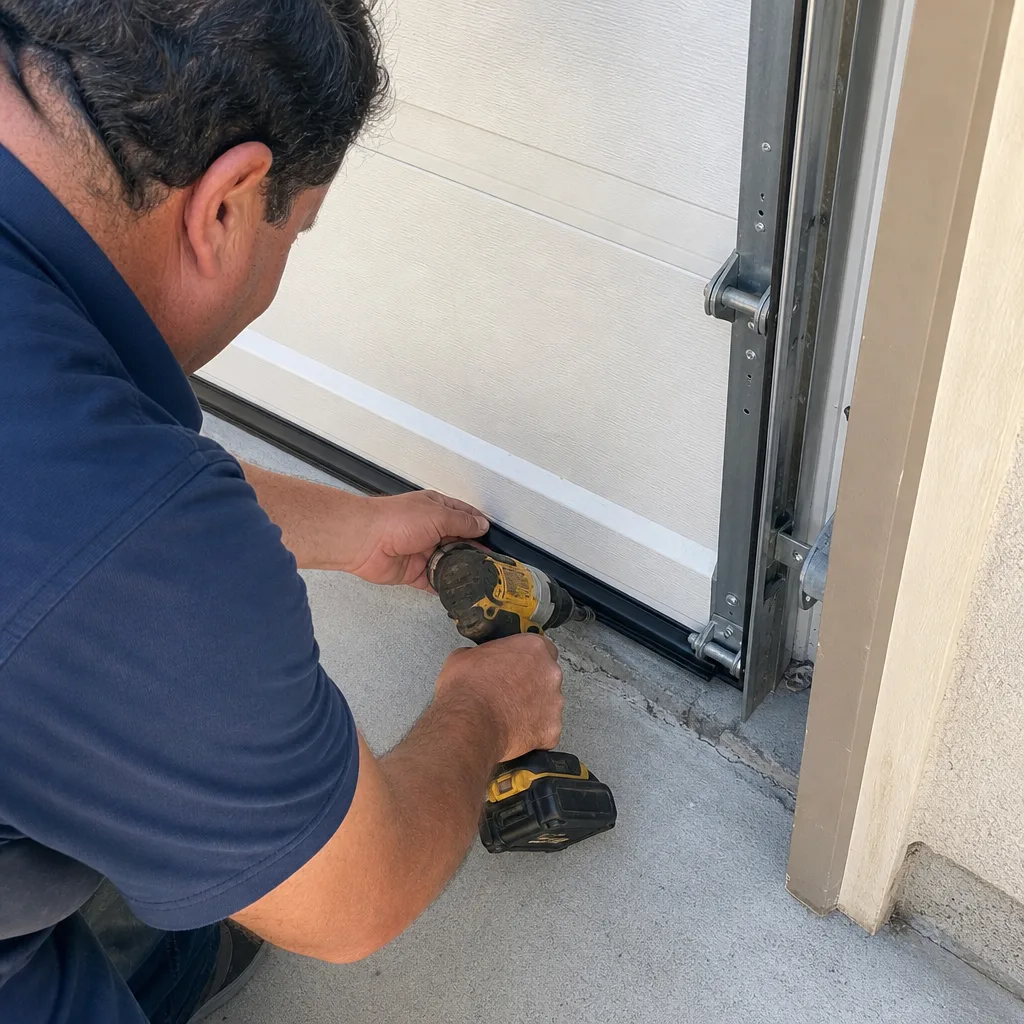
- Greasing the track. Homeowners grease the track face thinking it quiets the door. It attracts grit, grinds the rollers, and does nothing for the bearings, which are the parts that actually need the lubricant.
- Ignoring the balance test. A door that drifts down is a spring losing tension. Skipping the test is how a spring failure catches a Winchester family by surprise on a Monday morning.
- Adjusting springs yourself. A loaded torsion spring can injure anyone who winds it without the right bars and technique. Leave it to a technician.
- Replacing the whole door when one part fails. A single snapped spring, a worn roller, or a failed logic board doesn’t call for a new door.
- Skipping the documentation. No photos before a repair means no record if a warranty question comes up later. The photo costs nothing and settles disputes.
- Buying a heavier-duty spring without rebalancing. A sturdier spring changes the load on the door. It has to be matched to the door’s weight, not simply bolted in.
- Waiting for the seal to fail completely. In Winchester’s dry heat, replace weatherstripping on the interval, don’t wait for daylight to show through the perimeter.
See the difference
BeforeAfter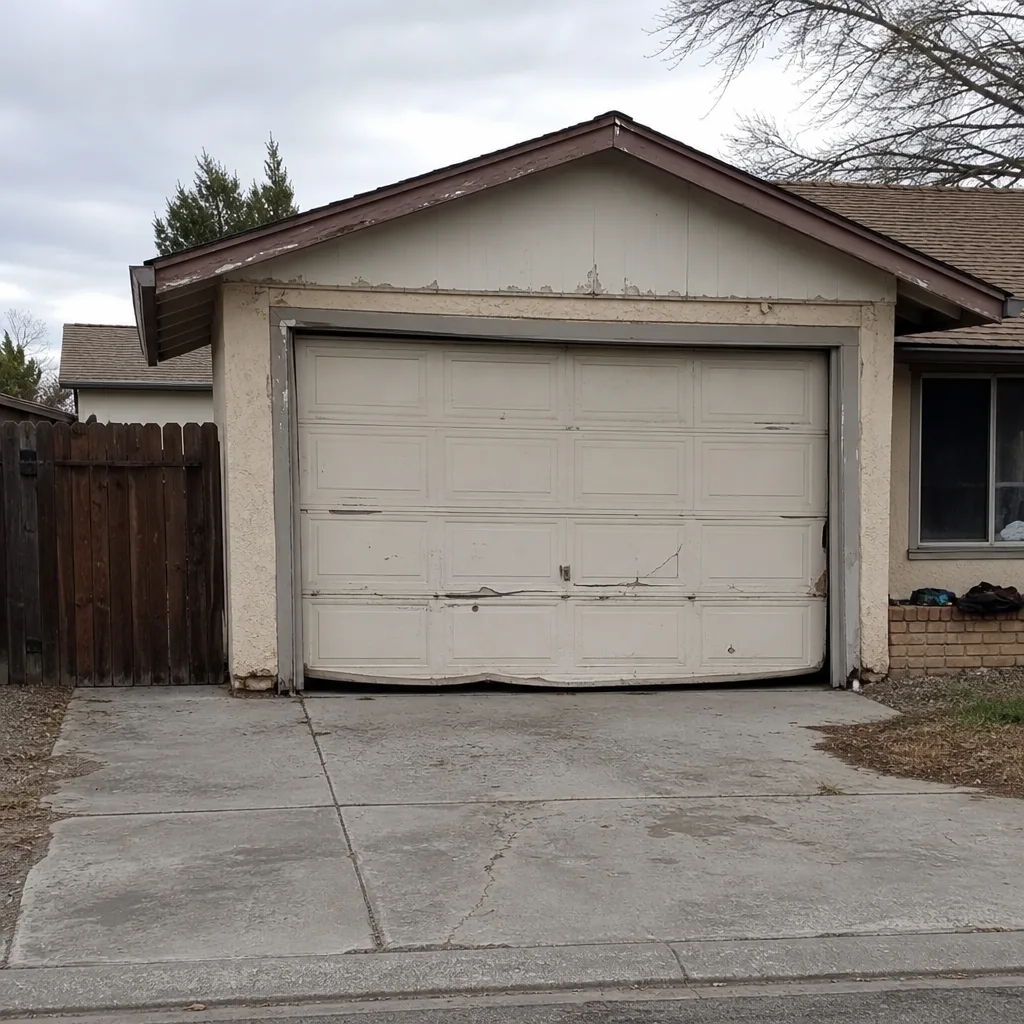 Before
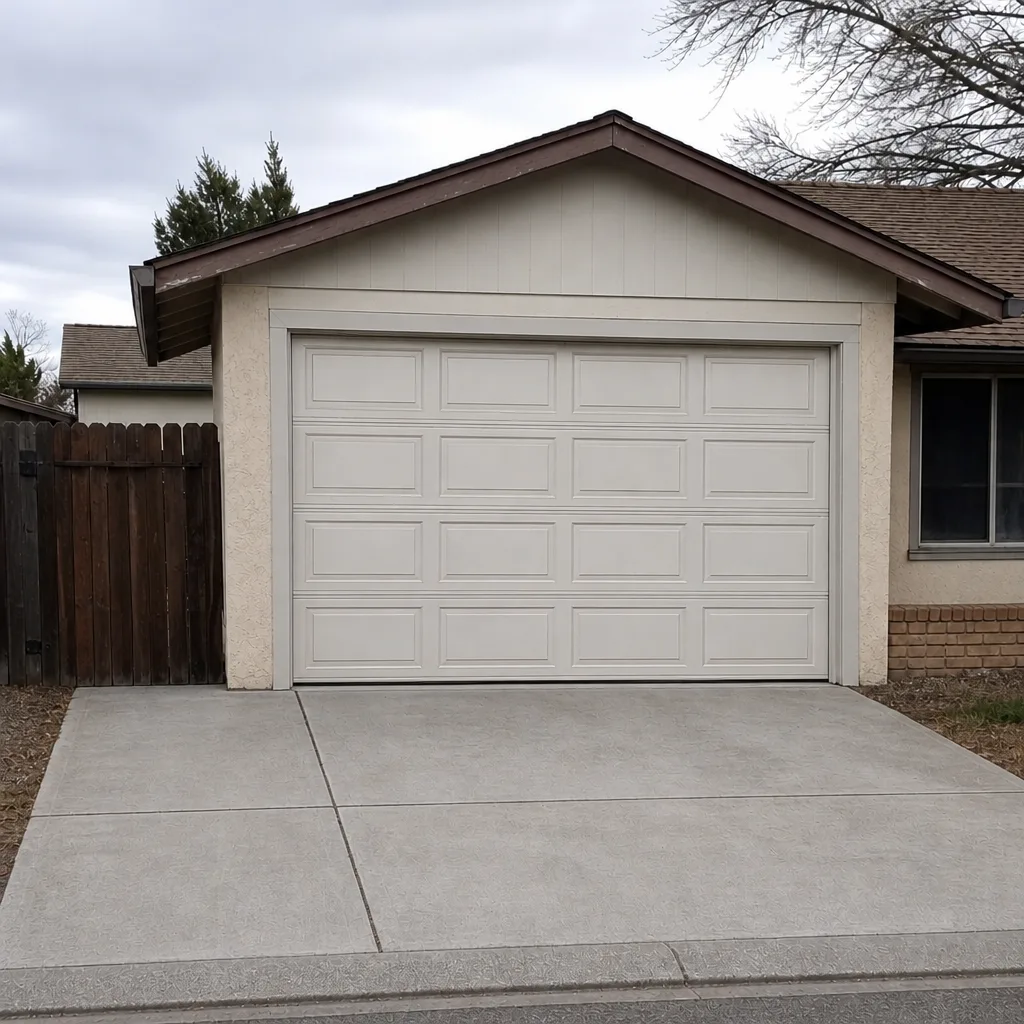 After
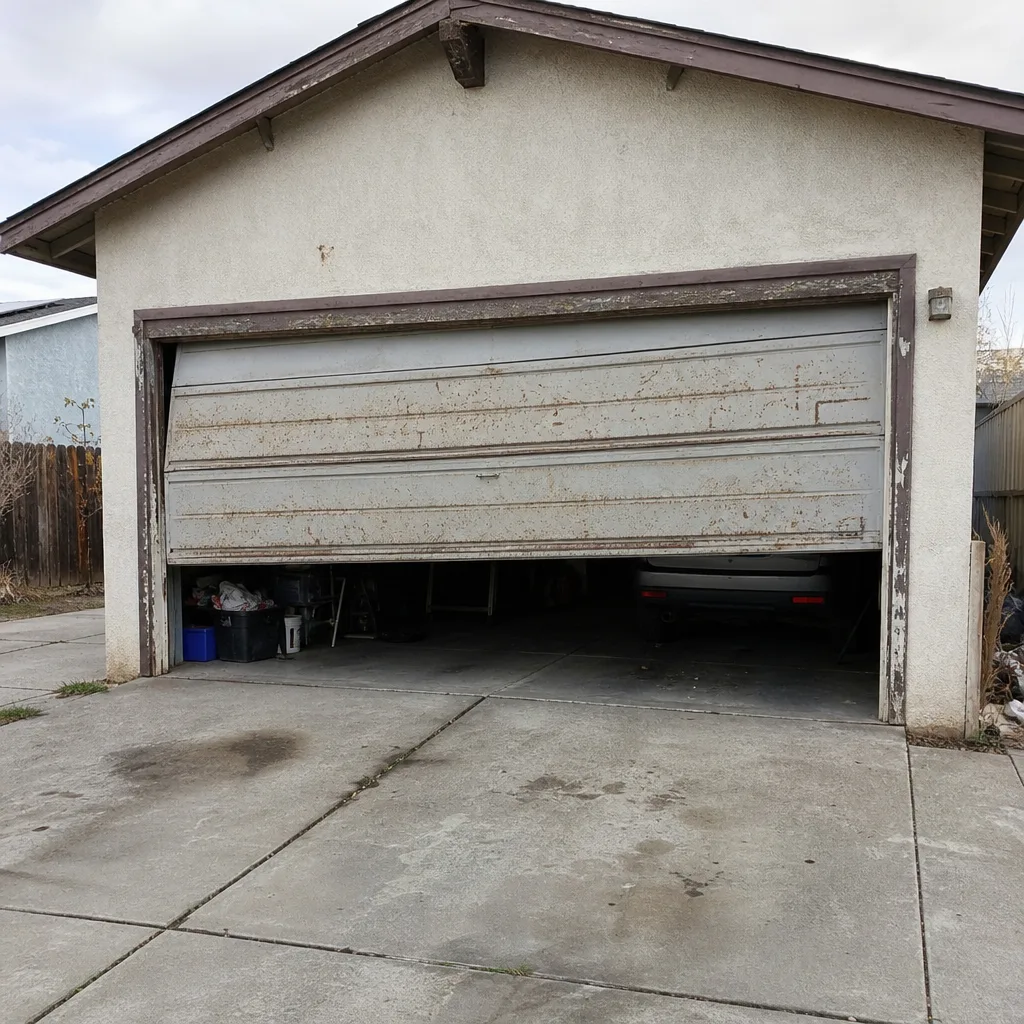 Before
 After
When to Call a Professional
Call a professional the moment you see a snapped or slack spring, a frayed or kinked cable, a door that drops unevenly, or an opener that reverses for no reason. Don’t use the door if it won’t stay up, if it’s come off one track, or if the safety reverse fails. Those aren’t maintenance tasks – they’re failures, and a trained technician needs to see the part before quoting. Servo Garage Doors Winchester offers free estimates in Winchester, with a written price and scope before any work begins and a live person on the phone when you call (855) 517-0284, including emergencies.
Frequently Asked Questions
A garage door should be lubricated every six months, visually inspected monthly, balance tested every quarter, and inspected by a technician annually. The annual inspection is when a trained eye checks spring cycle wear, cable condition, and opener drive that a homeowner can’t safely assess alone.
Springs need replacing when they reach roughly 10,000 cycles, when you can see a gap or break at a coil, or when the door no longer holds position during the balance test. In Winchester, a two-driver household often reaches that cycle count in five to seven years, while a single-driver household can go more than a decade. If you’re unsure where your springs sit, call (855) 517-0284 for a free estimate and a technician will tell you.
You can wipe the spring clean from a distance, but do not wind, unwind, or adjust a torsion spring. The spring stores dangerous tension. Lubricating the torsion bar bearings at the header is safe as long as you’re not touching the wound spring itself. When in doubt, leave spring work to a technician.
Regular maintenance does not void a warranty, but servicing a spring or opener without documentation can create a warranty dispute if a part fails. Photograph the part’s condition before and after any task you perform yourself. The written scope and photo record from a professional visit gives you a stronger paper trail.
Torsion springs, cables, and rollers fail first because they carry the most load and cycle the most. Winchester’s dry heat also cracks Weatherstripping and bottom seals faster than milder climates. The door sections themselves, including those on a Clopay or Amarr door, usually outlast several sets of springs.
Yes. We service all major brands, including LiftMaster, Chamberlain, Genie, Clopay, Amarr, Wayne Dalton, Craftsman, and Raynor. Whether you need a part replaced or a full inspection, the visit ends with a documented photo record of what was found and what was done. Call (855) 517-0284 for a free estimate.
The Bottom Line
A maintenance schedule works only when it tells you which part each task protects. Lubricate rollers to save the bearings, test balance to save the springs, clean the seal to save the threshold, and leave springs and cables to a technician. Track your cycle count – it’s the number that predicts spring and opener life far better than a calendar. In Winchester’s high desert, replace weatherstripping and bottom seals on the shorter interval and photograph condition before you touch anything. The parts that fail first are the ones under load. The Servo Garage Doors Winchester home page covers how we document each visit and what you receive when we leave.
Call Servo Garage Doors Winchester at (855) 517-0284 for a free estimate. You’ll get a flat, written price and written scope before any work starts, a photo record of the failed part before anyone quotes a replacement, and a live person on the phone if something fails at 2 a.m. Every job is backed by the 365-Day Done Right Promise, and our technicians have up to 11 years of experience with all eight major brands. We’ve made 18,000+ garage doors right with a written price before work started and a documented record when the technician left.
Written by the team at Servo Garage Doors Winchester.