
Last updated November 18, 2026
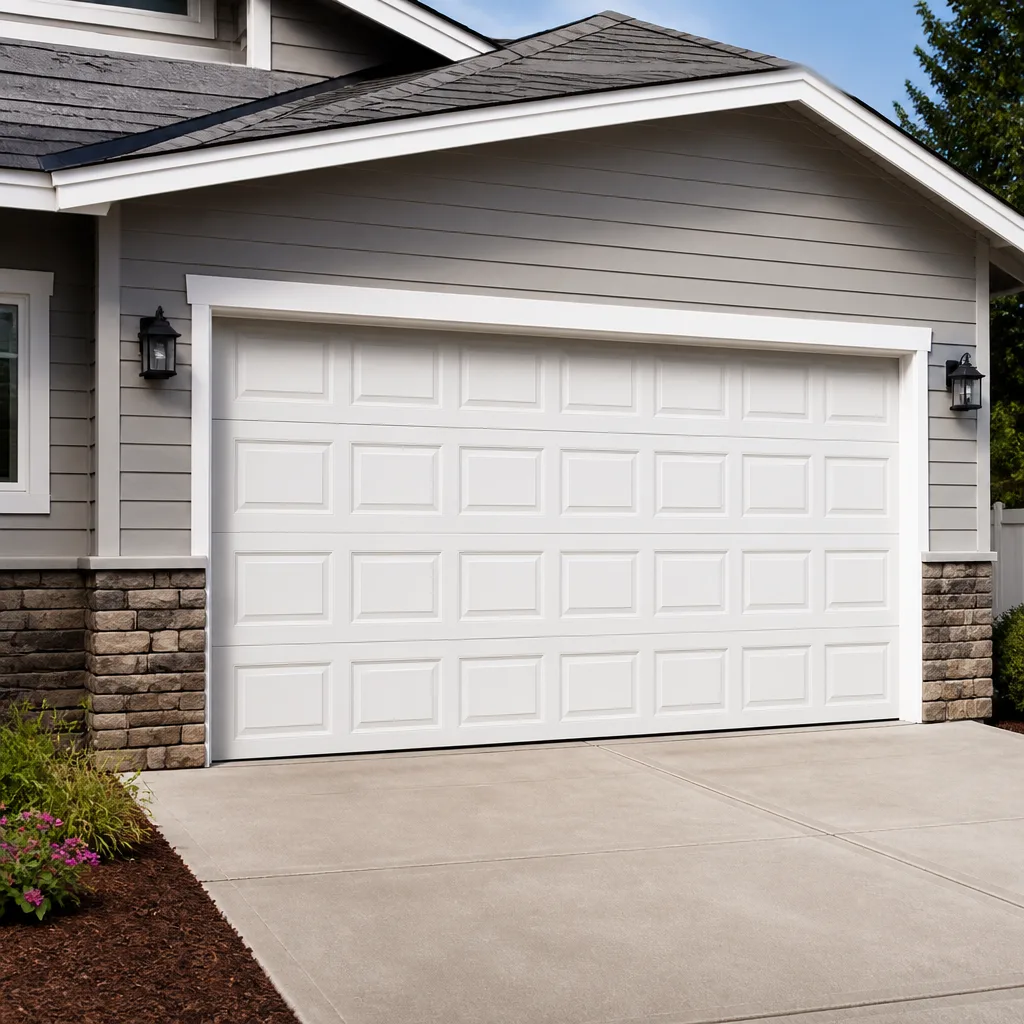 Raised-panel steel
 Carriage house
 Modern flush
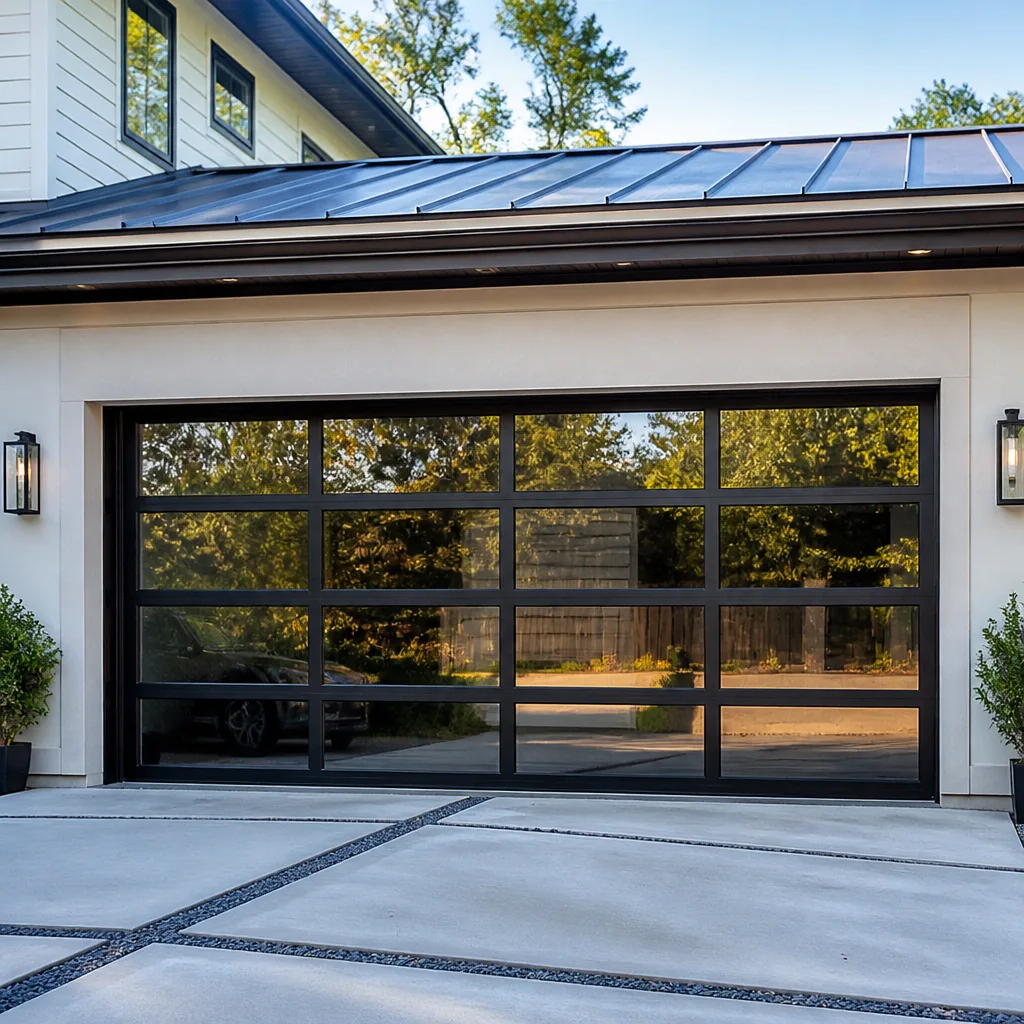 Full-view glass
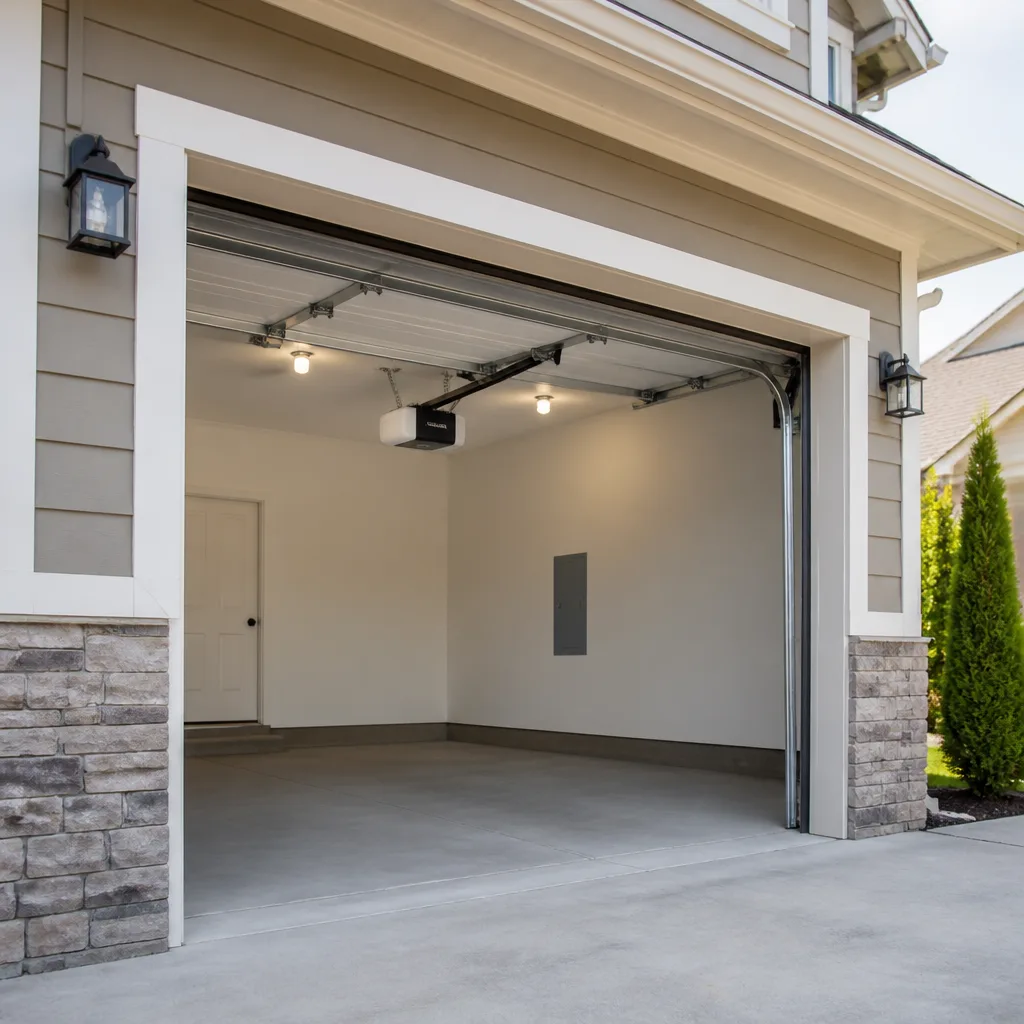 LiftMaster openers
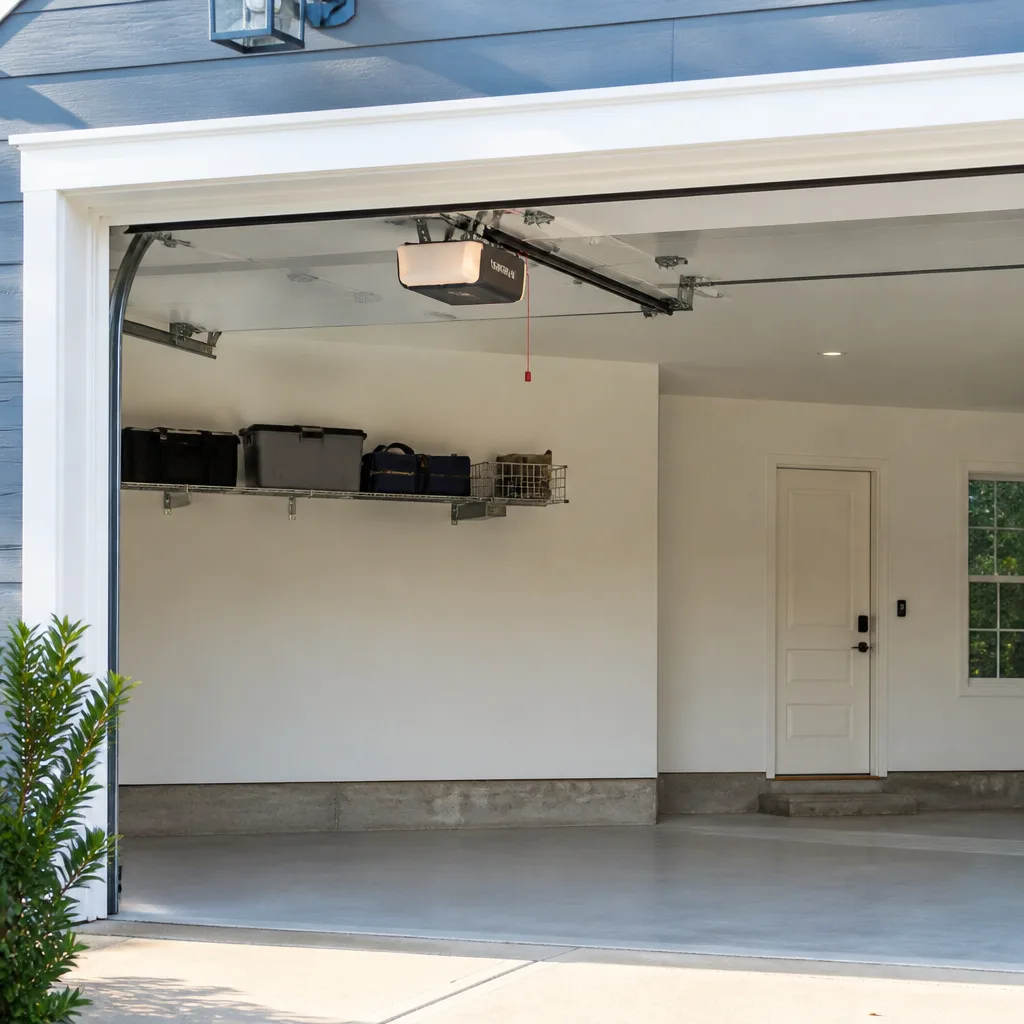 Chamberlain openers
Full 25-point door and opener safety check with every visit - springs, cables, rollers, tracks, and your LiftMaster or Chamberlain opener included
You get a price before we start. It does not change when the pro arrives.
Get your free estimateDIY vs Professional Garage Door: The Winchester Homeowner’s Decision Guide
Replacing a garage door bottom seal is a DIY task most homeowners can complete in about 20 minutes with a pair of pliers and a $25 length of rubber. Replacing a torsion spring on a door that weighs 200 pounds is a task that sends roughly 2,000 people to emergency rooms across the country each year. These two jobs are not on the same decision spectrum, and treating them as one category called “garage door repair” is how homeowners get hurt. This guide draws the line at the component level, so a Winchester homeowner can decide task by task instead of guessing at their own general handiness.
Quick Answer
Some garage door jobs are safe and sensible DIY, and some are hard-stop professional work. Bottom seals, weather stripping, rollers on extension-spring doors, and sensor realignment are fair game for a careful homeowner. Torsion spring replacement, cable replacement on a loaded drum, and any task that requires releasing stored spring tension are professional work regardless of skill level, because the stored energy in those parts can cause serious injury and the tools to do it right aren’t sold at a hardware store. Everything in between gets decided by one test: if the tool costs more than the service, hire it out.
Styles & brands we work with
- Raised-panel steel
- Carriage house
- Modern flush
- Full-view glass
- LiftMaster openers
- Chamberlain openers
Table of Contents
- Where the Line Actually Falls
- The Hard-Stop List: Never DIY These
- The DIY-Friendly Tasks, Step by Step
- The Tool-and-Cost Threshold Test
- How to Document a DIY Repair So It Doesn’t Become a Liability
- What a Fair Professional Quote Looks Like
- Common Mistakes to Avoid
- When to Call a Professional
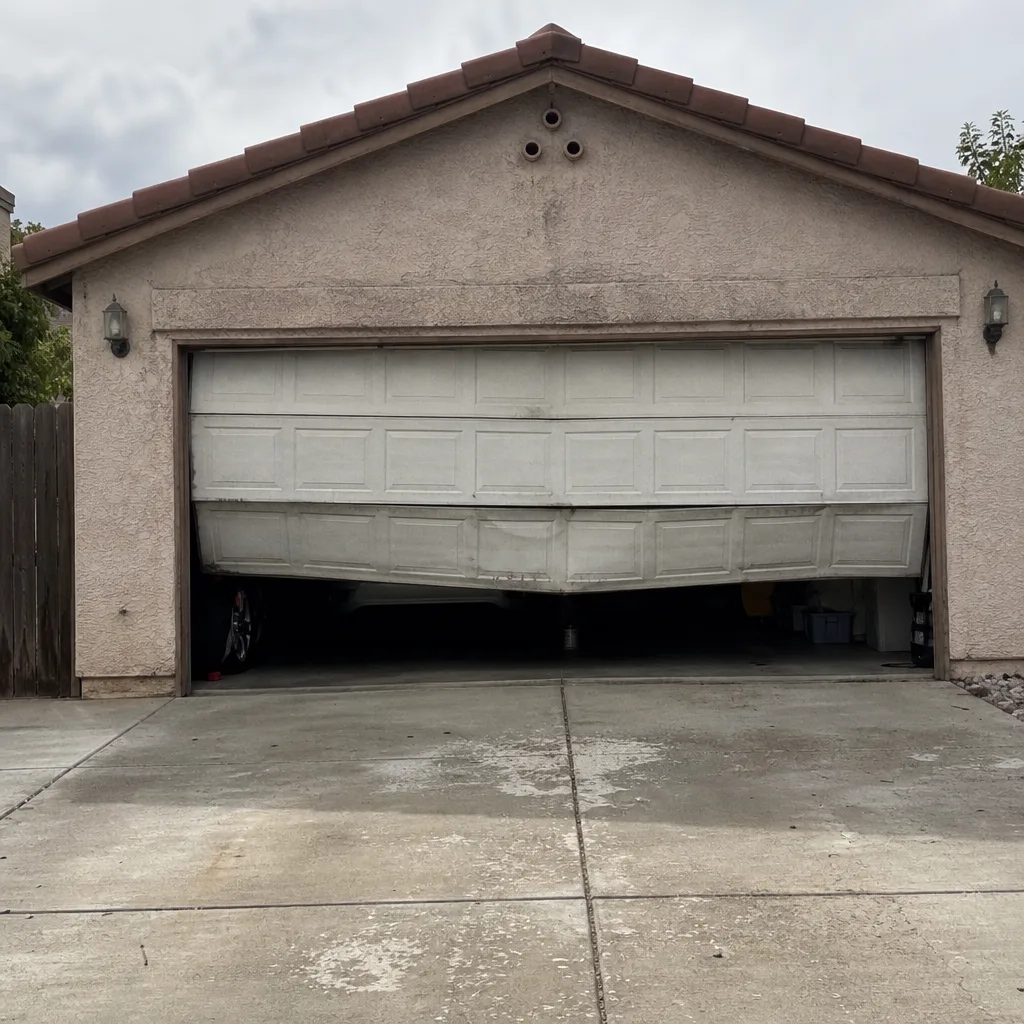 Before
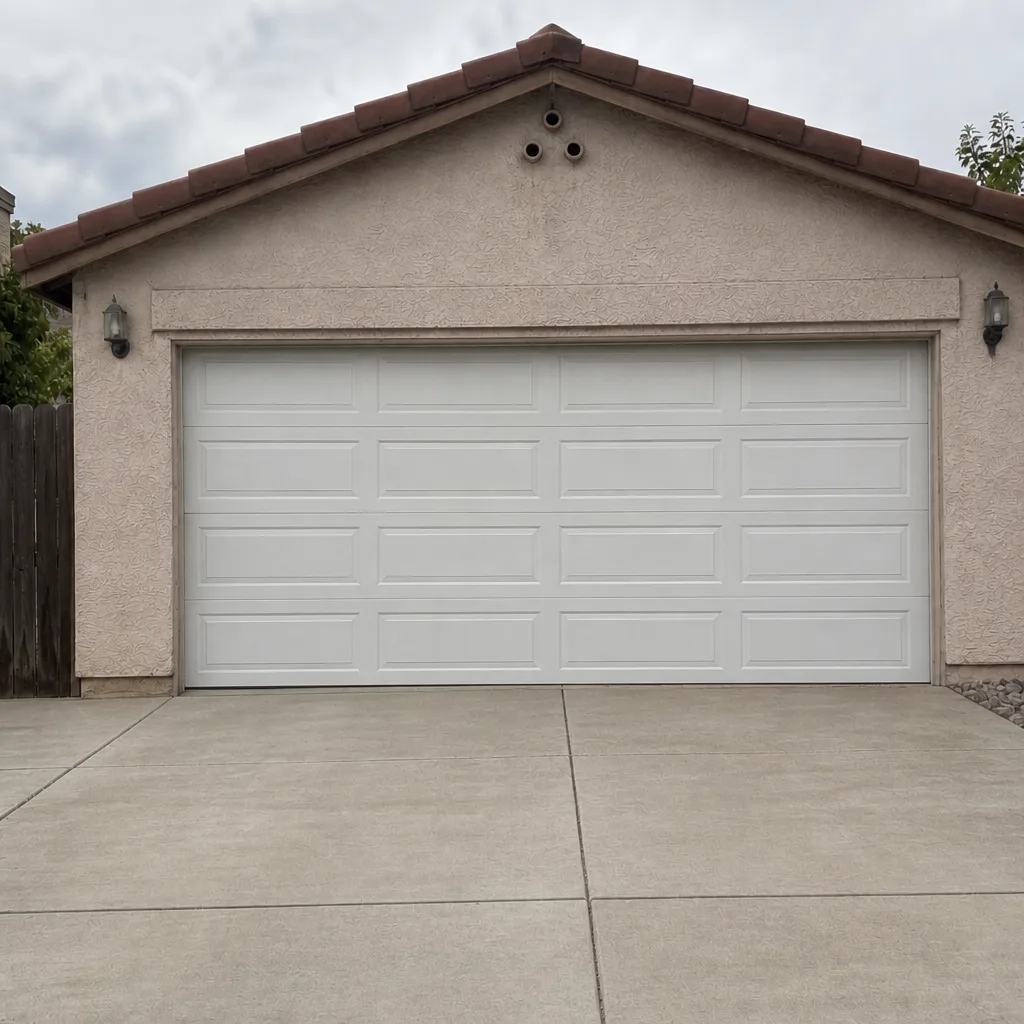 After
Where the Line Actually Falls
Most DIY guides blur every garage door repair into one encouraging list because “comprehensive” reads better than “it depends.” That’s the wrong frame for this trade. A garage door is a balanced system under constant tension, and the parts split into two groups by how much stored energy they carry and what happens when that energy releases unexpectedly.
The line isn’t about whether you’re handy. We’ve watched capable homeowners who remodel their own kitchens wisely stop at a torsion spring, and we’ve watched people who’ve never held a socket wrench safely swap a bottom seal on a Saturday morning. The dividing question is mechanical: does this task require managing a load?
- Tension-free tasks – bottom seals, weather stripping, most sensor work, and rollers on an extension-spring door (a door with springs that run along the horizontal tracks rather than a shaft above the door). The door’s weight is held by the springs and the tracks; you’re replacing a part, not managing the weight.
- Loaded tasks – torsion springs, cables wrapped on a drum, and anything that touches the counterbalance system. The spring or cable is holding hundreds of pounds of force, and releasing it the wrong way is the injury event.
Winchester homes sit in a desert climate that punishes the parts on both lists differently. The dry air and summer heat run 100°F-plus for weeks, which dries out bottom seals and weather stripping until they crack and pull away from the door. That’s exactly why the DIY-friendly repairs here are the ones homeowners attempt most often: they fail first. Meanwhile, the constant thermal cycling weakens springs and stresses cables, which is why loaded-system failures show up across Winchester this time of year too. The climate drives both lists at once, but only one list is safe to tackle yourself.
The Hard-Stop List: Never DIY These
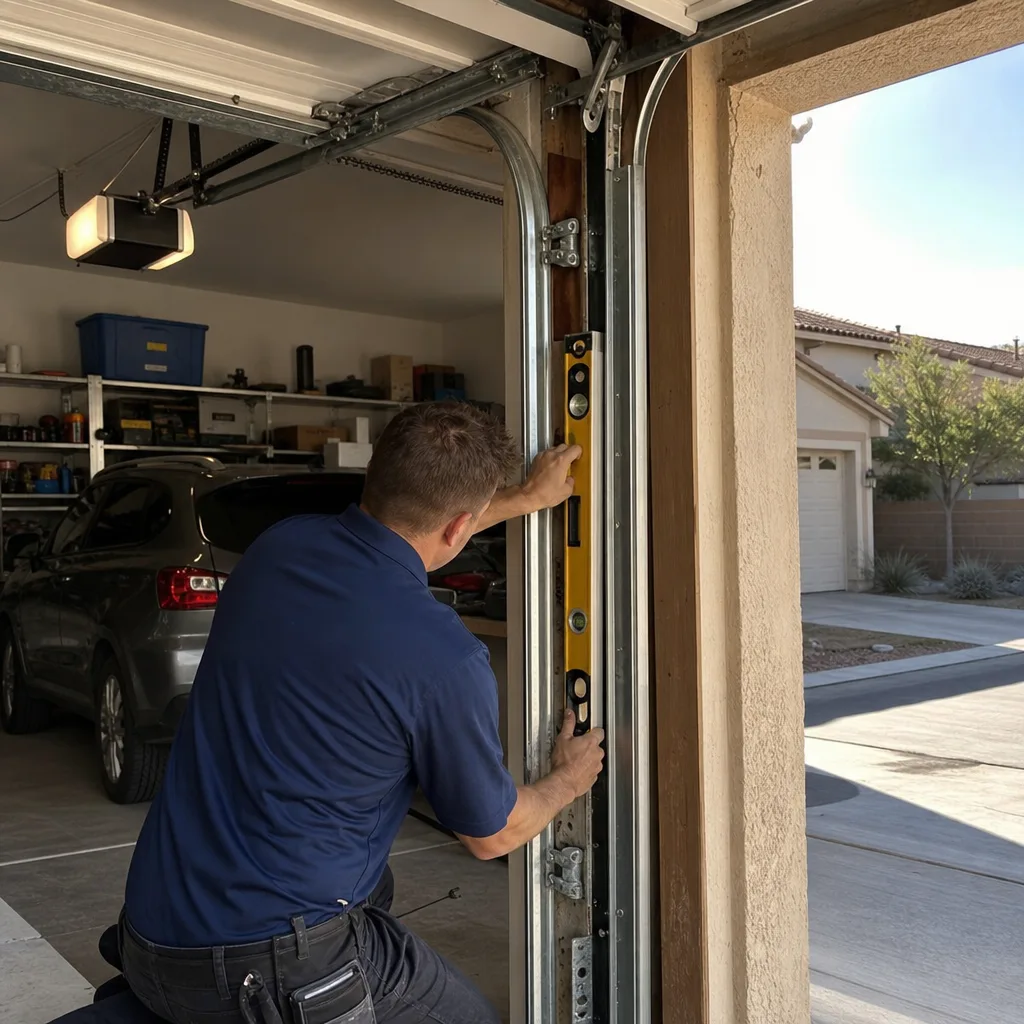
These three tasks require professional tools and training regardless of how skilled a homeowner is. This isn’t caution for its own sake. A torsion spring on a standard residential door stores enough energy to lift that door, and if it lets go while you’re winding or unwinding it with the wrong bar, it can break a wrist or worse.
- Torsion spring replacement. A torsion spring is the coiled spring mounted on a shaft above the door that counterbalances the door’s weight. Winding and releasing it requires a proper winding bar and knowing how many quarter-turns the specific spring needs, based on its wire diameter and length. A spring wound incorrectly can fail catastrophically or leave the door unbalanced enough to come off its tracks.
- Cable replacement on a loaded drum. The lift cables run from the bottom corners of the door up to drums on that same shaft, and they’re under tension whenever the door is closed. Cutting or loosening a loaded cable releases that tension instantly. A cable can whip and cause serious lacerations.
- Any work that requires releasing stored spring tension. That includes adjusting the springs to fix a door that’s hard to lift or slams down, and it includes repositioning the drums. If the job means the spring has to come out of tension, it’s off the DIY list.
Here’s the part that catches people: a broken spring often doesn’t announce itself dramatically. It lets go with a sharp bang, and then the door won’t open because the opener is trying to lift dead weight. That’s not a moment to try a repair. It’s a moment to stop and get a pro. In our experience, the homeowners who get hurt are the ones who saw the broken spring, watched a video, and decided the winding bars were a small purchase. The tool and cost test below is the safe way to think about it.
The DIY-Friendly Tasks, Step by Step
These tasks are within reach for a careful homeowner with basic tools. Each one is a part swap, not a load management job. Work on a door that’s fully closed, and never stand under a door that’s raised while you’re working on it.
Bottom seal replacement
- Measure the width of your door and buy a replacement seal in that width, matched to the channel type on your door (some slide in, some nail on).
- With the door closed, pull the old seal out of its retainer channel, or pry the nailed version loose, working from one end to the other.
- Clean the channel so the new seal seats fully.
- Feed the new seal in from one end and slide it through, or nail it in place, trimming the ends flush.
- Open and close the door once to check the seal contacts the floor evenly across the width.
Weather stripping swap
The side and top weather stripping around the frame is a similar pull-and-press job. Vinyl or foam strips push into a kerf slot or nail onto the frame. Replace any section that’s cracked or pulling away, and check the top strip while you’re up there since heat drives it loose too.
Roller replacement on extension-spring doors
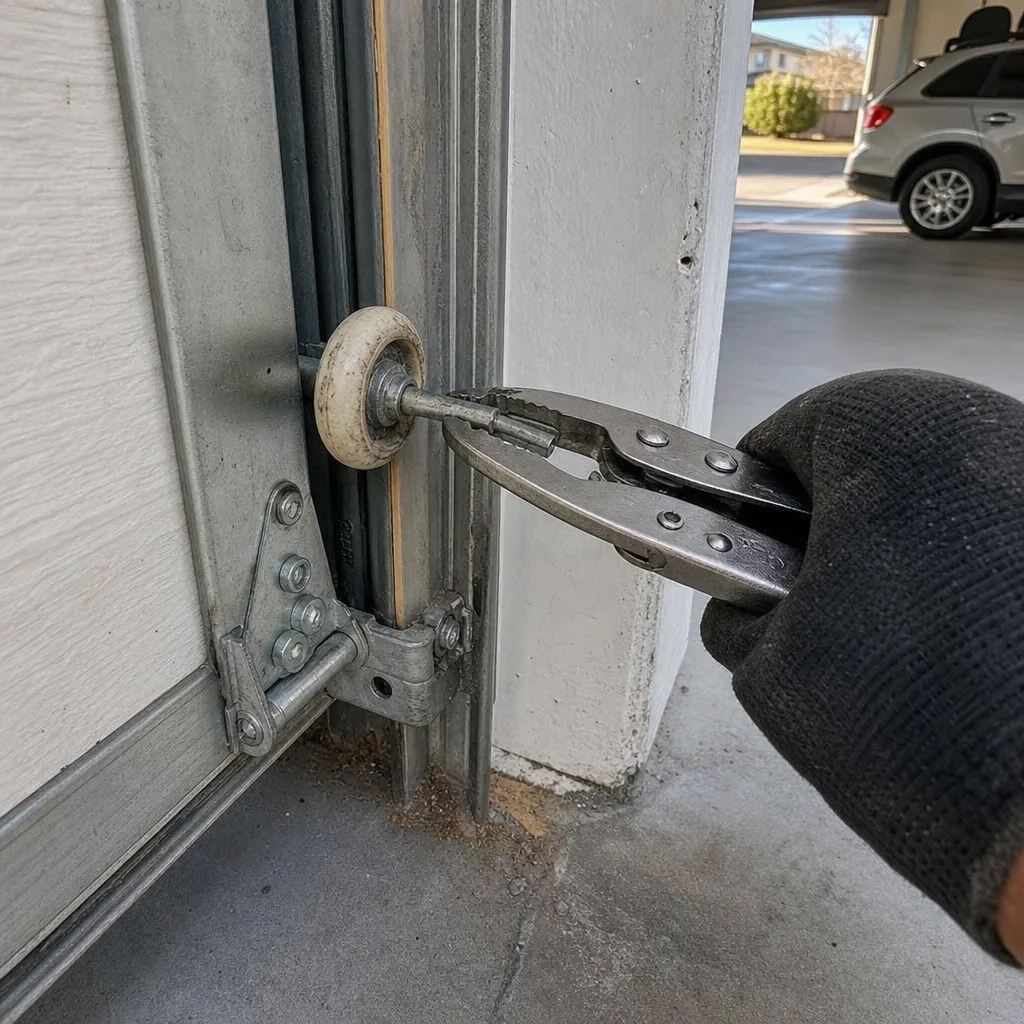
This one is DIY only on a door with extension springs (springs running along the horizontal tracks, not a torsion shaft above the door). With the door closed, the rollers at the hinges aren’t carrying load. Remove one hinge, slide the old roller out of the track, slide a new one in, and reattach. Do one roller at a time. Do not attempt this on a torsion-spring door where the rollers may be under different load.
Basic sensor realignment
The safety sensors at the bottom of the tracks are two small eyes that stop the door if something crosses the beam. If the door reverses for no reason, the eyes are usually misaligned or dirty. Wipe the lenses, then nudge each sensor until its indicator light comes on steady. No tools beyond a screwdriver. If they won’t stay aligned, a bracket may be bent, and that’s a call.
If any of these tasks turns up a bigger problem underneath (a cracked panel, a frayed cable, a door that won’t stay balanced), stop and read the hard-stop list again. And if you decide to hire one of these smaller jobs out, our Garage Door Repair in Winchester page covers how that works.
The Tool-and-Cost Threshold Test
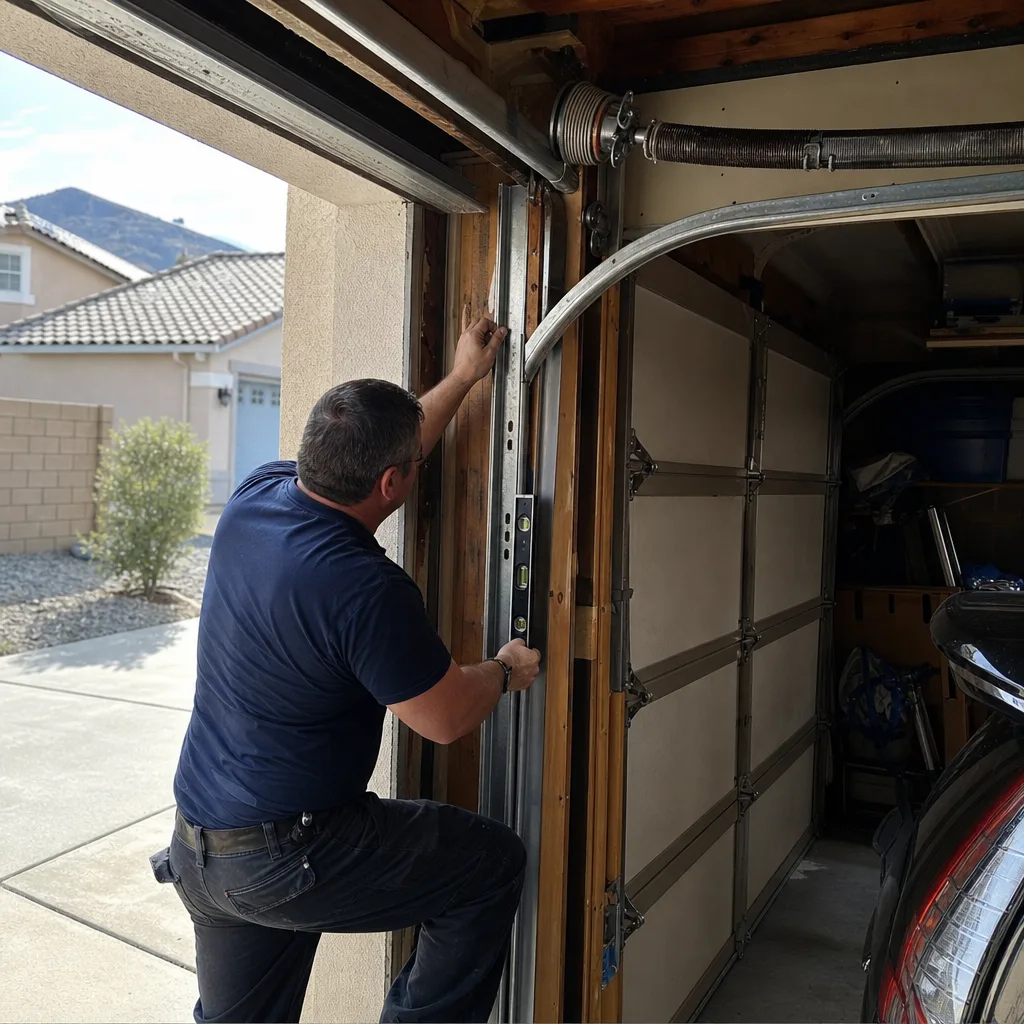
Here’s the test that settles most in-between jobs: if the tool required for the job costs more than the professional service, the DIY case collapses on economics alone. You don’t save money buying a tool you’ll use once to do a job a pro can do faster and with a warranty behind it.
Run the numbers on the obvious example. Torsion spring work requires a pair of winding bars, a proper set of them, plus the spring matched to your door’s weight and wire diameter, plus the knowledge of how many turns it takes. Winding bars aren’t expensive individually, but the job still lands in professional territory because of the safety risk, not the tool cost. The cost test matters more for the gray-area jobs:
- A one-time job where the specialty tool costs more than the service – hire it out. You keep the warranty instead of the tool.
- A job you’ll repeat or that improves your home long-term, with a tool that costs less than the service – reasonable to DIY.
- A job where the tool is cheap but the failure cost is high (anything on the loaded list) – hire it out. The economics don’t apply to safety.
There’s a second, quieter threshold: time. A pro does a bottom seal in 15 minutes because they’ve done hundreds. A first-timer does it in 40 with a trip to the hardware store. Neither is wrong. But when the same math applies to a cable job, the pro’s 30 minutes isn’t just faster, it’s the difference between a repair and an injury. If you’re weighing a bigger decision like a whole new door, that’s a different conversation entirely, and our Garage Door Installation in Winchester page covers what that involves.
How to Document a DIY Repair So It Doesn’t Become a Liability
If you do a DIY repair, document it. This matters at resale, at a home inspection, and if the door ever needs warranty work. A future buyer or inspector who sees an undocumented repair assumes the worst. A neat record shows the work was done properly by someone who cared.
- Photograph before, during, and after. A photo of the failed part, one of the replacement going in, and one of the finished job with the door closed. Date-stamp them or note the date.
- Note the part number and the date. Write down the manufacturer and part number of whatever you replaced, plus the date. Keep the receipt with it.
- Note the brand and model of the door and opener. If you don’t know them, they’re usually on a sticker on the opener motor housing or the door’s end stile.
- Keep the record with your home files. If you ever sell, this is the kind of paper trail that answers the inspector’s question before they ask it.
This is the same principle we work to. Our founding rule is that the customer sees the failed part before anyone quotes a replacement – Clause 4 of The Haven Standard – and every visit closes with a documented photo record of what was found and what was done. A homeowner’s own record is the DIY version of that same discipline. If you’re not sure whether your repair crossed into loaded-system territory, the record is also how a pro can check your work without guessing.
What a Fair Professional Quote Looks Like
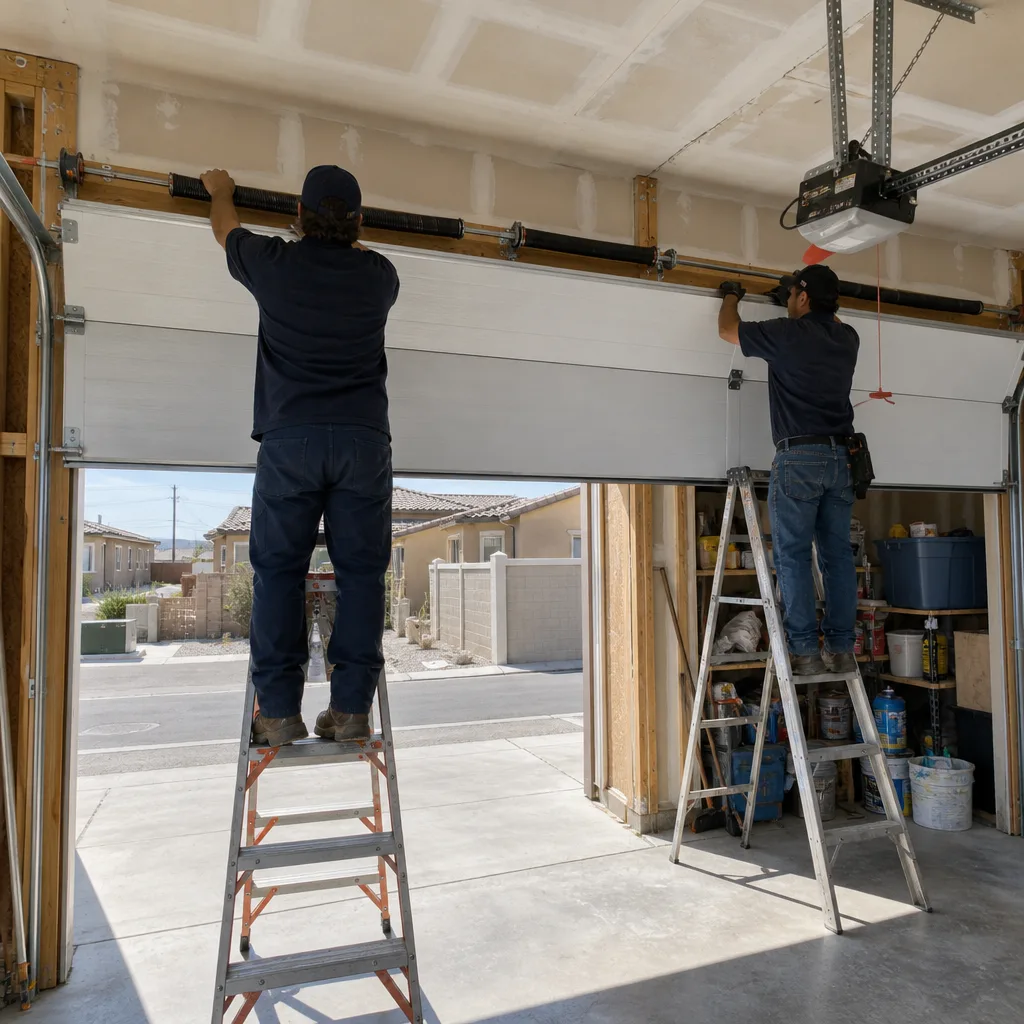
When you hand off a hard-stop job, you should be able to verify the price is fair before anyone touches the door. A fair quote for torsion spring or cable work in Winchester names the part, states the price in dollars, and describes the scope in writing.
What to look for on the paperwork:
- The failed part named specifically. “Torsion spring, 0.25-inch wire diameter, clean break at the coil” – not “spring assembly.” A quote that won’t name the part can’t be verified.
- A flat price in dollars, before work starts. Not a range, not “starting at,” not “call for pricing.” Clause 1 of The Haven Standard exists because a written price before any work is the whole point. You shouldn’t be guessing at the invoice when the job’s done.
- A written scope. What’s being replaced, what’s being adjusted or inspected while the door is open, and what the warranty covers.
- The technician’s license number on the page. The local business holds its own license and insurance, and the number should be visible, not buried in fine print.
If you’ve already got a written estimate from another company and want a second read on it, bring the paperwork. We offer a free second opinion on any competing written estimate, no coupon needed. That’s a fair way to check that the professional option is priced honestly before you commit. For the bigger system jobs like opener failures and logic board trouble, our Garage Door Opener Repair & Installation in Winchester page goes deeper.
Common Mistakes to Avoid
- Treating a loaded spring like a part swap. The winding bar isn’t a socket wrench with extra reach. Springs store enough force to injure you, and a “quick adjustment” is where injuries happen.
- Buying the winding bars to “save money.” The tool cost test doesn’t apply to safety jobs. The bars are cheap; the failure isn’t.
- Doing a roller swap on a torsion door. On extension-spring doors, the rollers at closed hinges are unloaded. A torsion door’s roller and drum work is a different job. When in doubt, it’s a call.
- Ignoring the seal until the floor floods. In Winchester, a dried-out bottom seal lets in blown dust and summer monsoon runoff. Catch the cracks early and the swap stays a 20-minute job.
- Doing a repair with no record. An undocumented DIY repair is a liability at inspection and resale. Photograph it, note the part number and date, and file it.
- Watching a video and calling it training. A five-minute video doesn’t teach you the stored energy in a wound spring. The physics doesn’t care how many views it has.
- Missing the real cause under a small symptom. A door that reverses on its own is usually a sensor, but sometimes it’s a failing limit switch. If a sensor realignment doesn’t hold, stop and get it checked.
When to Call a Professional
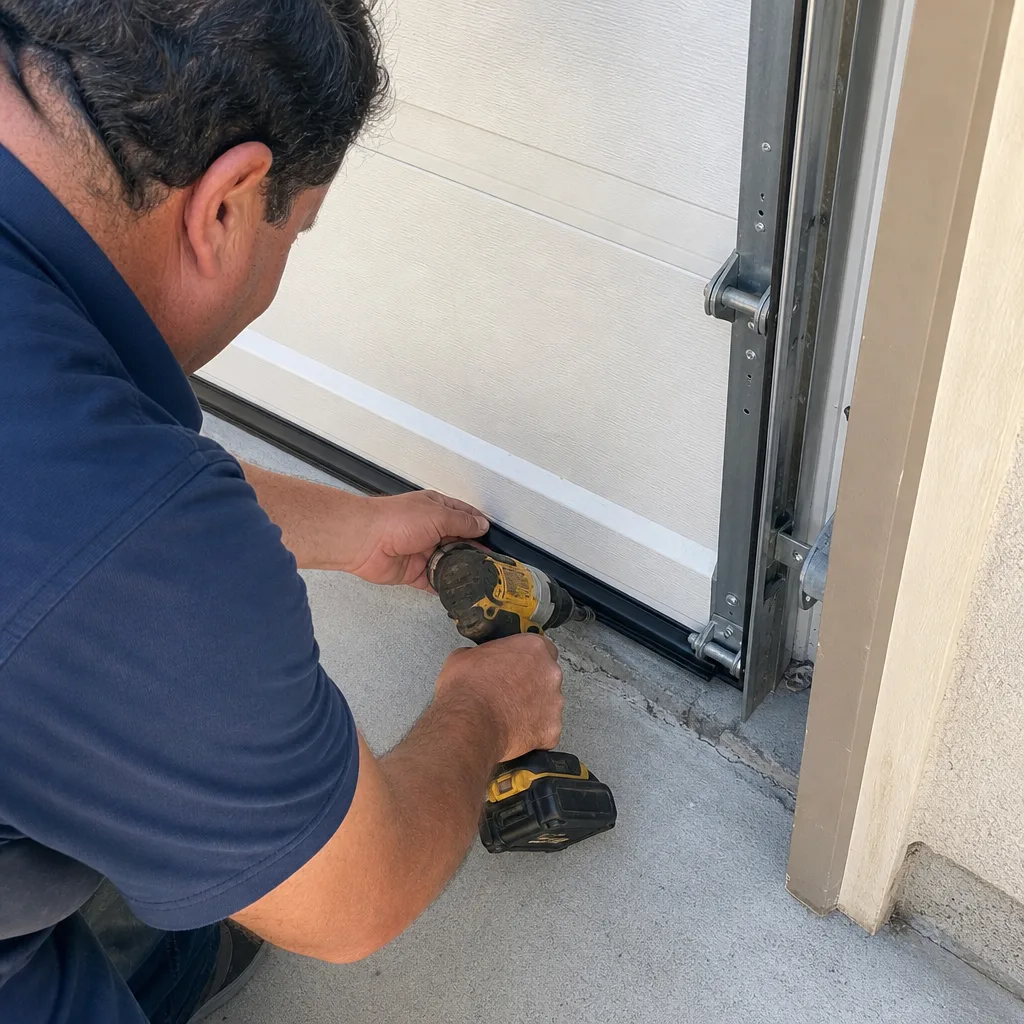
Call a pro for any task on the hard-stop list, full stop: broken or worn torsion springs, loaded cable work, and any adjustment that requires releasing spring tension. Call a pro if a door is off its tracks, if a panel is bent or cracked, if the opener’s motor runs but the door doesn’t move (a stripped gear or trolley carriage), or if a repair you attempted left the door unbalanced. If you own a Chamberlain or Genie opener and the logic board has failed, that’s a pro job too. If you’re simply not sure whether a task is loaded, that uncertainty is itself a reason to call.
Servo Garage Doors Winchester offers free estimates in Winchester – call (855) 517-0284. Every job comes with a written price before any work starts and a documented photo record when the technician leaves. Our technicians have up to 11 years of experience, and they service all eight major brands, including Clopay and Amarr doors alongside the openers above.
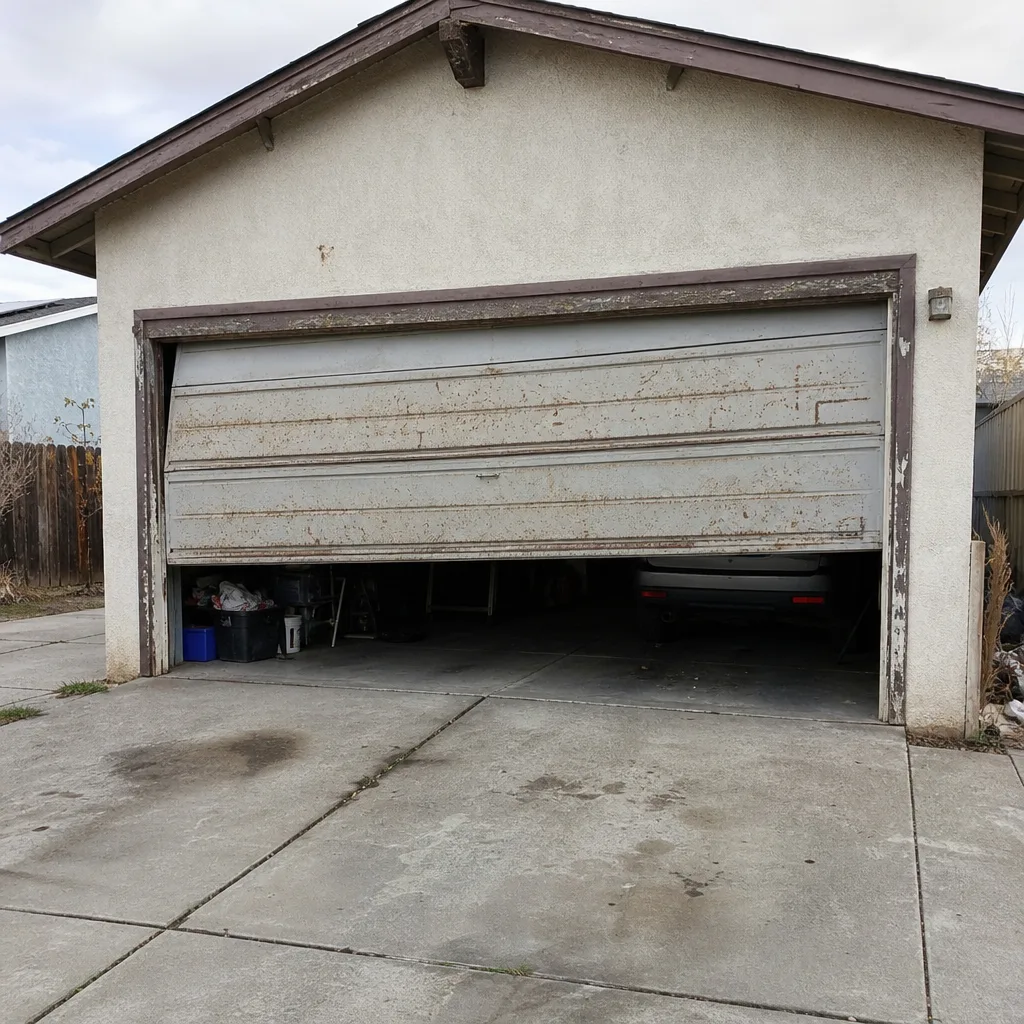
See the difference
BeforeAfter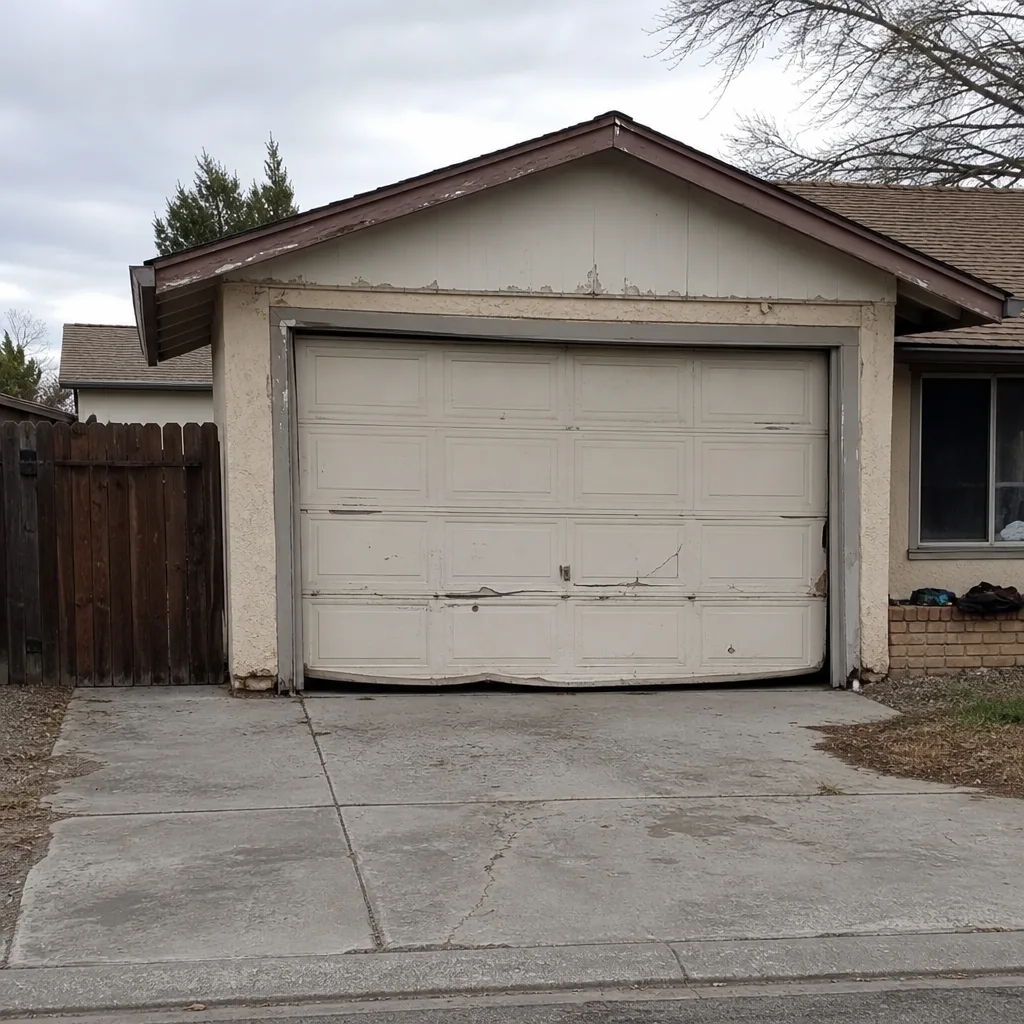 Before
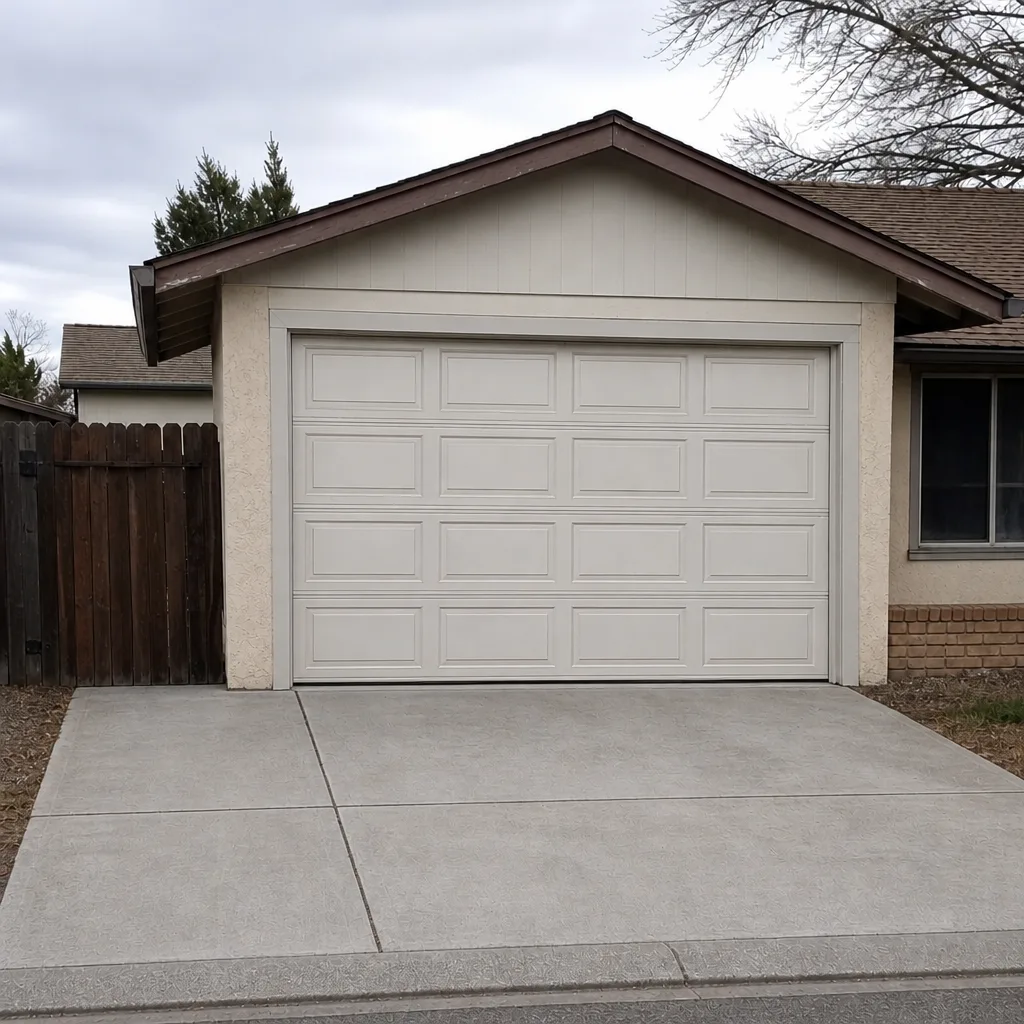 After
 Before
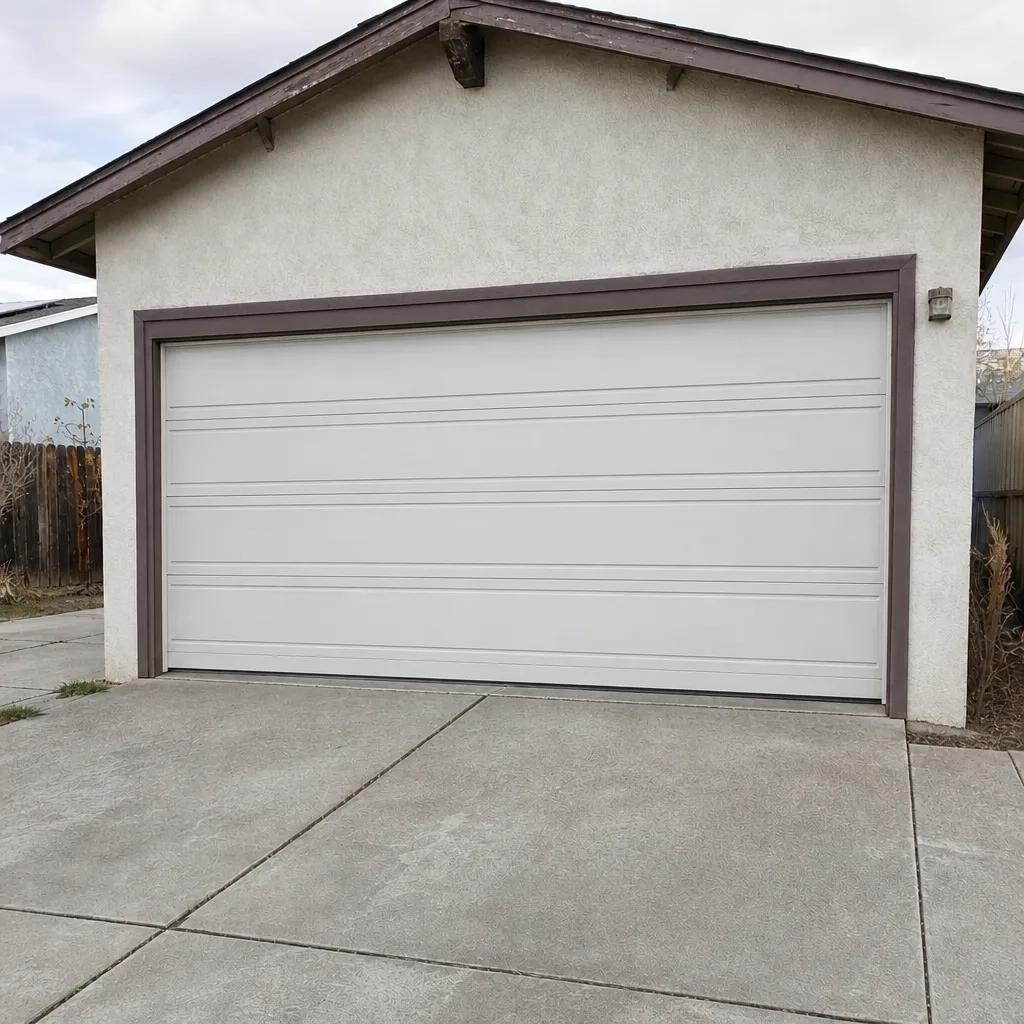 After
Frequently Asked Questions
No. Torsion spring replacement requires winding bars and the knowledge of how many quarter-turns the specific spring needs, and the stored energy can cause serious injury if released incorrectly. In our experience, this is the single most dangerous job on the entire door. Call (855) 517-0284 for a written price before the work starts.
Bottom seal replacement, weather stripping, basic sensor realignment, and roller replacement on extension-spring doors are safe for a careful homeowner. Any task that requires releasing stored spring tension is not. If you’re unsure which category a job falls into, call us for a free estimate and we’ll tell you straight.
Prices vary with the spring and door, and we quote a flat written price before any work begins, so you never get an invoice that’s bigger than the quote. Call (855) 517-0284 and we’ll give you the range on the page and confirm it in writing for your door.
Start with a DIY realignment: wipe the lenses and nudge each sensor until the indicator light stays on steady. If they won’t hold alignment, a bracket may be bent, which is a professional fix. Call us if the realignment doesn’t stick.
Call and we’ll tell you what’s available for your door – emergency garage door calls are answered by a live person 24/7. The technician is documented, the price is written before the work, and you’ll get a text with the technician’s name and on-the-way confirmation, not a callback window.
No. Clause 1 of The Haven Standard means the flat price and the written scope are agreed before anyone starts work, so the number you accept is the number you pay. Call (855) 517-0284 for a free estimate.
The Bottom Line
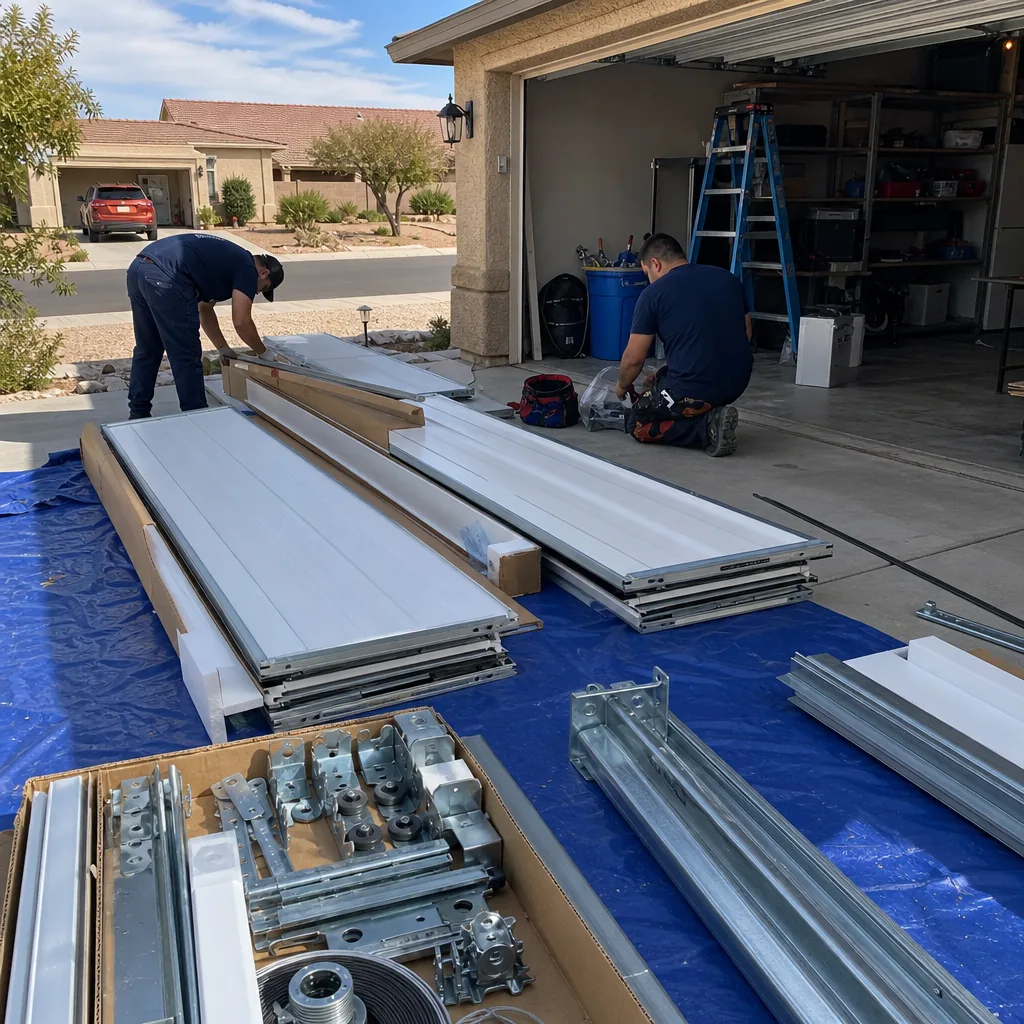
The DIY vs. professional question for a garage door doesn’t have one answer, it has two, split by the component. Seals, weather stripping, sensor realignment, and extension-spring rollers are fair game for a careful homeowner. Torsion springs, loaded cables, and any job that releases stored spring tension are professional work no matter how handy you are. Use the tool and cost test for the gray areas, document anything you do yourself, and when you hand off a hard-stop job, insist on a written price and a named part before anyone touches the door. That’s the whole guide in one paragraph, and it’s the difference between a 20-minute repair and an emergency room visit.
Whether you’re doing the next job yourself or having it quoted, Servo Garage Doors Winchester is here for the full picture. Our technicians have up to 11 years of experience, every job carries the 365-Day Done Right Promise, and background-checked technicians arrive on every visit. Read more on Servo Garage Doors Winchester home to see how The Haven Standard works, and when the job is out of DIY territory, call (855) 517-0284 for a free estimate – we’ll quote you a flat written price before any work starts and leave you with a documented photo record when we’re done.
Written by the team at Servo Garage Doors Winchester.