
Last updated November 18, 2026
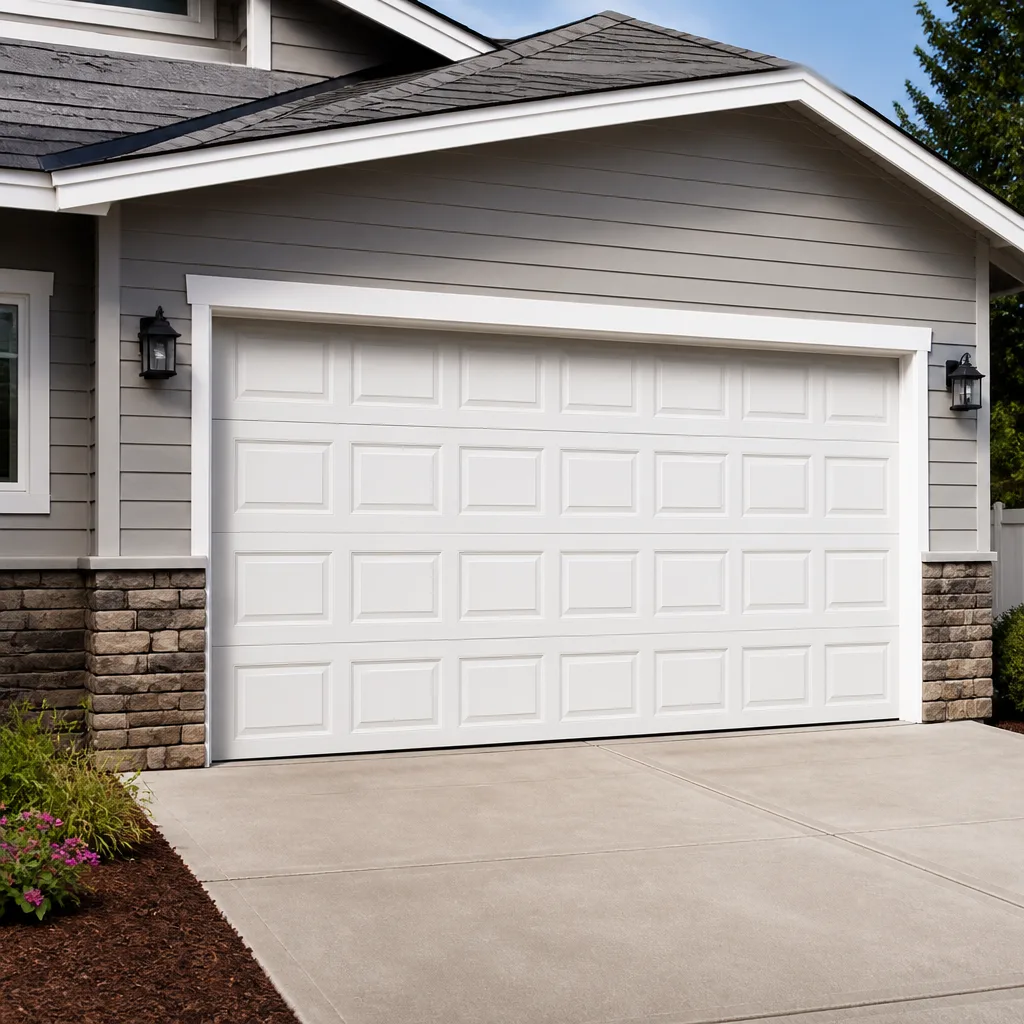 Raised-panel steel
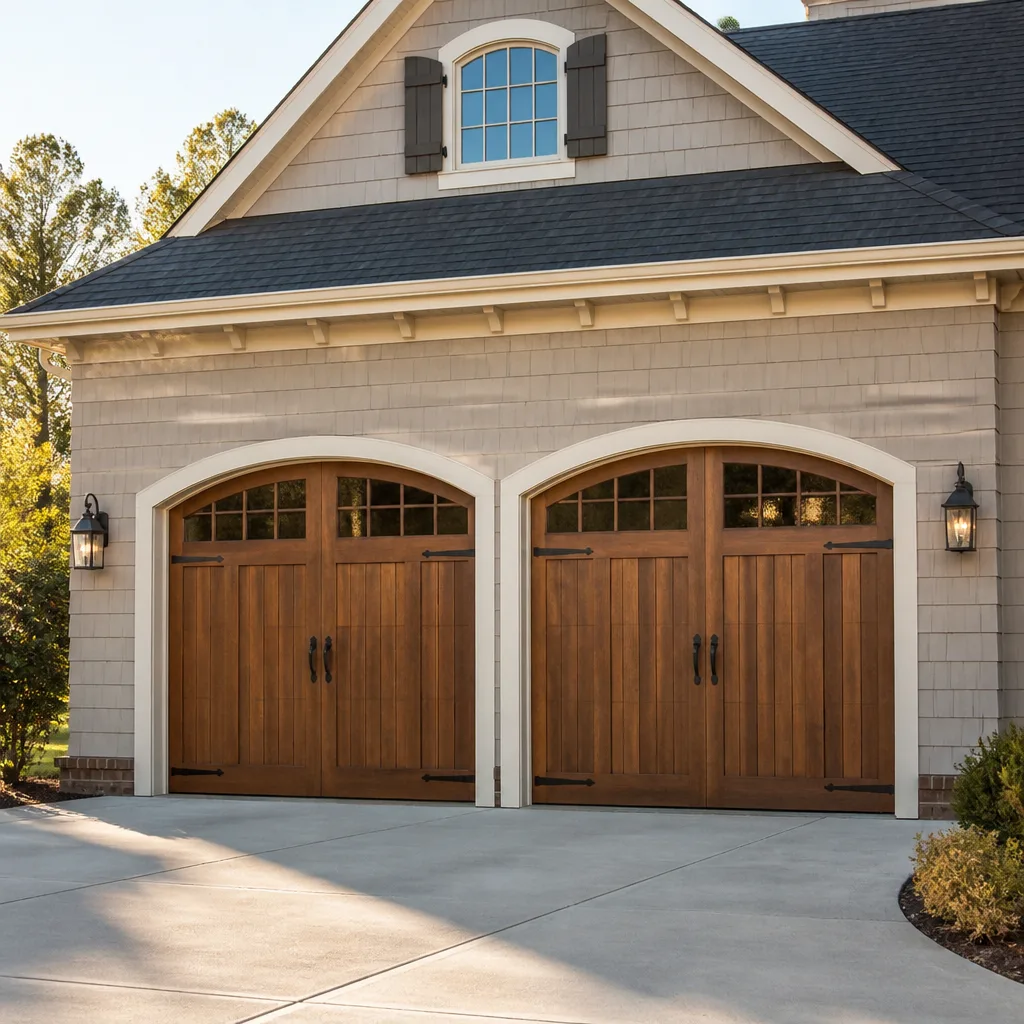 Carriage house
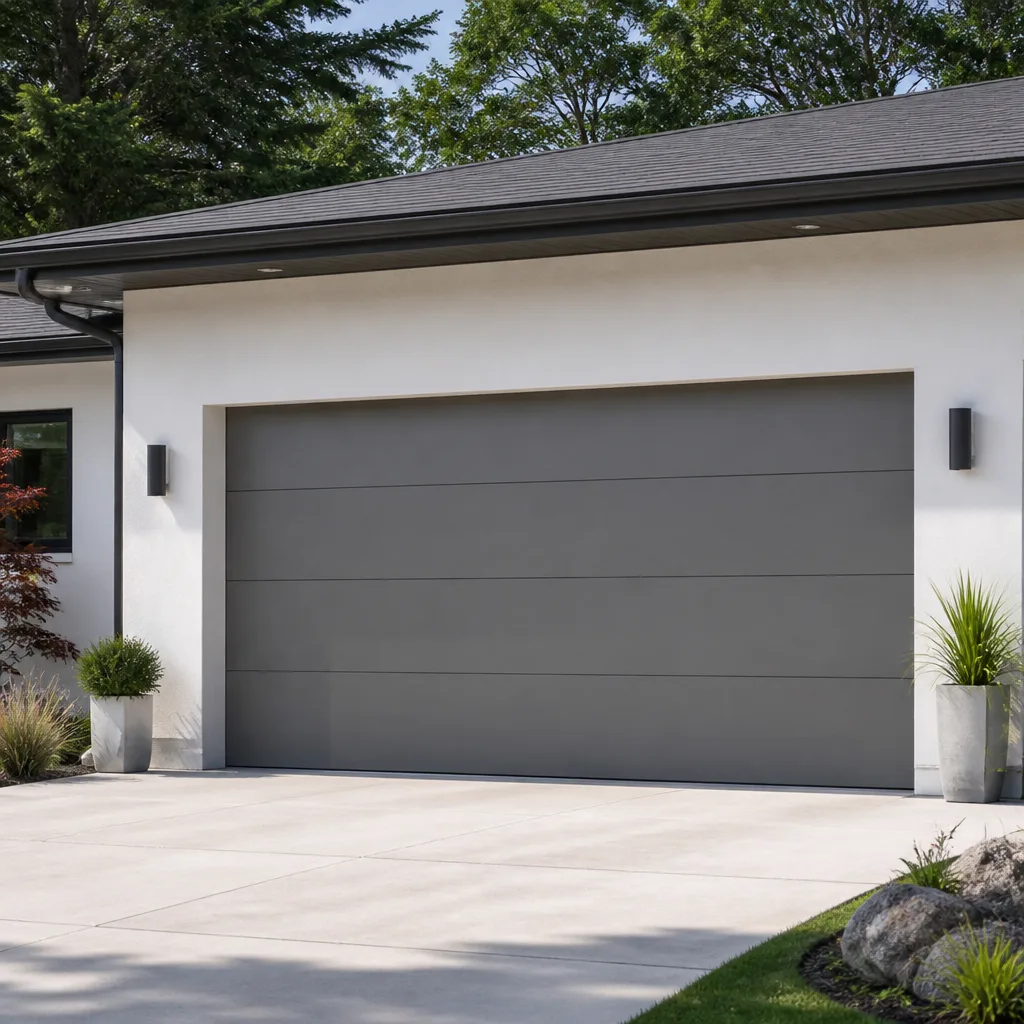 Modern flush
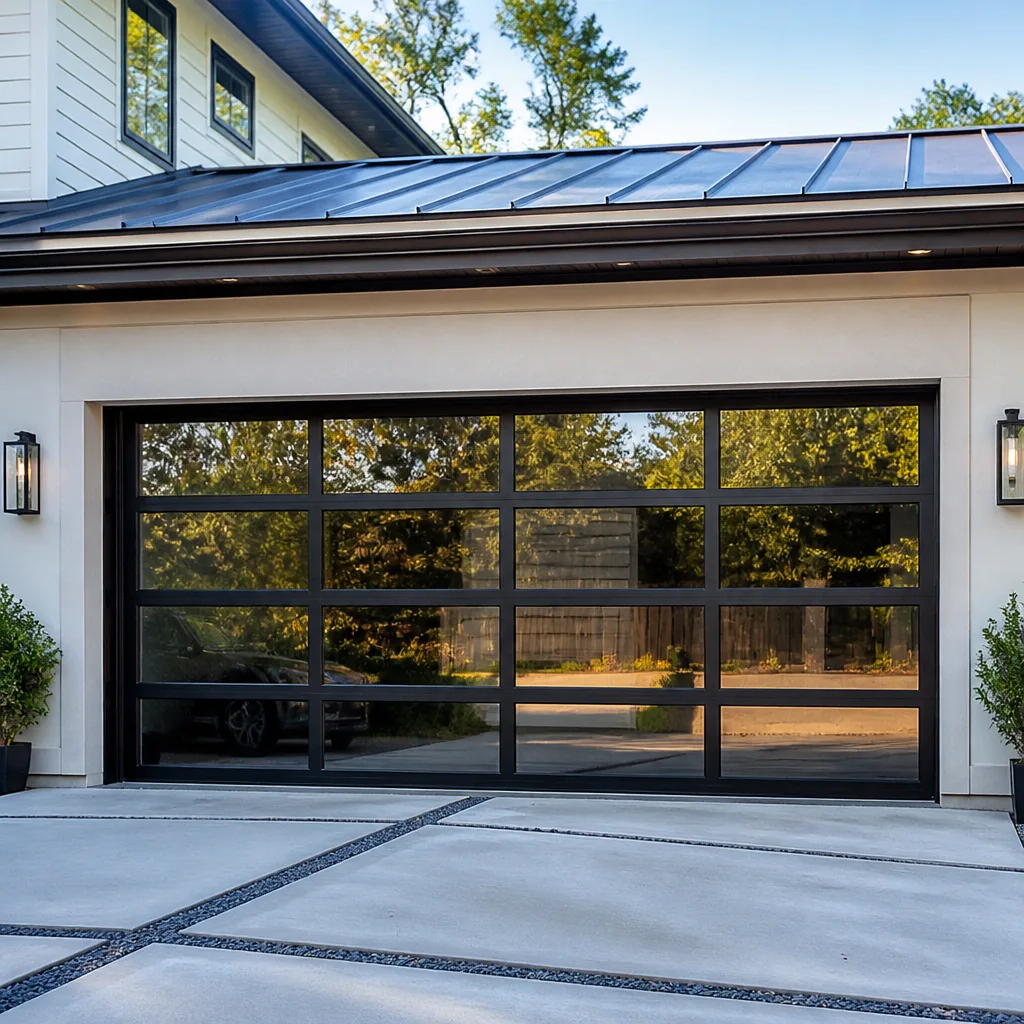 Full-view glass
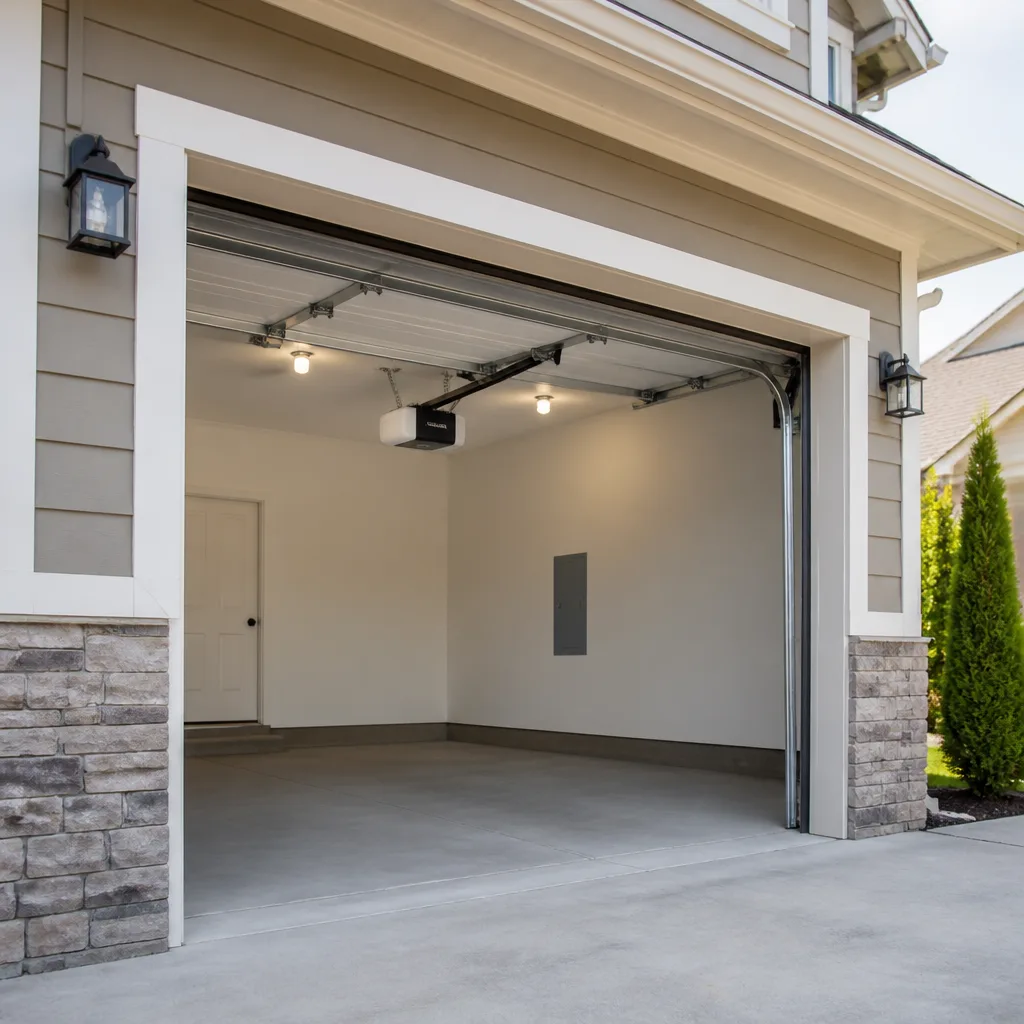 LiftMaster openers
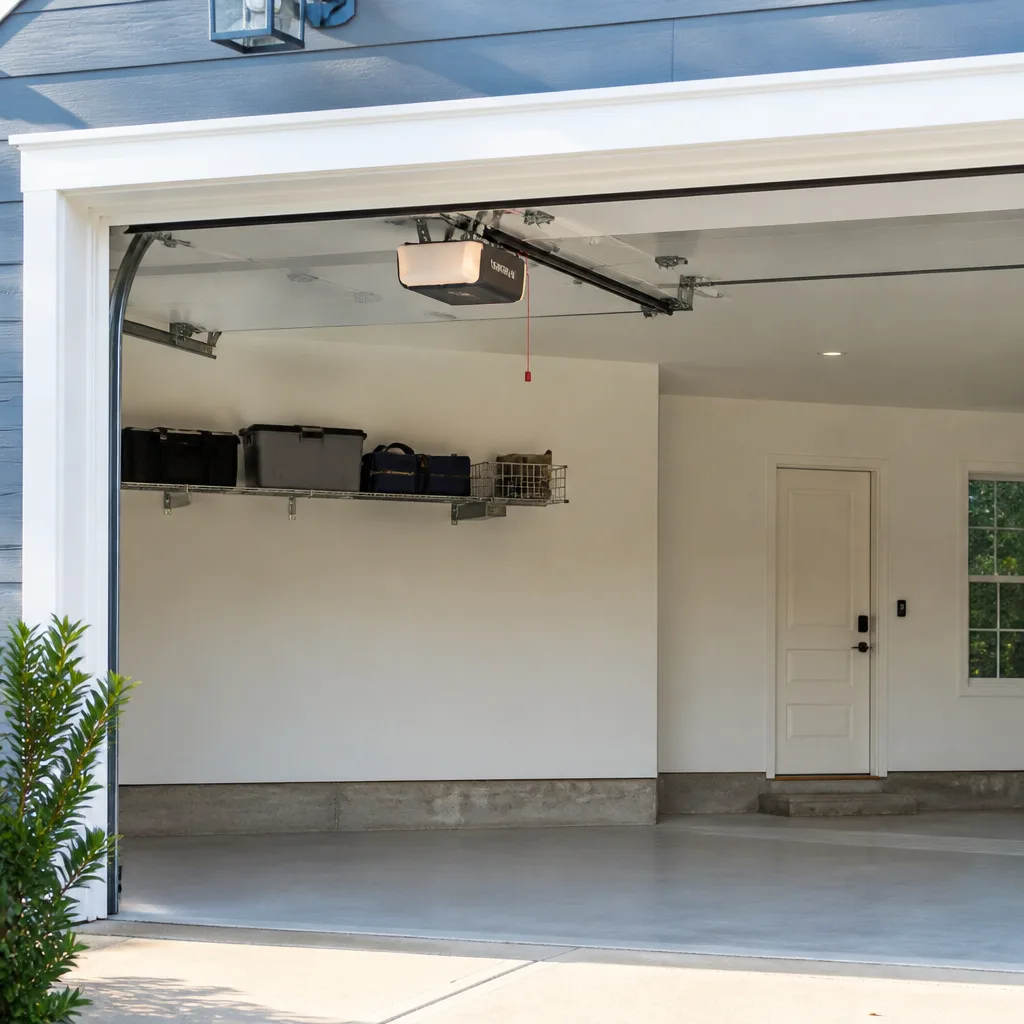 Chamberlain openers
Full 25-point door and opener safety check with every visit - springs, cables, rollers, tracks, and your LiftMaster or Chamberlain opener included
You get a price before we start. It does not change when the pro arrives.
Get your free estimateThe Complete Guide to Garage Door in Winchester
A typical residential garage door has around eleven moving parts that wear on their own schedules, and most homeowners can name two: the spring and the opener. That gap is expensive. When you can’t name the part, you can’t question the quote, so the recommendation delivered at your door goes unchallenged. This guide closes the gap before anyone arrives at your house. You’ll get the full component map, the Winchester-specific load factors that shorten part life here, honest price ranges, and a decision tree for repair versus replacement. By the end, you should be able to name the failed part before the technician does.
Quick Answer
Most garage door problems in Winchester come down to one of four things: a broken torsion or extension spring, a worn bottom seal or weather stripping, a failing opener logic board or trolley carriage, or a door that’s simply reached the end of its cycle rating. Springs typically run $180 – $340 installed, opener repairs $120 – $280, and full door replacement $1,400 – $4,200 depending on size and material. The right call depends on the door’s age, its cycle count, and how much of the hardware is original.
Styles & brands we work with
- Raised-panel steel
- Carriage house
- Modern flush
- Full-view glass
- LiftMaster openers
- Chamberlain openers
Table of Contents
- The Component Map: Eleven Parts, Named and Explained
- Torsion Springs vs. Extension Springs: What Winchester Homes Actually Have
- How Winchester’s High-Desert Climate Wears Your Door Down
- Reading a Cycle Rating Against Your Household’s Daily Use
- Repair or Replace: The Five-Year Cost Decision Tree
- What a Legitimate Written Quote Must Contain
- What You Should Never Do Yourself
 Before
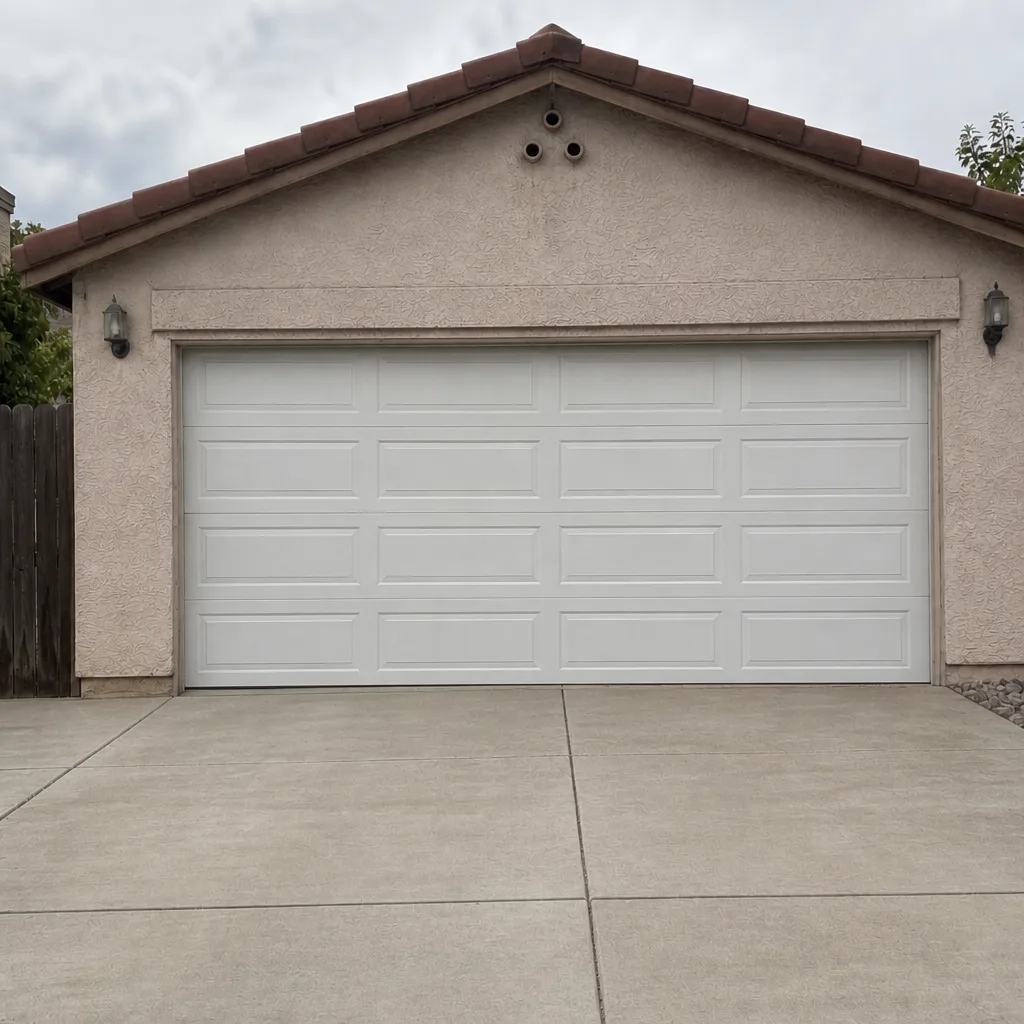 After
The Component Map: Eleven Parts, Named and Explained
Trade vocabulary earns its keep here. Once you know the name of each part, you can hear a diagnosis and know whether it makes sense. Here’s the map, starting from the hardware that does the heavy lifting.
- Torsion spring – the coiled steel spring mounted on a shaft above the door that stores the energy to lift it. On most modern Winchester doors it’s the single point of failure.
- Extension spring – a stretch spring that runs along the horizontal track on older doors. It stretches rather than twists, and when it fails it can travel, which is a safety concern.
- Trolley carriage – the sliding piece the opener pushes along the rail. It disconnects the door from the motor when you pull the release cord.
- Logic board – the circuit board inside the opener that runs the safety sensors, limits, and remote receiver. A lightning surge or age can take it out.
- Limit switch – the component that tells the opener where the fully-open and fully-closed positions are.
- Bottom seal – the rubber strip along the bottom edge that contacts the floor. Wears fastest in full sun.
- Weather stripping – the side and top seals that keep wind, dust, and insects out.
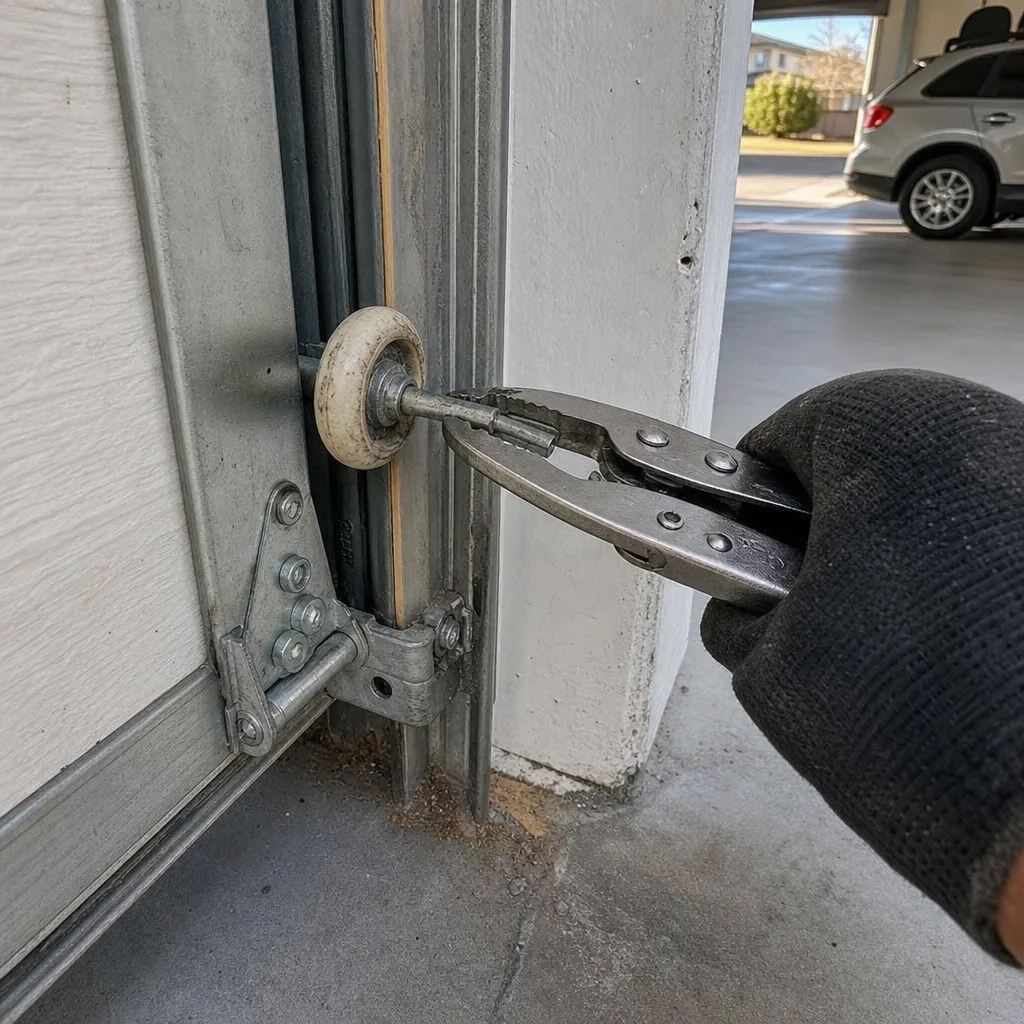
- Hinges and rollers – the pivot points between panels. Rollers ride the track; hinges connect the sections.
- Track – the vertical and horizontal rails that guide the door. Bend one and the whole door misbehaves.
- Cables – the steel cables that connect the bottom corners of the door to the spring system. Under high tension.
- Panels – the sections that make up the door itself. Often the decision point between repair and replacement.
When you call Servo Garage Doors Winchester, the technician photographs the failed component before quoting a replacement. Clause 4 of The Haven Standard is built on exactly that rule: you see the part that failed, not a story about it.
Torsion Springs vs. Extension Springs: What Winchester Homes Actually Have
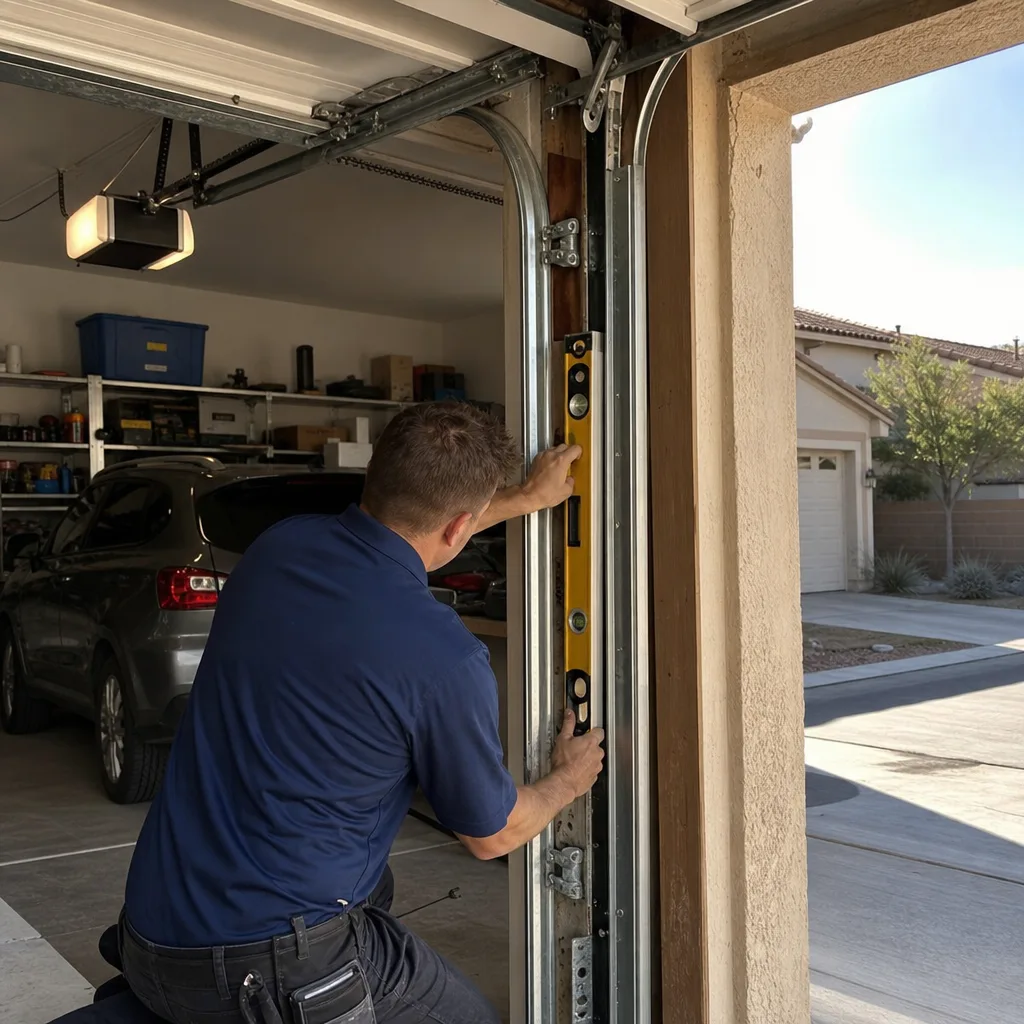
If you have a door installed in the last 20 to 25 years, the odds are good it uses torsion springs. Extension springs are more common on doors from before roughly 1990 and on certain light-weight models. The type matters because it changes repair cost, risk, and how the failure sounds when it happens.
Torsion springs run quieter and last longer, generally speaking, and they use a single pair (sometimes one spring) mounted at the top of the door frame. Extension springs are cheaper but stretch with the door and are more prone to violent failure if nothing catches them.
You can usually tell what you have from inside the garage:
- Look straight up above the door. A horizontal steel shaft with coiled springs perpendicular to it means torsion.
- Look along the top horizontal track on either side. Springs running parallel to the track, connected by cables, means extension.
- Check the door edges for safety containment cables running through the middle of each extension spring. Older doors often lack them.
If you’re not sure what you’re looking at, don’t guess. Springs are under enough tension to cause serious injury, and the safest move is to let a trained technician confirm the type and condition.
How Winchester’s High-Desert Climate Wears Your Door Down
Las Vegas and the surrounding valley run hot, dry, and bright. Winchester sees the same pattern: long stretches of 100°F-plus afternoons, cold winter nights that drop into the 30s, and a daily temperature swing that moves metal and vinyl more than most homeowners realize. That has three practical consequences.
- UV degradation. Vinyl bottom seals and painted steel panels fade and crack faster here than in coastal climates. A seal that would last five years elsewhere often needs replacing in three or four.
- Spring tension drift. Springs are calibrated to a specific door weight and temperature range. Repeated expansion and contraction over years changes the balance. You feel this as a door that slams or one the opener strains to lift.
- Dust and grit in the tracks. Desert wind pushes fine dust into tracks and roller bearings. Ungreased rollers wear faster, and track buildup is a common cause of jerky travel.
In our experience, doors on the west-facing side of a house here take the brunt of it. If your garage door faces the afternoon sun, plan on inspecting the bottom seal and the panel facing every spring.
Reading a Cycle Rating Against Your Household’s Daily Use
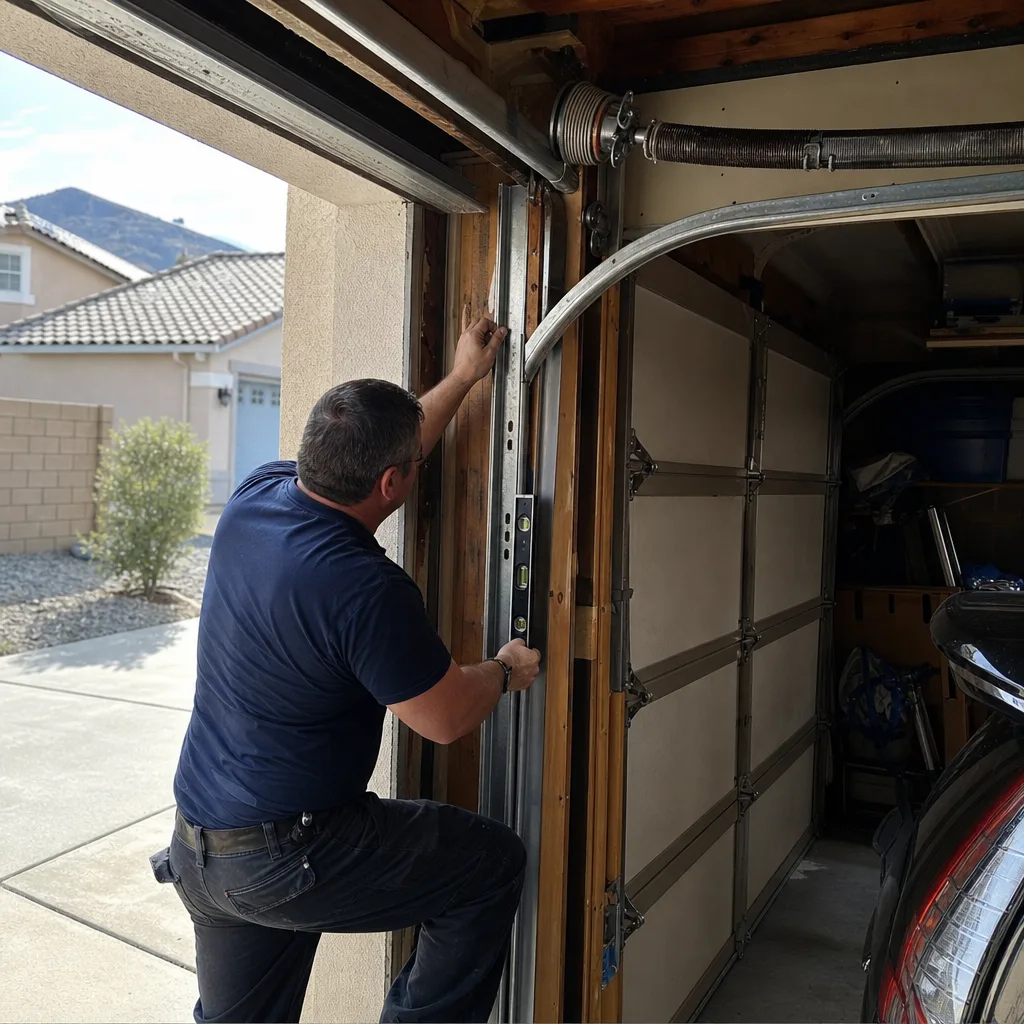
Every spring is rated in cycles, and one cycle equals one full open-and-close. Standard springs are commonly rated around 10,000 cycles; higher-cycle springs are available at added cost and last noticeably longer.
The math that matters is your household’s actual use. A rough formula:
- Count how many times the door opens and closes on a typical day. A two-car family with kids and errands might hit six cycles a day.
- Multiply by 365. Six cycles a day is roughly 2,190 cycles a year.
- Divide the spring’s cycle rating by your annual cycles. A 10,000-cycle spring at 2,190 cycles a year is roughly four-and-a-half years of life.
That four-to-five year window matches what we see across Winchester: springs failing in the fourth or fifth year on busy households, earlier on doors that face the sun. If you’re quoted a spring with no cycle rating mentioned, ask for it. A written scope under Clause 1 of The Haven Standard should name the part and its rating, not just “spring replacement.”
Repair or Replace: The Five-Year Cost Decision Tree
The honest test is not “how much does the repair cost today” but “how much will this door cost me over five years.” A few years of stacked repairs can climb past the price of a new door, and a new door adds insulation, quieter operation, and a modern opener.
Here’s the tree we’d walk a homeowner through:
- Door age under 10 years and panels intact? Repair. Springs, rollers, seals, and opener components are all fair game, and you’ll get years more from the door.
- Door age 10 to 15 years, one major failure (springs or opener)? Repair, unless the panels are already dented or rusted. If they are, price replacement too and compare.
- Door age 15+ with two or more failures in the last 24 months? Replacement is usually the lower five-year cost once you add up repairs, energy loss, and the next failure.
- Panels cracked, delaminated, or rusted through? Replacement. Panel repair rarely makes sense economically and often isn’t structurally sound.
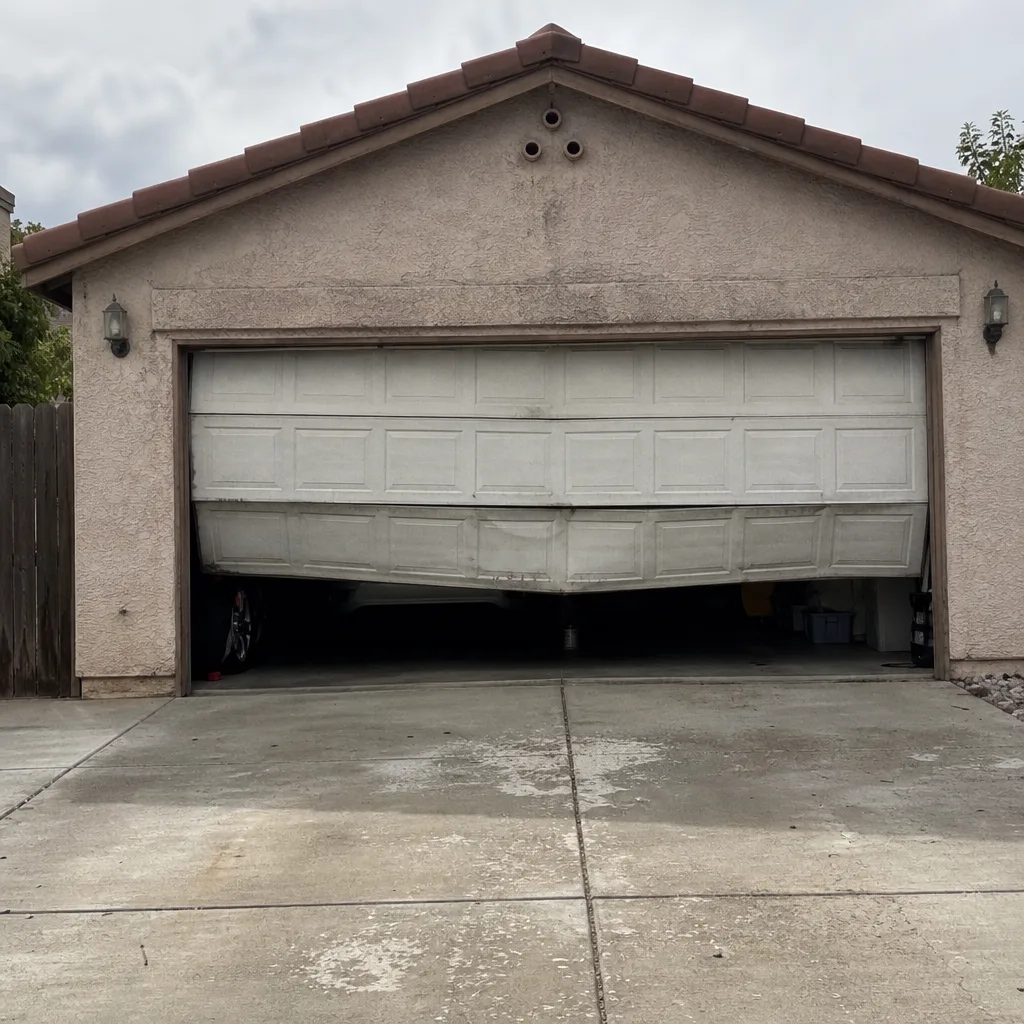
- Door off its track or bent from impact? Get an assessment before deciding. Sometimes tracks and rollers are the only fix; sometimes the door is done.
A flat, written price for both paths makes the decision easy to see on paper. That’s the point of quoting before work starts: you compare numbers, not sales pitches.
What a Legitimate Written Quote Must Contain
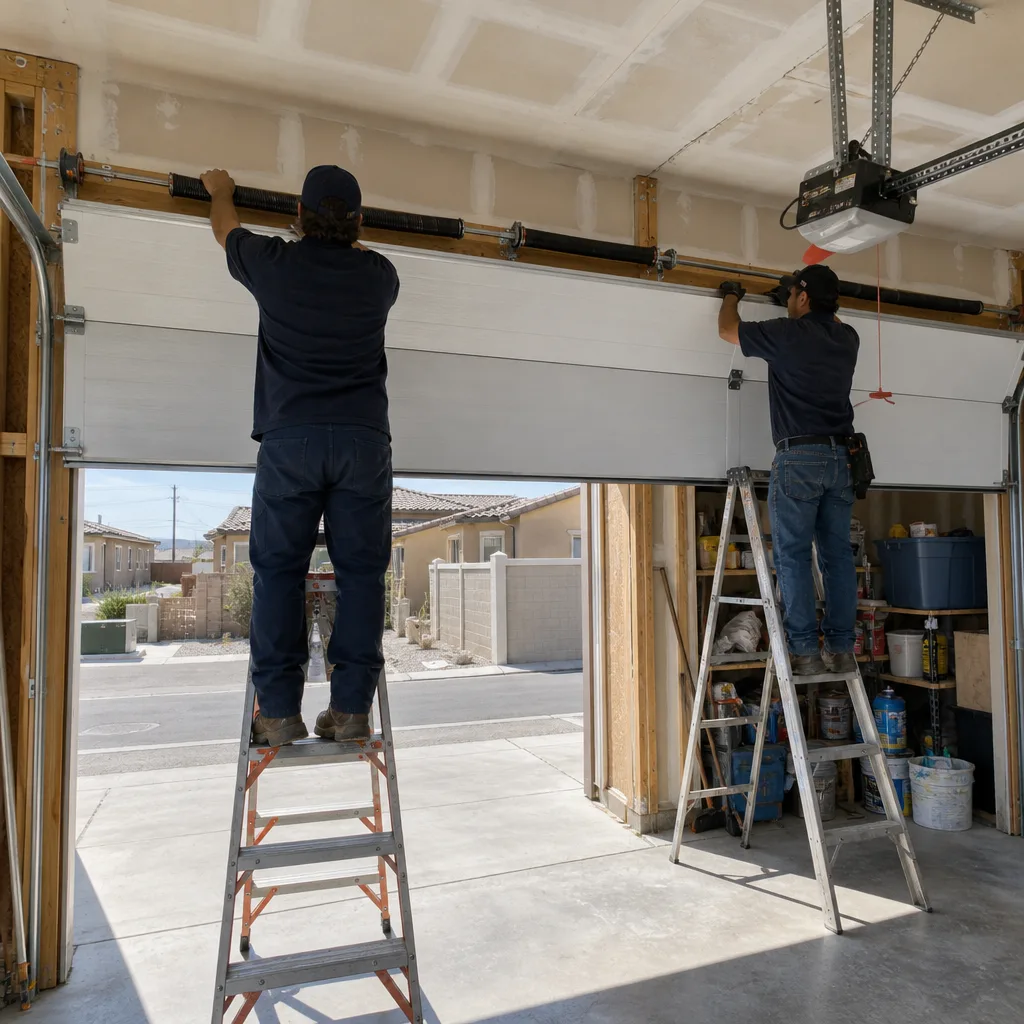
A written quote is a document, not a verbal estimate. If the number on the paper doesn’t match what the technician says at the door, you have the wrong paper. Every quote worth accepting should include these items:
- Itemized parts with brand and model where it applies. “Spring replacement” is not enough. A torsion spring with a specified wire diameter, cycle rating, and brand is.
- Labor broken out separately from parts.
- Disposal of the old door hardware or panels, if any is being hauled away.
- Scope describing what will be done, in plain language, and what won’t.
- Price stated as a flat figure, not a range or “starting at.”
- Warranty terms on parts and labor, spelled out rather than promised verbally.
What’s missing from that list is just as telling. No verbal-only estimates. No “call for a quote.” No price that appears for the first time on the invoice. If a quote arrives without itemization, treat the absence as a signal and get a second one. The Free Second Opinion offer at Servo Garage Doors Winchester applies to any competing written estimate you bring in, and no coupon or code is needed.
What You Should Never Do Yourself
Some garage door maintenance is genuinely safe for a homeowner: wiping tracks, greasing rollers, replacing a bottom seal, swapping a remote battery. Some of it isn’t, and the line is bright.
- Torsion springs and cables are under tension high enough to break bones or worse. Do not adjust, unwind, or remove them. A trained technician uses specific winding bars and knows the tension math.
- Electrical work on the opener – hardwiring, replacing a logic board, or installing a new opener that ties into the home’s circuit – should be done by someone familiar with the door and the electrical side. If it involves a panel or new circuit, the local pro is licensed and insured as their state requires, and that’s who should be touching it.
- Track straightening after impact – a bent track plus a live spring is not a DIY environment.
- Replacing panels – awkward, heavy, and easy to get wrong in a way that pinches fingers or damages the door.
If you’re not sure which side of the line a task falls on, that’s the sign to call. A technician can tell you in five minutes what’s safe and what isn’t.
Common Mistakes to Avoid
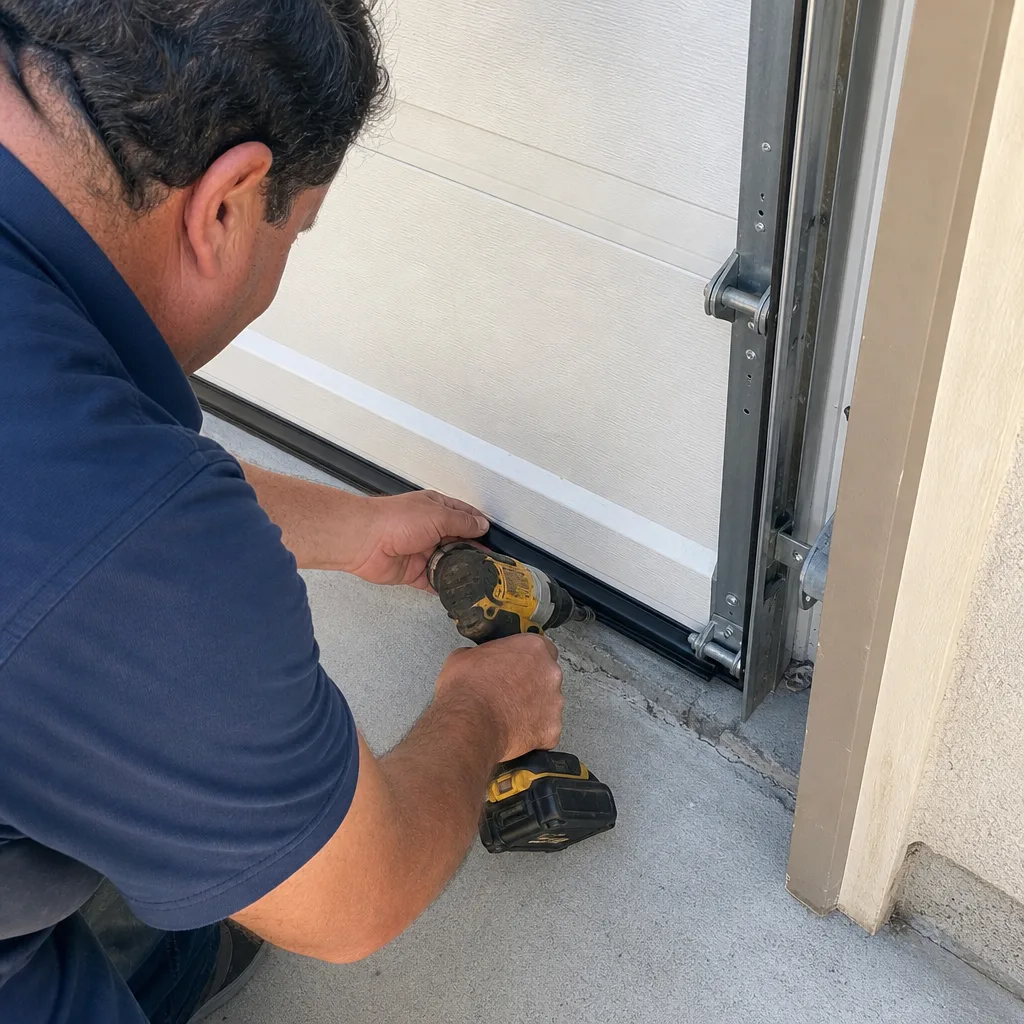
- Accepting a verbal price at the door. In Winchester, a same-day verbal number that never becomes a written scope leaves you with nothing to hold anyone to. Ask for the flat price in writing before any work starts.
- Replacing the whole door when only the springs failed. A broken spring at year six is not a reason to buy a new door. Price the repair first, then price the replacement, and compare honestly.
- Ignoring the cycle rating. A cheap spring with no stated rating is often the one that fails in three years. Always confirm the cycle rating on the part being installed.
- Never lubricating rollers and hinges. Desert dust plus dry metal equals wear. A yearly light grease job on rollers and hinges stretches life and cuts noise.
- Skipping the bottom seal inspection. Full UV exposure here chews through bottom seals faster than most homeowners expect. A cracked seal lets in dust, wind, and pests before you notice.
- Letting track buildup go unchecked. Dust and grit in Winchester tracks cause jerky travel and strain the opener. Cleaning them a couple of times a year is a five-minute task.
- Calling a company that can’t tell you why the part failed. If the answer is “it just wore out” for every issue, ask a different question. What did the broken part measure, and what caused the wear?
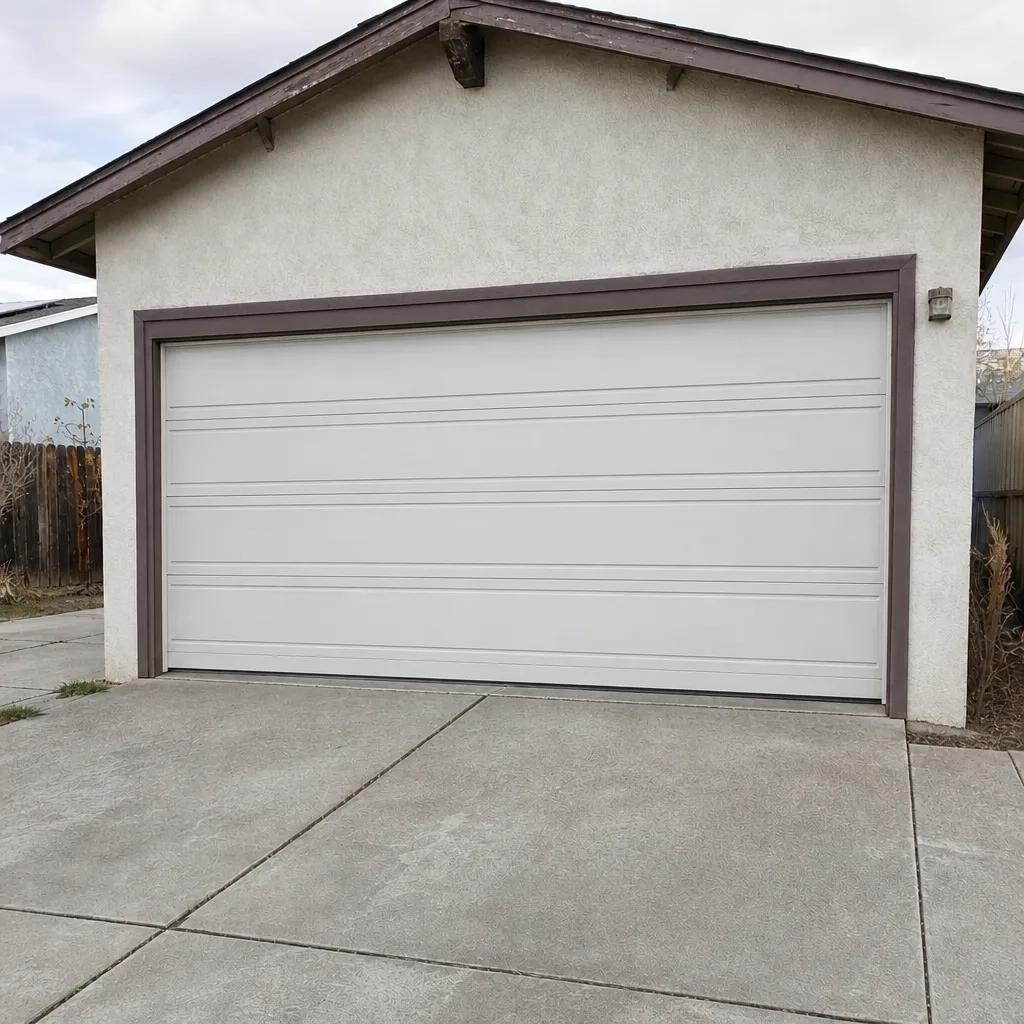
See the difference
BeforeAfter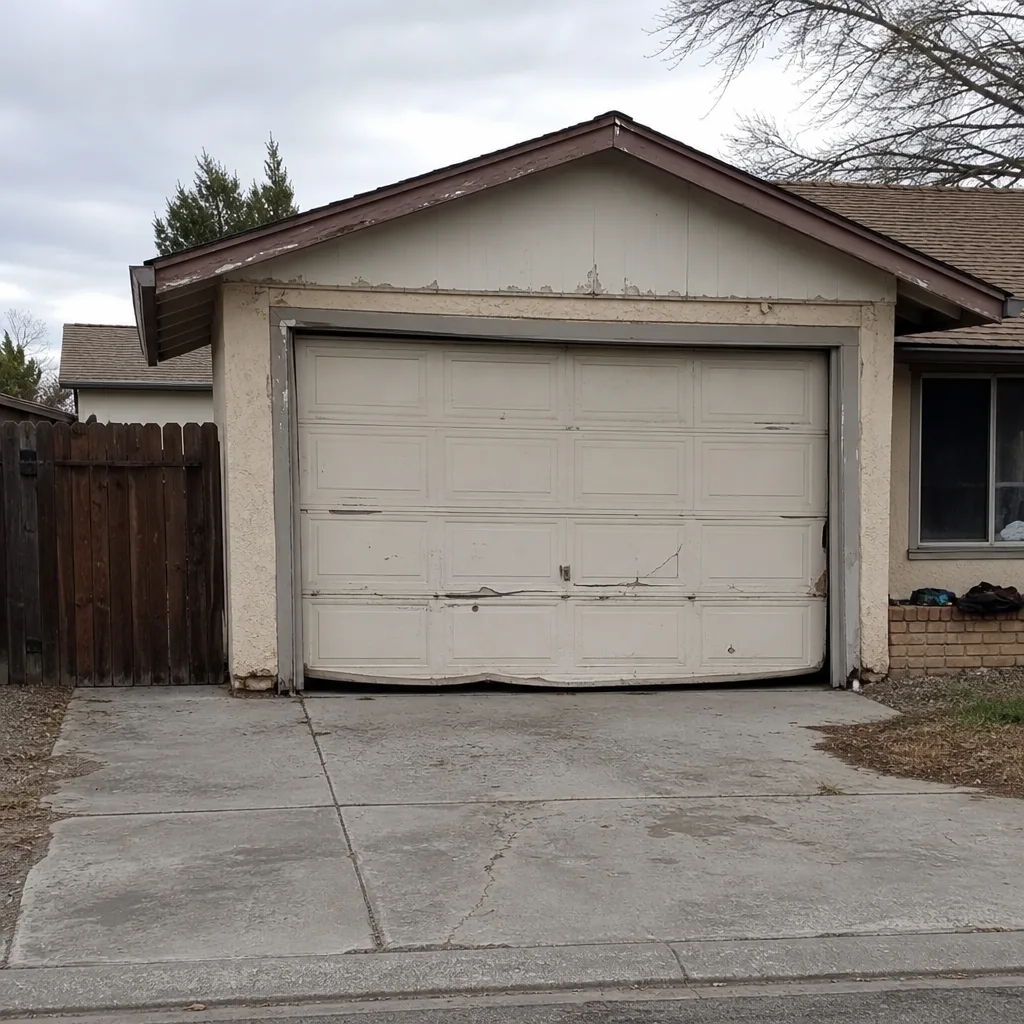 Before
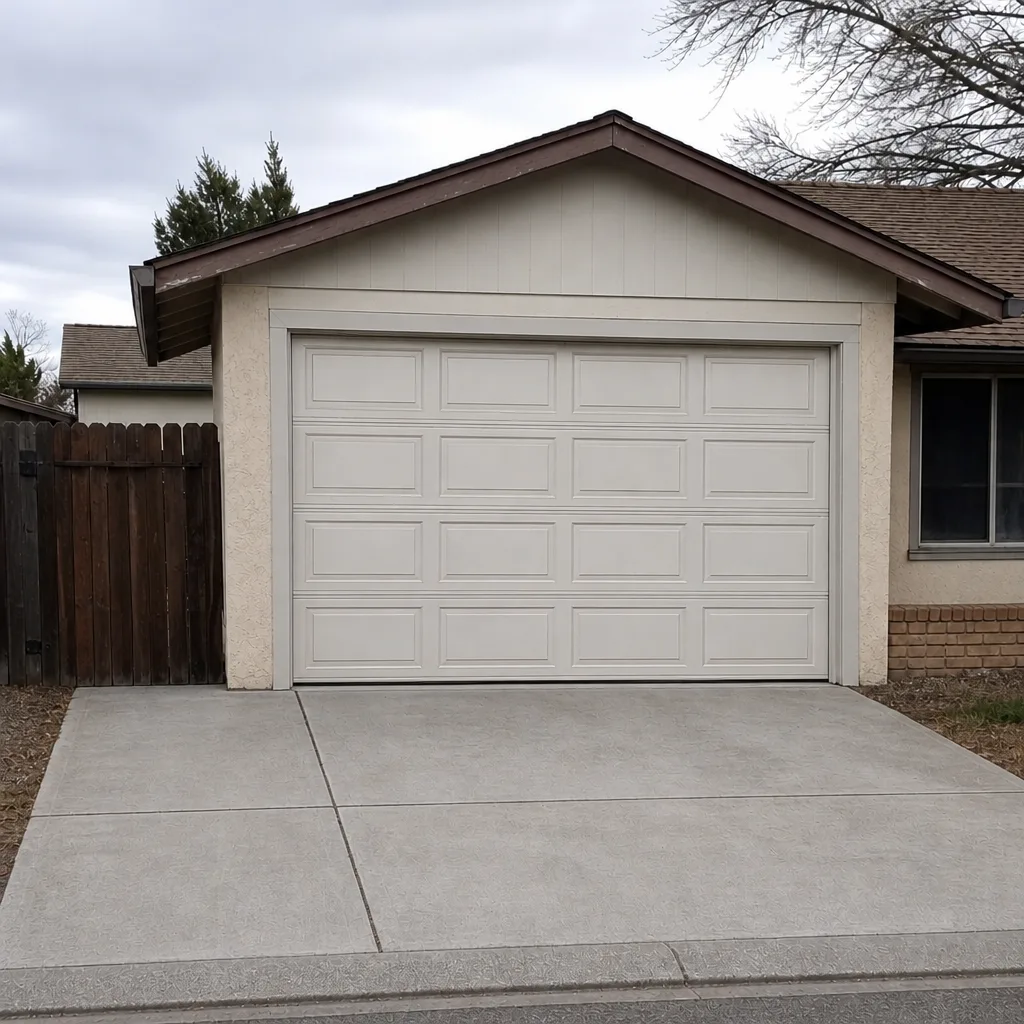 After
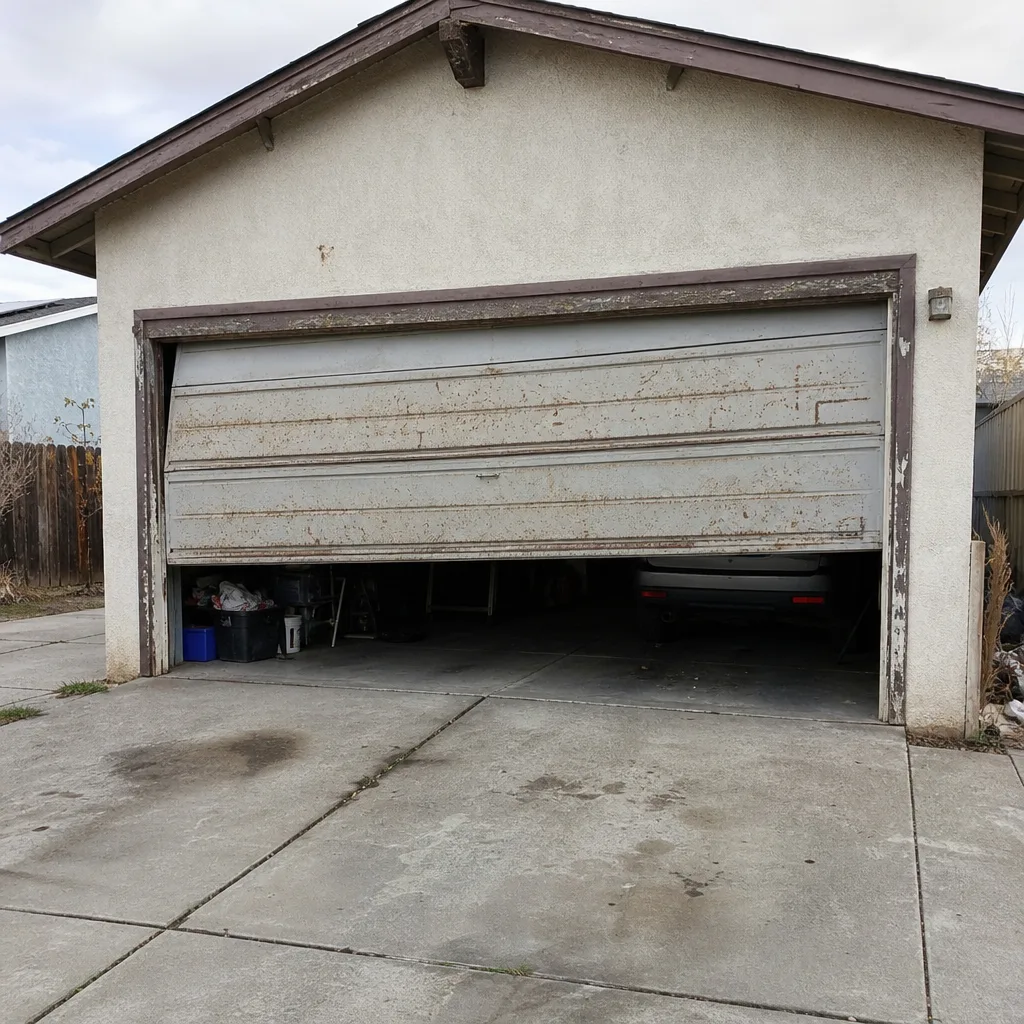 Before
 After
When to Call a Professional
Call now, not later, if any of these apply: you heard a loud snap from the garage and the door won’t lift by hand, the door is stuck halfway and the opener is running but nothing moves, one side of the door is higher than the other, the panels are visibly bent, or the door is off its track entirely. These are the situations where amateur handling can turn a repair into a replacement, or worse, an injury. For routine spring replacements, opener failures, and quotes on a new door, a scheduled visit is the right call. Servo Garage Doors Winchester offers free estimates in Winchester – call (855) 517-0284.
Frequently Asked Questions
Torsion spring replacement typically runs $180 to $340 installed, including labor and disposal of the old spring. Higher-cycle springs cost more upfront but last considerably longer, which usually pays for itself over five years in a busy household. Call (855) 517-0284 for an exact quote for your door – estimates are free.
Spring, opener, roller, and track repairs can often be done same day, and emergency calls are answered by a live person 24/7. Full door replacement is a different timeline: the door is measured, ordered, and scheduled, usually across several weeks depending on the brand and size. Call (855) 517-0284 and we’ll tell you honestly what your job needs.
No. Under Clause 1 of The Haven Standard, the flat price and written scope are agreed before any work starts, with no exceptions. If the scope genuinely changes because something else is found, the new price is written and agreed before that work begins too. Call (855) 517-0284 for a free estimate.
The clearest signs are a loud snap from the garage, a door that feels too heavy to lift by hand, a gap at the coil, or a door that lifts a few inches and stops. Springs fail on a predictable cycle, so the failure is often months before something else gives. Call (855) 517-0284 and we’ll confirm the wear with a photo record.
If the door is under 10 years old and the panels are solid, repair almost always wins over a five-year outlook. If it’s 15 or older with repeated failures or damaged panels, replacement is usually the lower long-term cost once repairs, energy loss, and the next failure are totalled. A written quote for both paths makes the decision straightforward – call (855) 517-0284 and we’ll price both.
Yes. The local pro we connect you with is licensed and insured as their state requires, and every job is backed by the 365-Day Done Right Promise – if the work isn’t right, it gets made right. Call (855) 517-0284 for a free estimate and a written scope before anything is touched.
The Bottom Line
If you take one thing from this guide, take the component map. Knowing the difference between a torsion spring and an extension spring, or a logic board and a limit switch, is the difference between evaluating a diagnosis and accepting one. Add the climate realities – UV, temperature swing, dust – and you have a working model of why your Winchester door wears the way it does. Add the cycle rating and the written-quote checklist and you have the tools to price any job with a clear head. From there, it’s arithmetic and a paper trail, not persuasion. When it’s time to act, call Servo Garage Doors Winchester at (855) 517-0284 for a free estimate on garage door repair in Winchester, or a scheduled measure and written quote on a new door through garage door installation in Winchester. Opener concerns are covered by the garage door opener repair & installation in Winchester team, and the full service list lives on the Servo Garage Doors Winchester home page.
Written by the team at Servo Garage Doors Winchester.